
Understanding habitats Reading Worksheets for Ages 3-9
3 filtered results
Difficulty Level
Grade
Age
-
From - To
Subject
Activity
Standards
Discover our engaging "Understanding Habitats" reading worksheets designed specifically for children aged 3 to 9! These worksheets foster a love for nature while enhancing literacy skills. Through vibrant illustrations and age-appropriate content, young learners explore different habitats—such as forests, oceans, and deserts—discovering the unique plants and animals that thrive in each environment. Our materials promote critical thinking and comprehension, making learning fun and interactive. Perfect for classroom settings or home activities, these worksheets are an excellent resource for educators and parents alike. Dive into the fascinating world of habitats and watch your child's reading skills blossom!
Favorites
With answer key
Interactive
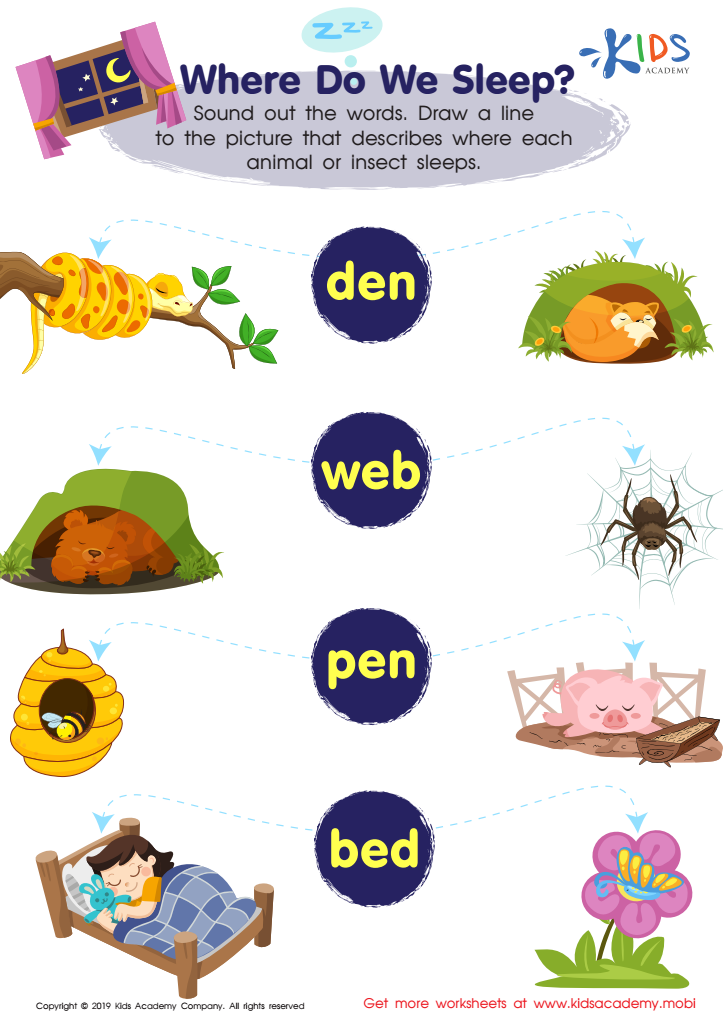
Where Do We Sleep Worksheet
Help your kids understand the importance of a safe space with this activity: Ask them to draw a line connecting the different animals and insects to the words that describe where they sleep. Remind them that everyone needs a sanctuary to rest – like the animals and insects in this printout.
 Assign to My Students
Where Do We Sleep Worksheet
Worksheet
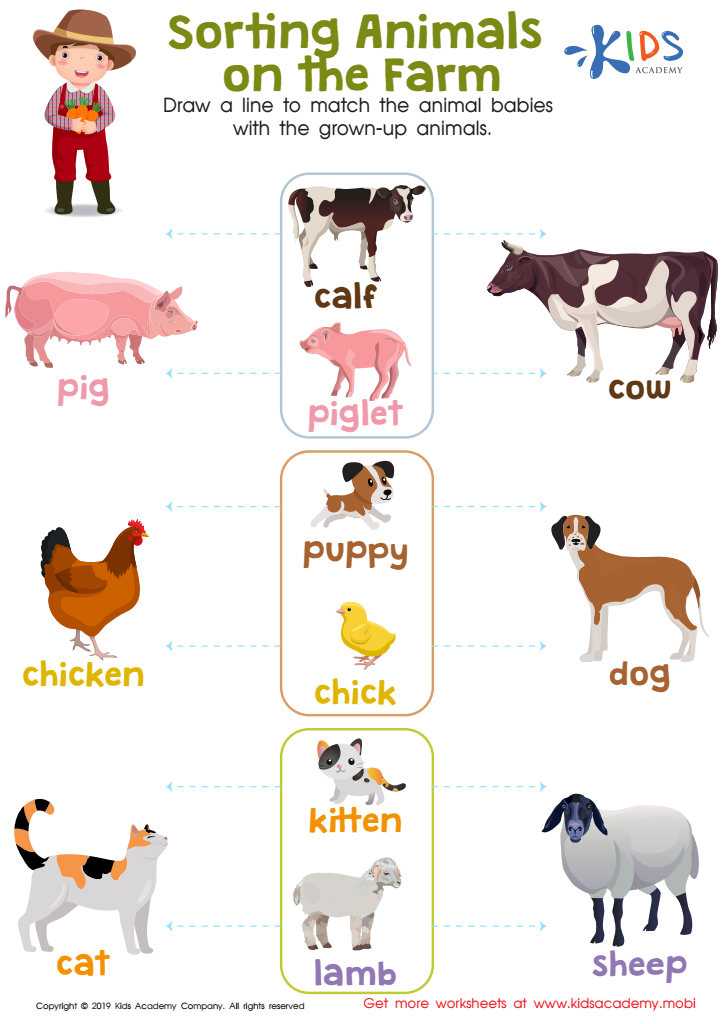
Sorting Animals on the Farm Worksheet
This PDF worksheet engages preschoolers in a fun activity to match Mama farm animals with their babies, strengthening their sorting and patterning skills. They'll learn to recognize rules and relationships, while gaining familiarity with animal-related words.
Sorting Animals on the Farm Worksheet
Worksheet
Join Kids Academy for Free
Who is primarily going to use this learning content?







Understanding habitats is crucial for children aged 3-9, as it lays the foundation for their environmental awareness and appreciation for the natural world. Parents and teachers should prioritize reading about habitats because it helps children develop a sense of curiosity and inquiry about their surroundings. By exploring different ecosystems, such as forests, deserts, and oceans, children learn about biodiversity, species interdependence, and the importance of conservation.
Engaging with habitat-themed stories can enhance vocabulary, comprehension, and critical thinking skills. Literature provides a window into diverse environments, allowing children to visualize and connect emotionally with animals and plants. By fostering empathy for other living beings, children become more invested in protecting the environment.
Additionally, understanding habitats nurtures a sense of wonder and responsibility. As they learn about the impact of human actions on different ecosystems, children can grasp the importance of sustainability. This knowledge encourages them to adopt eco-friendly practices from a young age.
Ultimately, reading about habitats enriches children’s education, supports cognitive development, and cultivates responsible global citizens who care for the planet, making it essential for parents and teachers to promote this vital theme in early literacy.








