Understanding Sequences Reading Comprehension Worksheets for Ages 3-9
4 filtered results
-
From - To
"Understanding Sequences Reading Comprehension Worksheets for Ages 3-9" facilitate early literacy development by helping young learners recognize the order of events in stories. These engaging worksheets feature age-appropriate activities that encourage children to sequence images and text, fostering critical thinking and comprehension skills. Ideal for classrooms or at-home learning, these resources enhance children's ability to follow narratives and understand cause-and-effect relationships. With varying levels of difficulty, these printables cater to diverse learning needs, allowing children to progress at their own pace. Explore our collection and empower your child's reading journey while making learning fun and interactive!
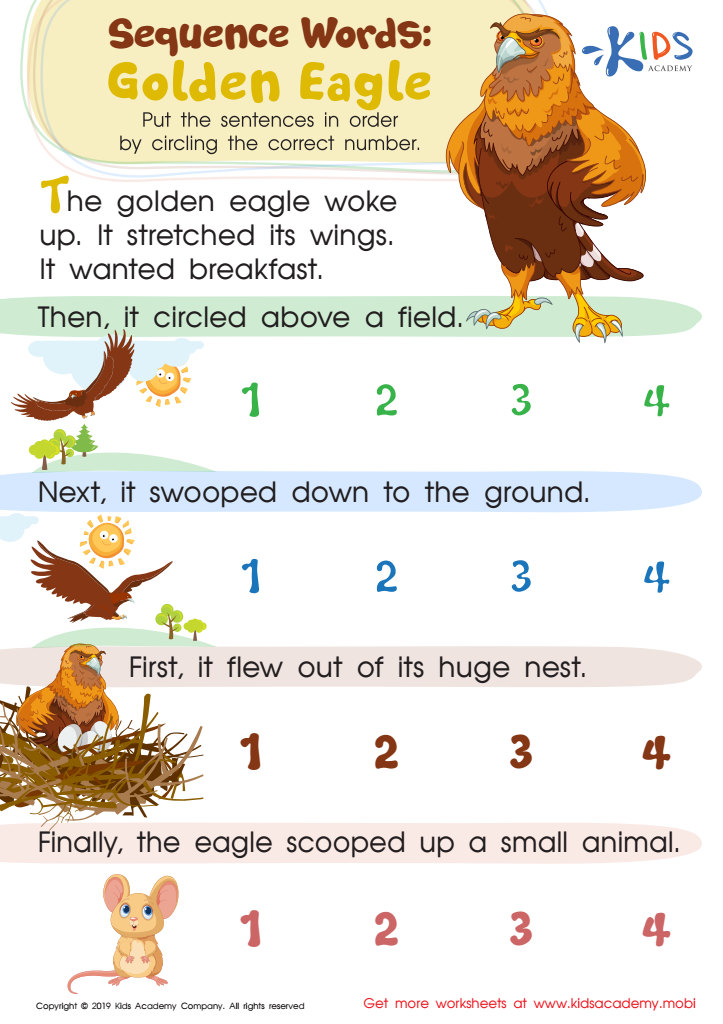
Sequence Word Eagle Worksheet
 Assign to My Students
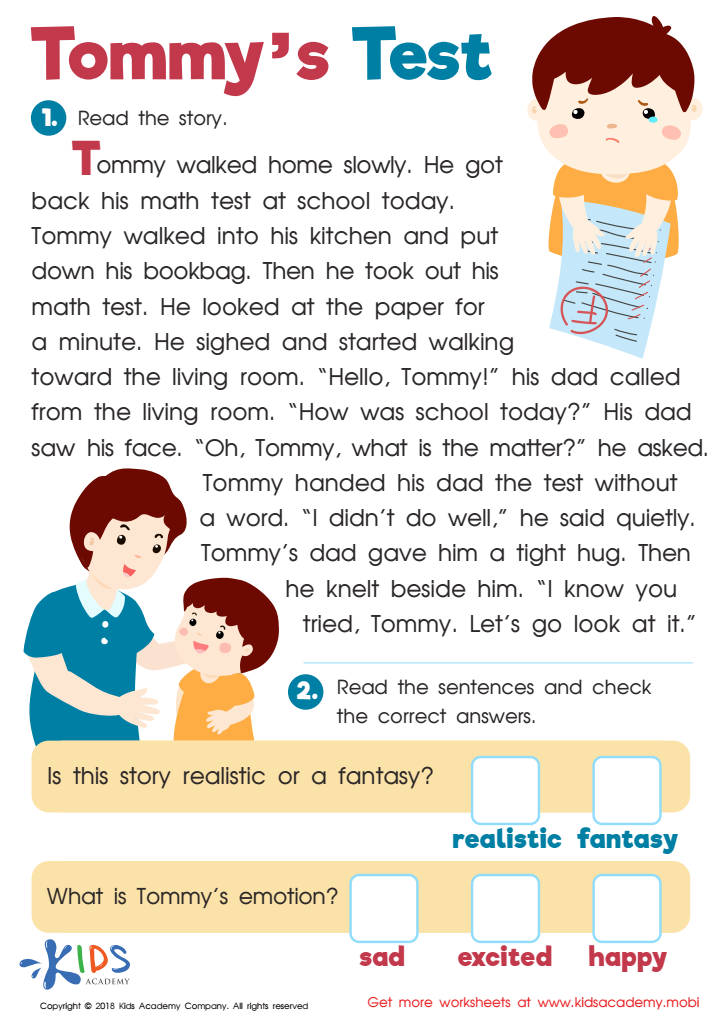
Tommys Test Worksheet
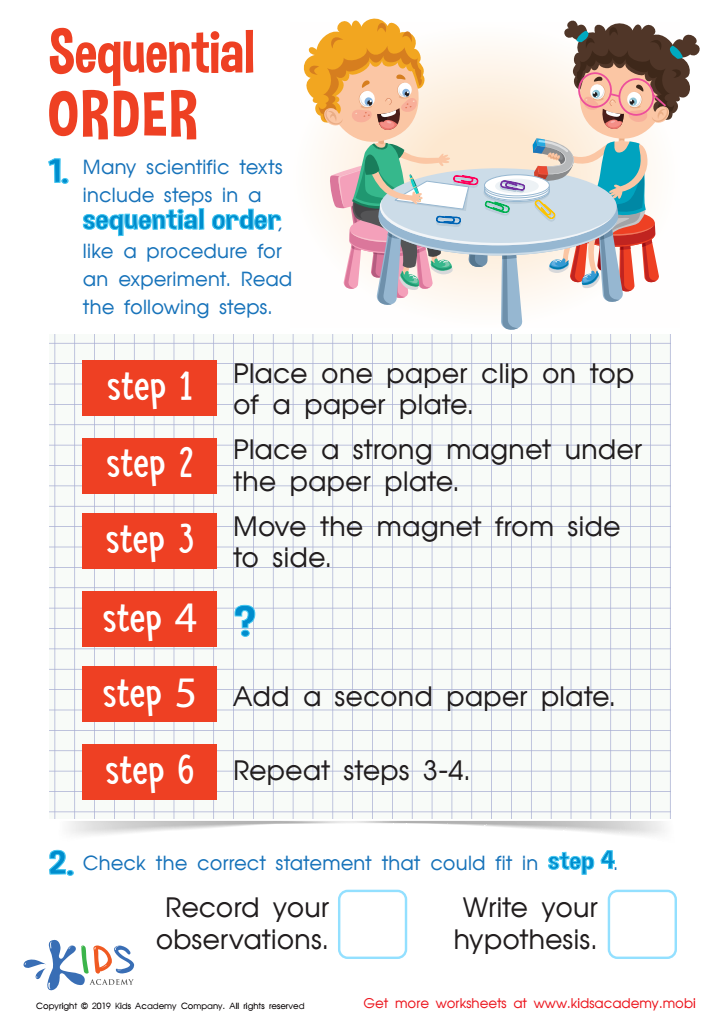
Sequencential Order Worksheet
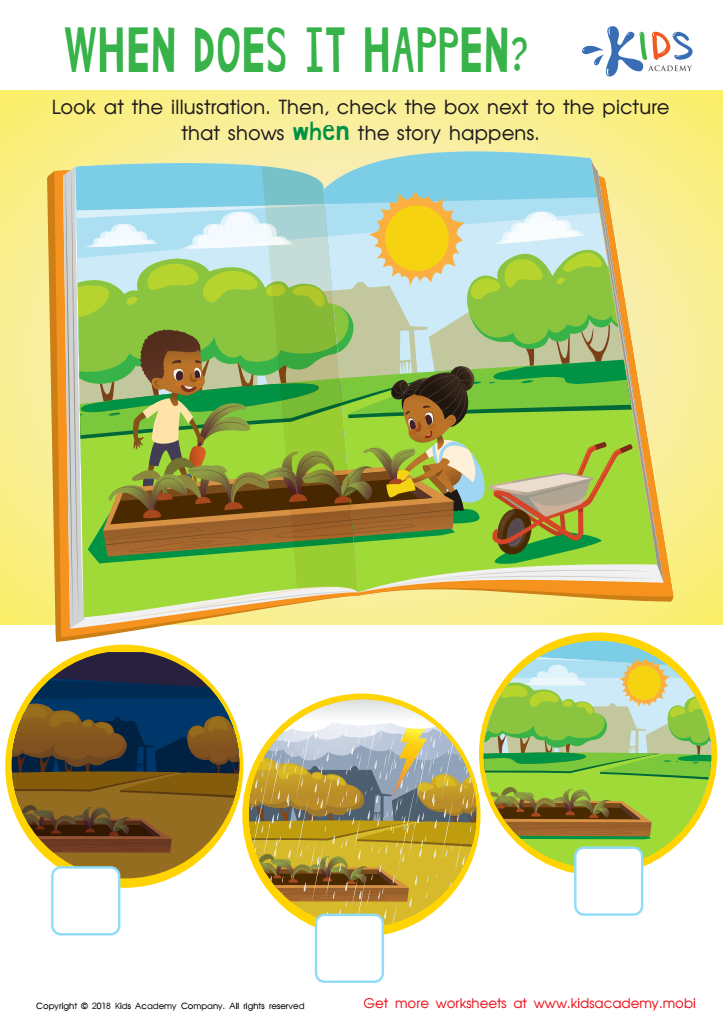
When Does It Happen? Worksheet


.jpg)





Understanding sequences is a critical component of reading comprehension for children aged 3-9. At this formative stage, children are not only learning to read but also developing essential cognitive skills. Sequences help children grasp the structure of stories, which enhances their overall comprehension. Recognizing the order of events fosters predictive skills; children learn to anticipate what might happen next based on prior information, which enriches their engagement with texts.
For parents and teachers, prioritizing sequence awareness means nurturing a child’s ability to summarize and articulate thoughts clearly. It enables children to retell stories accurately, reinforcing their understanding of narrative coherence. Furthermore, sequences contribute to skills in critical thinking and problem-solving, as kids learn to connect causes and effects within a storyline.
Moreover, incorporating sequence activities into the learning process — like storytelling or sequencing cards — can make reading enjoyable and interactive, fostering a lifelong love for literature. Overall, by honing their understanding of sequences, children improve their reading skills and gain confidence, laying a strong foundation for deeper comprehension as they advance in their educational journey. This foundational skill ultimately helps parents and teachers ensure children become proficient and enthusiastic readers.








