
Character recognition Reading Fiction Worksheets for Ages 3-9
4 filtered results
Difficulty Level
Grade
Age
-
From - To
Subject
Activity
Standards
Unlock your child's imagination and reading skills with our Character Recognition Reading Fiction Worksheets, designed for ages 3-9! These engaging worksheets provide young learners with fun opportunities to explore diverse characters in their favorite stories. Children will enhance their comprehension and recognition abilities through lively exercises that encourage critical thinking and engagement with fictional narratives. Each activity aims to build a strong foundation in literacy while fostering a love for reading. Dive into a world of adventure, learning, and creativity as your child connects with beloved characters, all while developing essential reading skills. Perfect for home or classroom use!
Favorites
With answer key
Interactive
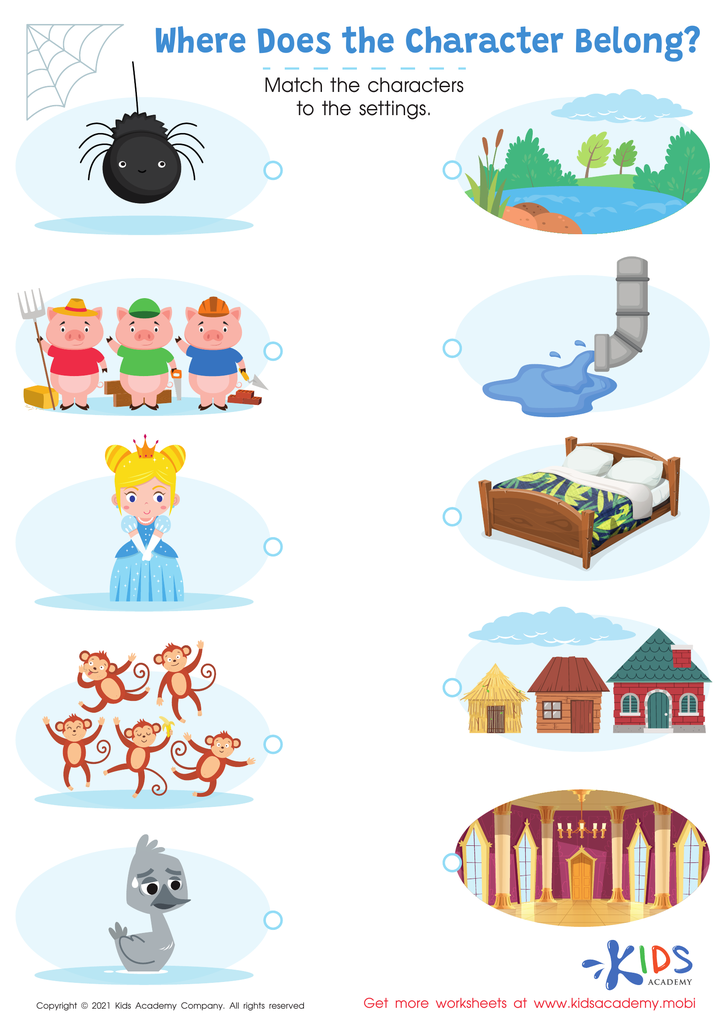
Where Does the Character Belong? Worksheet
Fairy Tales are a great way to teach young ones about settings, characters and other literary elements. This worksheet contains illustrations from popular fairy tales to help kids identify characters and match them to the right settings. It's a fun way to improve recall skills and enhance comprehension using visuals.
Where Does the Character Belong? Worksheet
Worksheet
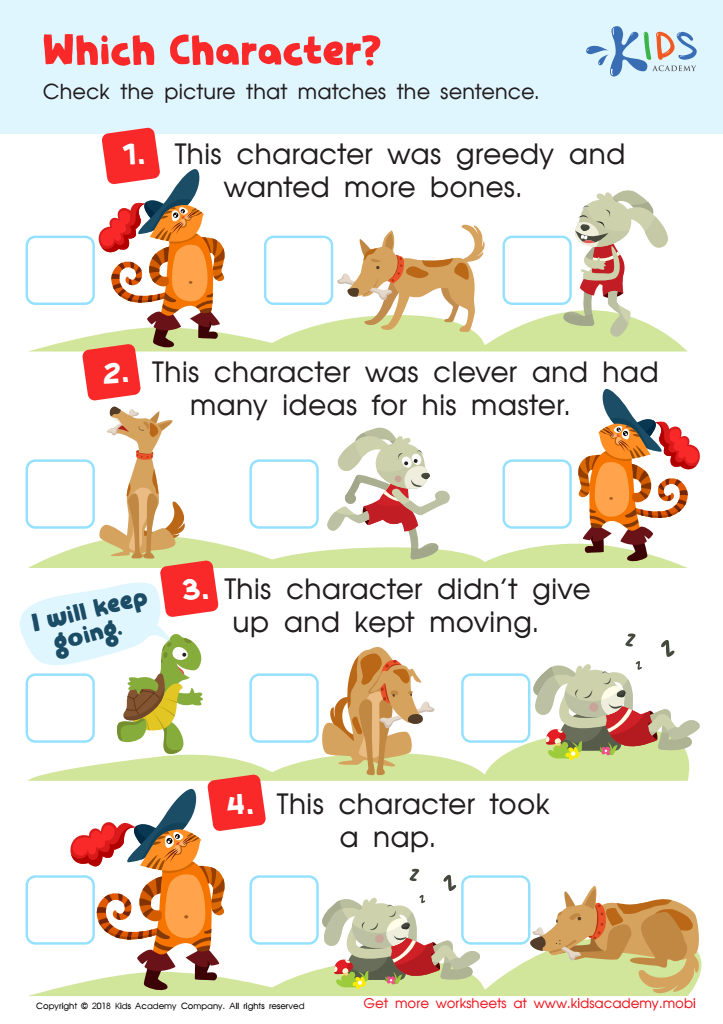
Which Character Worksheet
Kids learn best with stories, and this fun worksheet shows characters from popular tales. Like the tortoise who forgot hard work pays off, the cat defending its honor with wit, and the dog teaching a lesson about sharing. It's a great way to assess their understanding, and they'll be successful.
 Assign to My Students
Which Character Worksheet
Worksheet
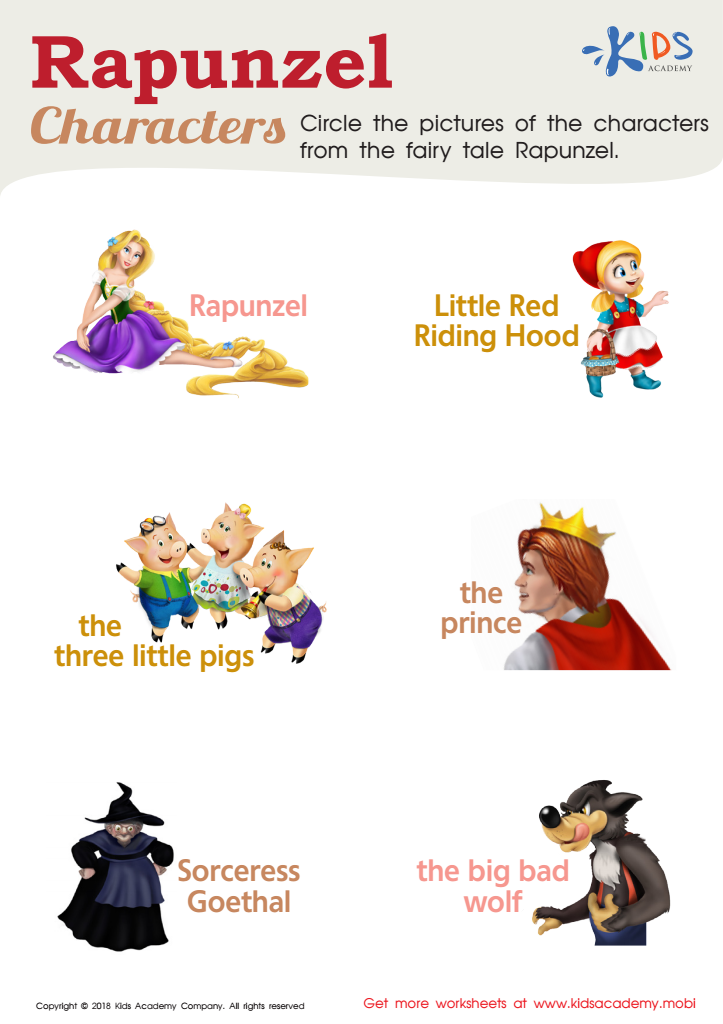
Rapunzel Characters Worksheet
This fun and colourful worksheet is perfect to see what your kids have learned from story time. Test their knowledge with a Rapunzel-themed exercise! Ask them to circle the pictures of the characters from the fairy tale. Helping them to remember the lessons taught in the stories you have read.
Rapunzel Characters Worksheet
Worksheet
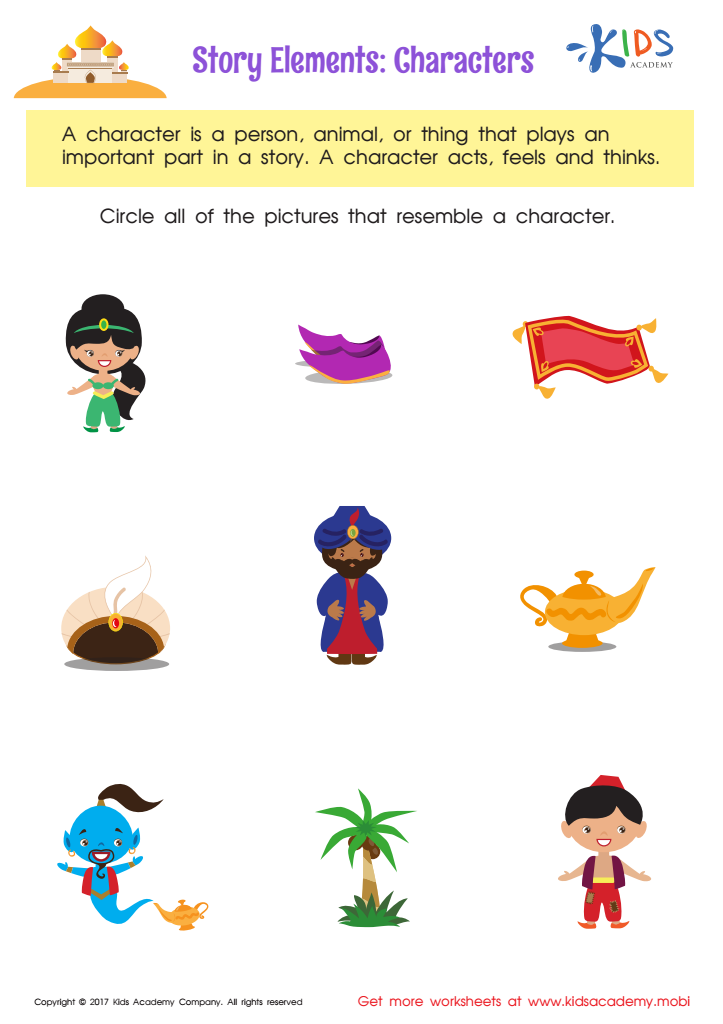
Story Elements Printable
Read the text and review the characters, settings and plot in a guided discussion.
Take your child on a journey to the Middle East and review the characters, settings and plot of their favorite childhood stories with this Aladdin-themed worksheet! It'll help them master early analysis skills and learn about characterization. Enjoy a fun, guided discussion with your child as you review important story elements.
Story Elements Printable
Worksheet
Join Kids Academy for Free
Who is primarily going to use this learning content?



.jpg)



Character recognition in reading fiction is crucial for children aged 3-9, as it lays the foundation for literacy and cognitive development. At this formative age, children are not only learning to read words but also to understand the emotional and relational dynamics between characters, which enhances their comprehension skills. When parents and teachers prioritize character recognition, they encourage empathy, critical thinking, and analytical skills as children decipher characters' motives and feelings.
Reading fiction also fosters imagination and creativity. Children engage in storytelling, which helps them express themselves and develop their own narratives. Understanding character attributes and relationships can also lead to better social skills, as children learn to navigate real-world interactions by relating to others' experiences.
Moreover, recognizing characters allows young readers to make connections with personal experiences, fostering a love for literature. This early exposure contributes to building strong reading habits and instills a lifelong appreciation for books. Therefore, recognizing the significance of character exploration in fiction not only enriches a child's reading experience but also supports cognitive and emotional growth, making it essential for parents and teachers to prioritize this aspect of literacy development.








