Contextual understanding Reading Fiction Worksheets for Ages 3-9
4 filtered results
-
From - To
Enhance your child's reading comprehension with our Contextual Understanding Reading Fiction Worksheets, designed for ages 3-9. These engaging worksheets aim to develop critical thinking skills by helping young learners understand stories in context. Through fun activities, children will explore characters, settings, and plots, making connections with their own experiences. Ideal for home or classroom use, our worksheets promote literacy by encouraging kids to analyze text while enjoying the imaginative worlds of fiction. Support your child's academic journey and foster a love for reading with our thoughtfully crafted worksheets, tailored to meet the developmental needs of early learners. Start their adventure today!
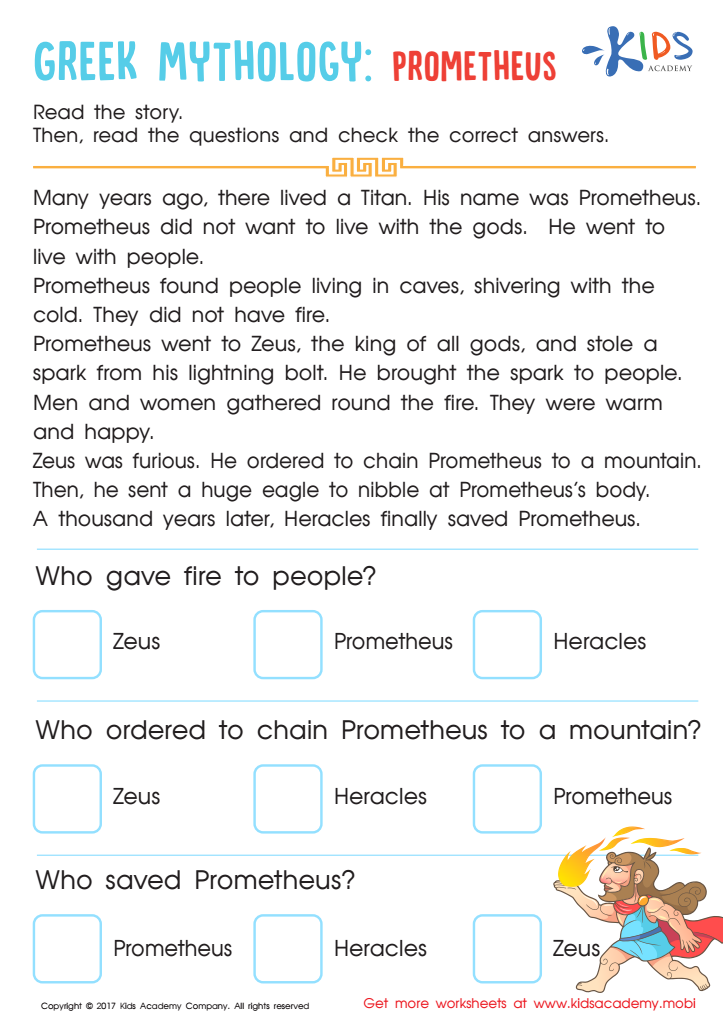
Prometheus Story Worksheet
 Assign to My Students
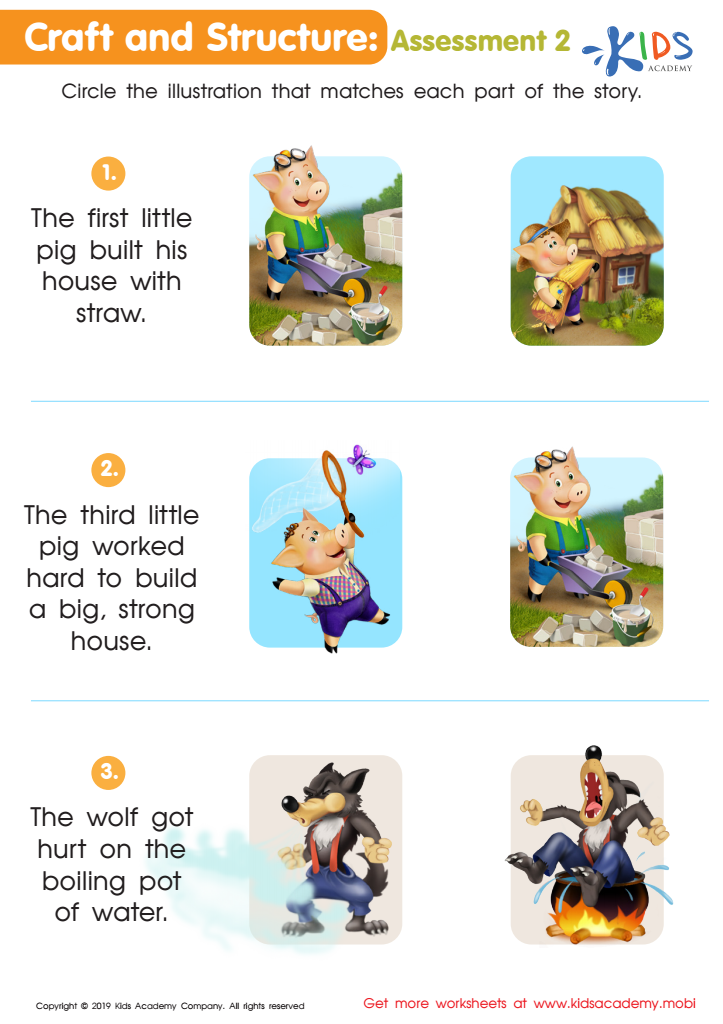
Craft and Structure: Assessment 2 Worksheet 2
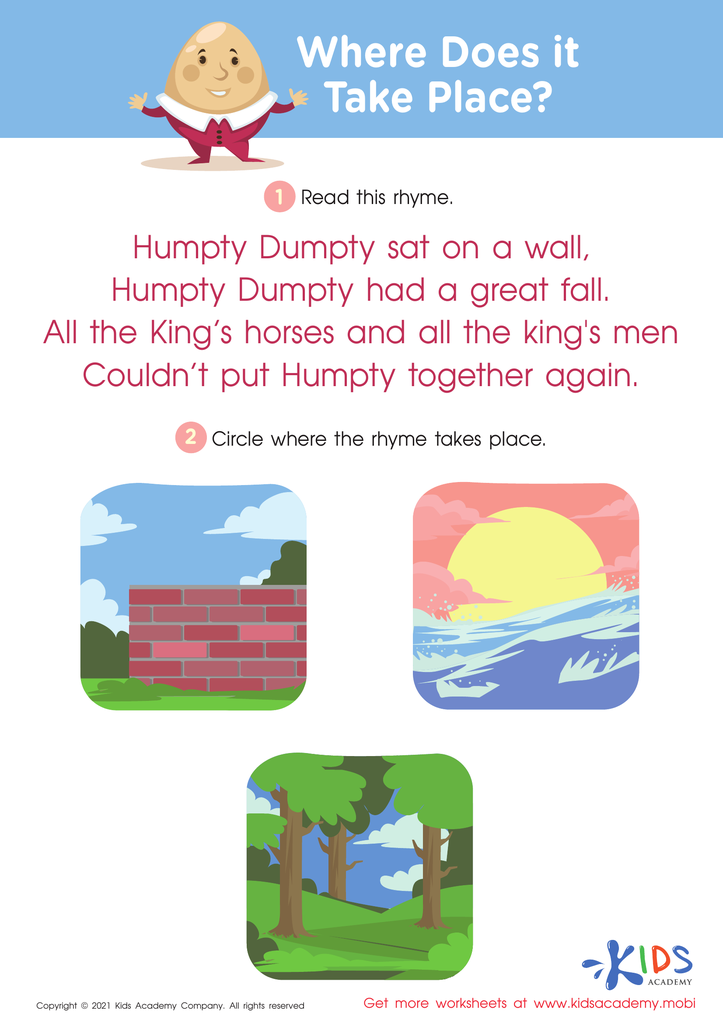
Where Does It Take Place? Worksheet
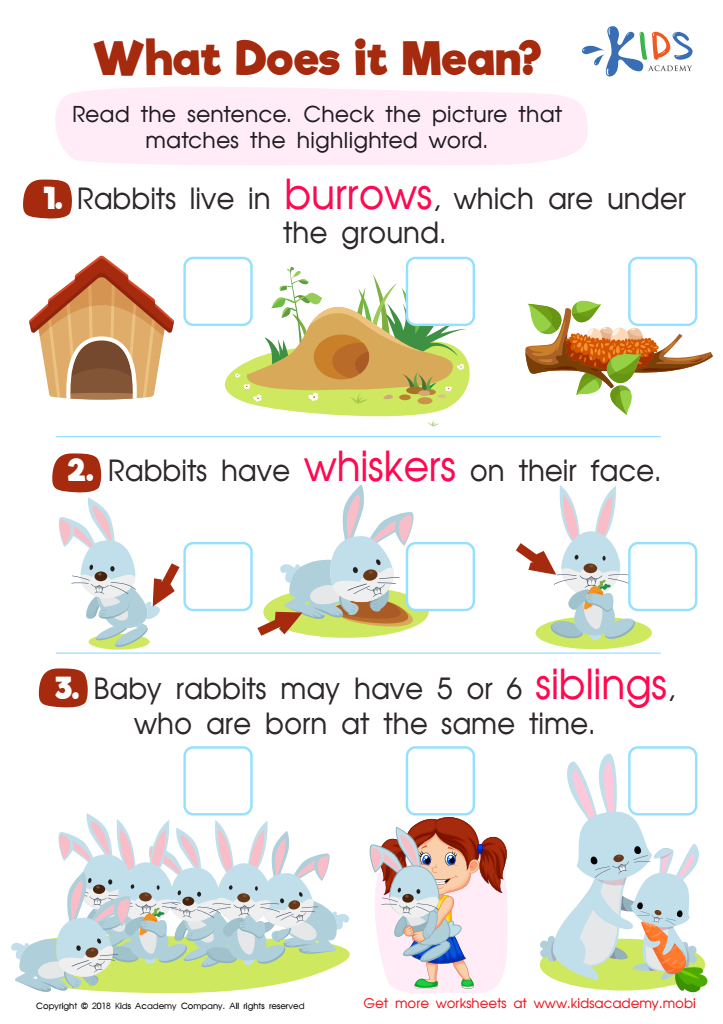
What Does It Mean? Worksheet


.jpg)





Contextual understanding in reading fiction is essential for children aged 3 to 9, as it significantly enhances their cognitive development and emotional intelligence. This age group is particularly impressionable, and stories can serve as powerful tools for learning about the world around them. When parents and teachers encourage contextual understanding, they help children draw connections between the text and their experiences, fostering critical thinking skills.
Engaging with fiction in context allows young readers to grasp the nuances of characters’ emotions, motivations, and social interactions. This understanding can promote empathy as children learn to consider different perspectives, which is crucial for developing social skills. Moreover, context allows children to relate narratives to their own lives, helping them make sense of their feelings and challenges.
Furthermore, conversations around context can enhance vocabulary and comprehension. By discussing unfamiliar settings, cultures, or circumstances in stories, educators and parents can build a richer understanding and enthusiasm for reading. In essence, fostering contextual understanding in fiction not only nurtures a child's love for literature but also equips them with essential life skills, setting a strong foundation for their future learning and development. It empowers them to navigate complex social scenarios and develops their ability to empathize with others.








