Reading comprehension Rhyming Words Worksheets for Ages 3-9
10 filtered results
-
From - To
Enhance your child’s reading skills with our engaging Rhyming Words Worksheets, specifically designed for ages 3-9. These resources help boost reading comprehension while making learning enjoyable and interactive. Rhyming words are essential for developing phonemic awareness and vocabulary in early readers. Our worksheets feature colorful illustrations and diverse activities that encourage children to identify, match, and create rhymes. By incorporating these fun exercises, your child will strengthen their reading comprehension and phonics skills, paving the way for lifelong literacy. Explore our collection today and support your child's educational journey with effective and playful learning tools!
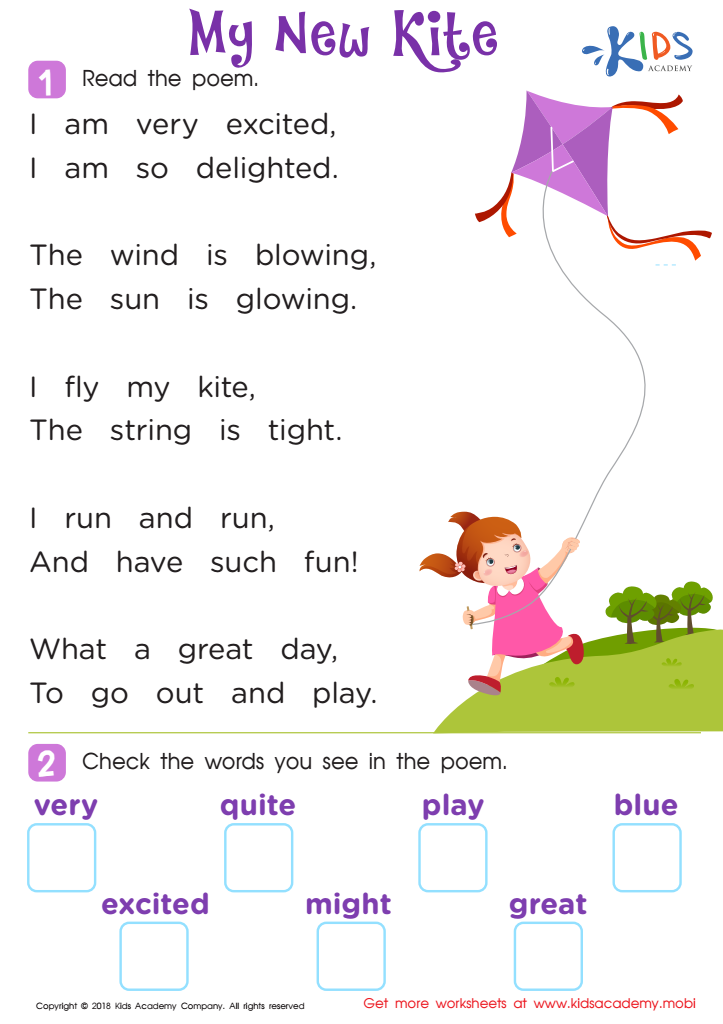
Poem: My New Kite Worksheet
 Assign to My Students
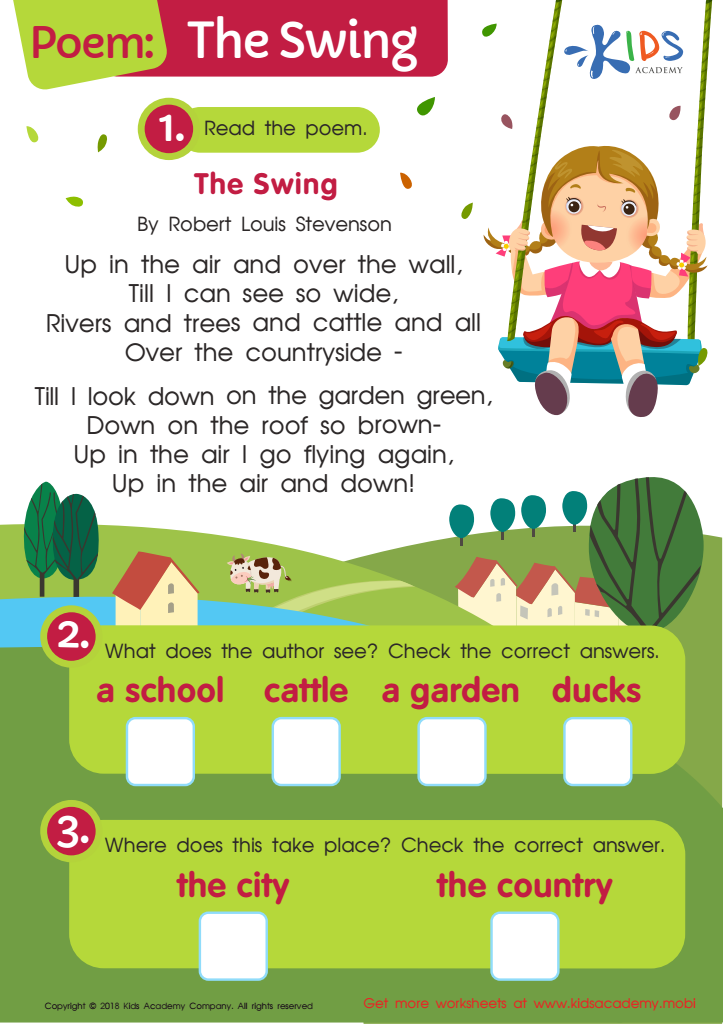
Poem: The Swing Worksheet
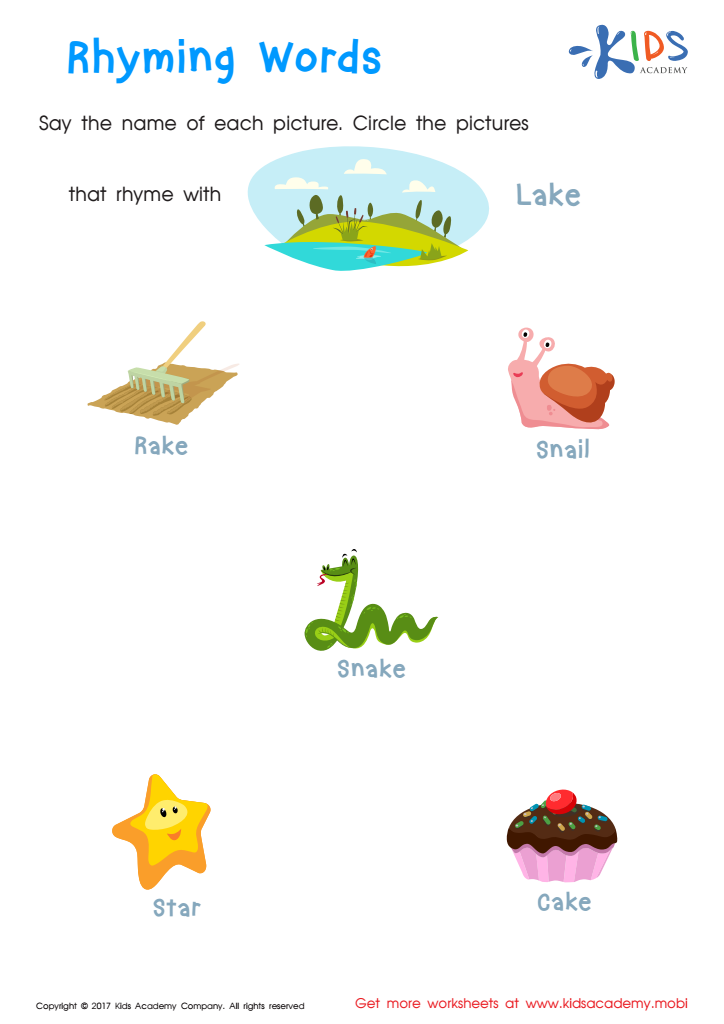
Rhyming Words Rhyming Worksheet
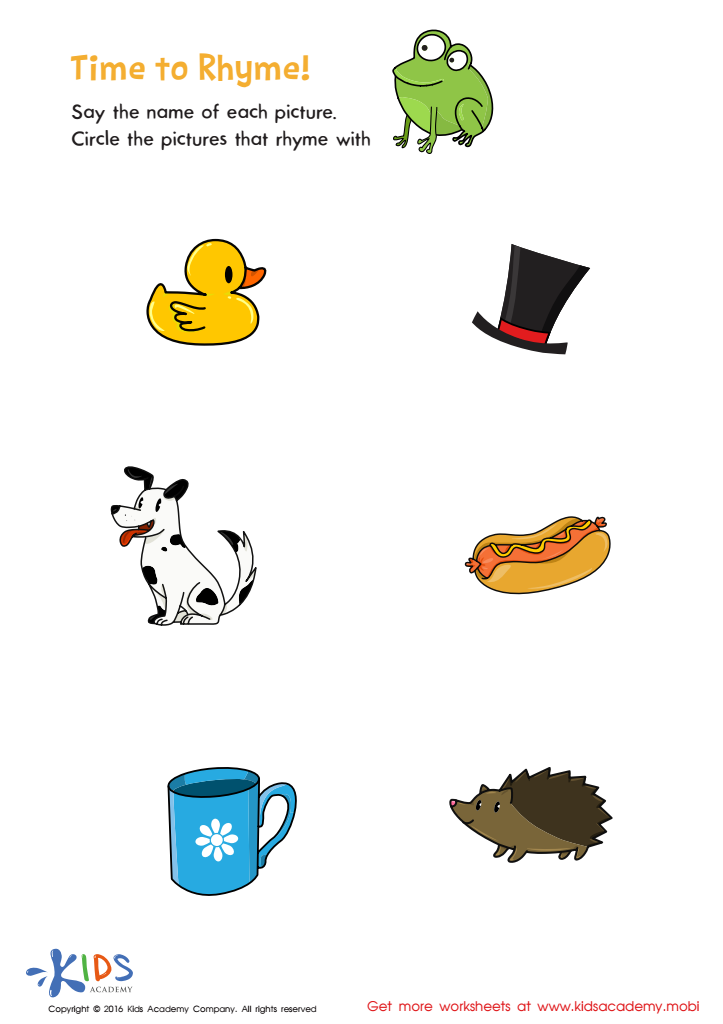
Rhyming Worksheet: Time to Rhyme Rhyming Worksheet
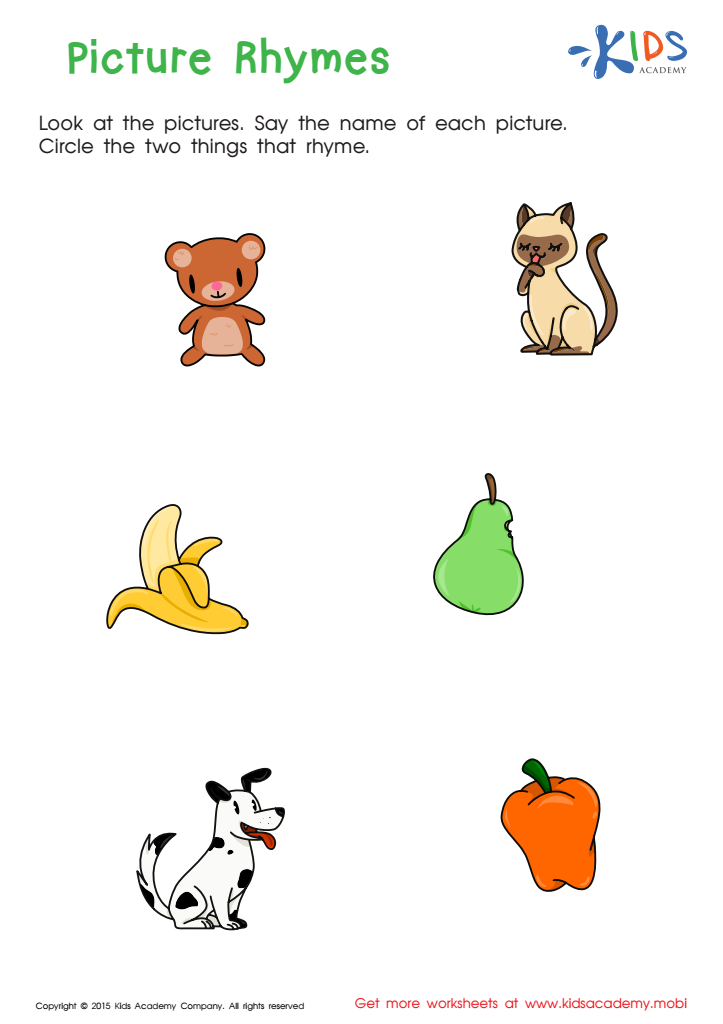
First Words: Picture Rhymes Worksheet
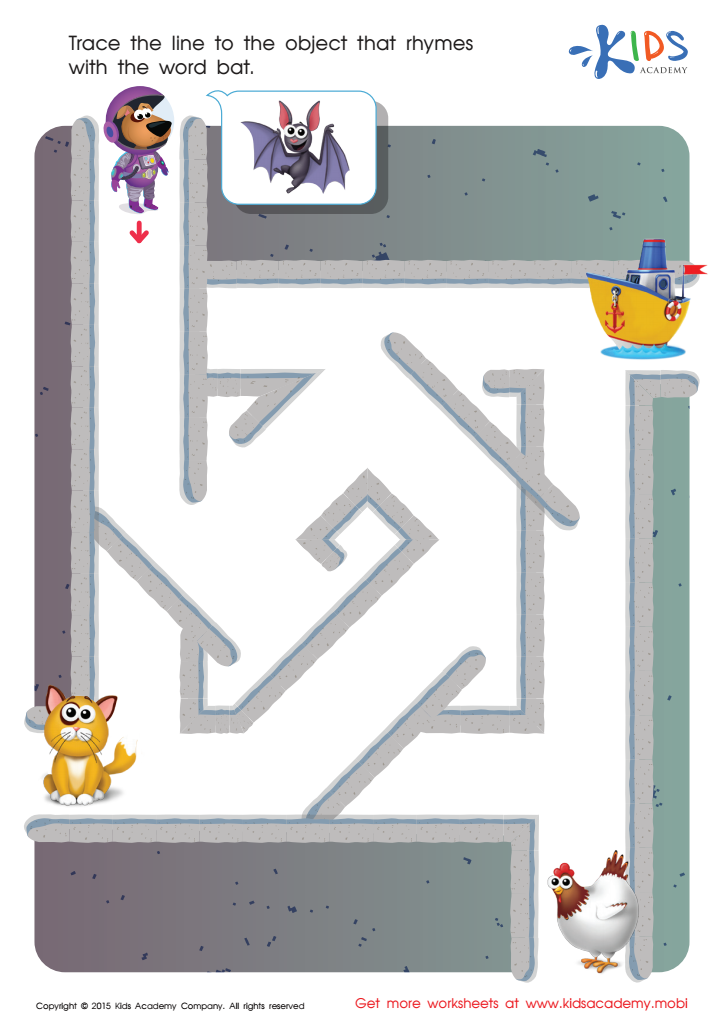
Bat Rhyming Words Worksheet
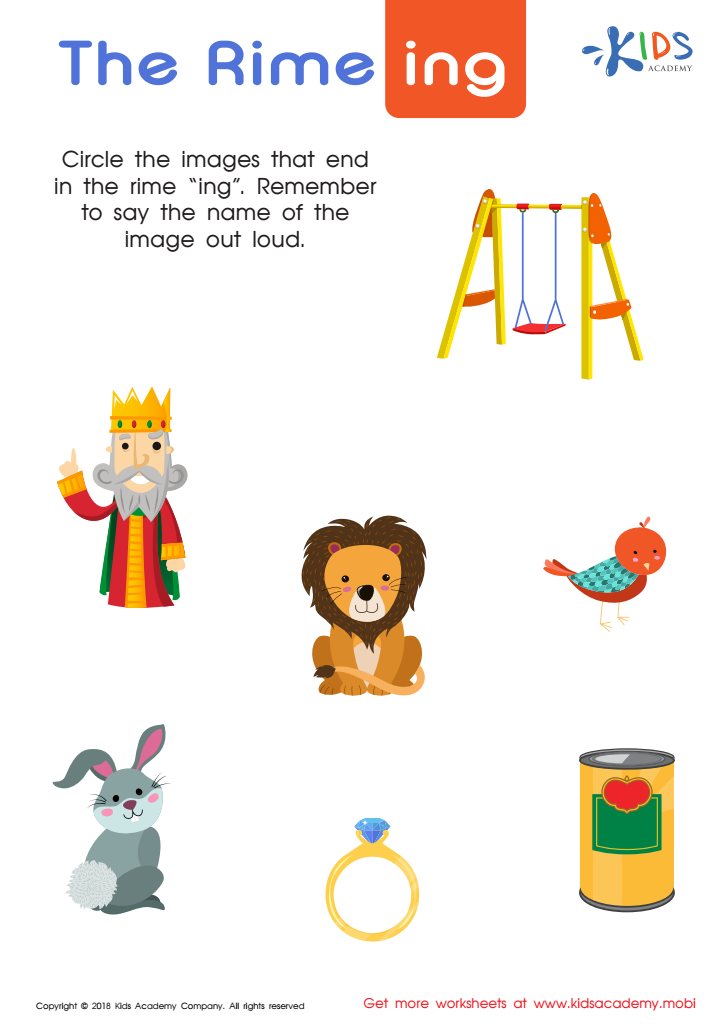
The Rime "ing" Worksheet
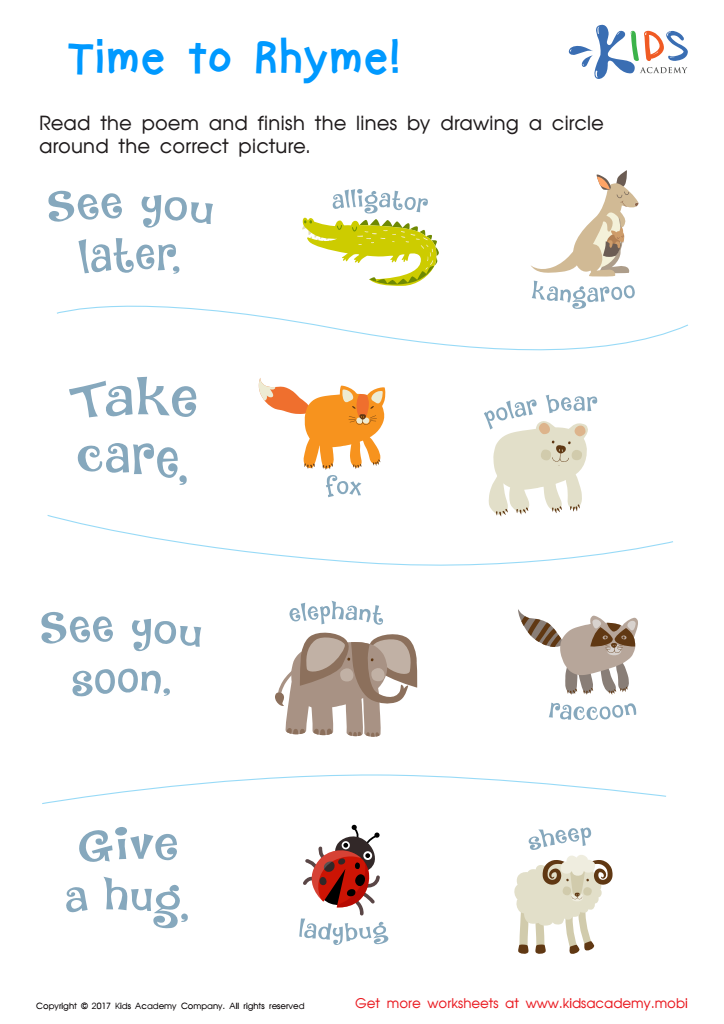
Time to Rhyme Rhyming Worksheet
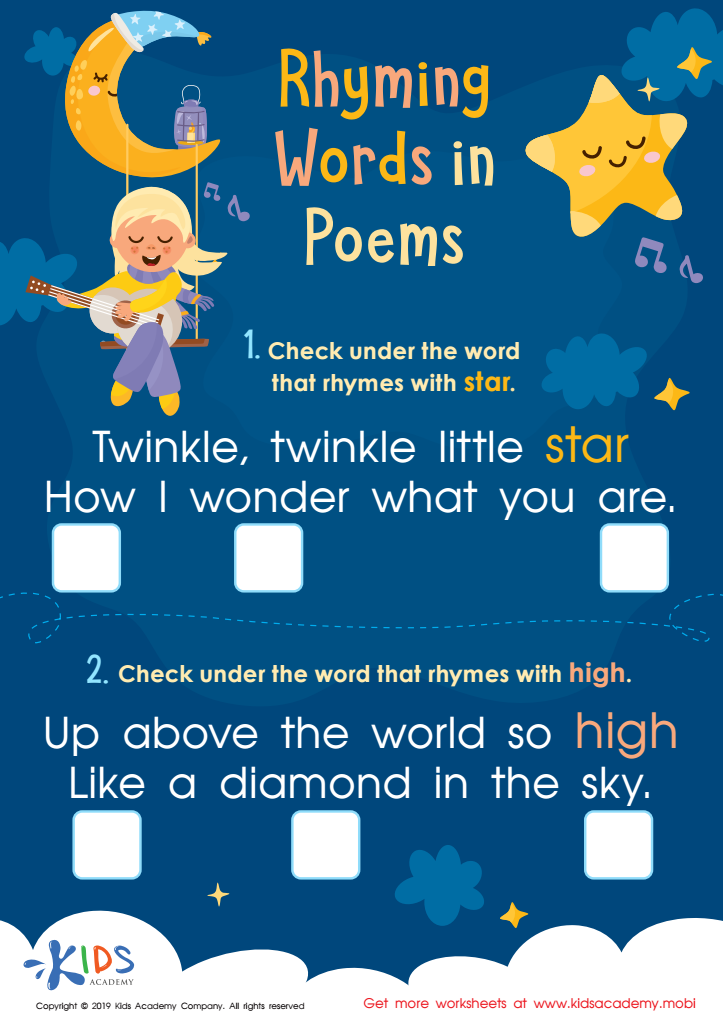
Rhyming Words in Poems Worksheet
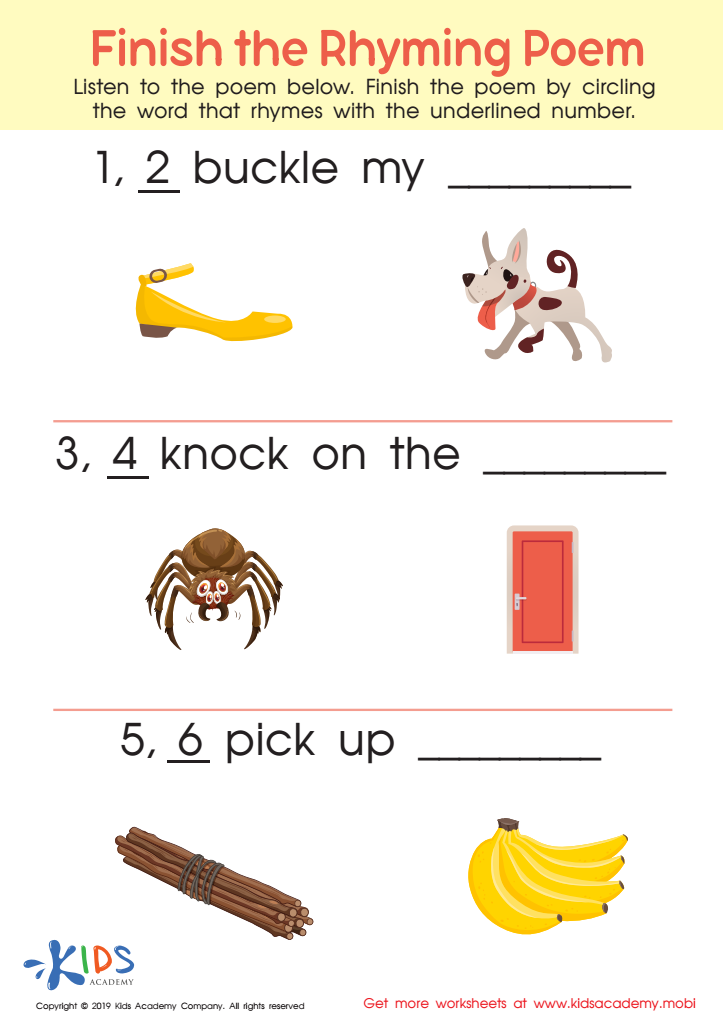
Finish Rhyming Poem Worksheet






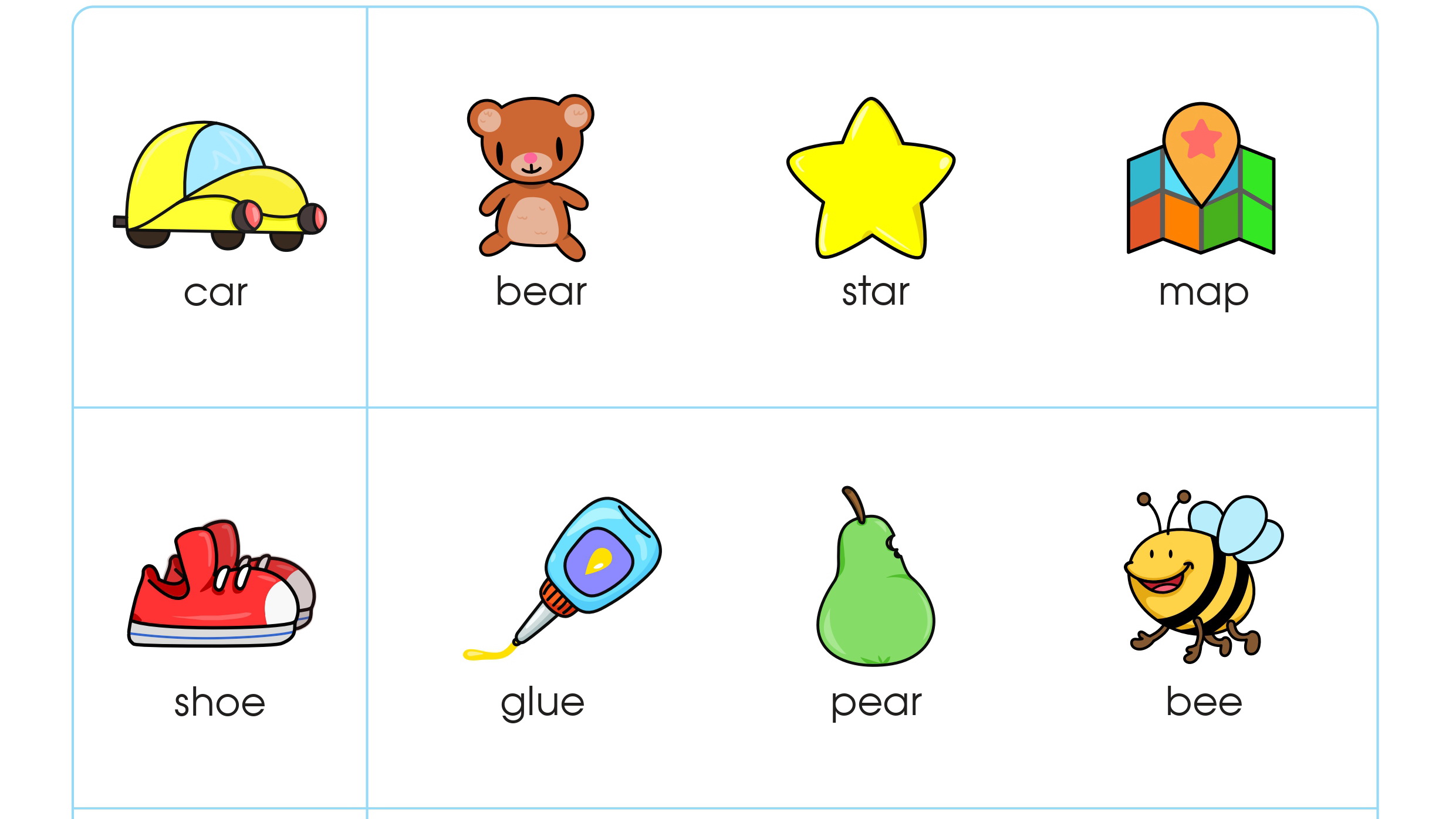

Reading comprehension, particularly through rhyming words, is crucial for children aged 3-9 as it lays the foundation for effective literacy skills. At this early age, children are developing essential cognitive abilities, and integrating rhyming activities into reading can significantly enhance their understanding of language.
Rhyming words improve phonemic awareness, which is the ability to hear and manipulate sounds in words. This skill is essential for decoding and spelling, making it easier for children to grasp more complex language structures later on. Engaging with rhymes also fosters a love for reading, as children find rhythm and predictability enjoyable, encouraging them to explore books independently.
Furthermore, rhyme-rich stories stimulate memory and recall, allowing children to connect words and ideas more effectively. By engaging in discussions about rhymes and their meanings, parents and teachers can enhance vocabulary acquisition and comprehension skills.
Ultimately, promoting rhyming words not only boosts literacy but also supports critical thinking and creativity. The joyful interplay of sounds fosters a positive reading environment, making learning an active and engaging experience. For holistic development and lifelong literacy, caregivers should prioritize rhyming activities in children’s early reading experiences.








