Rhyming skills development Rhyming Words Worksheets for Ages 3-9
3 filtered results
-
From - To
Discover engaging Rhyming Words Worksheets designed for children ages 3-9! Our specialized exercises focus on rhyming skills development, enhancing phonemic awareness and early reading abilities. Kids Academy offers fun, interactive activities that make learning enjoyable, from matching rhyming words to completing rhyming pairs. These worksheets help build a strong foundation in literacy, allowing young learners to recognize sound patterns and improve vocabulary. Perfect for preschool and elementary students, our resources support an essential skill for reading success. Start your child's rhyming journey today with Kids Academy and watch their love for reading grow!
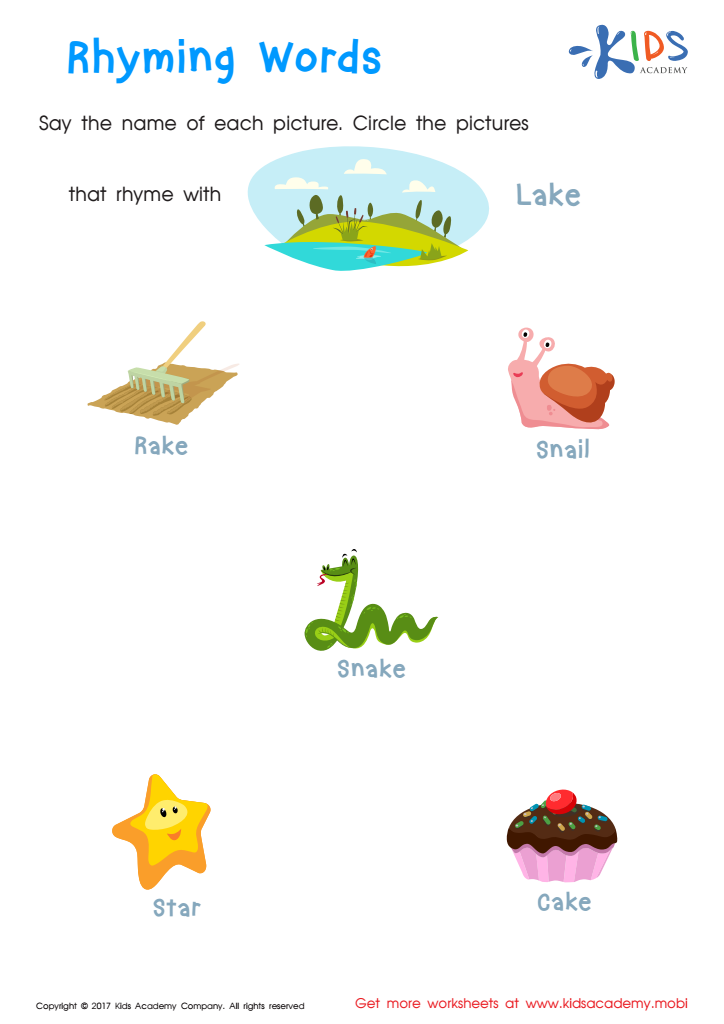
Rhyming Words Rhyming Worksheet
 Assign to My Students
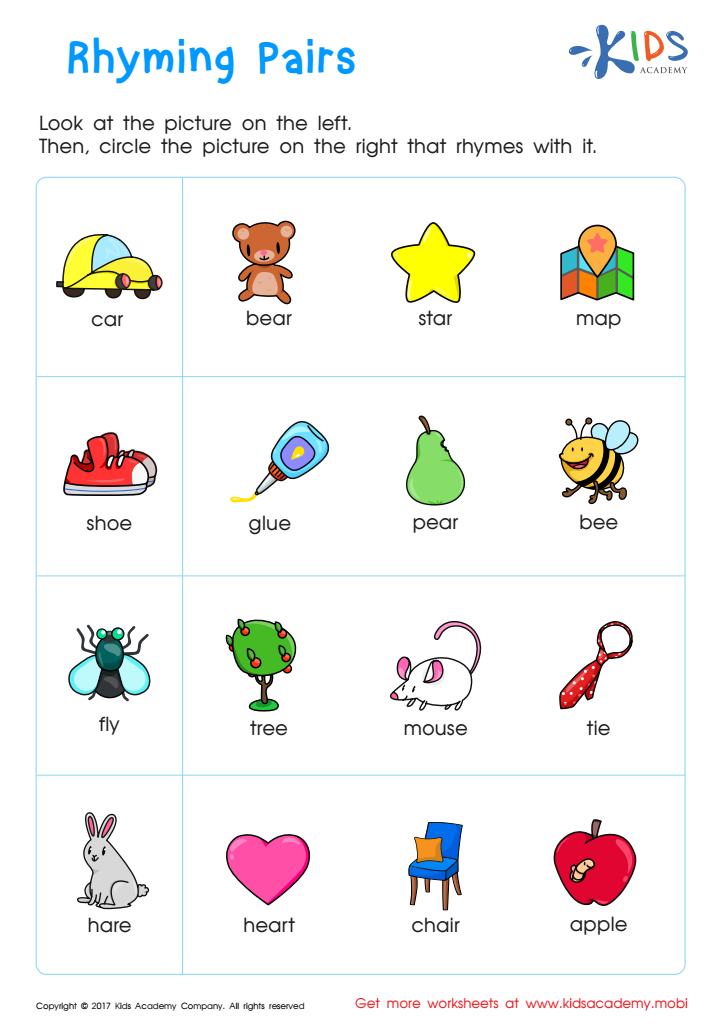
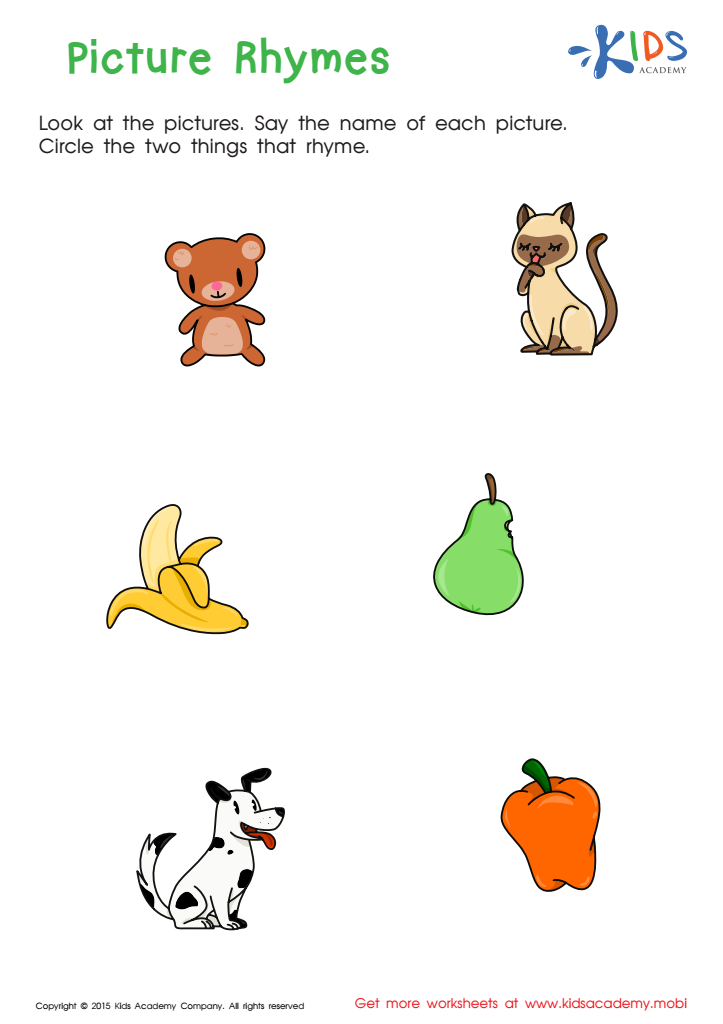
First Words: Picture Rhymes Worksheet








Rhyming skills are a foundational aspect of early literacy development, crucial for young children between ages 3 and 9. Parents and teachers should prioritize rhyming because it enhances phonological awareness, which is the ability to recognize and work with sounds in spoken language. By recognizing patterns in words, children improve their ability to predict and decode new words, a skill essential for reading fluency.
When children engage with rhyming words, they learn to identify the similarities in sound, which builds their auditory discrimination – listening to and distinguishing between different sounds. This further aids in spelling, as kids understand that words like "cat," "bat," and "hat" share a common ending and can generalize this knowledge to other word families.
Rhyming is also an engaging and fun way to develop vocabulary. Rhyming games and songs naturally captivate young learners' attention and make the practice session enjoyable, leading to better retention. Additionally, rhyming activities encourage creative thinking and imagination, as children experiment with wordplay and practice making their own rhymes.
Ultimately, nurturing rhyming skills lays a strong foundation for literacy and cognitive development, helping children become confident readers and effective communicators. Investing time in rhyming activities is an investment in a child’s overall academic success and lifelong love for learning.








