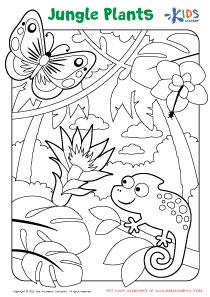
Animal identification Animals Worksheets for Ages 3-9
3 filtered results
Difficulty Level
Grade
Age
-
From - To
Subject
Activity
Standards
Explore our exciting Animal Identification Worksheets designed for children aged 3-9, perfect for nurturing a love of wildlife! These engaging printables enhance observation skills while introducing young learners to various animals, their habitats, and characteristics. With colorful illustrations and age-appropriate activities, our worksheets make learning fun and interactive, helping kids identify and classify different species. Ideal for classroom use or at-home learning, these resources support early science education and promote curiosity about the natural world. Let your child embark on a fascinating journey into the animal kingdom, fostering knowledge and appreciation of nature through captivating worksheets!
Favorites
With answer key
Interactive
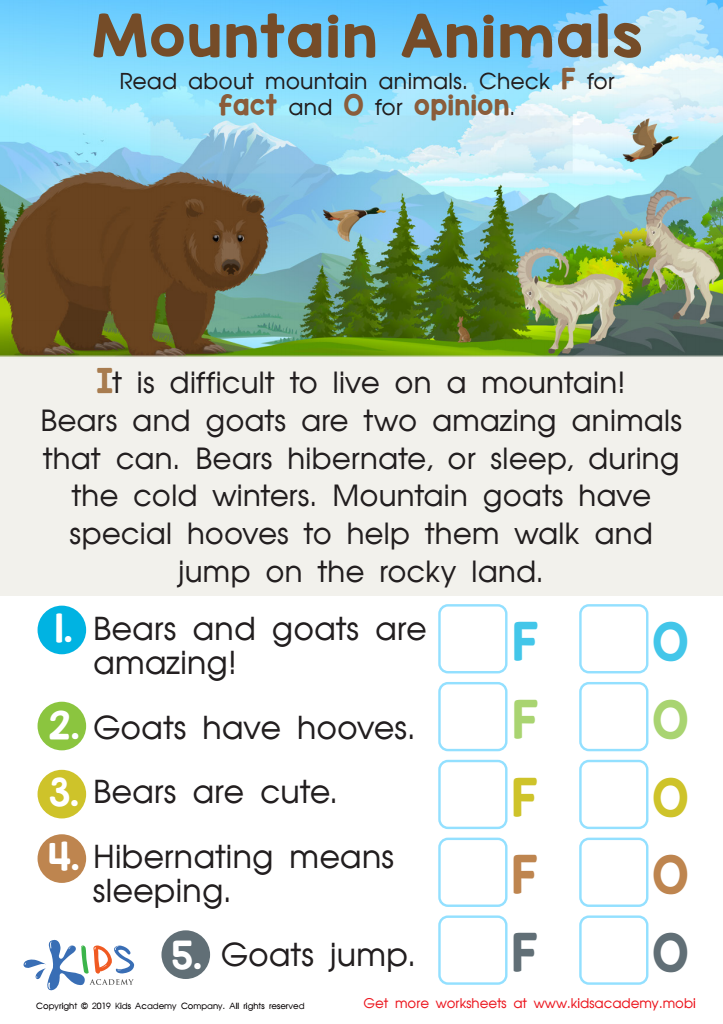
Mountain Animals Worksheet
Is mountain wildlife amazing? Fact or fiction? Help your child sharpen critical-thinking skills with this engaging worksheet. Featuring a fun nonfiction passage about animals like bears and goats, your child will read through the text and identify each statement as fact or fiction. Perfect for boosting reading comprehension and analytical abilities!
 Assign to My Students
Mountain Animals Worksheet
Worksheet
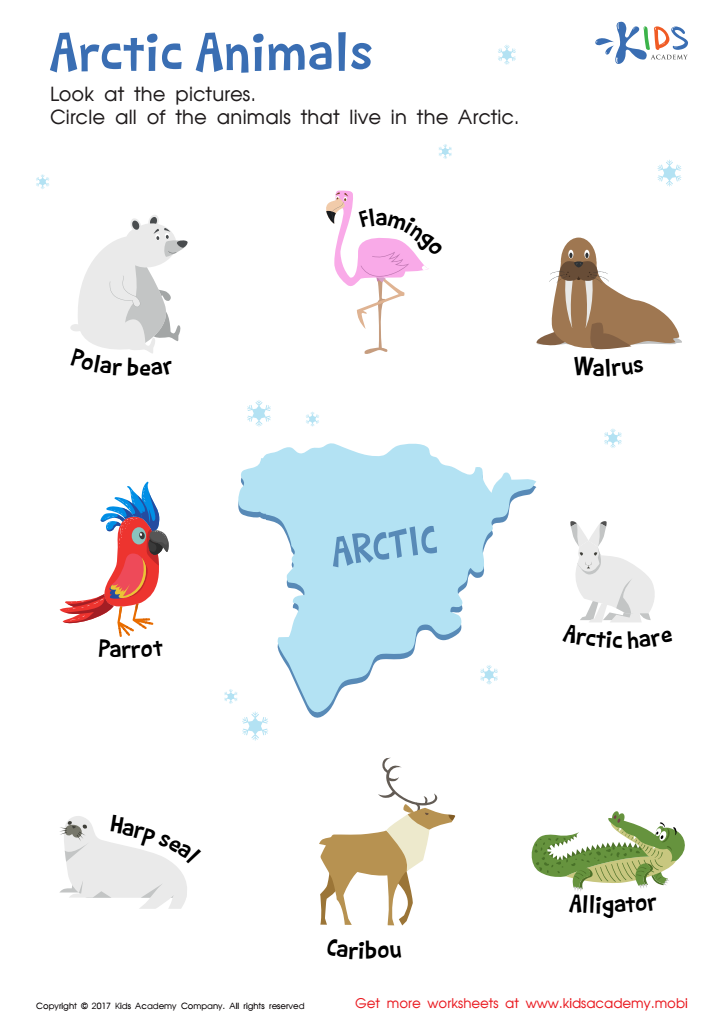
Arctic Animals Worksheet
Kids love animals and this worksheet is a great way to teach them where they live. It reinforces classification skills and introduces new animals, like the Arctic hare. Use it to discuss the Arctic climate and how these animals live, then ask your child where other animals live to keep the conversation going.
Arctic Animals Worksheet
Worksheet
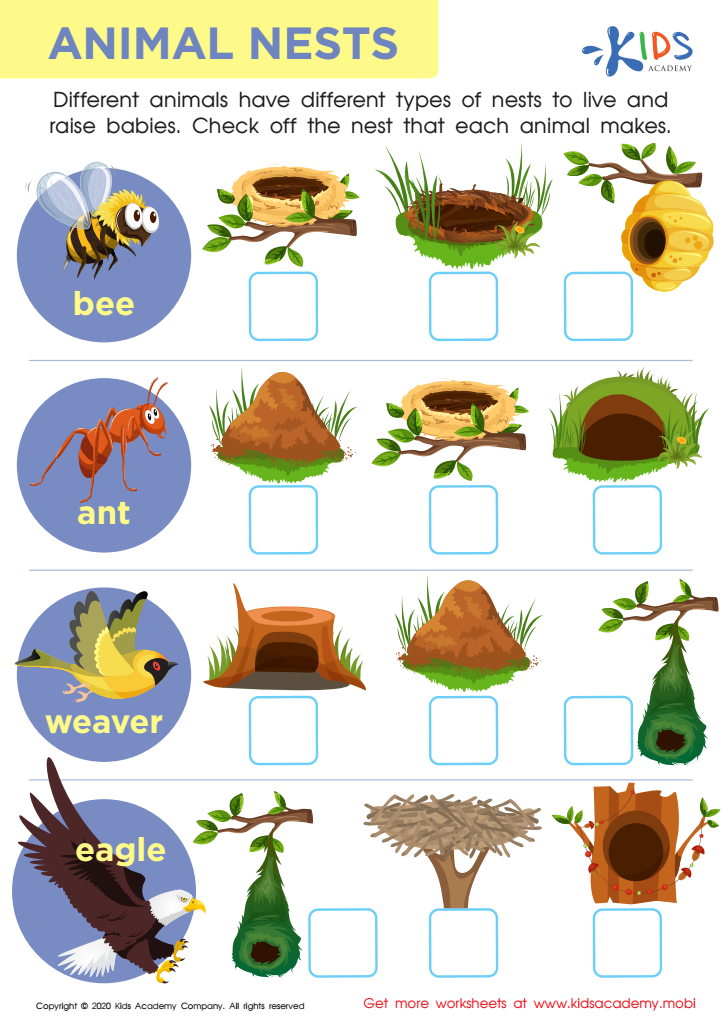
Animal Nests Worksheet
Animals need homes to sleep and stay safe. Look at the animal on the left and examine the nests and hives to the right. Check off the correct one for each animal to complete the worksheet! From birds to bees, it's a great way to show different types of homes animals make!
Animal Nests Worksheet
Worksheet
Join Kids Academy for Free
Who is primarily going to use this learning content?



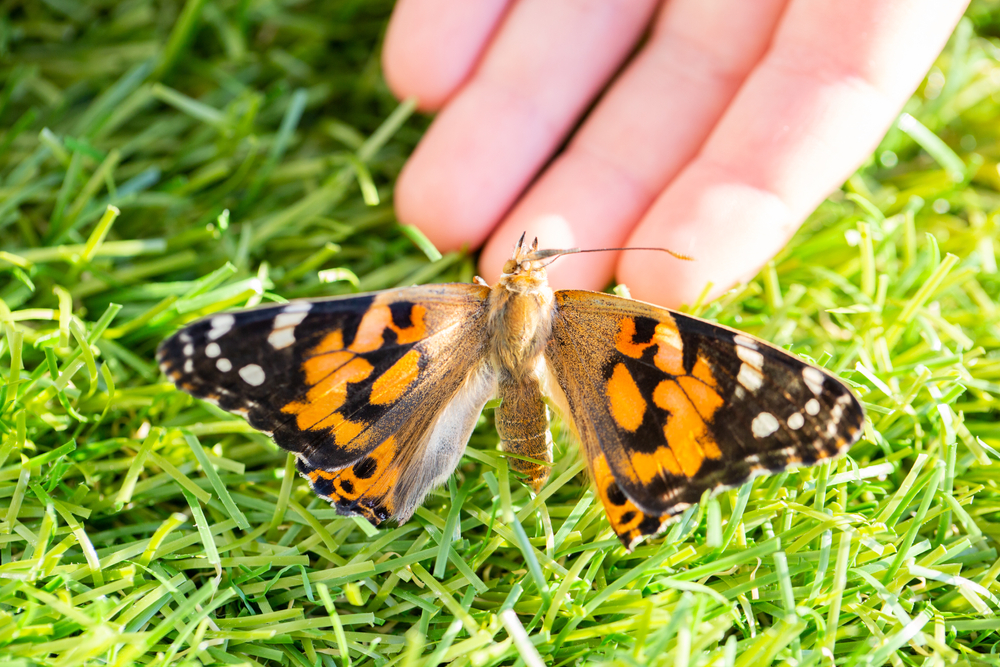




Animal identification is a crucial aspect of early childhood education, particularly for children aged 3 to 9. It helps young learners develop a fundamental understanding of the natural world and the diverse species that inhabit it. When parents and teachers prioritize animal identification, they empower children to build curiosity and a sense of connection with animals, fostering a respect for biodiversity.
Learning to identify animals enhances vocabulary, memory, and observational skills. It gives children the opportunity to interact with their environment, and promotes scientific thinking as they categorize and understand different habitats, diets, and behaviors. Furthermore, animal identification can be used to teach important ecological concepts, such as ecosystems, food chains, and conservation efforts. Such knowledge instills a sense of responsibility toward the planet.
Incorporating animal identification into educational activities can also make learning engaging and fun. It can involve storytelling, outdoor exploration, and hands-on activities with animal images or toys, making complex topics accessible. By showing interest in animal identification, parents and teachers prepare children to become informed, empathetic individuals who appreciate the role of wildlife in our lives, thus fostering a generation that values both education and environmental stewardship.