Animal recognition Science Worksheets for Ages 3-9
6 filtered results
-
From - To
Discover our engaging "Animal Recognition Science Worksheets" designed specifically for children ages 3-9! These fun, interactive worksheets help young learners explore the fascinating world of animals while fostering essential science skills. Kids will identify various animal traits, their habitats, and sounds, enhancing their observation and critical thinking abilities. Our age-appropriate activities encourage creativity and promote a love for science through colorful illustrations and engaging questions. Ideal for home or classroom use, these worksheets not only make learning enjoyable but also help develop vocabulary and comprehension skills. Let your child embark on an exciting adventure into the animal kingdom today!
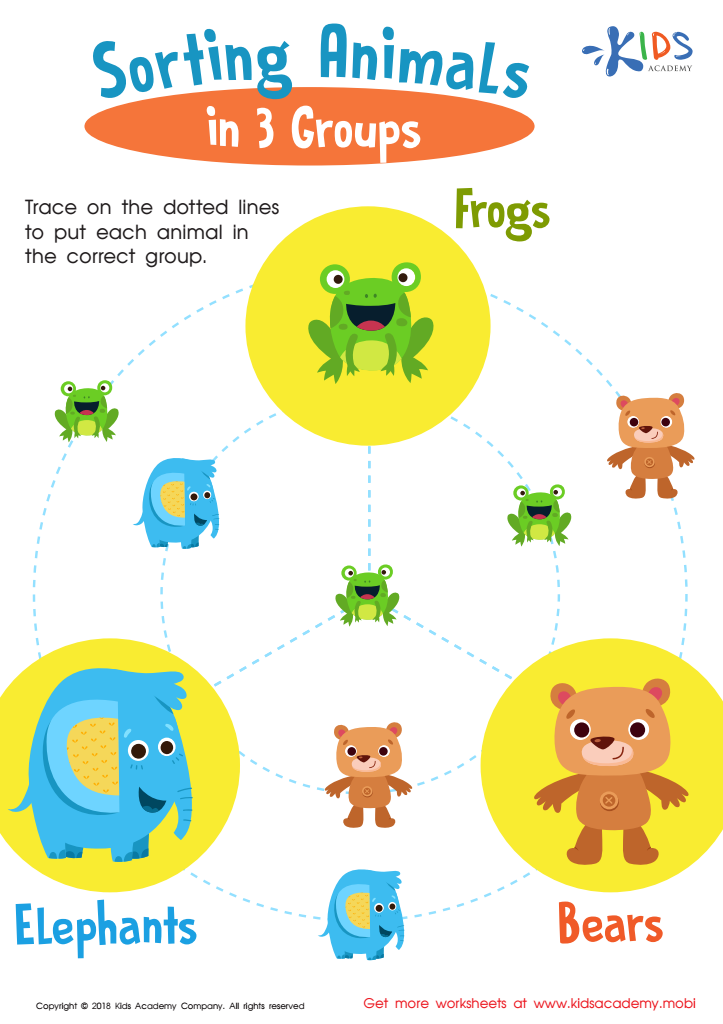
Sorting Animals in 3 Groups Worksheet
 Assign to My Students
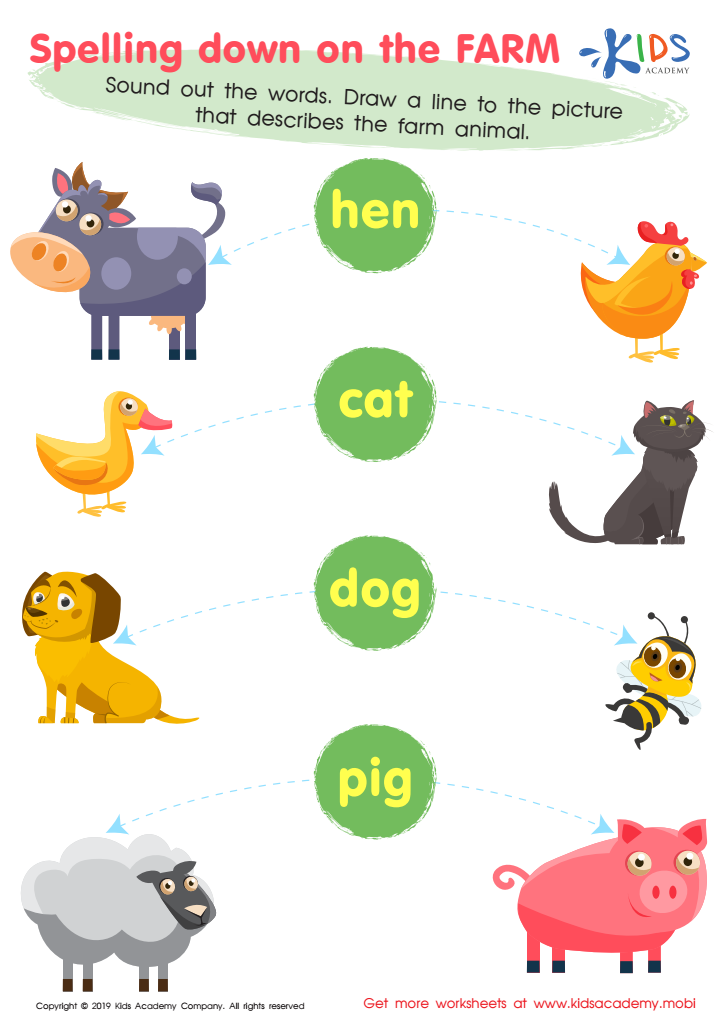
Spelling Down on the Farm Worksheet
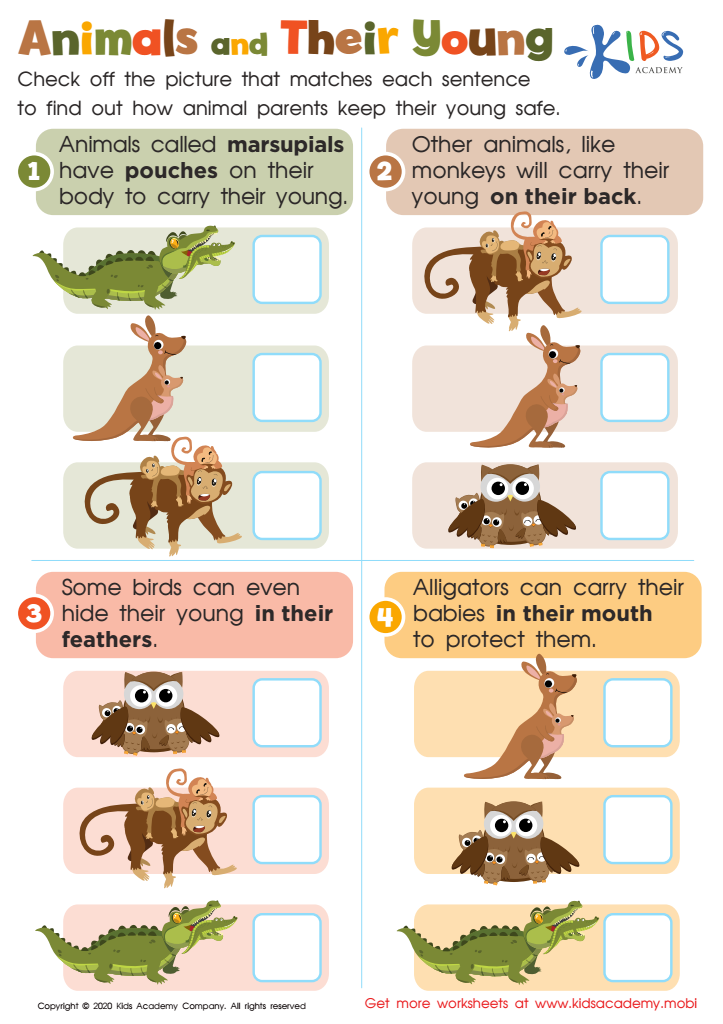
Animals and Their Young Worksheet
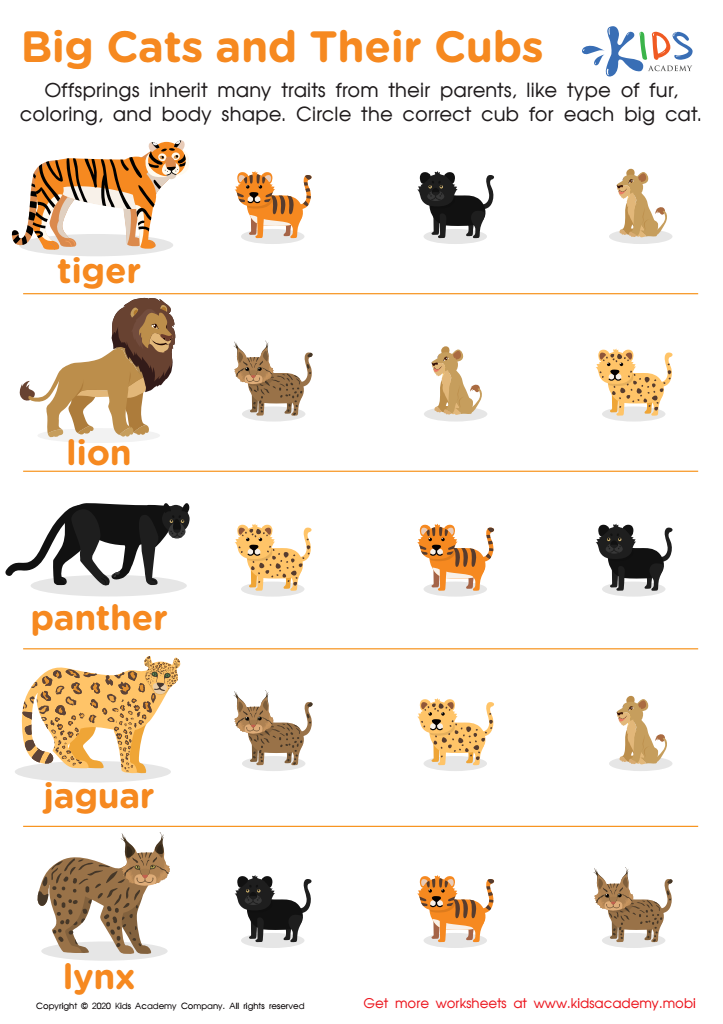
Big Cats and Their Cubs Worksheet
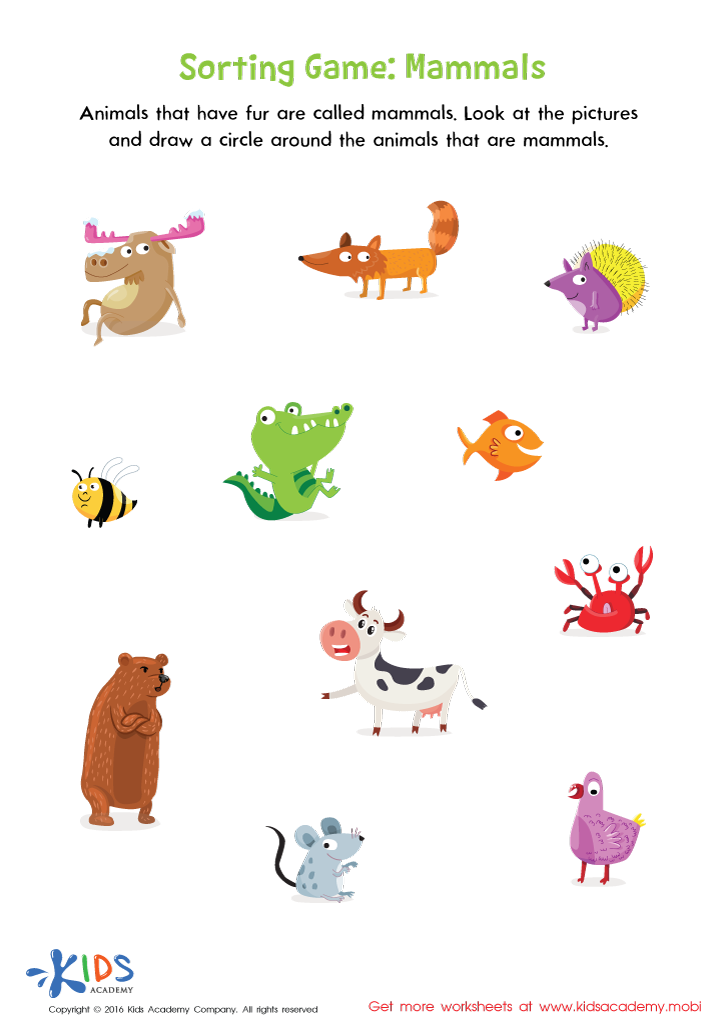
Mammals Sorting Worksheet
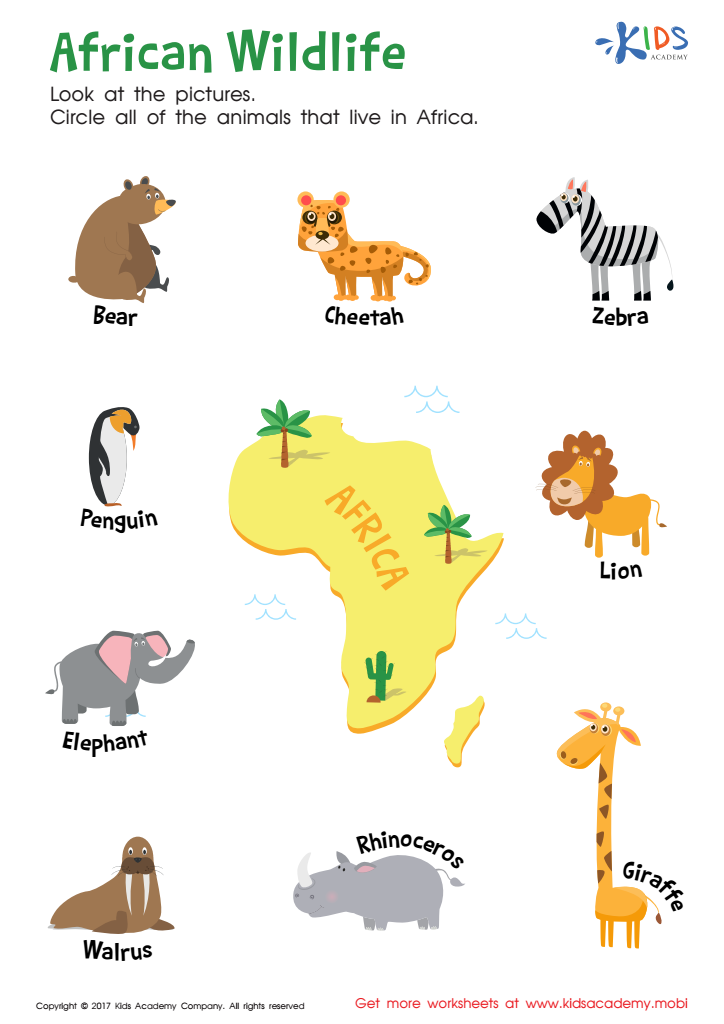








Animal recognition science is essential for children aged 3-9 as it fosters curiosity and appreciation for the natural world. Engaging young learners in this field promotes critical observation skills, enhancing their cognitive development. By recognizing and understanding different animals, children develop important skills such as categorization, comparison, and reasoning.
Parents and teachers should care about this discipline as it also provides an excellent opportunity for interdisciplinary learning. It combines elements of biology, ecology, and environmental science, making lessons richer and more engaging. Furthermore, exposure to animal recognition can nurture empathy and responsibility towards living beings, instilling a sense of stewardship for the environment from a young age.
With technology increasingly prevalent in children’s lives, incorporating animal recognition through interactive apps and engaging content can create a balance between screen time and real-world exploration. This not only captures children's imaginations but also encourages outdoor engagement and physical activity.
Moreover, animal recognition can be a powerful tool for promoting language development. Learning about different animals enriches vocabulary and storytelling skills, vital components of early literacy. By integrating animal recognition science into early education, we lay the groundwork for informed, compassionate, and environmentally aware future generations.







