
Understanding moon phases Space Worksheets for Ages 3-9
3 filtered results
Difficulty Level
Grade
Age
-
From - To
Subject
Activity
Standards
Introduce your young learners to the fascinating world of astronomy with our "Understanding Moon Phases Space Worksheets" designed for ages 3-9! These engaging worksheets offer vibrant visuals and age-appropriate activities that help children grasp the lunar cycle while exploring the wonders of space. Each worksheet is carefully crafted to strengthen observation skills, critical thinking, and an appreciation for the night sky. Perfect for classrooms or at-home learning, these resources make science fun and accessible. Watch your child’s curiosity expand as they learn about the New Moon, Full Moon, and everything in between. Ignite their imagination and love for learning today!
Favorites
With answer key
Interactive
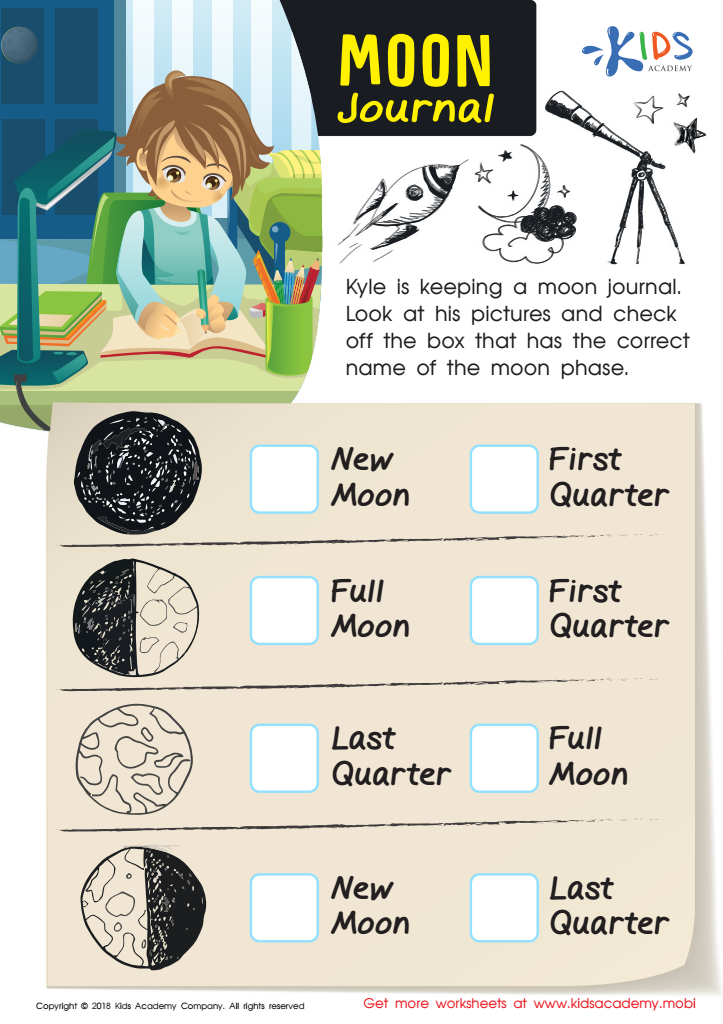
Moon Journal Worksheet
Observe the moon and its 8 phases with your child by downloading this free PDF worksheet from Kids Academy! Review the moon phases with them then help them label Kyle's moon journal. Select the right moon phase for each picture to complete the page!
 Assign to My Students
Moon Journal Worksheet
Worksheet
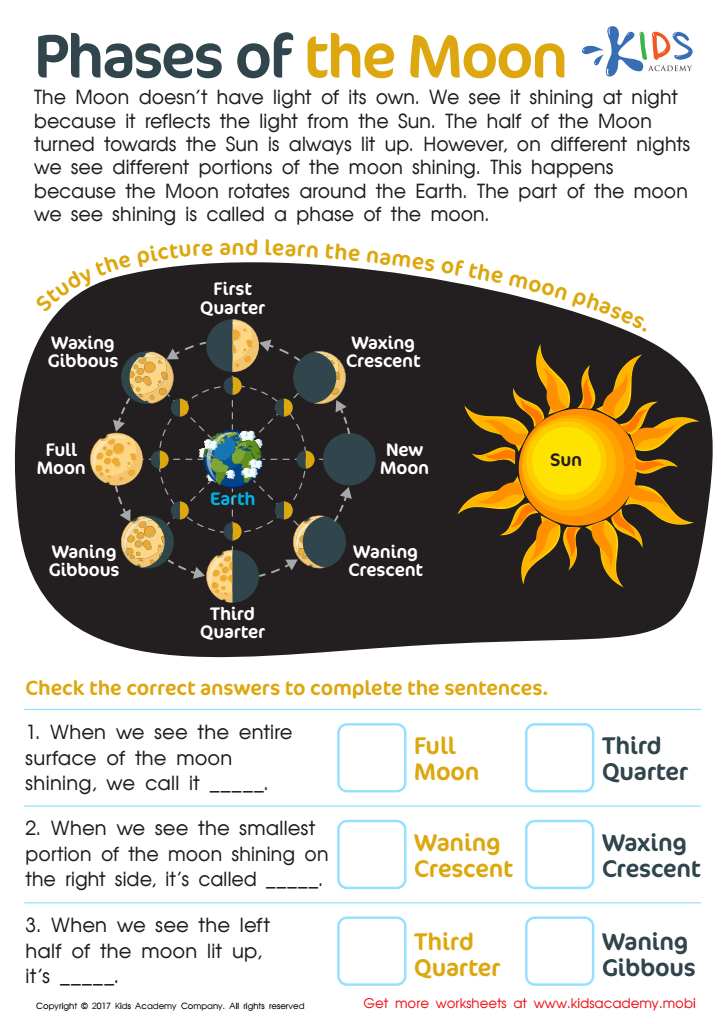
Phases of The Moon Worksheet
It'll show kids the fascinating phases and journey the moon takes around Earth. They'll be amazed to learn it's not always shining!
Phases of The Moon Worksheet
Worksheet
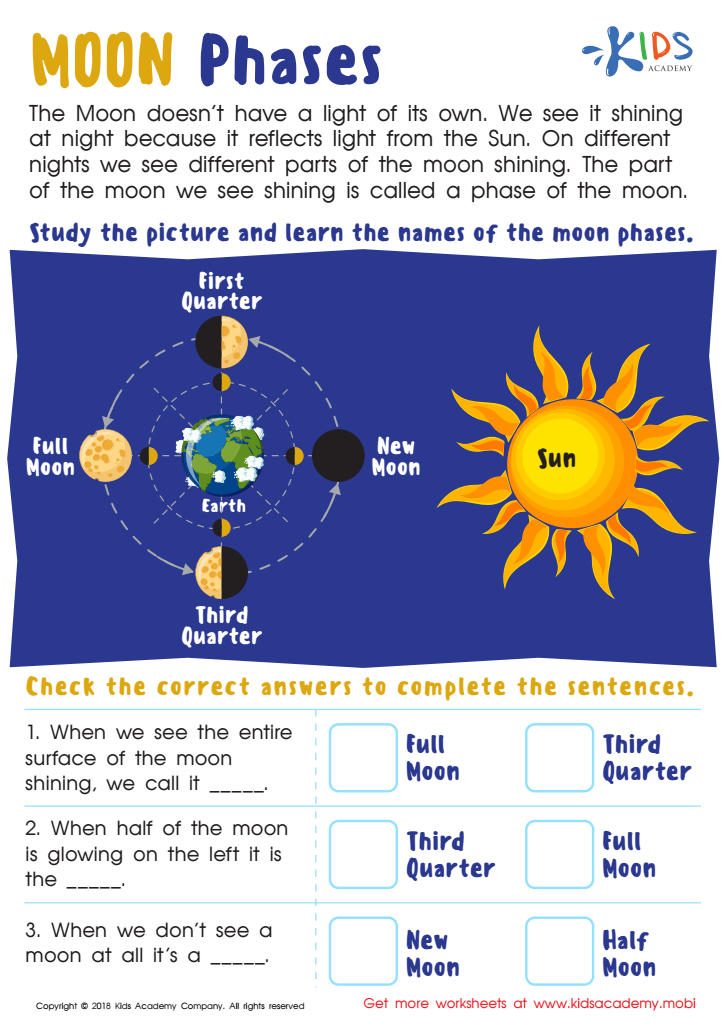
Moon Phases Worksheet
Gaze up at the night sky and the moon's appearance may change from night to night. Encourage your child to learn more about the sun, the moon, and space with this science worksheet. Have them read the text then study the picture. Finally, read the sentences and check the answers to identify the moon's phases.
Moon Phases Worksheet
Worksheet
Join Kids Academy for Free
Who is primarily going to use this learning content?






Parents and teachers should care about understanding moon phases for children aged 3-9 because it lays the groundwork for scientific literacy and curiosity. Introducing young learners to moon phases fosters observational skills and critical thinking, as they learn to recognize patterns, changes, and sequences in nature. The moon's phases can serve as a relatable and exciting way for children to grasp abstract scientific concepts, making complex ideas more concrete.
Engaging with moon phases also enhances creativity, as it inspires storytelling and artistic projects, allowing children to express what they've learned. This exploration of the natural world encourages a sense of wonder and encourages questions, thus promoting a lifelong love for learning. In addition, addressing natural phenomena like the moon helps build awareness of environmental rhythms and the universe's complexities.
Moreover, learning about moon phases provides opportunities for family bonding. Activities like moon-gazing or creating moon phase crafts allow parents and teachers to connect with children on a deeper level as they explore science together. Ultimately, incorporating moon phase education in early childhood can ignite an interest in STEM that might influence future educational paths and cultivate well-rounded, inquisitive individuals.







