Vocabulary development Community Worksheets for Ages 3-9
7 filtered results
-
From - To
Our Vocabulary Development Community Worksheets for Ages 3-9 are thoughtfully designed to enrich young learners' language skills while exploring their community. These engaging, printable worksheets introduce children to essential vocabulary related to their surroundings, helping them understand the roles of different community helpers and places. Through fun activities like matching, coloring, and simple word games, kids not only expand their vocabulary but also enhance their social studies knowledge. These resources support early literacy skills and provide a strong foundation for future learning. Ideal for classroom use or homeschooling, our worksheets make vocabulary learning interactive and enjoyable.

Let's Go to the Library! Worksheet
 Assign to My Students

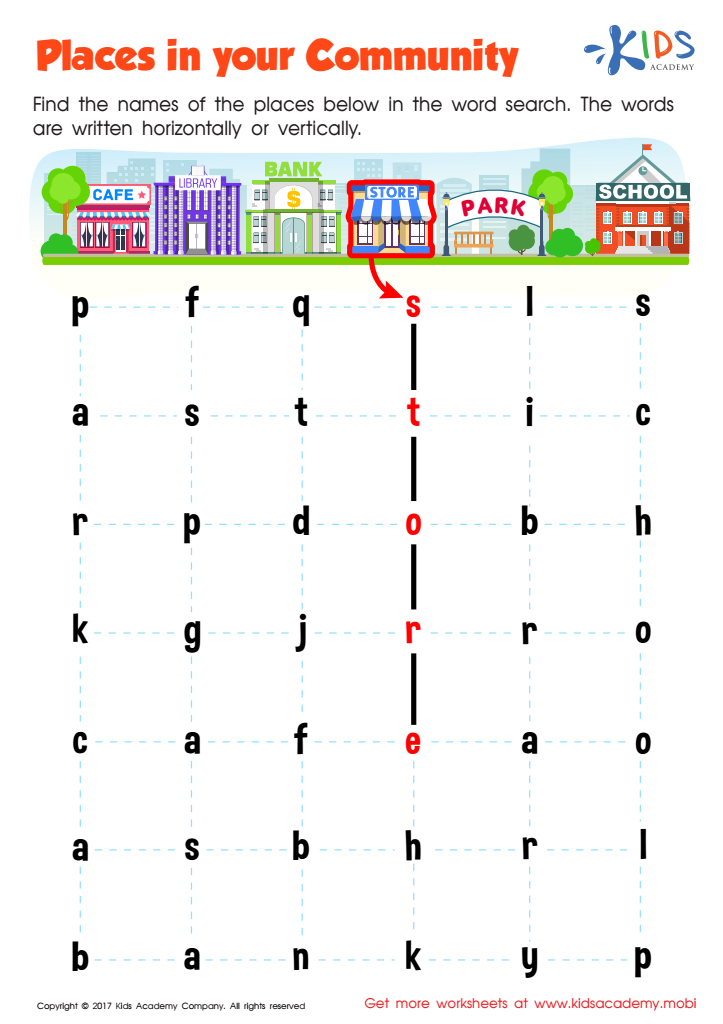
Places in Your Community Worksheet
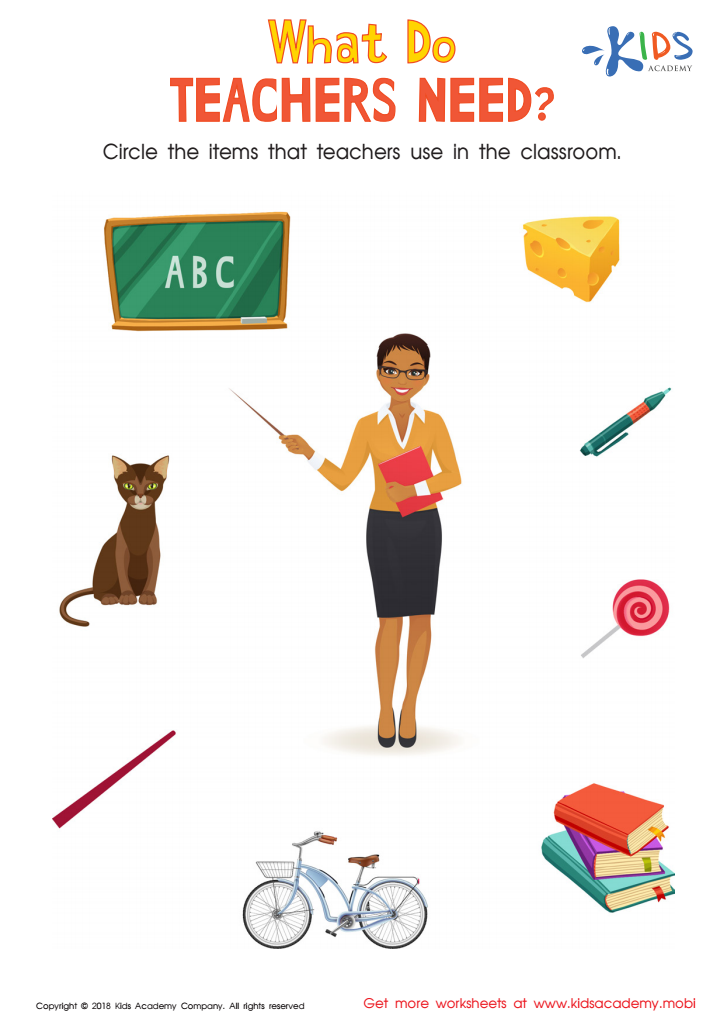
What Do Teachers Need Worksheet
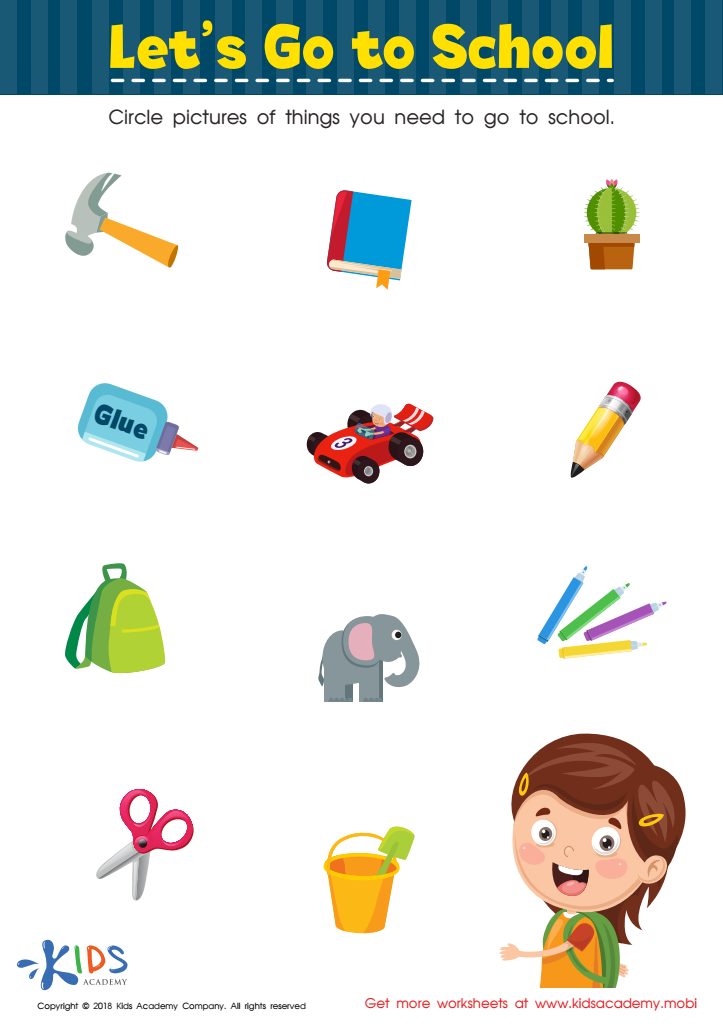
Let's Go to School! Worksheet
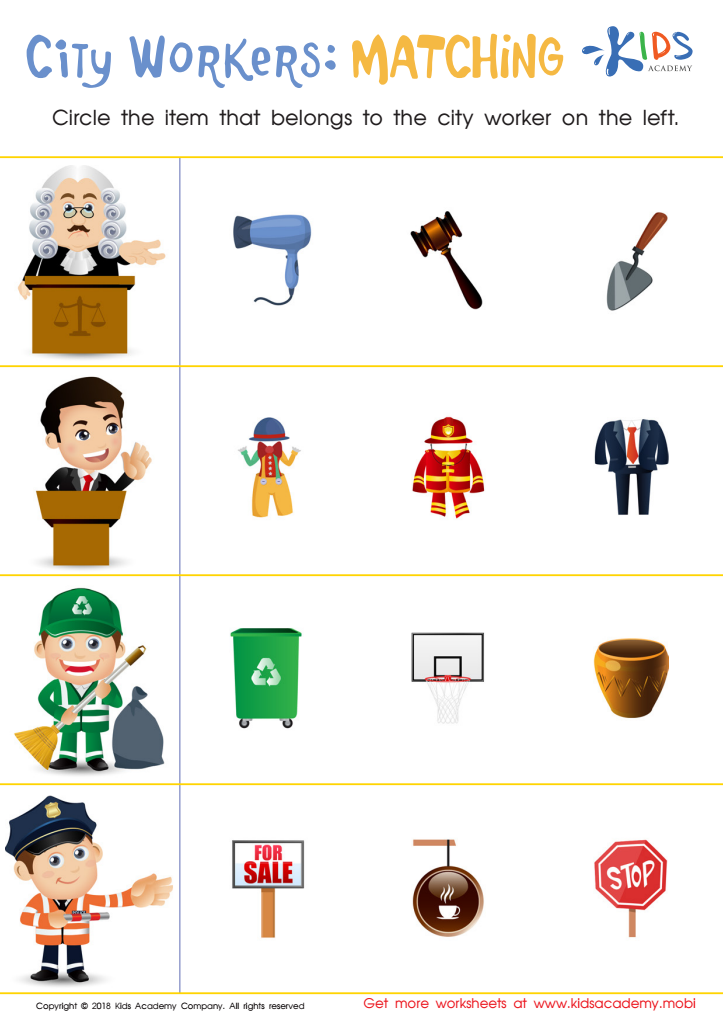
City Workers: Matching Worksheet
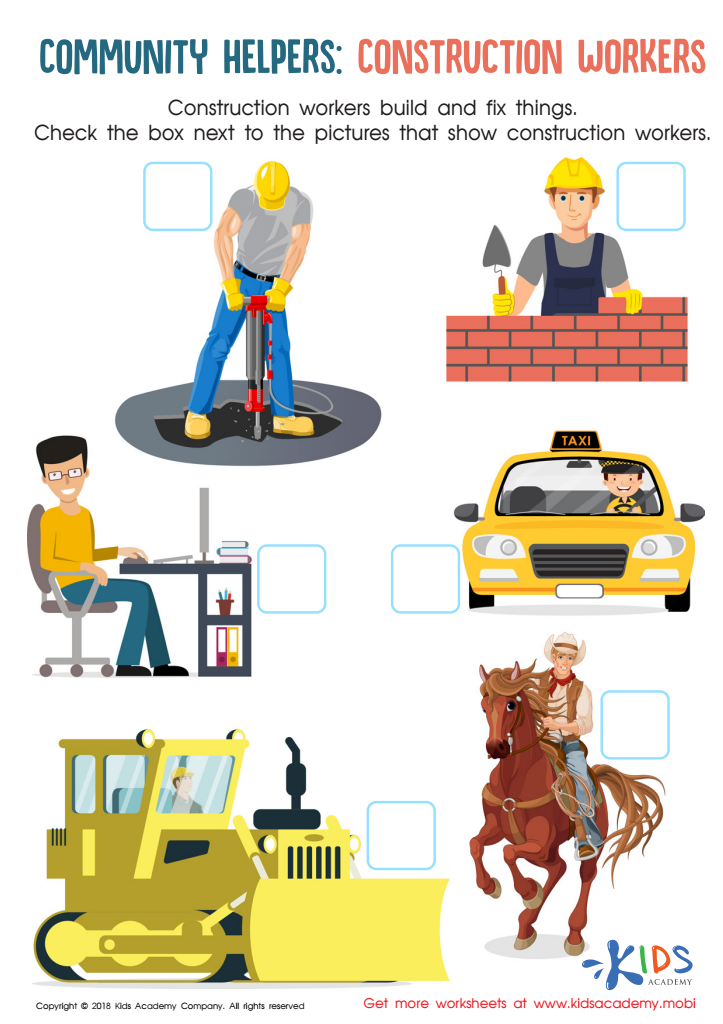
Construction Workers Community Helpers Worksheet








Vocabulary development for children between the ages of 3 and 9 is crucial for several reasons, and both parents and teachers should be deeply invested in fostering this growth. During these early years, children’s brains are extraordinarily receptive to learning new words, which in turn builds the foundation for later academic success. A rich vocabulary enables children to express themselves more clearly and understand others more effectively, which is essential for both social interactions and educational endeavors.
For teachers, focusing on vocabulary development means more dynamic and interactive classrooms. As students’ word knowledge expands, it supports reading comprehension and enhances their ability to follow instructions and participate in discussions. This sets the groundwork for understanding more complex texts and concepts in the later years, facilitating smoother transitions into higher academic levels.
Parents play a key role because everyday interactions, from reading a bedtime story to engaging in casual conversations, present invaluable opportunities to introduce new words. Research shows that children who are exposed to a rich linguistic environment from an early age tend to perform better academically. Moreover, strong vocabulary skills can boost a child’s confidence and willingness to explore new topics, enhancing overall cognitive development.
In summary, investing time in vocabulary-building activities creates a stronger, more capable, and more curious learner, paving the way for lifelong success.








