Map reading Geography Worksheets for Ages 3-9
3 filtered results
-
From - To
Ignite your child's curiosity and foster essential geography skills with our "Map Reading Geography Worksheets" designed for ages 3-9. These interactive and engaging printable worksheets offer a fun way for young learners to explore the world and master foundational map-reading skills. Perfect for both classroom settings and homeschooling, our worksheets include activities on cardinal directions, landmark identification, simple map navigation, and more. By incorporating a variety of exciting topics, these worksheets encourage critical thinking and spatial awareness, setting a strong groundwork for future geographical learning. Help your child embark on an educational adventure with Kids Academy today!
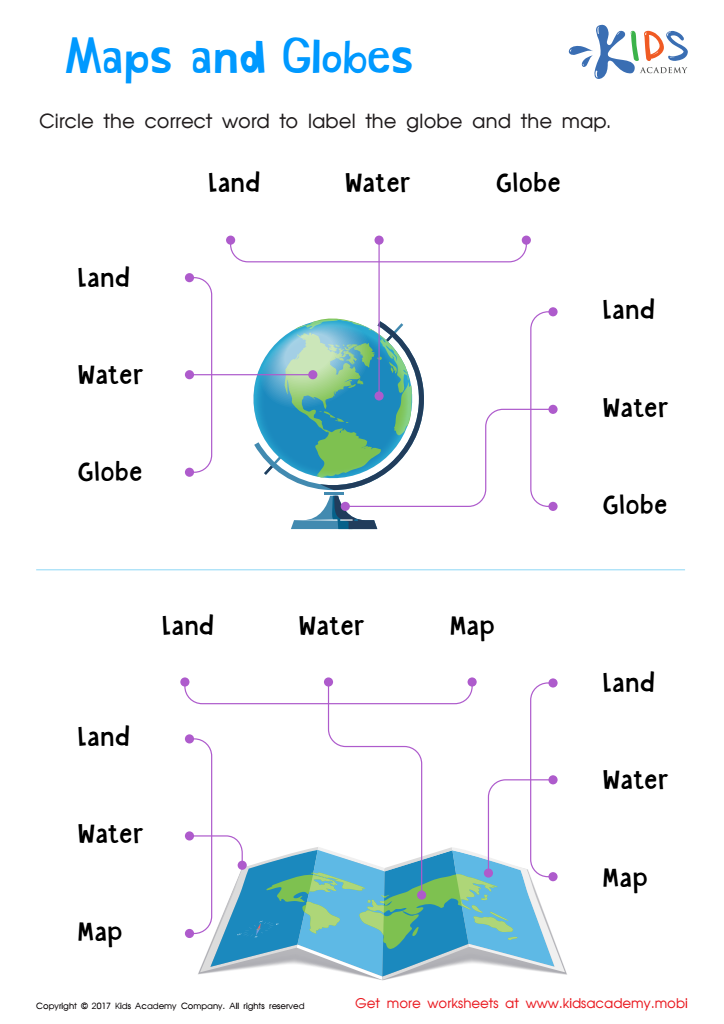
 Assign to My Students
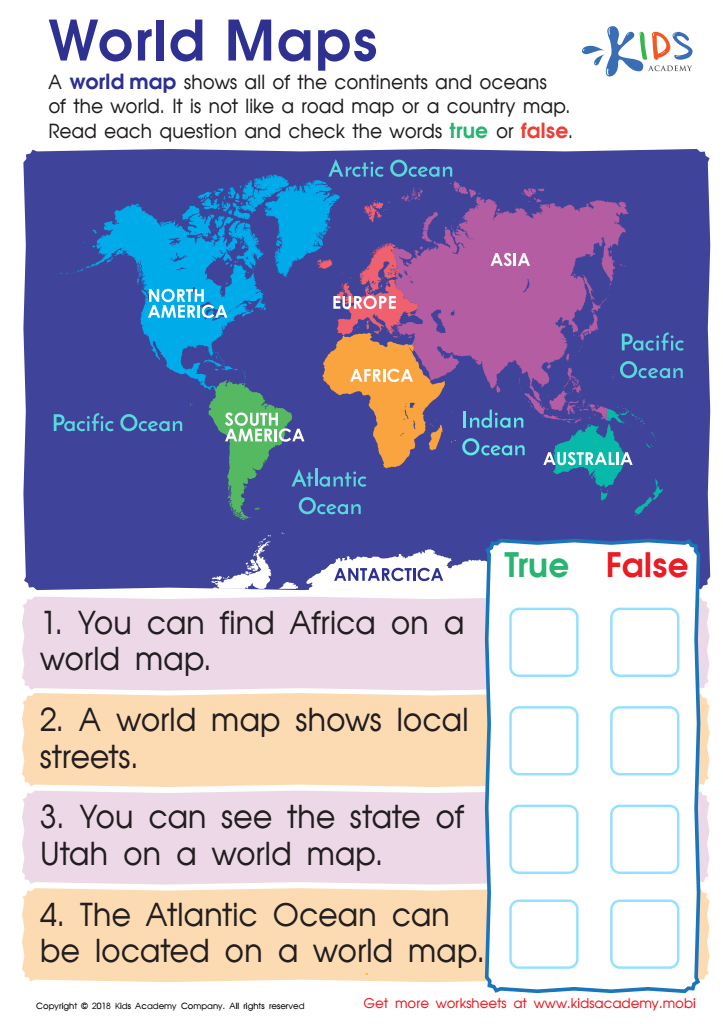
World Maps Worksheet
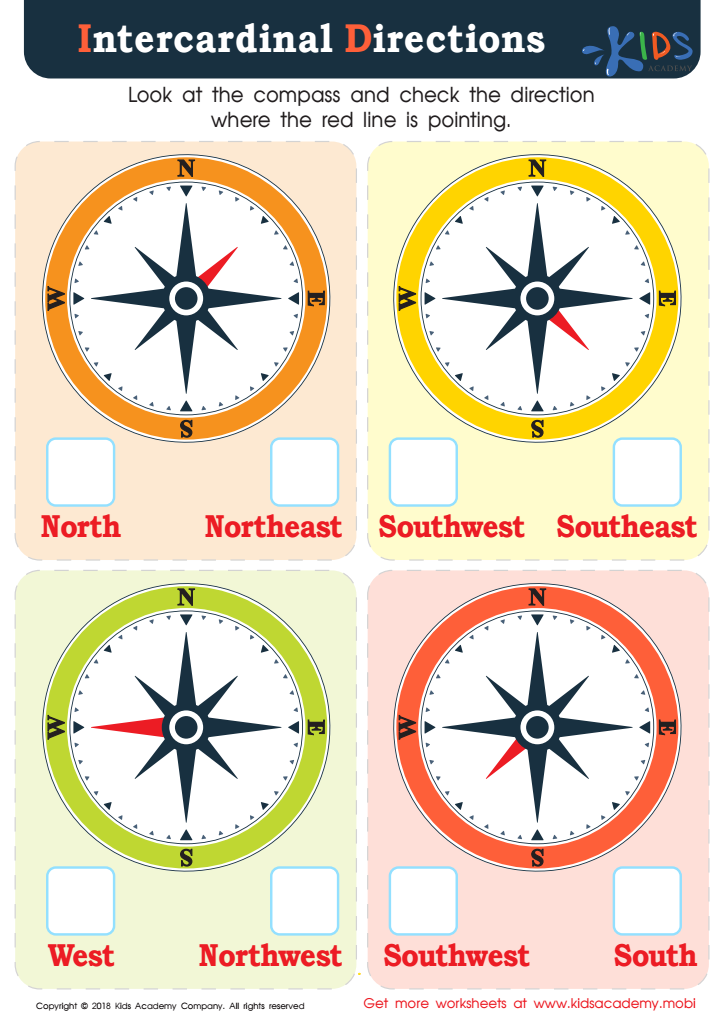
Intercardinal Directions Worksheet




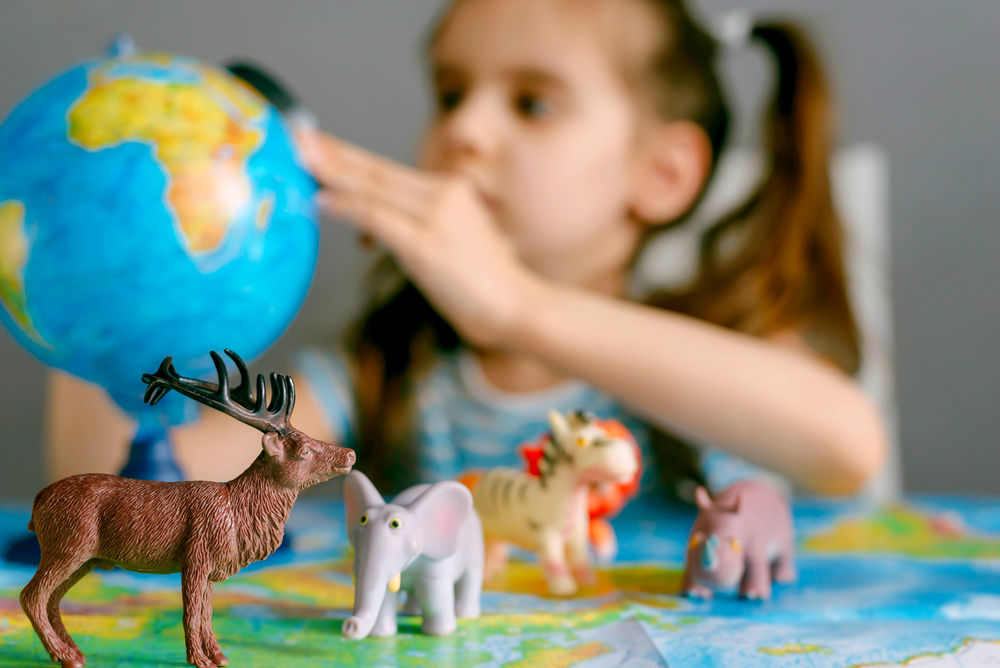


Introducing map reading and geography to children aged 3-9 holds significant importance for both parents and teachers. Understanding maps lays a foundation for spatial awareness, a crucial cognitive skill that impacts various aspects of learning and everyday functioning. When young minds begin to grasp the basics of geography, they start to make sense of their surroundings and how different places relate to each other.
Early exposure to geography enriches a child's global awareness. As they learn about diverse places, cultures, and languages, their appreciation for the world's vastness and variety grows, promoting tolerance and empathy. Additionally, geography lessons can integrate compelling stories, engaging hands-on activities, and dynamic visual aids, making learning interactive and fun.
Moreover, map reading fosters critical thinking and problem-solving skills. Children learn to interpret symbols, follow directions, and understand scales. This analytical approach is transferable to other academic areas such as mathematics and science.
Lastly, in an increasingly interconnected world, geographical literacy equips children with essential knowledge to navigate future challenges and opportunities. By fostering curiosity and an informed perspective, parents and teachers can help children become more competent and confident global citizens. Therefore, prioritizing geography and map education at an early age is an investment in a child's holistic development.








