
Understanding seasons Geography Worksheets for Ages 3-9
5 filtered results
Difficulty Level
Grade
Age
-
From - To
Subject
Activity
Standards
Explore the wonders of nature with our "Understanding Seasons Geography Worksheets" designed specifically for children ages 3 to 9. These engaging resources help young learners grasp the concept of seasons through colorfully illustrated activities and simple explanations. From identifying seasonal changes in weather and nature to exploring holiday celebrations and clothing choices throughout the year, these worksheets make learning fun and interactive. Ideal for home or classroom use, they not only enhance geography knowledge but also nurture observation skills and creativity. Encourage curiosity about the world around them, and watch as their understanding of seasons blossoms!
Favorites
With answer key
Interactive
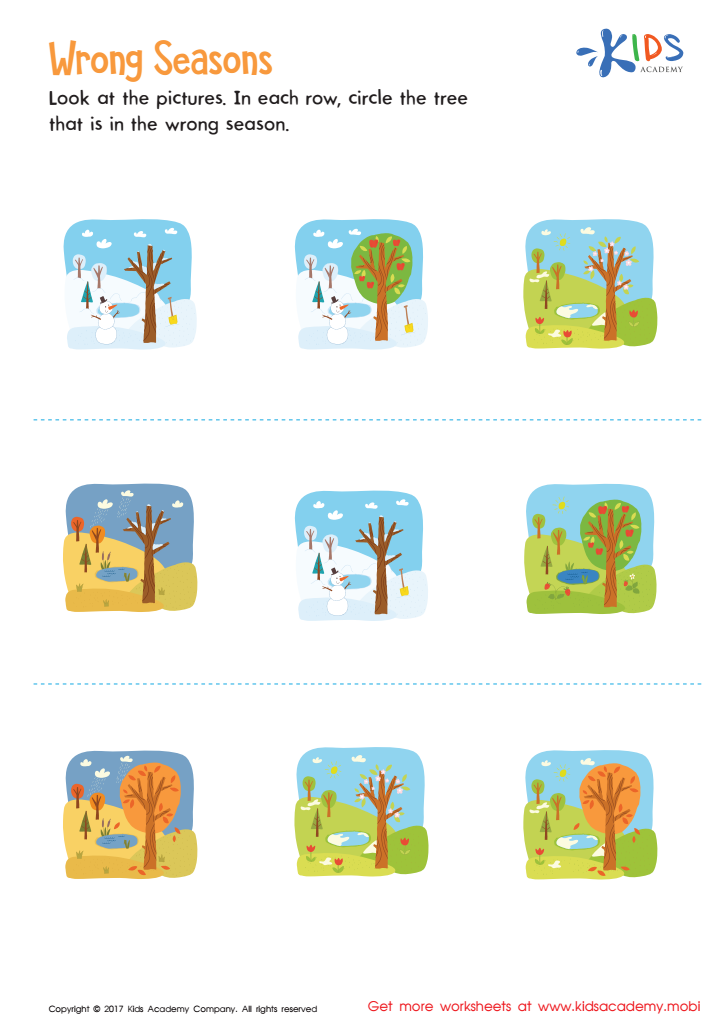
Wrong Seasons Worksheet
Uh oh! Trees are out of place in these vibrant pictures! Use this wrong seasons worksheet to help your child develop observation, analytical, and critical thinking skills. They'll learn about how the seasons change the surroundings, like trees. Print it out today to sharpen your child's eye for spotting the seasons!
Wrong Seasons Worksheet
Worksheet
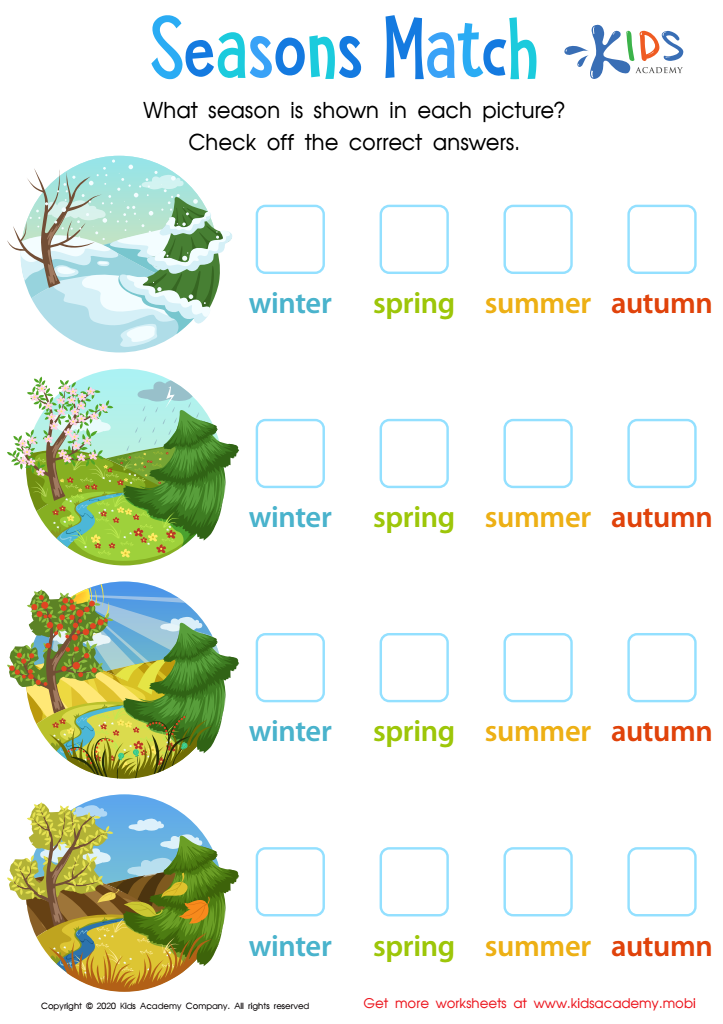
Seasons Match Worksheet
Preschoolers should begin learning about seasons and weather early. Most can tell what season it is by upcoming holidays or school activities. Test their knowledge with a printable PDF worksheet. It asks them to match each image with its corresponding season!
Seasons Match Worksheet
Worksheet
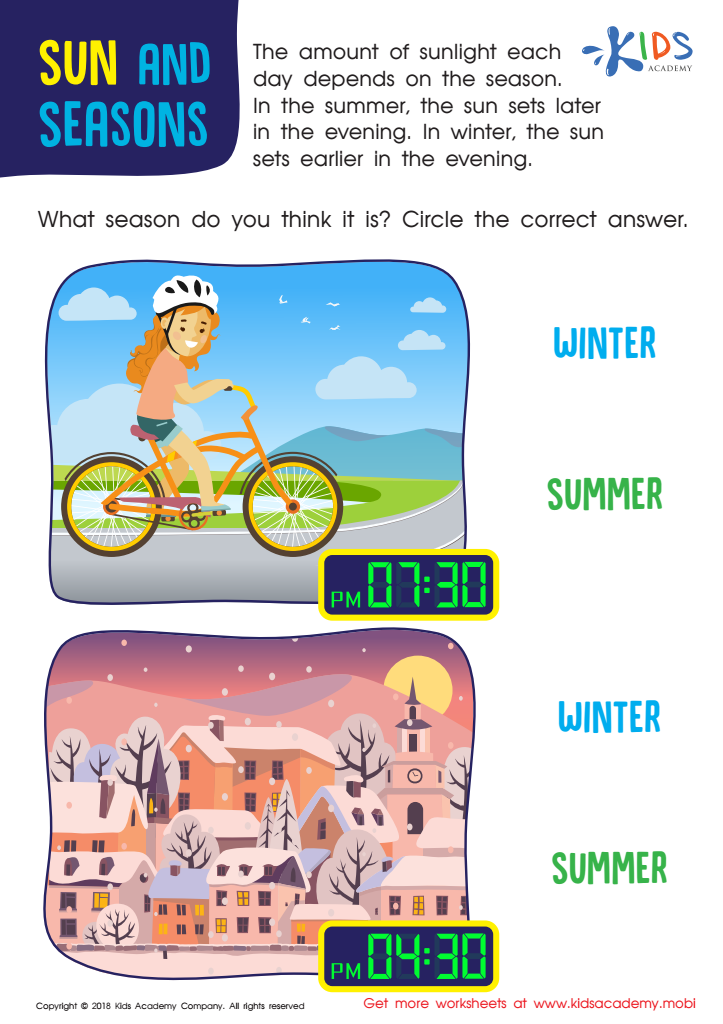
Sun and Seasons Worksheet
Help your child understand science and seasons with this Kids Academy worksheet! Discuss how the daylight varies in summer and winter with them. Guide them to note the digital clock on each page then circle the correct answers. With this sheet, your child will gain a better understanding of why days are longer in summer and shorter in winter!
Sun and Seasons Worksheet
Worksheet
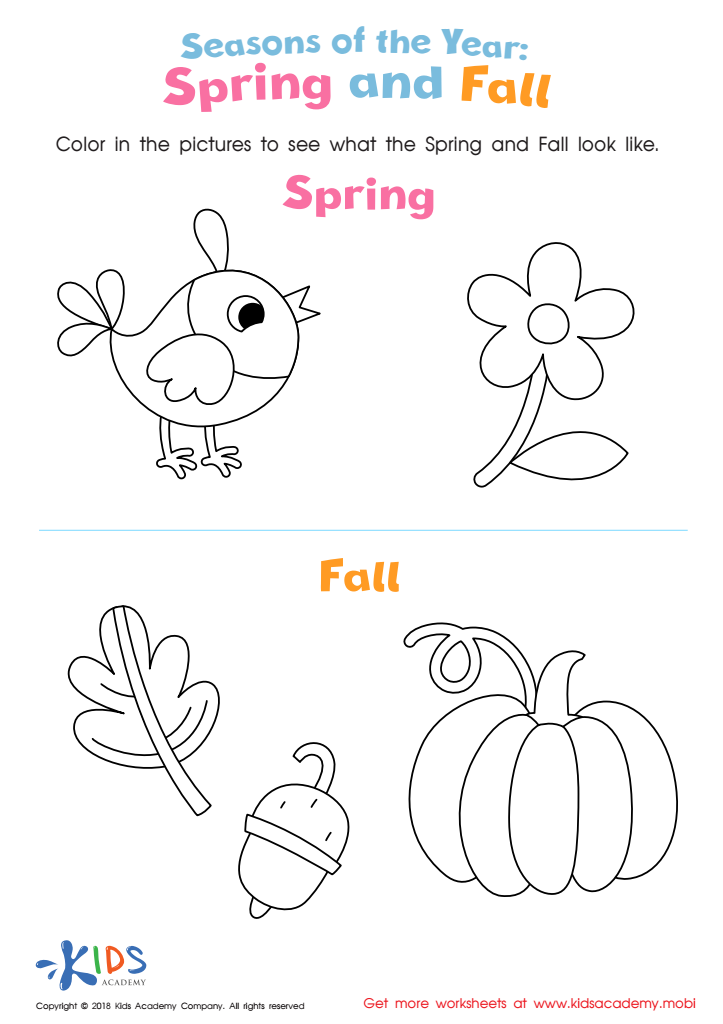
Spring and Fall Worksheet
This coloring sheet is great fun for kids. It features animals, shapes, and asks kids to identify spring and fall. Ask them to name the things in the sheet, and then help choose colors that fit each season. Let their imaginations run wild!
Download (PDF)
 Assign to My Students
Assign to My Students
Spring and Fall Worksheet
Worksheet
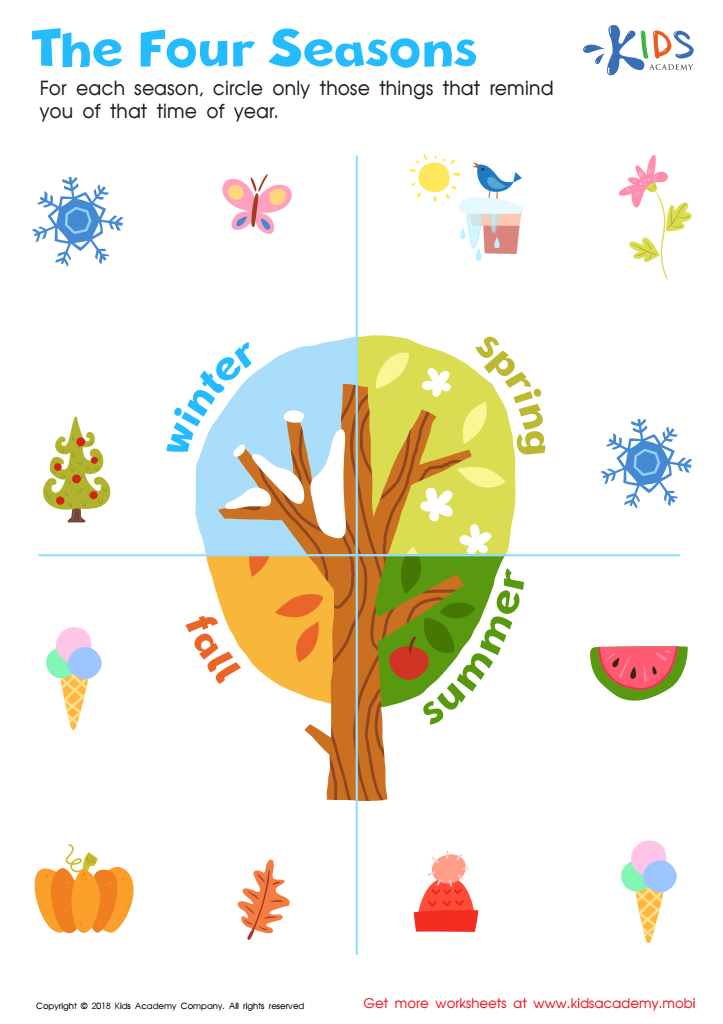
The Four Seasons Worksheet
Tell your child to circle things that remind them of each season. The tree has four squares, one for each season. Some things in each square match the season, others don't. Ask if any are out of place. Help them circle only items that remind them of that season.
The Four Seasons Worksheet
Worksheet
Join Kids Academy for Free
Who is primarily going to use this learning content?



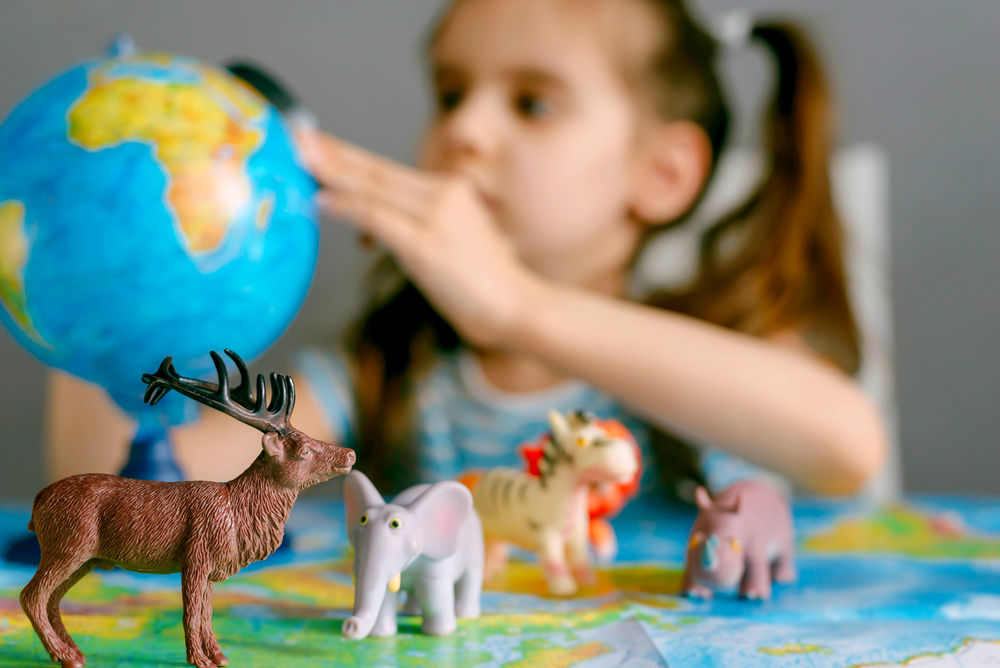



Understanding seasons and geography from an early age is crucial for children's holistic development. For children aged 3-9, grasping the concept of seasons helps them make sense of the world around them. It fosters their observational skills as they notice changes in weather, temperature, and natural surroundings. This awareness enhances their connection to nature, promoting empathy for the environment and encouraging responsible behaviors towards it.
Moreover, learning about geography helps children understand the diverse world they live in, including different cultures, landscapes, and climates. This broadens their perspective and fosters curiosity, making them more open-minded and accepting of differences. It also enhances critical thinking skills, as they begin to draw relationships between people, places, and events.
For parents and teachers, instilling this knowledge early on promotes cognitive and social-emotional development. It presents opportunities for interactive learning through nature walks, seasonal crafts, and discussions about different regions. Engaging children with seasons and geography enables them to build foundational skills in science, math, and social studies, paving the way for future learning and appreciation of diversity. Ultimately, understanding these concepts cultivates informed, engaged citizens who appreciate the complexities of our world.








