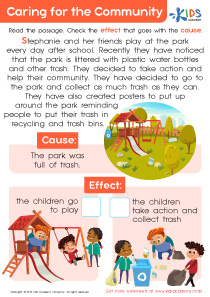
Understanding democracy Governance and Civics Worksheets for Ages 3-9
3 filtered results
Difficulty Level
Grade
Age
-
From - To
Subject
Activity
Standards
Welcome to our "Understanding Democracy, Governance, and Civics Worksheets" page for children ages 3-9! Designed to introduce young learners to the fundamental concepts of democracy and civic engagement, these engaging worksheets promote critical thinking and social awareness. Each activity encourages exploration through colorful illustrations and age-appropriate language, helping children grasp important ideas such as fairness, community involvement, and rule of law. Perfect for teachers and parents alike, our resources aim to foster curiosity and facilitate foundational discussions about governance in an interactive and enjoyable manner. Discover the joy of learning about democracy with our comprehensive, kid-friendly activities today!
Favorites
With answer key
Interactive
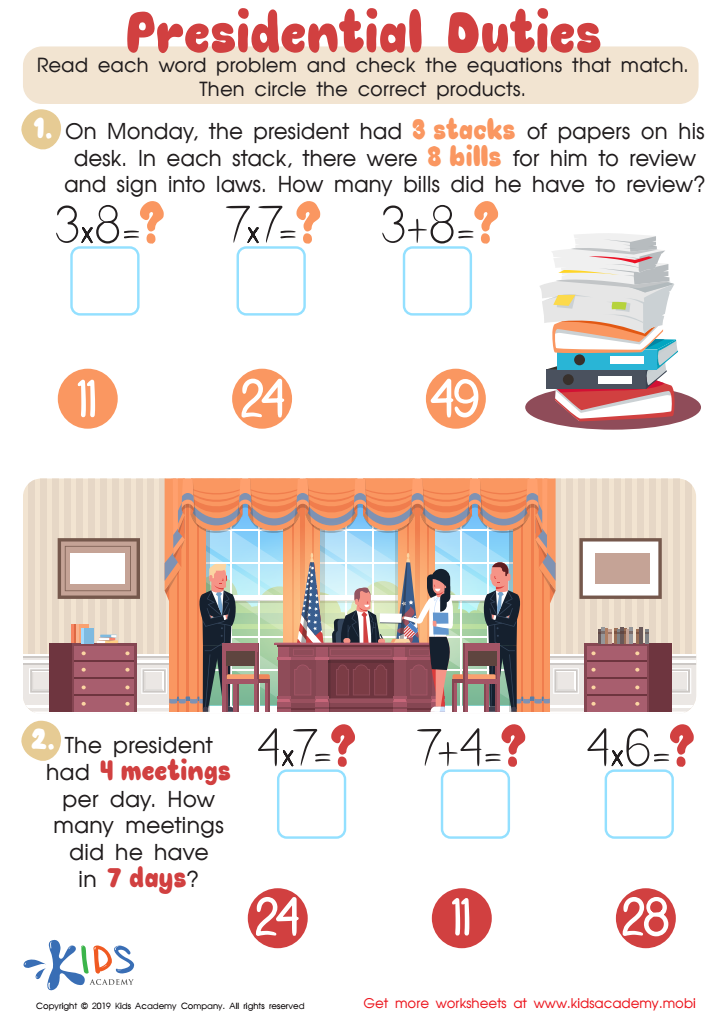
Presidential Duties Worksheet
Presidents have many duties. Utilize this worksheet to review the important ones while solving multiplication word problems. Read each passage, determine the equation, then find the product and select the correct answer.
 Assign to My Students
Presidential Duties Worksheet
Worksheet
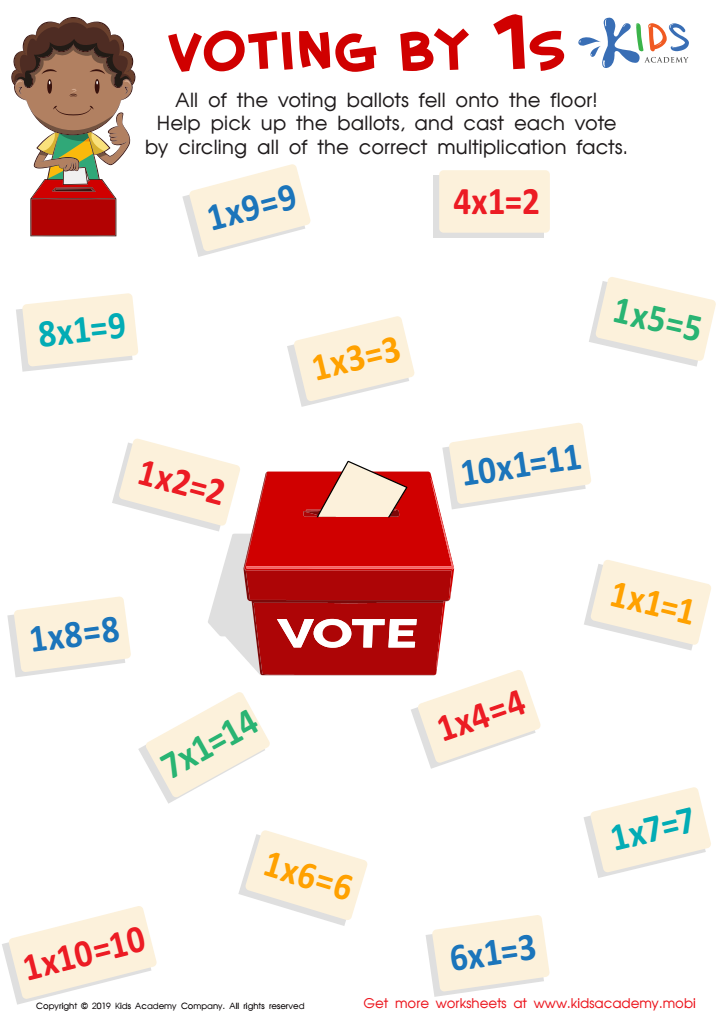
Voting by 1s Worksheet
Ask your child if they can list duties of a good citizen. These include voting, to elect right leaders. With this worksheet, the voting ballots have fallen to the floor! Help your kids pick them up and cast each vote by circling the correct multiplication facts.
Voting by 1s Worksheet
Worksheet
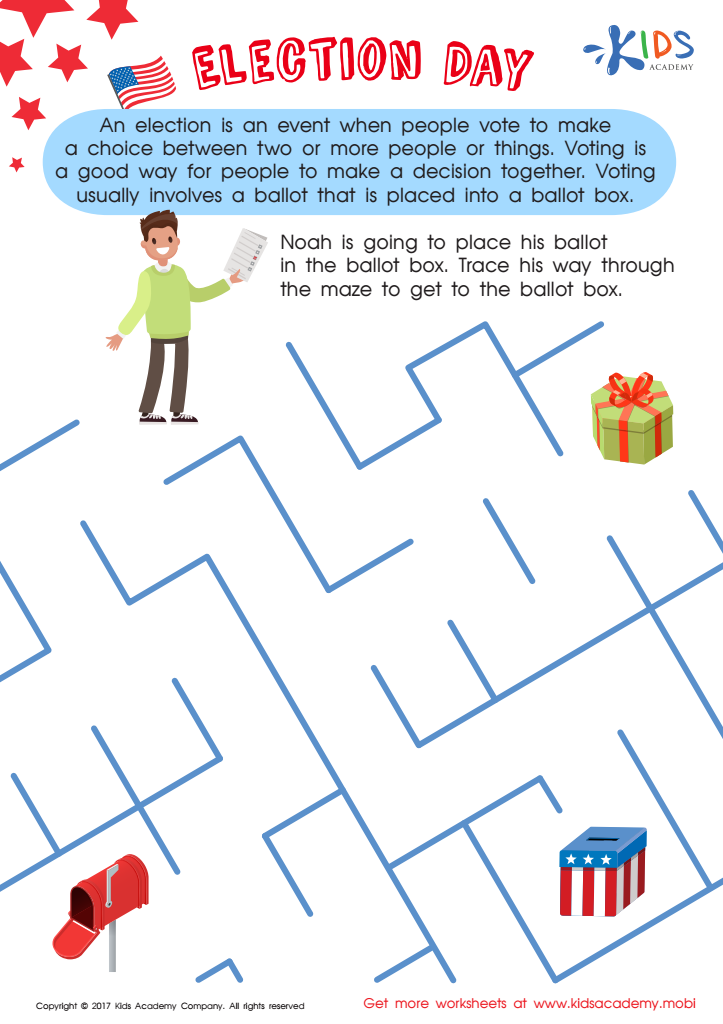
Election Day Worksheet
Get the election day worksheet PDF and teach them the value of voting - an integral part of our democracy! 80 words
Election Day Worksheet
Worksheet
Join Kids Academy for Free
Who is primarily going to use this learning content?


Understanding democracy, governance, and civics is crucial for children aged 3-9, as early exposure fosters essential social, emotional, and cognitive skills. At this stage, children are like sponges, absorbing information and developing foundational beliefs about justice, fairness, and community responsibility. By introducing concepts of democracy, children learn the value of cooperation, empathy, and respect for diverse perspectives.
Engaging young minds in age-appropriate discussions about rules, community roles, and participation nurtures critical thinking. Teachers and parents can create opportunities for children to express their opinions through classroom activities or family discussions, empowering them to feel their voices matter. This early education instills a sense of belonging and encourages active citizenship from a young age.
Moreover, teaching governance concepts helps children understand the structures that shape their lives, promoting informed and engaged future citizens. In a world where polarization can undermine social cohesion, equipping young learners with civic knowledge fosters tolerance and strengthens communities. Ultimately, supporting children in grasping these principles not only prepares them for life's challenges but also cultivates a generation committed to upholding democratic values, ensuring they contribute positively to society. Investing in this knowledge is essential for nurturing a democratic culture and responsible citizenship in the years to come.