Event sequencing History Worksheets for Ages 3-9
3 filtered results
Difficulty Level
Grade
Age
-
From - To
Subject
Activity
Standards
Discover engaging Event Sequencing History Worksheets designed for children ages 3-9! These interactive resources help young learners develop essential skills by mastering the art of sequencing events in history. With a variety of age-appropriate activities, children will explore timelines, understand cause and effect, and enhance their critical thinking abilities. Our worksheets are visually appealing and easy to understand, making history fun and accessible. Perfect for classroom use or at-home learning, these worksheets encourage creativity and collaboration. Ignite your child's curiosity about the past with our Event Sequencing History Worksheets and watch their historical knowledge flourish!
Favorites
With answer key
Interactive
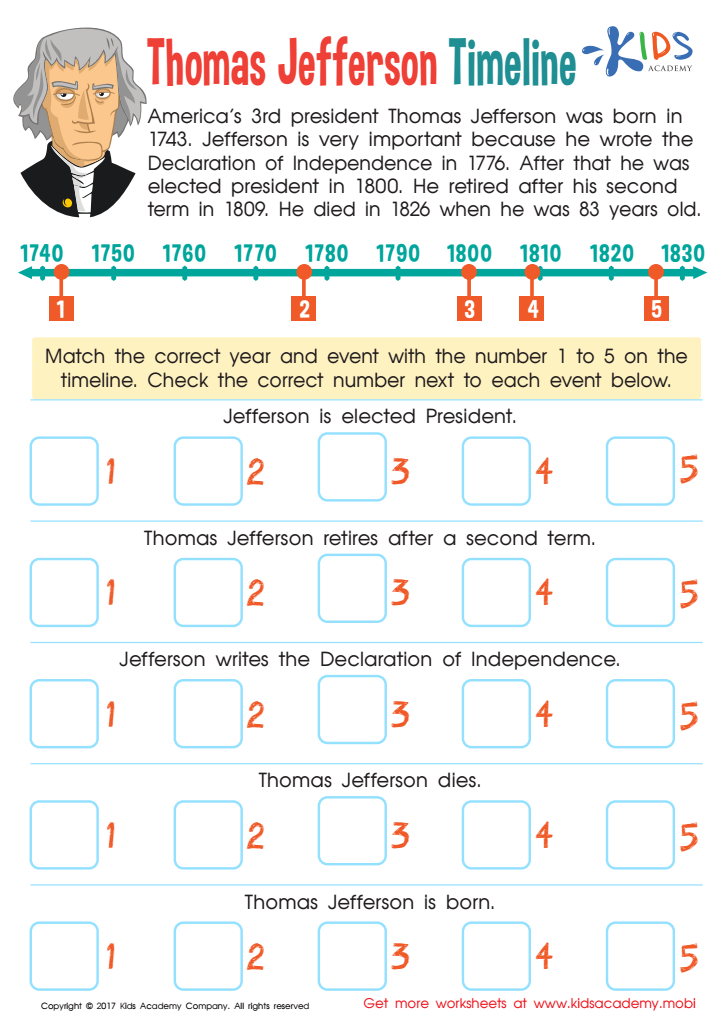
Thomas Jefferson Timeline Worksheet
Check your child's reading comprehension and knowledge of US history with this Thomas Jefferson timeline worksheet! Have them read the paragraph to learn about him, then use what they've read to fill in the timeline.
 Assign to My Students
Thomas Jefferson Timeline Worksheet
Worksheet
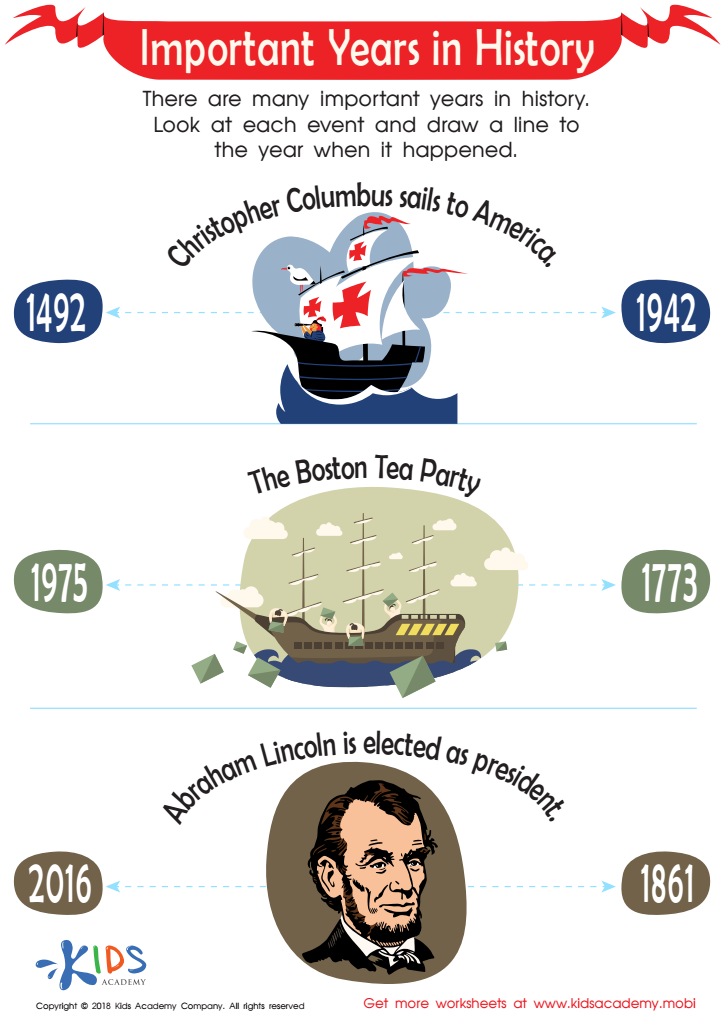
Important Years in History Worksheet
Ask your students if they can name any important dates in history. Then, look at the images in the worksheet with them. Read the sentences above each one to them and have them trace a line to the year when the event occurred.
Important Years in History Worksheet
Worksheet
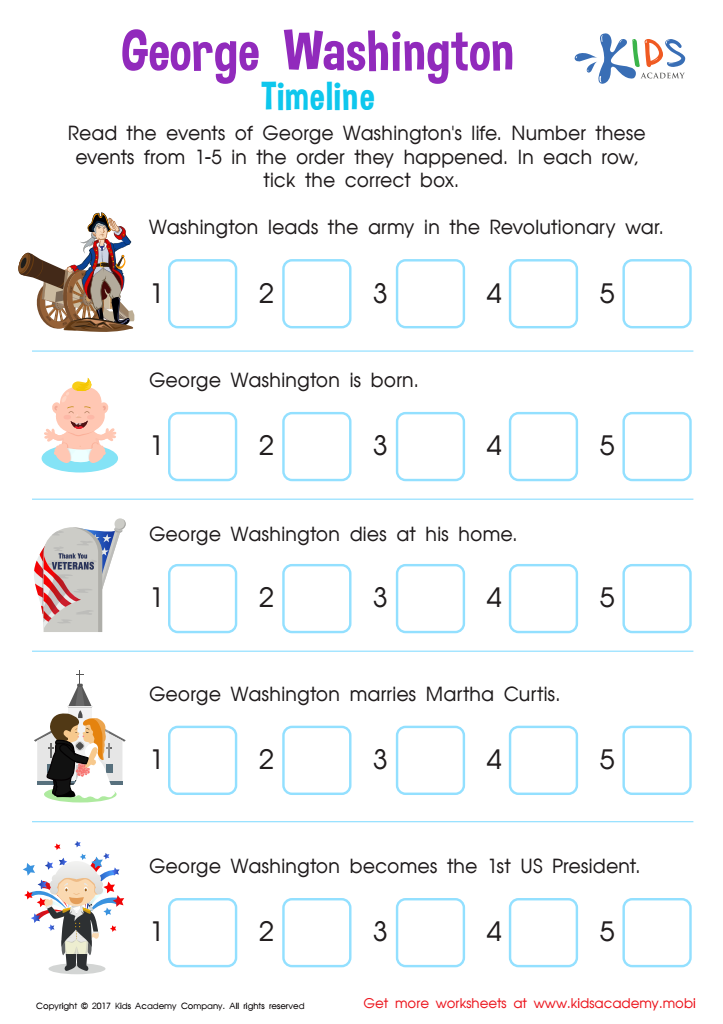
George Washington Timeline Worksheet
Help your child learn about George Washington and practice sequencing events! This printable worksheet will boost their reading and comprehension skills while they review historical facts. It's a great challenge to keep them engaged and learning.
George Washington Timeline Worksheet
Worksheet
Join Kids Academy for Free
Who is primarily going to use this learning content?







Event sequencing is a crucial skill for children aged 3-9 as it lays the foundation for their cognitive, language, and social development. Understanding the order of events helps young learners grasp the cause-and-effect relationships in stories, leading to improved comprehension and critical thinking. By mastering sequencing, children can better retell stories, make predictions, and summarize information—skills that are essential for academic success.
Moreover, sequencing activities encourage children to organize their thoughts and express them clearly, enhancing their communication skills. This can be through storytelling, sorting events in a picture book, or arranging daily routines, making learning both interactive and fun.
Parents and teachers play a vital role in fostering event sequencing through varied activities—such as storytelling, role-play, or using visual aids like story maps. These methods not only reinforce academic concepts but also strengthen children’s creativity and imagination. Additionally, sequencing lays the groundwork for future tasks across subject areas, including math (understanding numbers and operations) and science (following experiments).
Overall, an emphasis on event sequencing promotes a child's ability to connect ideas, follow logical progression, and build essential life skills, making it a fundamental aspect of early education that should not be overlooked.