Reading Skills History Worksheets for Ages 3-9
3 filtered results
Difficulty Level
Grade
Age
-
From - To
Subject
Activity
Standards
Discover engaging Reading Skills History Worksheets for ages 3-9 that make learning history fun and educational. Our expertly designed worksheets help young learners develop reading comprehension while exploring fascinating historical topics. These printables stimulate curiosity with a blend of vibrant illustrations and compelling stories. Kids will enhance vocabulary, critical thinking, and reading fluency through activities that bring history to life. Ideal for classrooms and at-home learning, these resources align with learning standards to nurture a love for reading and history. Start your child’s historical adventure today with our Reading Skills History Worksheets, where every story turns education into an exciting journey!
Favorites
With answer key
Interactive
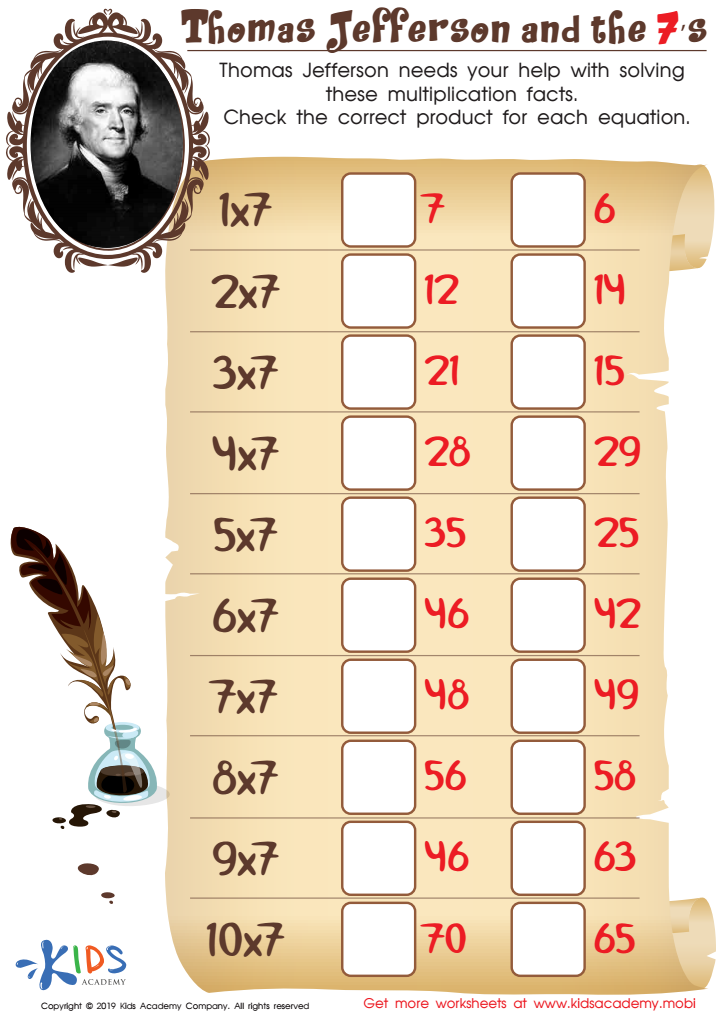
Thomas Jefferson and the 7’s Worksheet
Thomas Jefferson championed education and wants kids to know their times tables. Help your child with this worksheet focusing on 7's. Check the box for the correct answer for each multiplication problem. Make sure your child gets the facts right!
 Assign to My Students
Thomas Jefferson and the 7’s Worksheet
Worksheet
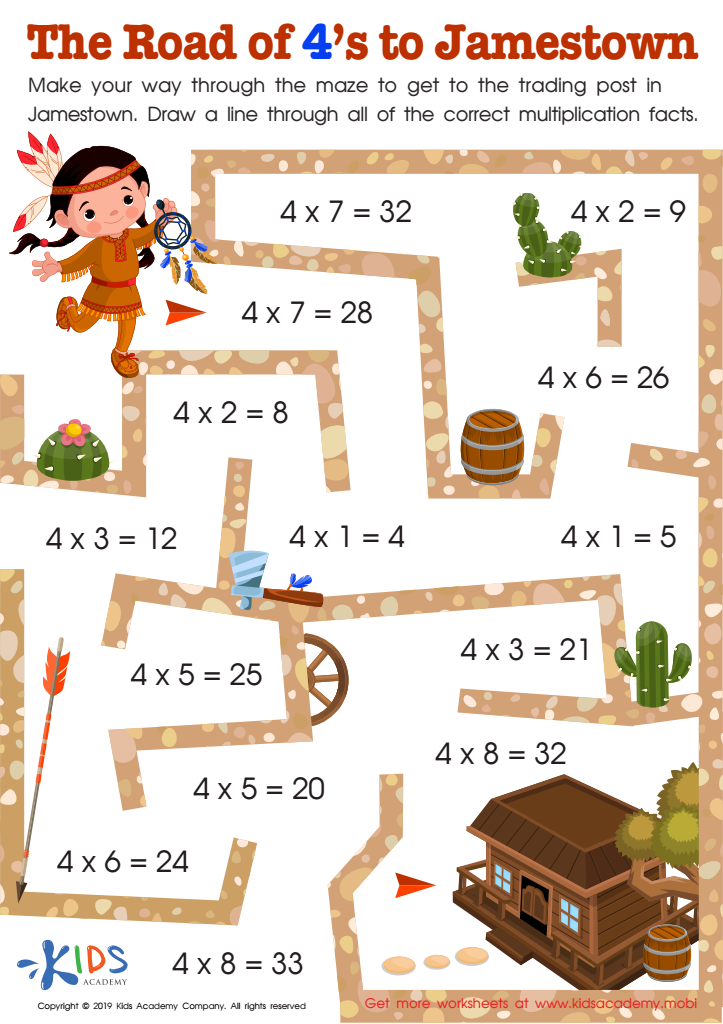
The Road of 4’s to Jamestown Worksheet
Does your child enjoy trips? Help them remember the best ones with this fun worksheet maze! Get your kid to look at the picture and draw a line through all the right multiplication facts to get to Jamestown's trading post. This worksheet is a great way to stimulate their problem-solving skills.
The Road of 4’s to Jamestown Worksheet
Worksheet
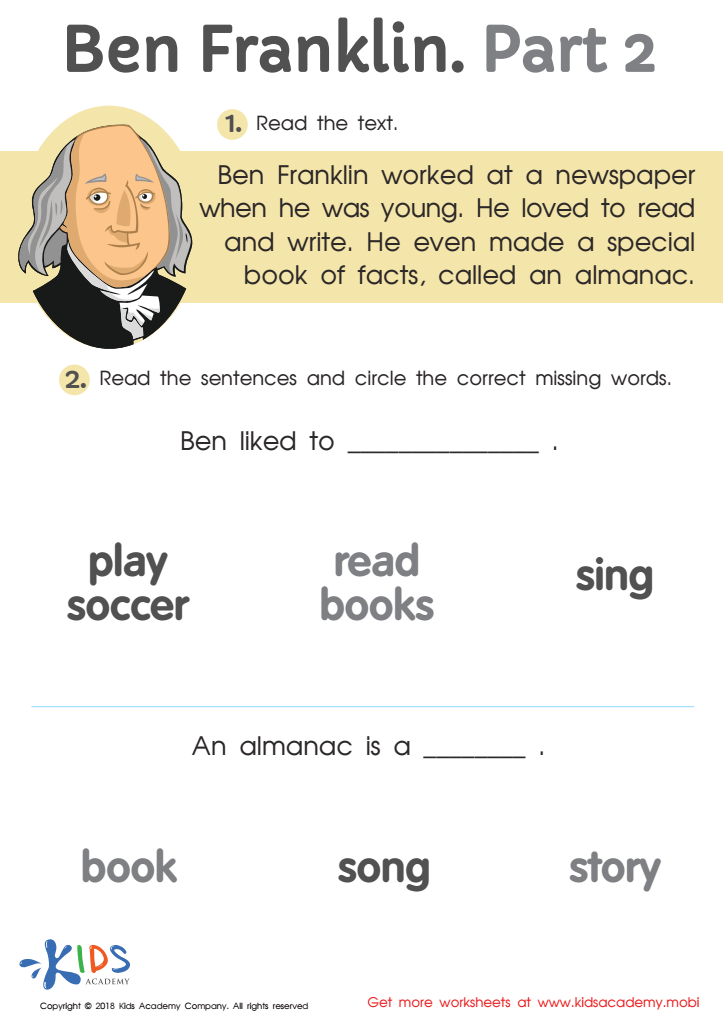
Ben Franklin Part 2 Worksheet
History is filled with great figures, like Benjamin Franklin. Let your kids in on the legacy by introducing them to the founder of the US fire department, diplomat, and inventor. Then, use a worksheet to have them fill in the blanks with the correct word to teach them more. Read the text, then read the sentences and have them circle the missing word.
Ben Franklin Part 2 Worksheet
Worksheet
Join Kids Academy for Free
Who is primarily going to use this learning content?



.jpg)




Reading skills play a crucial role in a child's overall development, especially between the ages of 3 and 9. During these formative years, children are highly receptive and their brains are developing rapidly. Early literacy skills provide the foundation for future academic success, social-emotional development, and lifelong learning.
Firstly, proficiency in reading directly affects a child's ability to grasp other subjects. Reading is not just about understanding text; it encompasses comprehension, vocabulary acquisition, and the ability to interpret information. Therefore, strong reading skills can enhance learning in areas such as math, science, and social studies.
Secondly, early reading skills contribute significantly to language development. As children engage with books, they are exposed to more complex sentence structures, a richer vocabulary, and diverse storytelling forms. This enriches their language use, expressive ability, and comprehension.
Moreover, reading fosters curiosity and imagination. Stories can take children to new worlds, introduce them to new ideas, and help them empathize with characters who are different from themselves. This not only makes them more creative but also helps them develop better social skills.
Lastly, fostering reading habits early instills a love for lifelong learning. Children who read regularly are more likely to develop habits built around seeking knowledge and personal growth.
In summary, understanding and nurturing reading skills in children aged 3-9 creates a strong educational foundation and benefits their long-term cognitive, social, and emotional health.