Understanding democracy Social Studies Worksheets for Ages 3-9
3 filtered results
-
From - To
Explore our engaging "Understanding Democracy" Social Studies worksheets designed for children ages 3-9. These resources are tailored to help young learners grasp basic democratic concepts, such as voting, community involvement, and the importance of rules. With colorful illustrations and interactive activities, children will enjoy exploring how democracy affects their lives while developing essential critical thinking skills. Ideal for home or classroom use, our worksheets foster early social awareness and build a foundation for responsible citizenship. Perfectly suited for teachers and parents alike, these printable materials make learning about democracy both fun and educational! Start inspiring the next generation today!
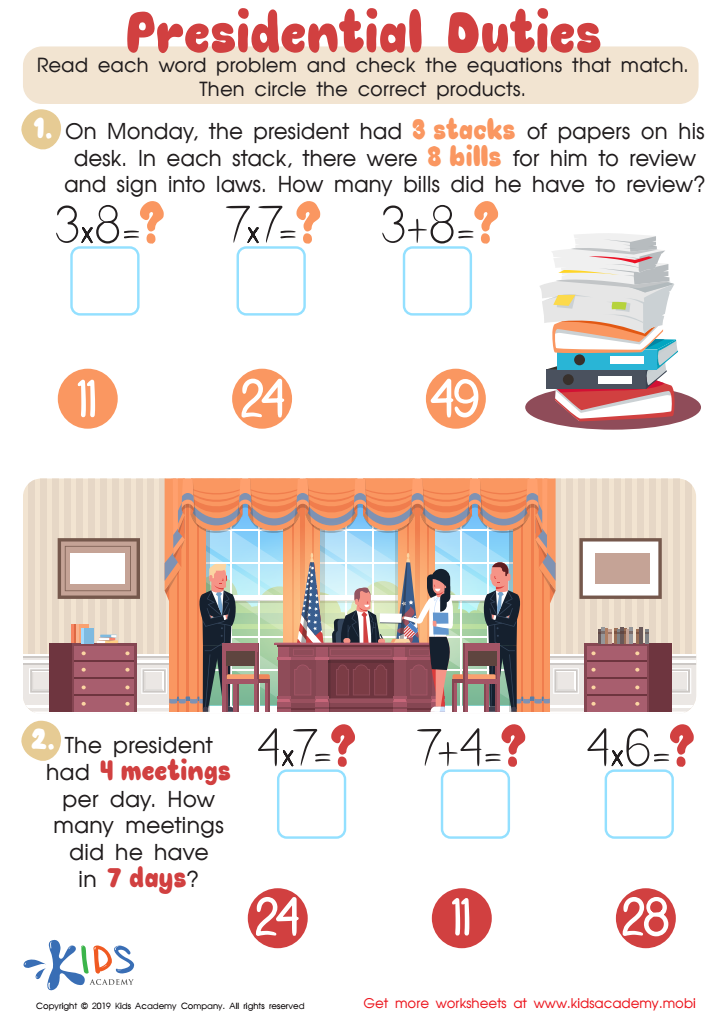
Presidential Duties Worksheet
 Assign to My Students
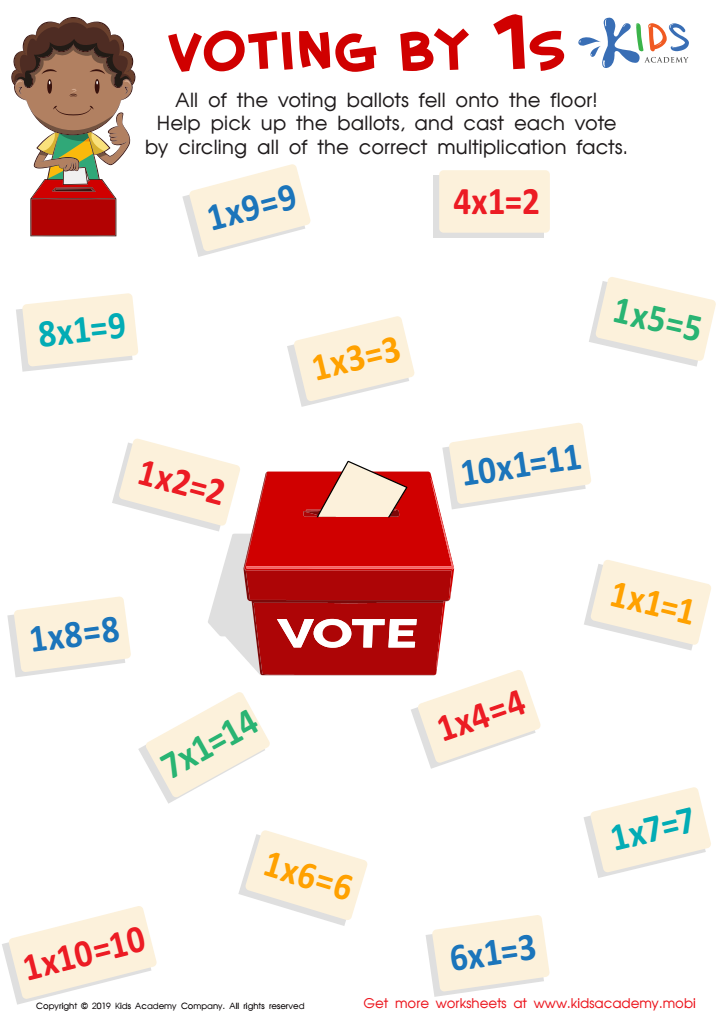
Voting by 1s Worksheet
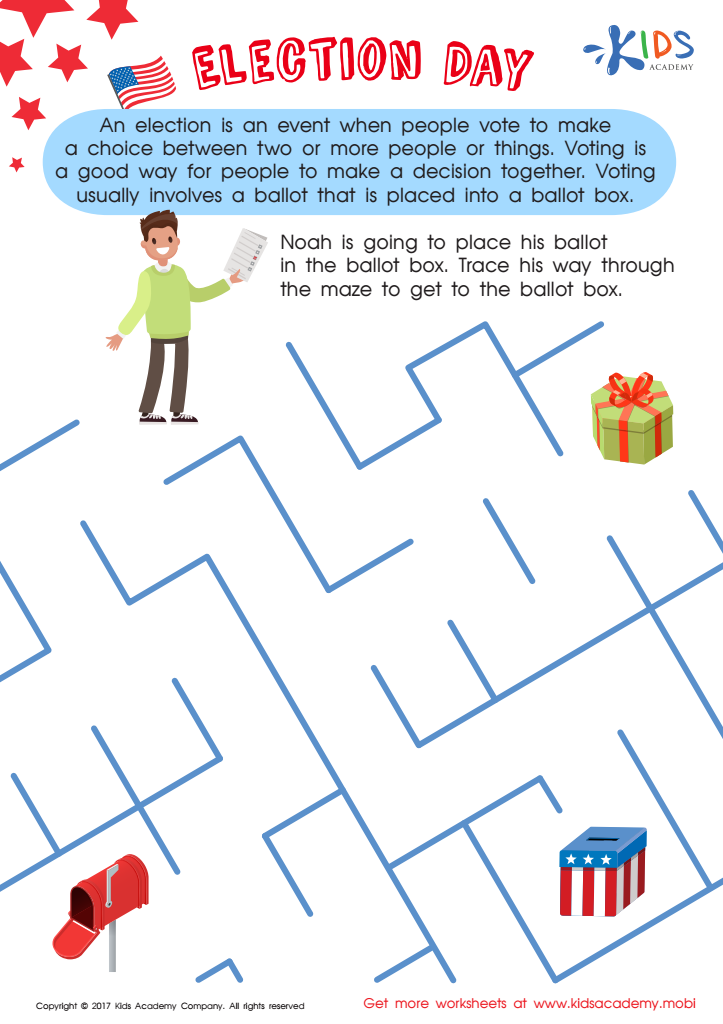
Election Day Worksheet







Understanding democracy in Social Studies is crucial for children aged 3-9, as it lays the foundation for informed, engaged citizenship. At this formative age, children begin to grasp concepts of fairness, cooperation, and community, essential components of democratic values. Teaching democracy helps them understand their rights, the importance of listening to others, and how to express their opinions constructively.
Parents and teachers play a pivotal role in nurturing these principles, helping children to explore the idea that everyone has a voice and a role in their community. Early lessons in democracy can be woven into everyday experiences—whether through discussions about rules in the classroom, group decision-making, or family activities—encouraging kids to participate actively and responsibly in their surroundings.
Moreover, understanding democracy fosters critical thinking skills. It enables young children to question, discuss, and reflect on social issues as they grow, shaping them into thoughtful individuals who care about justice and equity. By engaging in these discussions early, we equip children to navigate complex social landscapes, cultivating a sense of belonging and responsibility that will serve them in the classroom and beyond. Ultimately, supporting this understanding helps to promote a healthier, more engaged society.








