Phonics recognition Grammar Worksheets for Ages 3-9
5 filtered results
-
From - To
Enhance your child's literacy skills with our engaging Phonics Recognition Grammar Worksheets designed for ages 3-9. These worksheets provide young learners with essential practice in letter sounds, word recognition, and basic grammar concepts. Tailored for early readers, our resources utilize fun illustrations and interactive activities to foster a love for learning. Each printable worksheet focuses on phonemic awareness, helping children build vital reading foundations. As kids work through these activities, they’ll develop confidence in their language abilities while enjoying the process. Perfect for home or classroom use, our Phonics Recognition Grammar Worksheets make mastering language skills enjoyable and effective!
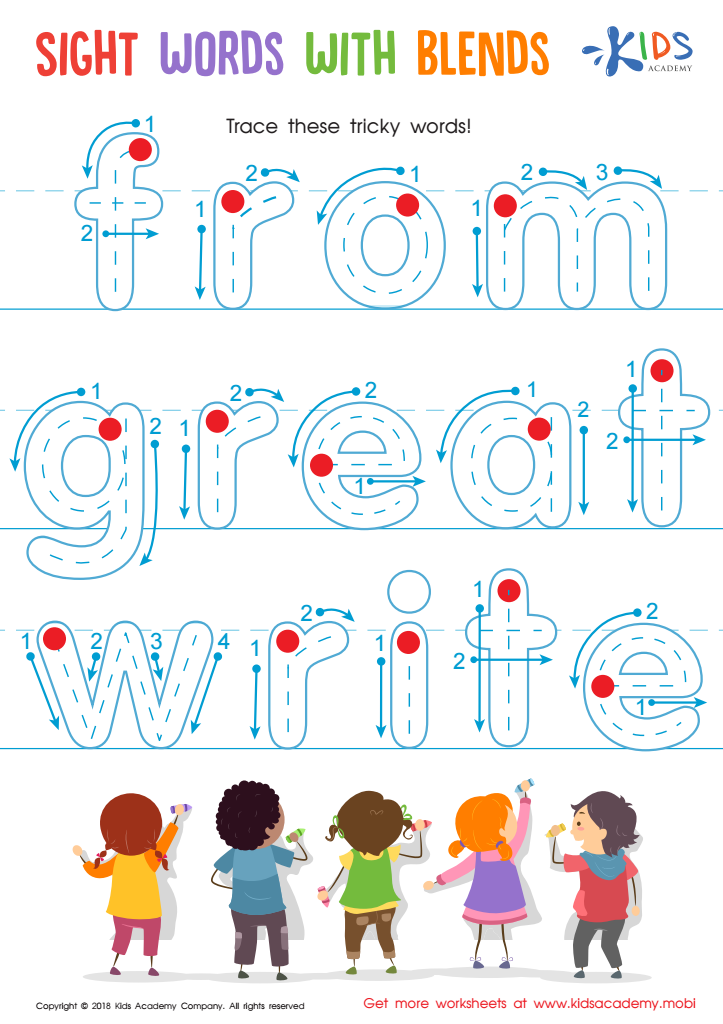
Sight Words with Blends Worksheet
 Assign to My Students
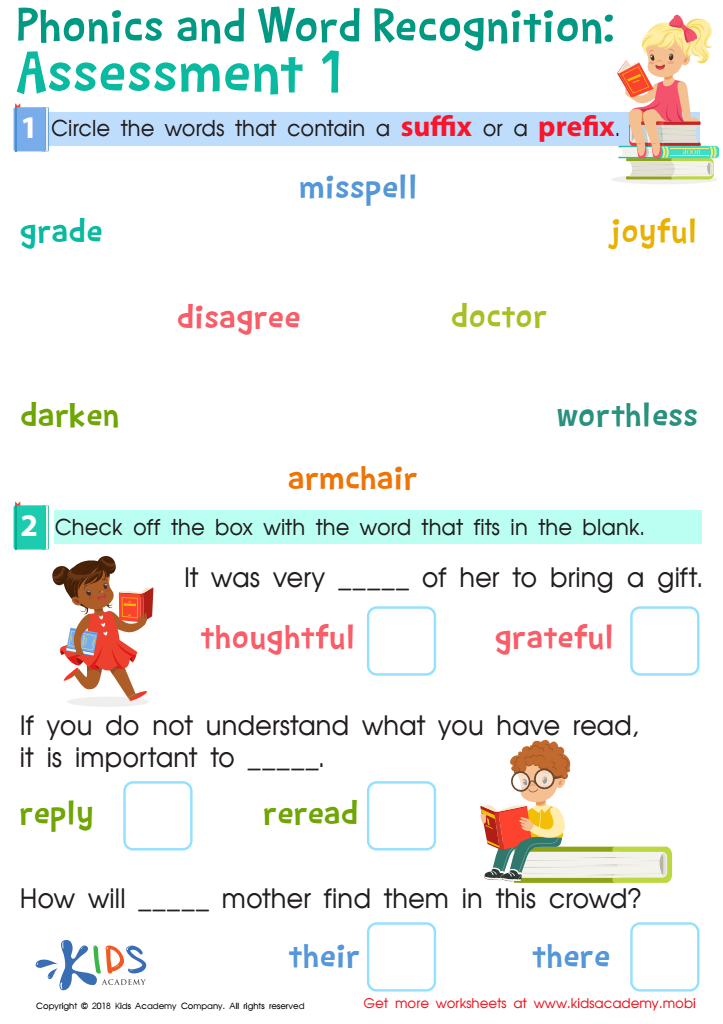
Phonics and Word Recognition: Assessment 1 Worksheet
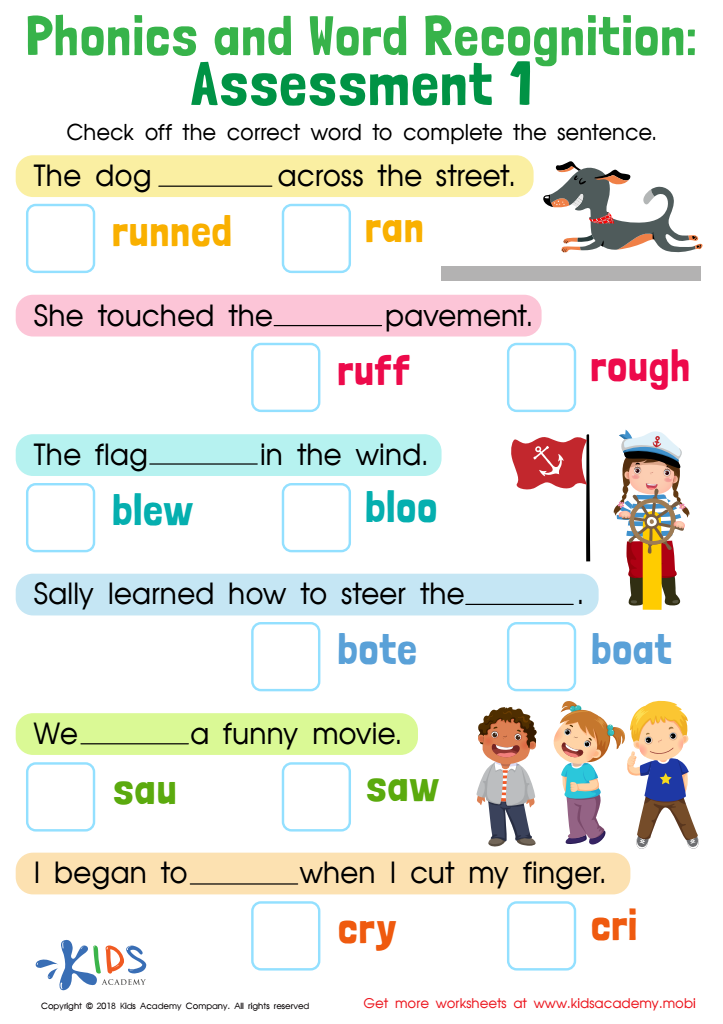
Phonics and Word Recognition: Assessment 1 Worksheet
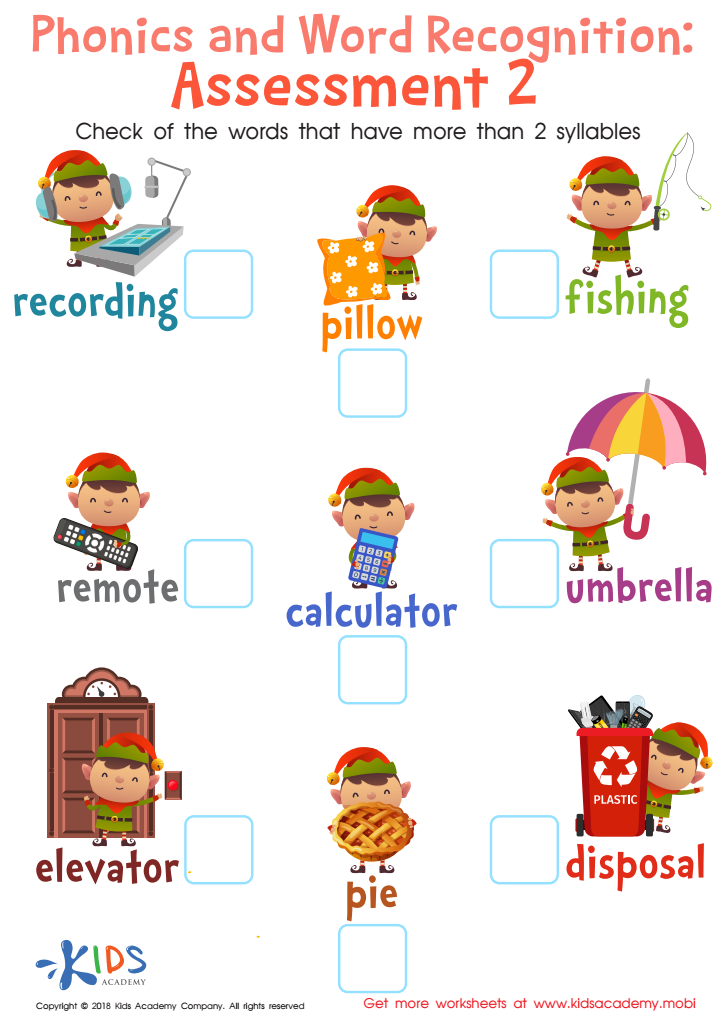
Phonics and Word Recognition: Assessment 2 Worksheet
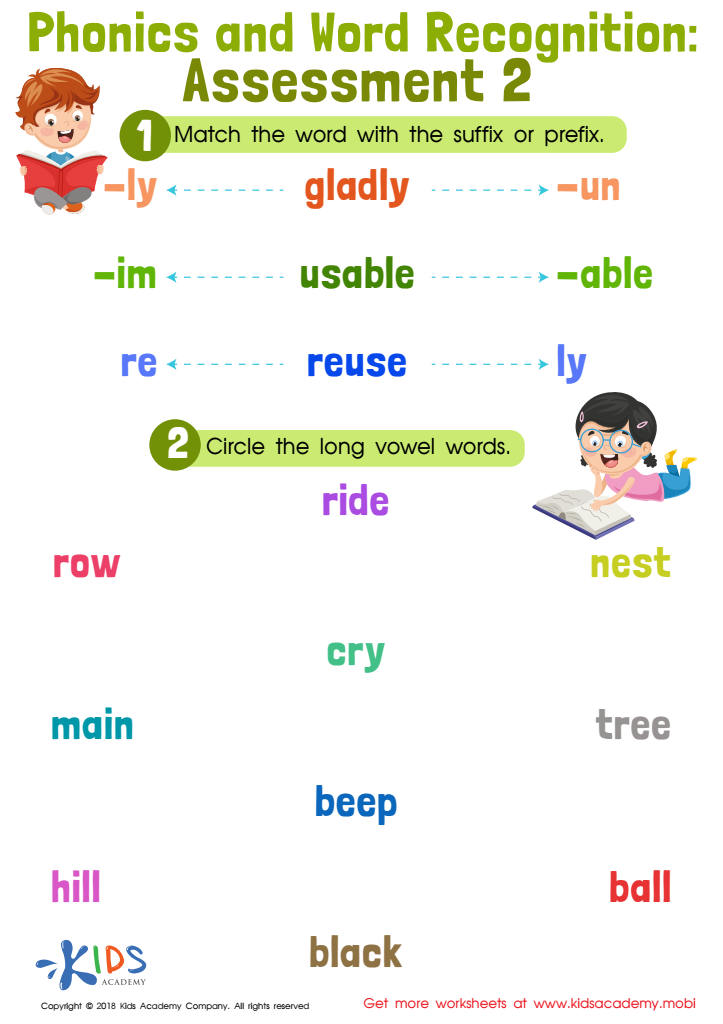
Phonics and Word Recognition: Assessment 2




.jpg)



Phonics recognition and grammar are fundamental components of early literacy development for children aged 3-9. For parents and teachers, understanding the significance of these skills is crucial for fostering effective communication and academic success.
Phonics recognition teaches children the relationship between letters and their corresponding sounds. This foundational skill enables them to decode words, facilitating reading and writing. Mastery of phonics boosts children's confidence in their literary abilities, allowing for better comprehension and a love for reading.
Moreover, grammar equips children with the tools needed to construct sentences correctly, enhancing their ability to express thoughts and ideas clearly. Understanding basic grammatical structures fosters effective communication, which is vital not only in school but also in daily interactions. Early mastery of grammar prevents misconceptions that can hinder students' progress in language arts as they grow.
By prioritizing phonics and grammar in early education, parents and teachers lay the groundwork for lifelong reading and writing skills. These competencies not only support academic achievement but also contribute to a child's overall cognitive and social development. In essence, a solid grasp of phonics and grammar is essential for cultivating proficient, confident communicators ready to engage with the world around them.








