Contextual understanding Writing Worksheets for Ages 3-9
6 filtered results
-
From - To
Discover our engaging Contextual Understanding Writing Worksheets designed for children aged 3-9. These worksheets are crafted to enhance young learners' ability to grasp context while developing their writing skills. Through fun and interactive activities, children will explore concepts related to different scenarios, characters, and settings, helping them write with greater clarity and relevance. Aligned with early education standards, our resources promote critical thinking and creativity. Perfect for at-home learning or classroom use, these worksheets support early literacy development and make learning enjoyable. Equip your child with the skills they need to write confidently and contextually!
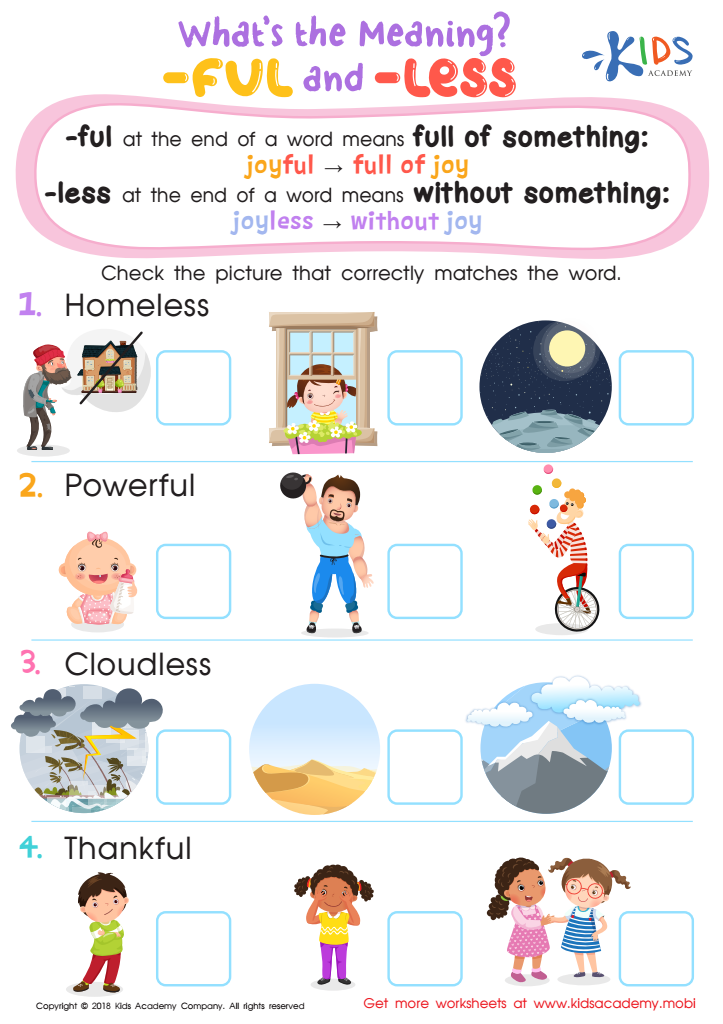
What's the Meaning? Worksheet
 Assign to My Students
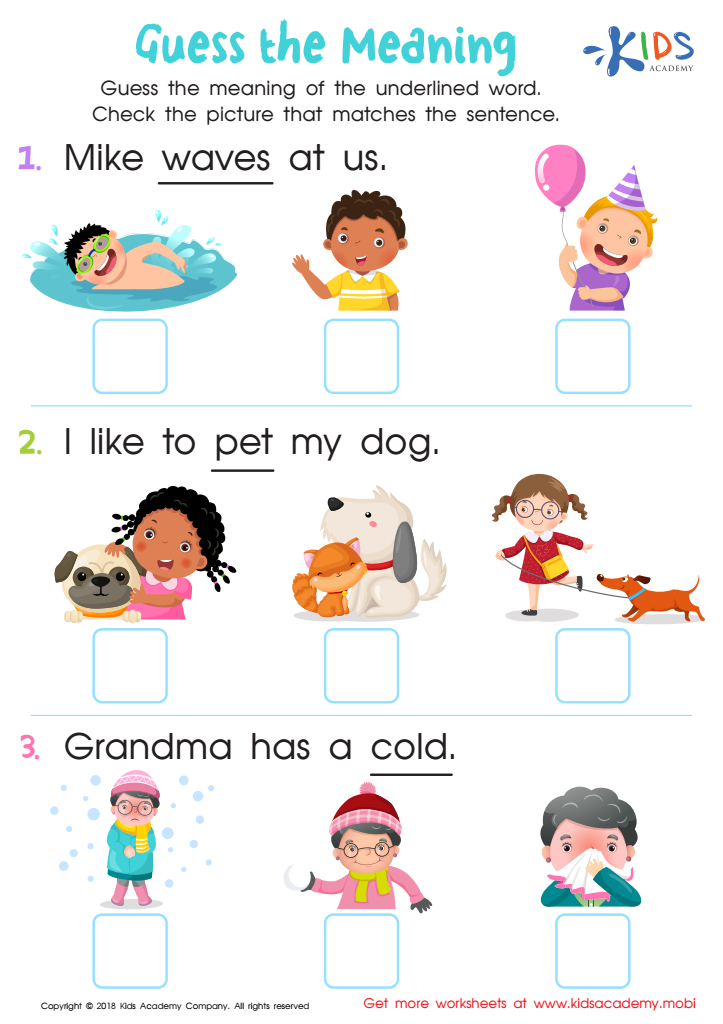
Guess the Meaning Worksheet
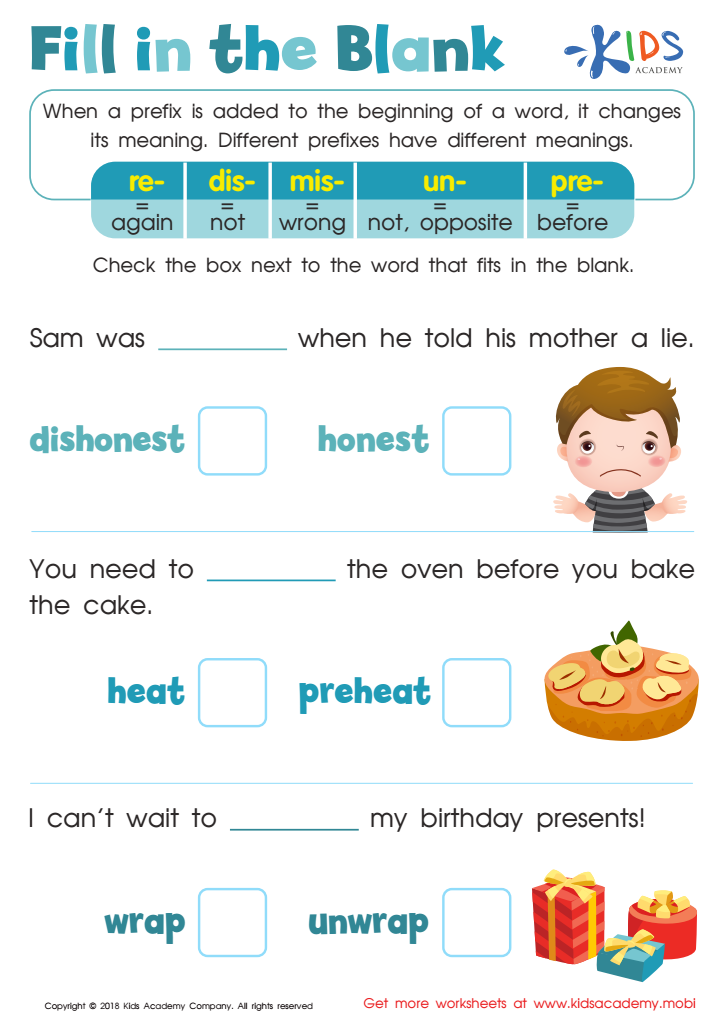
Reading: Fill in the Blank Worksheet
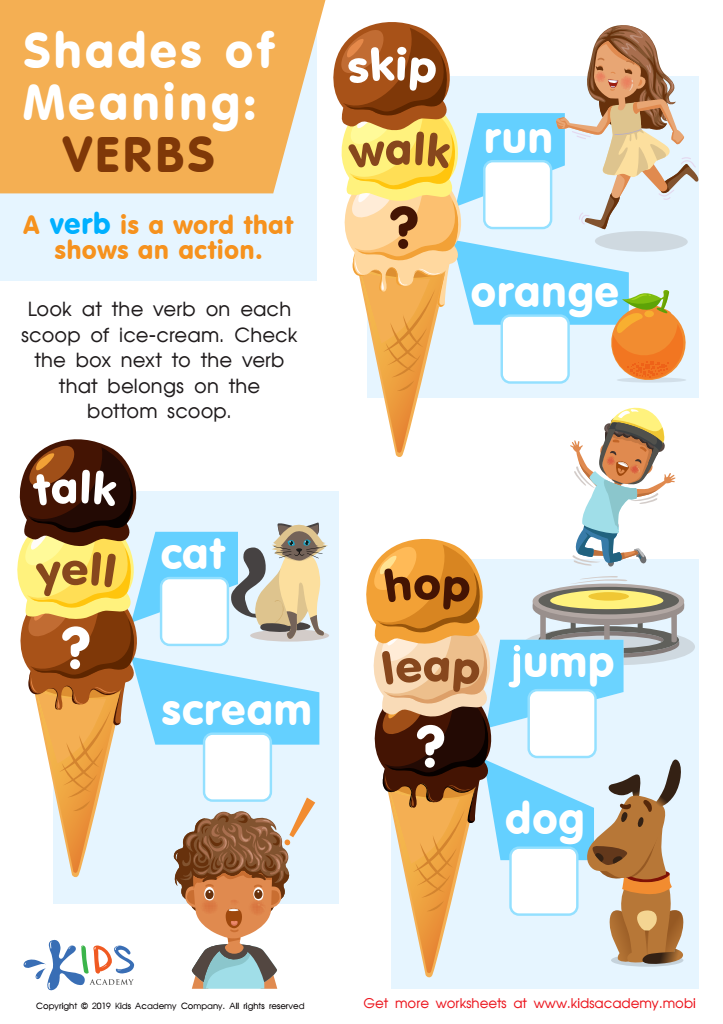
Shades of Meaning: Verbs Worksheet
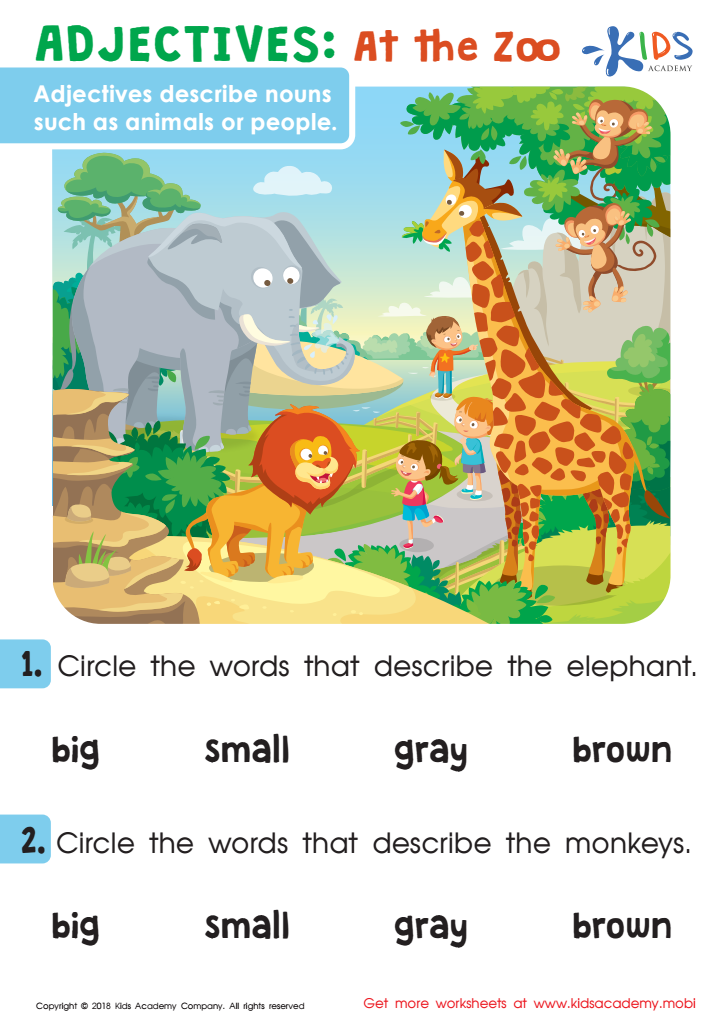
Adjectives: At The Zoo Worksheet
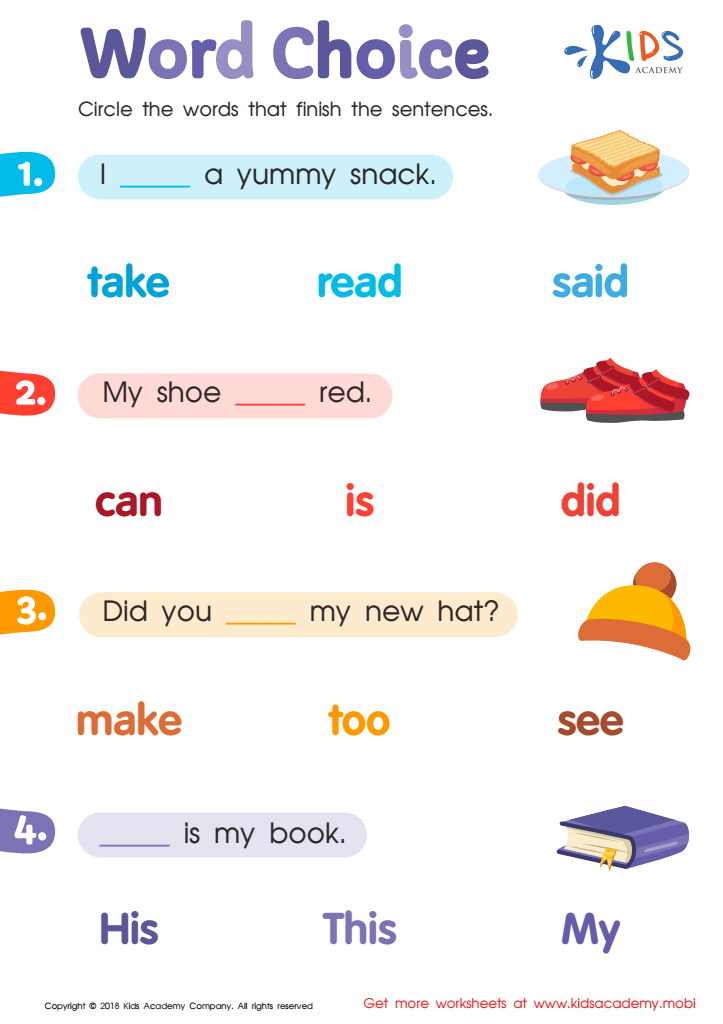
Word Choice Worksheet







Contextual understanding in writing is crucial for children aged 3-9 as it lays the foundation for effective communication and critical thinking. At this stage, children are not only learning to write but also to comprehend the connections between their thoughts, experiences, and the world around them. By focusing on contextual understanding, parents and teachers can help young learners make sense of their ideas and express them clearly.
When children grasp the context of what they write, they develop stronger narratives, enhancing their ability to convey emotions and convey messages. This skill is vital for building empathy; by understanding different perspectives, children learn to relate to others and express their thoughts respectfully. Moreover, contextual writing nurtures creativity, allowing children to incorporate unique experiences into their storytelling, thus enriching their writing skills.
Encouraging contextual understanding also aids in literacy development, as children improve their vocabulary and comprehension. Articulating thoughts in context enables young writers to engage with different subjects, improving their overall academic performance. By prioritizing this aspect of writing, parents and teachers will not only enhance children's writing abilities but also foster a love for learning and effective communication throughout their lives.








