Letter recognition Writing Worksheets for Ages 3-9
5 filtered results
-
From - To
Welcome to our Letter Recognition Writing Worksheets designed for children ages 3-9! These engaging, printable resources help young learners develop crucial letter recognition skills essential for early reading and writing. Our worksheets feature a variety of interactive activities, including tracing letters, identifying uppercase and lowercase forms, and vibrant illustrations to capture children’s interest. Tailored to reinforce learning through play, these worksheets encourage children to practice letter formation and improve their fine motor skills. Perfect for classroom or home use, our Letter Recognition Writing Worksheets make learning the alphabet fun and enjoyable! Empower your child's literacy journey today!
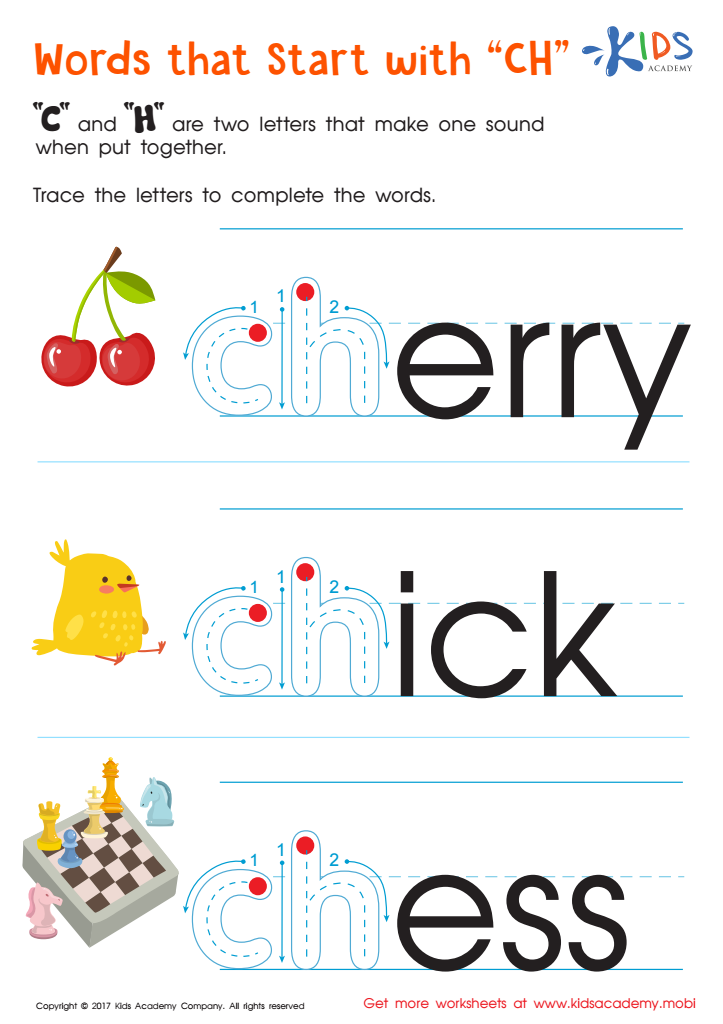
Words That Start with "ch" Spelling Worksheet
 Assign to My Students
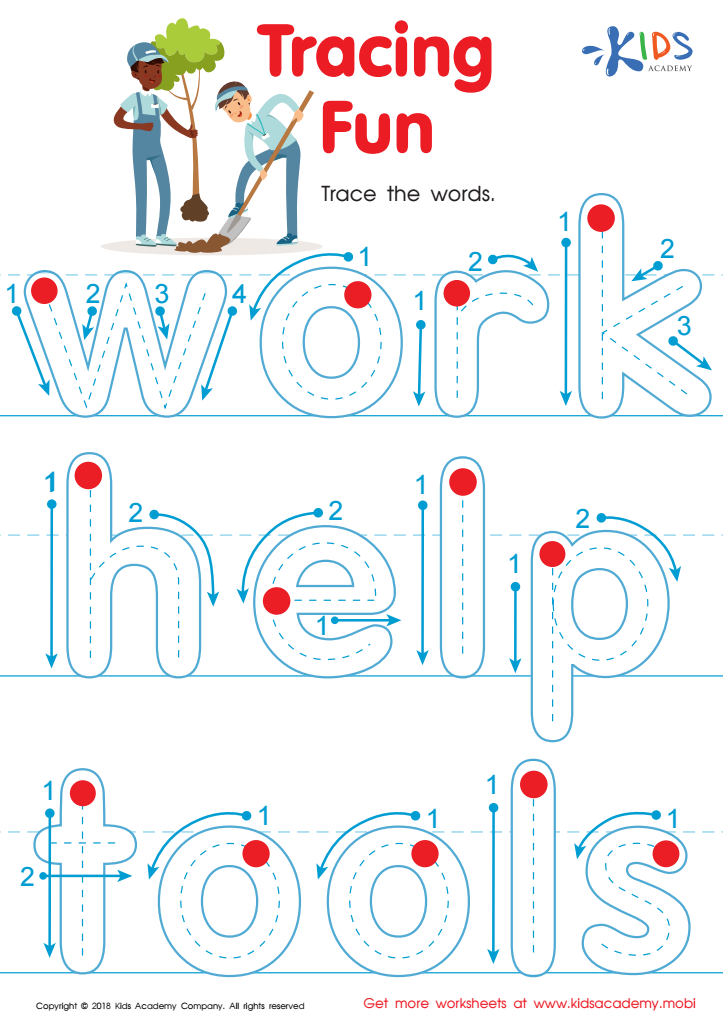
Tracing Fun Worksheet
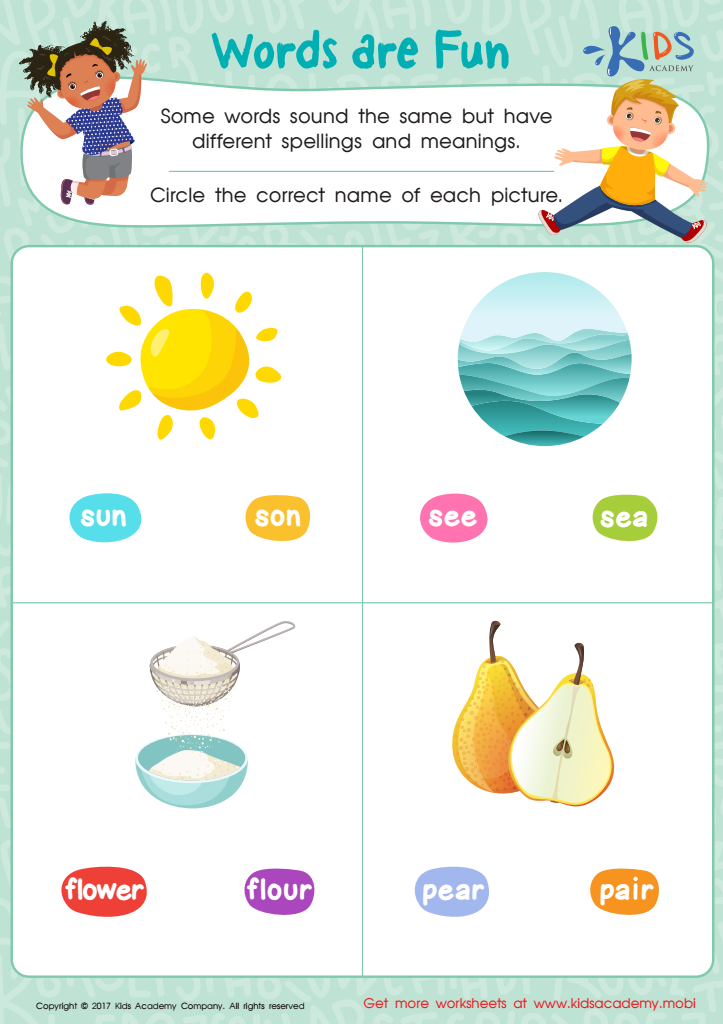
Words Are Fun Worksheet
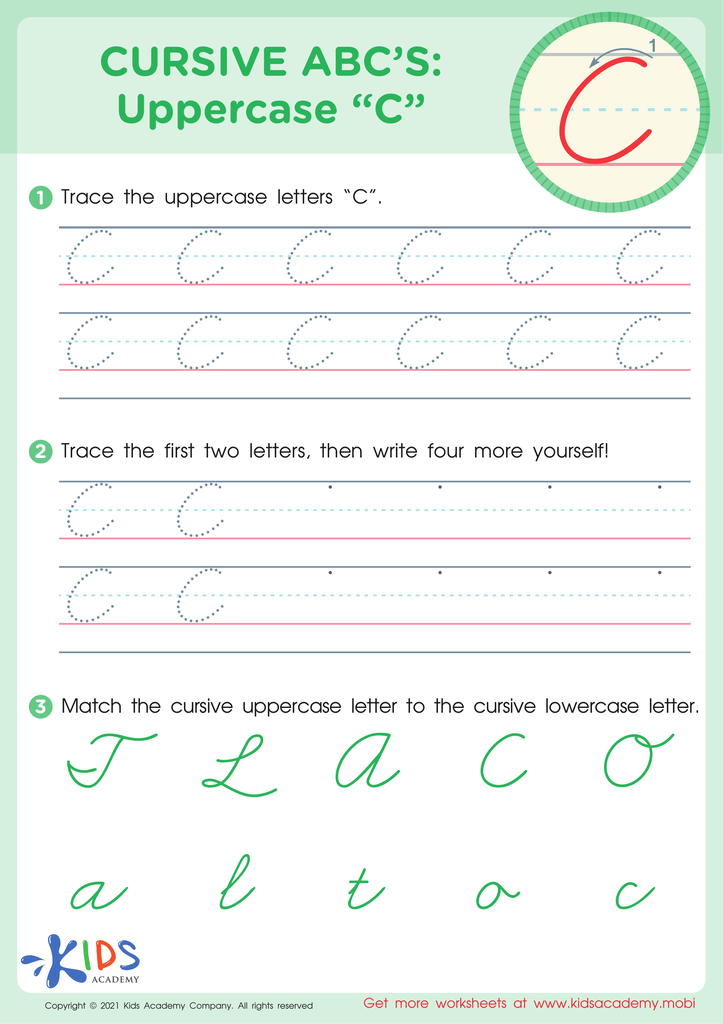
Cursive ABCs: Uppercase C
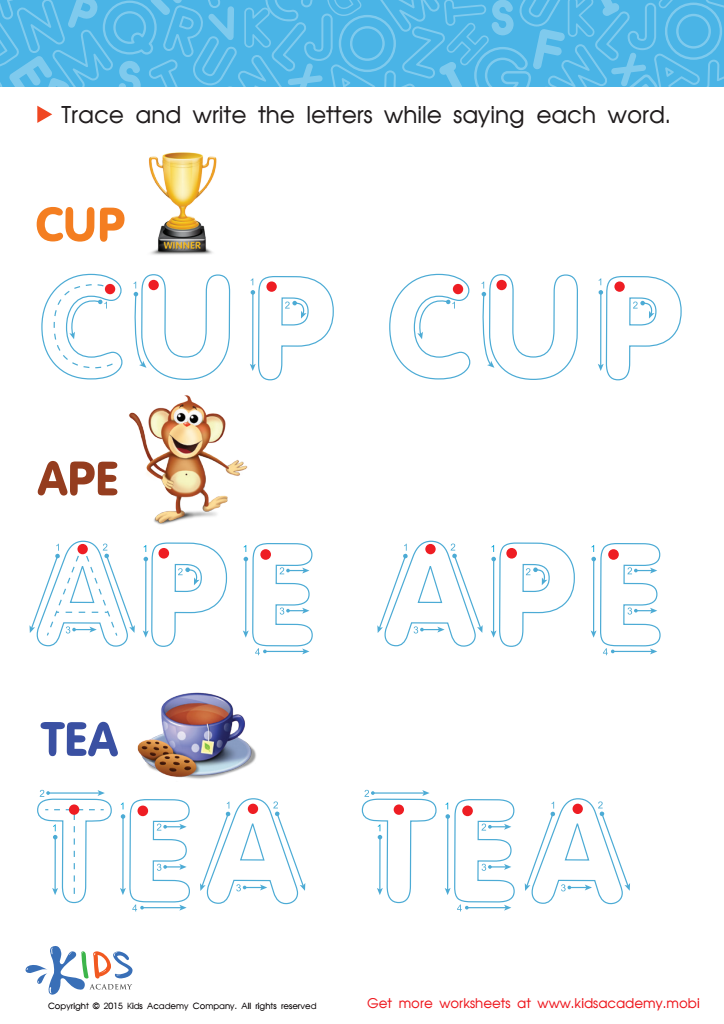
A Cup, an Ape and Tea Spelling Worksheet








Letter recognition and writing are foundational skills that play a crucial role in a child's literacy development from ages 3 to 9. During this critical period, children begin to connect sounds to symbols and develop an understanding of the alphabet, which is vital for efficient reading and writing.
Parents and teachers should care about letter recognition and writing because these skills enhance cognitive development and language comprehension. Early exposure to letters helps children identify them quickly, facilitating smoother transitions into reading. Mastering letter writing improves fine motor skills, boosting confidence in academic settings.
Moreover, knowing letters encourages children to engage with books, nurturing a lifelong love for reading. It enriches their vocabulary and improves communication skills, resulting in better oral and written expression. Additionally, strong letter recognition enhances spelling abilities, which are crucial as children progress in school.
Furthermore, fostering these skills at an early age offers an opportunity for parents and teachers to create a supportive learning environment. This engagement also strengthens the home-school connection, as caregivers can reinforce learning outside the classroom. By prioritizing letter recognition and writing, parents and teachers set a solid foundation for students’ future academic success and literacy skills.








