Understanding punctuation Writing Worksheets for Ages 3-9
3 filtered results
-
From - To
Discover our interactive "Understanding Punctuation Writing Worksheets," designed for children aged 3-9. These engaging worksheets provide a fun and effective way for young learners to grasp the essential skills of punctuation. With colorful visuals and age-appropriate activities, children will learn to identify punctuation marks like periods, commas, and question marks while enhancing their writing capabilities. Our resources encourage creativity and boost comprehension, setting a solid foundation for future language skills. Ideal for classroom use or at-home practice, these worksheets help young minds navigate the basics of punctuation with ease. Start exploring today and build strong writing skills in your child!
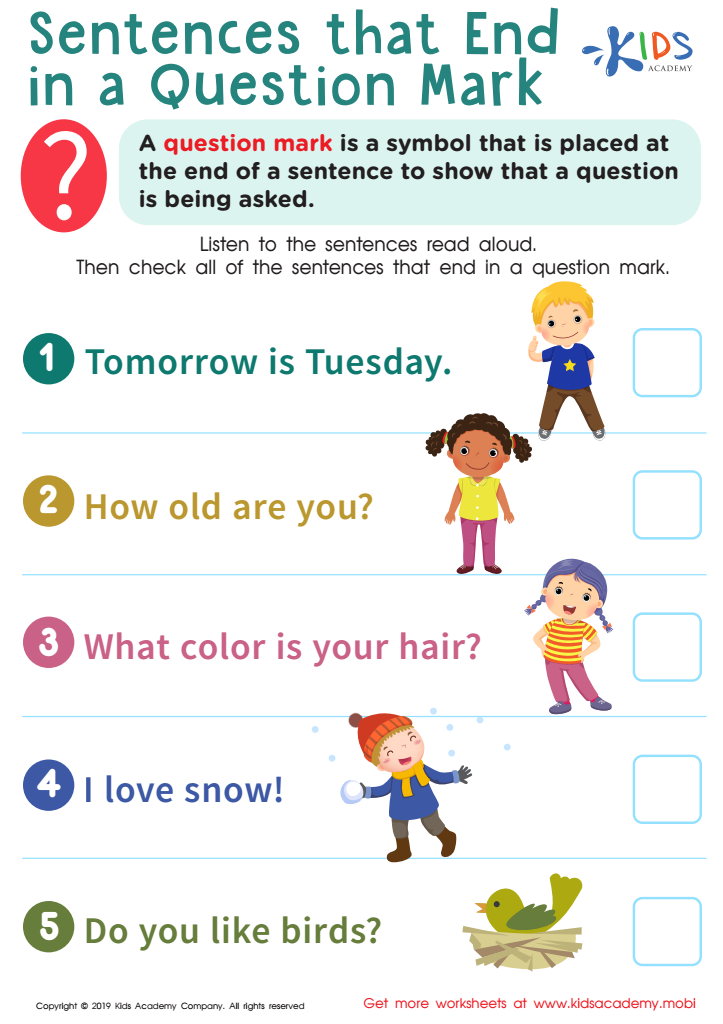
Sentences That End in an Question Mark Worksheet
 Assign to My Students
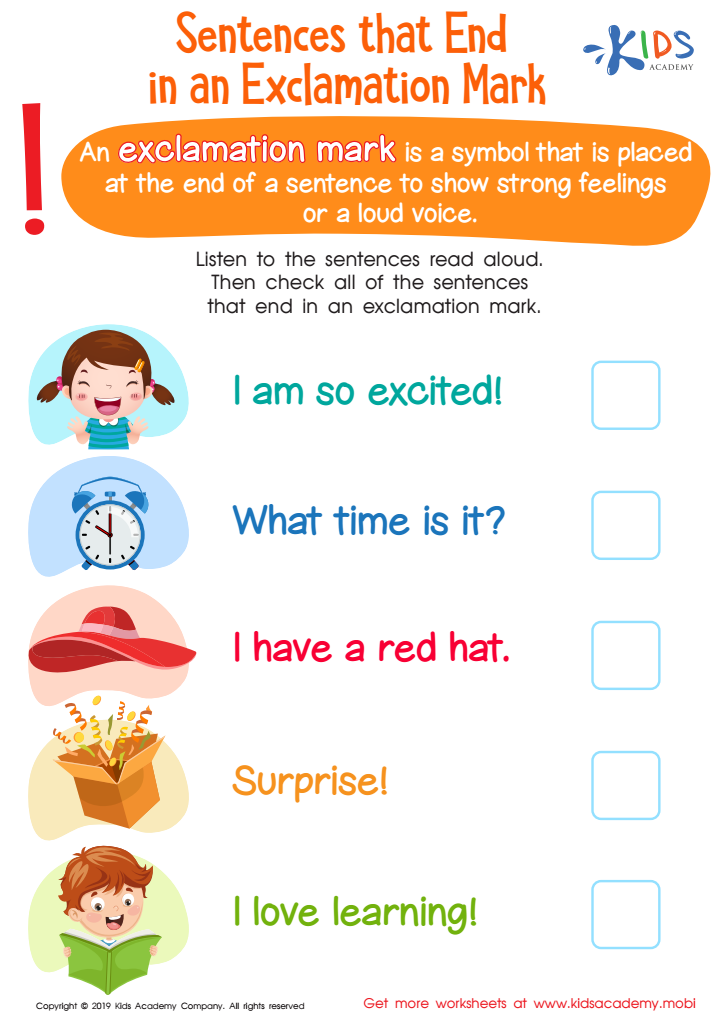
Sentences That End in an Exclamation Mark Worksheet
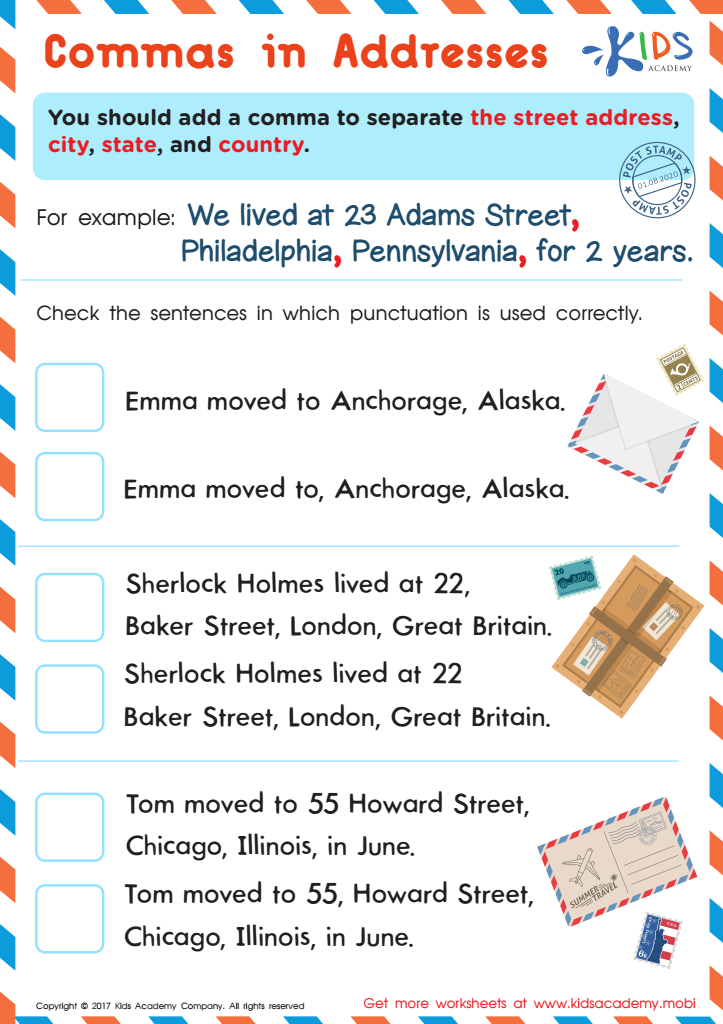
Commas in Addresses Worksheet







.jpg)
Understanding punctuation is essential for children aged 3 to 9, as it lays the foundation for effective communication and literacy skills. For parents and teachers, several reasons underscore the importance of teaching punctuation at an early age.
Firstly, punctuation helps children decode written language. It guides them in understanding the structure of sentences—identifying beginnings, endings, pauses, and emotions. Mastery of these elements enhances reading fluency, comprehension, and deciphering meaning.
Additionally, punctuation fosters writing skills. Early learners use basic punctuation marks, such as periods, question marks, and exclamation points, to convey their thoughts clearly. This clarity in writing encourages children to express their ideas confidently while making their stories engaging.
Improving communication skills is another key reason. Teaching punctuation aids in teaching children the nuances of spoken language, aiding verbal articulation as they recognize how tone can change with punctuation.
Moreover, early exposure to punctuation fosters critical thinking and attention to detail, skills valuable in their academic journey. Establishing a strong foundation in punctuation sets children up for success as they progress to more complex language concepts. Ultimately, parents and teachers play a crucial role in nurturing these essential skills necessary for lifelong learning.








