Letter formation ABC Order Worksheets for 3-Year-Olds
3 filtered results
-
From - To
Introduce your 3-year-old to the fascinating world of letters with our engaging “Letter Formation ABC Order Worksheets”! Designed specifically for young learners, these worksheets help toddlers develop essential writing skills as they practice tracing and forming each letter of the alphabet in sequential order. Our interactive exercises promote fine motor skills, improve pencil grip, and enhance letter recognition in a fun and inviting way. Colorful illustrations and exciting exercises make learning delightful and encourage independent exploration. Perfect for parents and educators looking to lay a solid foundation for literacy, these worksheets add an enjoyable element to early childhood education!
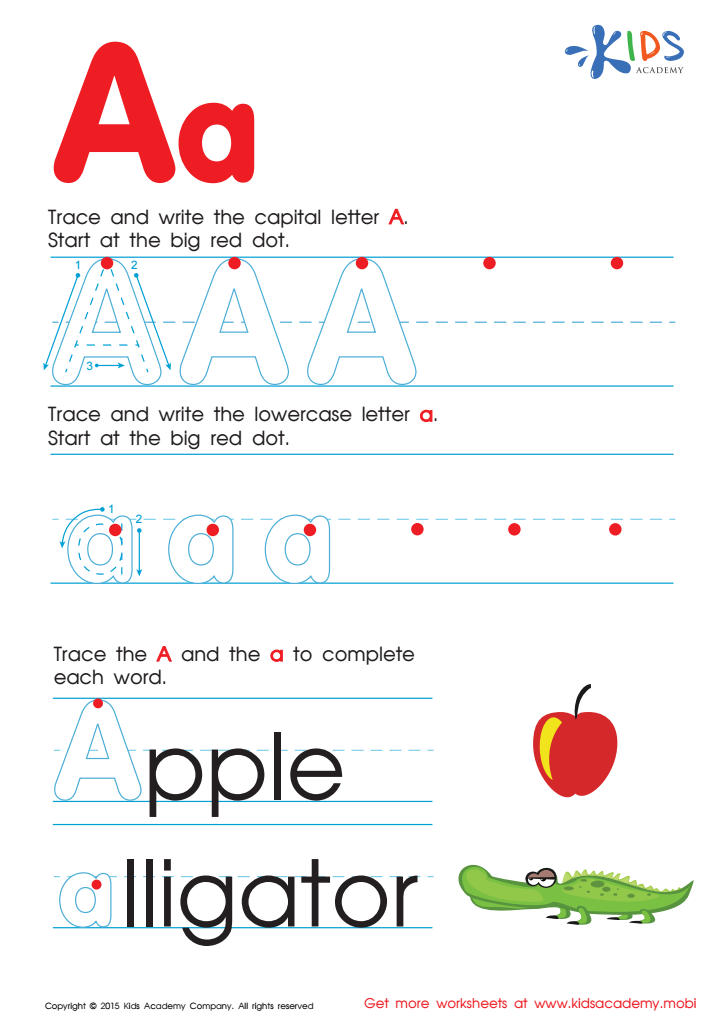
Letter A Tracing Page
 Assign to My Students

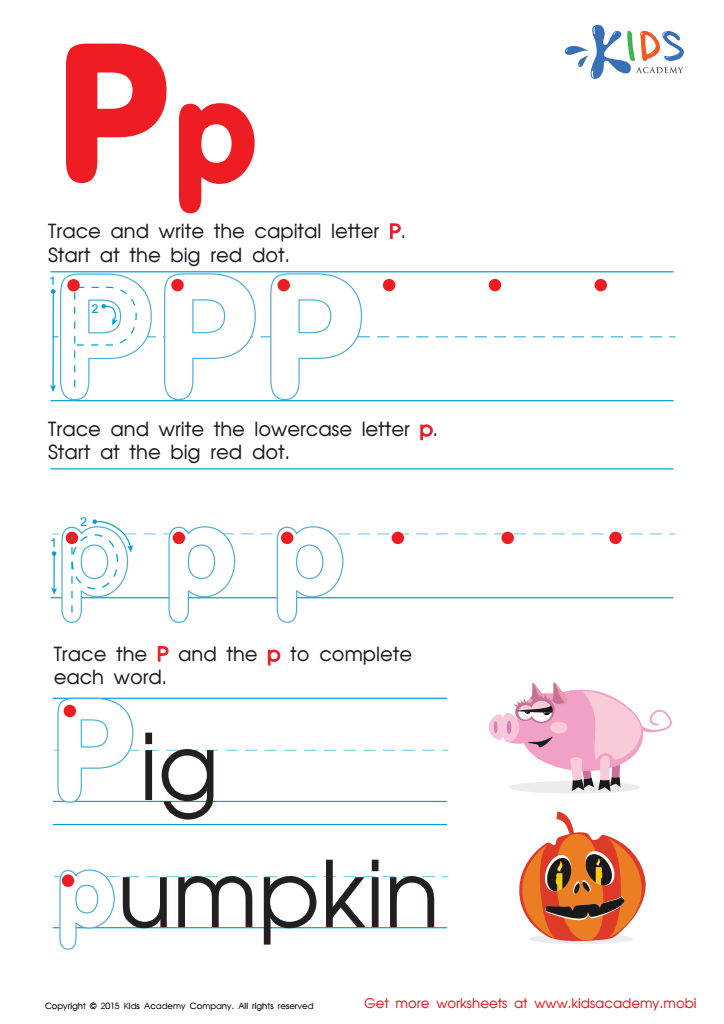
Letter P Tracing Page
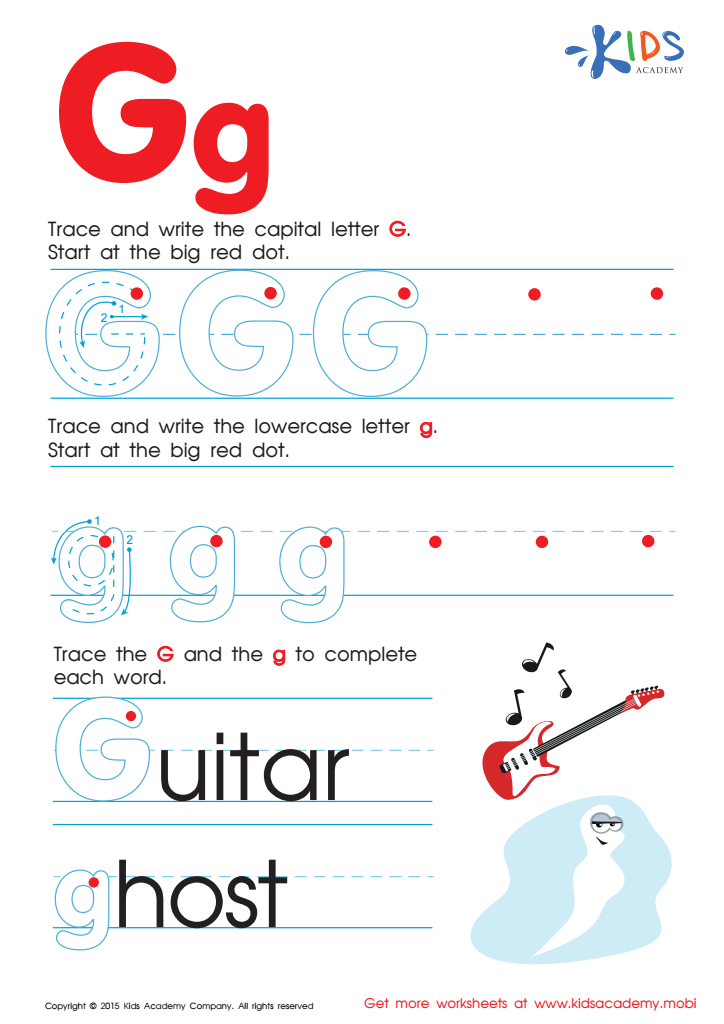
Letter G Tracing Page







Parents and teachers should care about letter formation and ABC order for 3-year-olds because these foundational skills play a critical role in early literacy development. At this age, children are like sponges, absorbing information through play and exploration. Learning to recognize and form letters correctly not only prepares them for reading and writing but also enhances fine motor skills. Engaging in activities that promote letter formation helps develop hand-eye coordination and dexterity crucial for later tasks, like using scissors or writing with a pencil.
Understanding the ABC order fosters cognitive skills, encouraging children to recognize patterns and relationships among letters. This foundational knowledge facilitates later literacy experiences, such as phonics and spelling, making the transition to reading smoother and more engaging.
Moreover, nurturing a love for letters at an early age can spark enthusiasm for learning. When children practice forming letters and recognizing their sequence, they build confidence and a sense of accomplishment, which can motivate them to explore language further. As literacy is fundamental to academic success and lifelong learning, instilling these skills in 3-year-olds positions them to thrive in school and beyond. Therefore, fostering an early understanding of letter formation and alphabet order is essential for future educational success.