Fine motor skills development ABC Letters Worksheets for 3-Year-Olds
3 filtered results
-
From - To
Enhance your 3-year-old's fine motor skills with our engaging ABC Letters Worksheets! Designed specifically for early learners, these printable activities provide a fun way for children to practice letter recognition and essential handwriting techniques. Each worksheet includes interactive exercises that promote gripping, tracing, and coloring, benefiting both gross and precise movement development. The vibrant designs and playful illustrations foster a love for learning while improving hand-eye coordination and dexterity. Perfect for home or classroom use, our worksheets empower young minds to build a solid foundation in literacy skills. Start your child’s educational journey with our creative and exciting resources today!
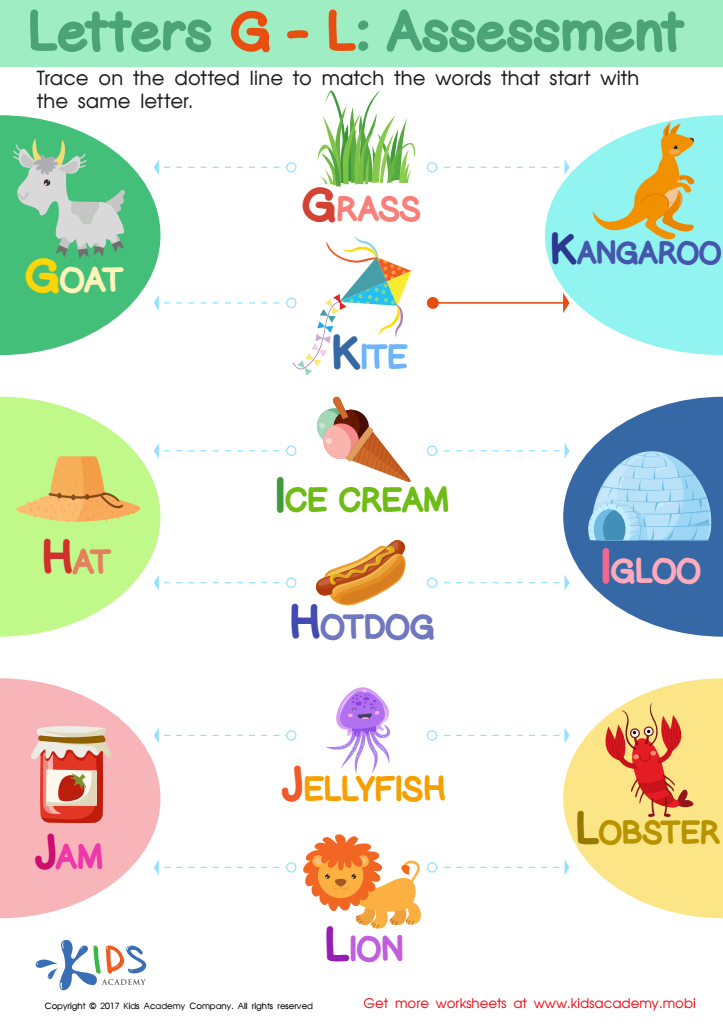
Letters G-L Worksheet



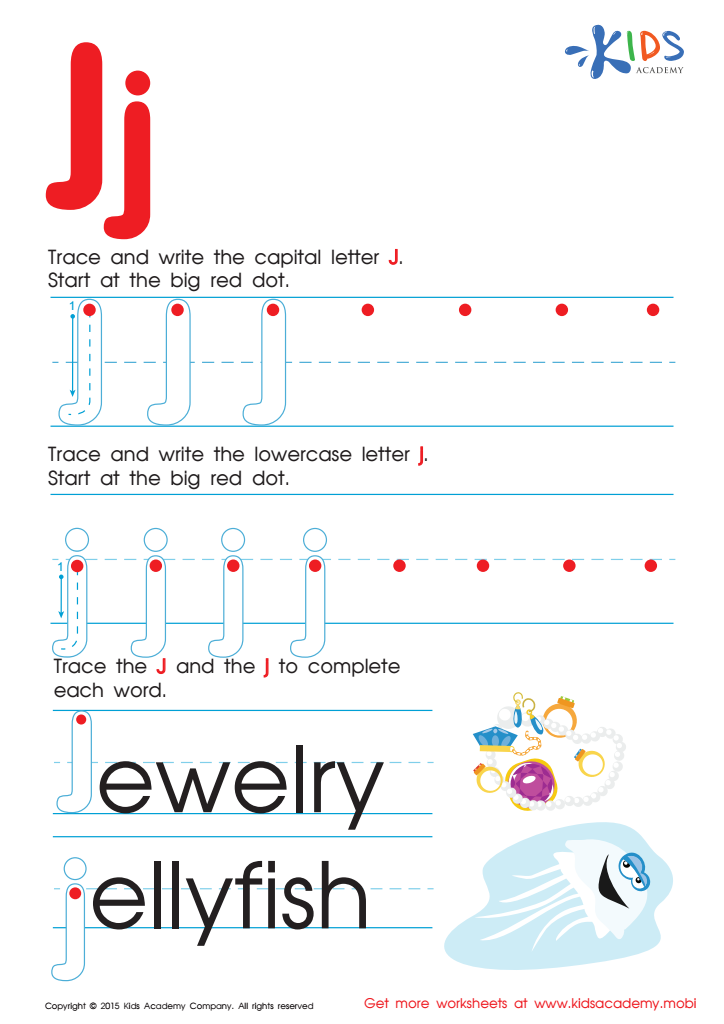
Letter J Tracing Page
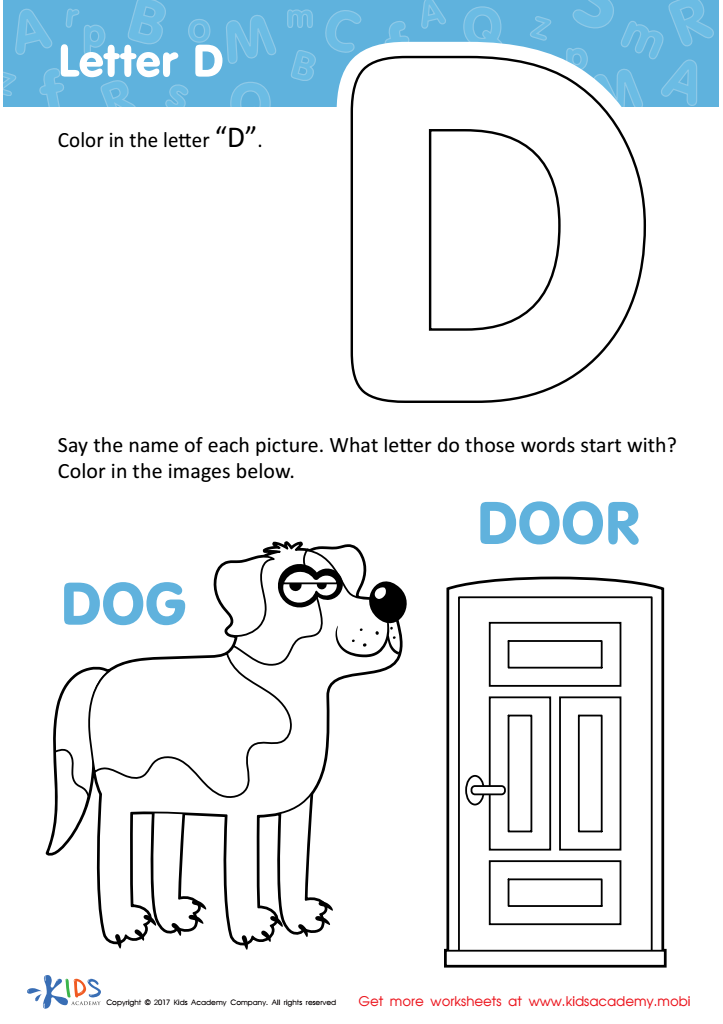
Letter D Coloring Sheet
 Assign to My Students






Fine motor skills development is crucial for 3-year-olds as it lays the foundation for later learning and daily activities. The ability to manipulate small objects, such as ABC letters, enhances children's hand-eye coordination, dexterity, and control. These skills are essential for tasks like writing, cutting, and even self-care activities such as buttoning clothes and brushing teeth.
For parents and teachers, focusing on fine motor skills involving ABC letters provides an engaging way to foster literacy. By manipulating alphabet shapes through activities like tracing, sorting, or playing with letter puzzles, children develop not only their motor skills but also their recognition of letters and sounds, which are pivotal for reading readiness.
Additionally, these activities often encourage creativity and problem-solving, as children explore various ways to form and interact with letters. Engaging in fine motor activities fosters a sense of accomplishment and boosts children's confidence as they observe their skills improving. Ultimately, prioritizing fine motor skills development enables children to prepare for the demands of school and everyday life, ensuring they are well-equipped for future challenges.







