Listening skills Elementary Phonics Worksheets for 3-Year-Olds
3 filtered results
-
From - To
Enhance your child’s early literacy through our engaging Listening Skills Elementary Phonics Worksheets designed specifically for 3-year-olds! These interactive worksheets empower young learners by focusing on phonemic awareness, helping them develop essential listening skills needed for reading readiness. Featuring playful activities and simple exercises, children will learn to identify letters, sounds, and words through fun and captivating formats. Our user-friendly resources support parents and educators in creating a stimulating learning environment. Build a solid foundation for your child's educational journey while making learning enjoyable! Download our printable worksheets today and watch your little ones thrive in their phonics skills!
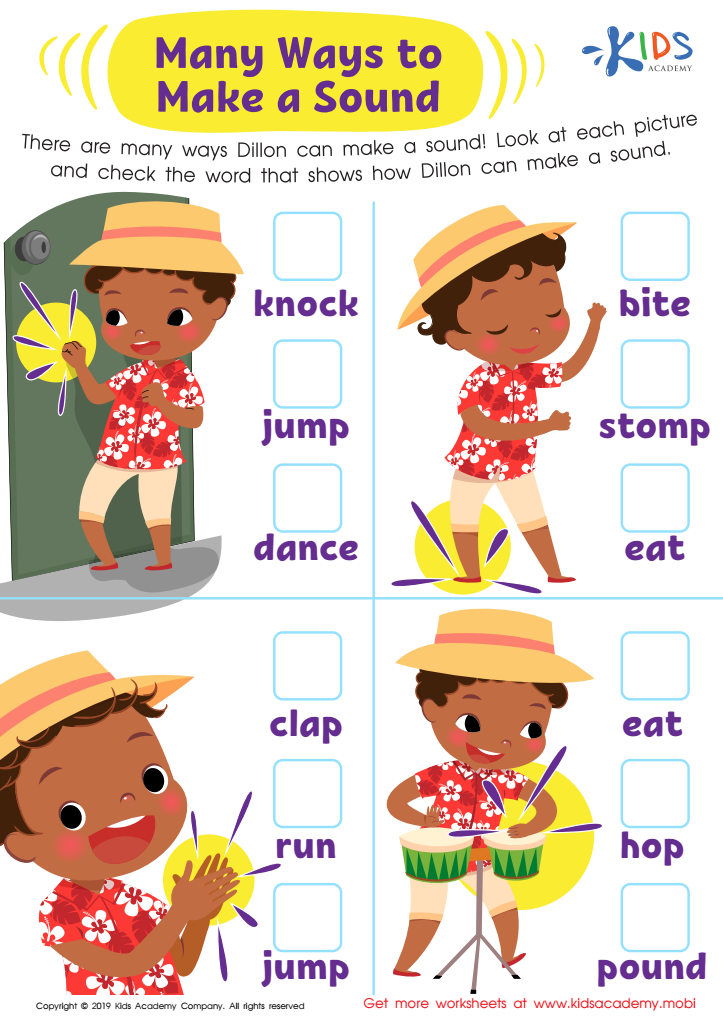
Many Ways to Make a Sound Worksheet
 Assign to My Students
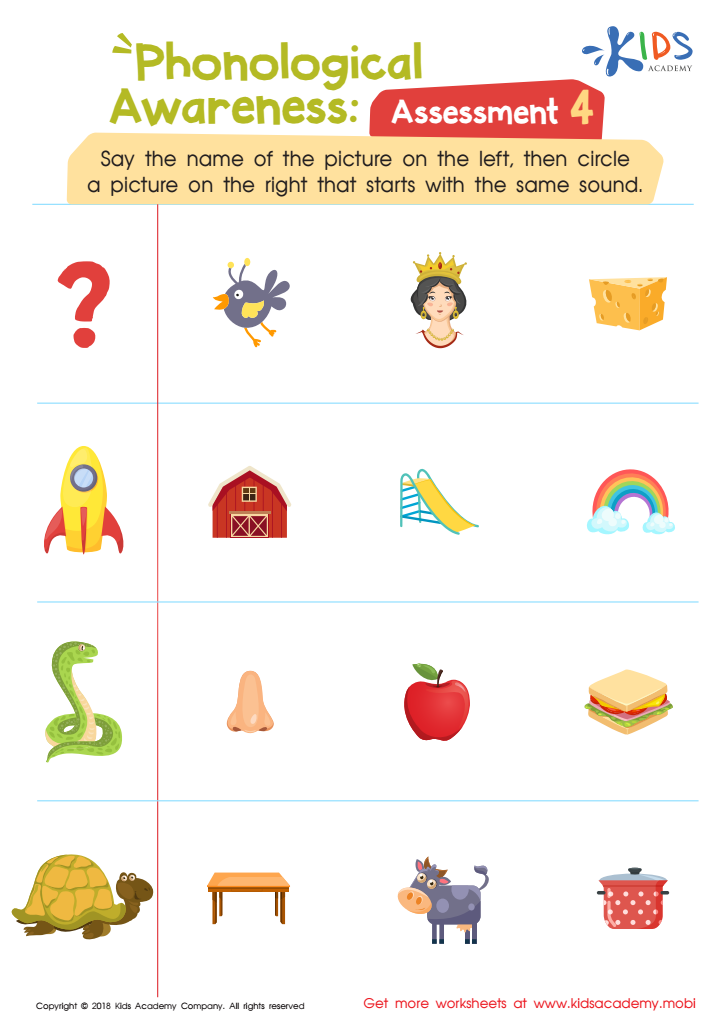
Phonological Awareness: Assessment 4 Worksheet
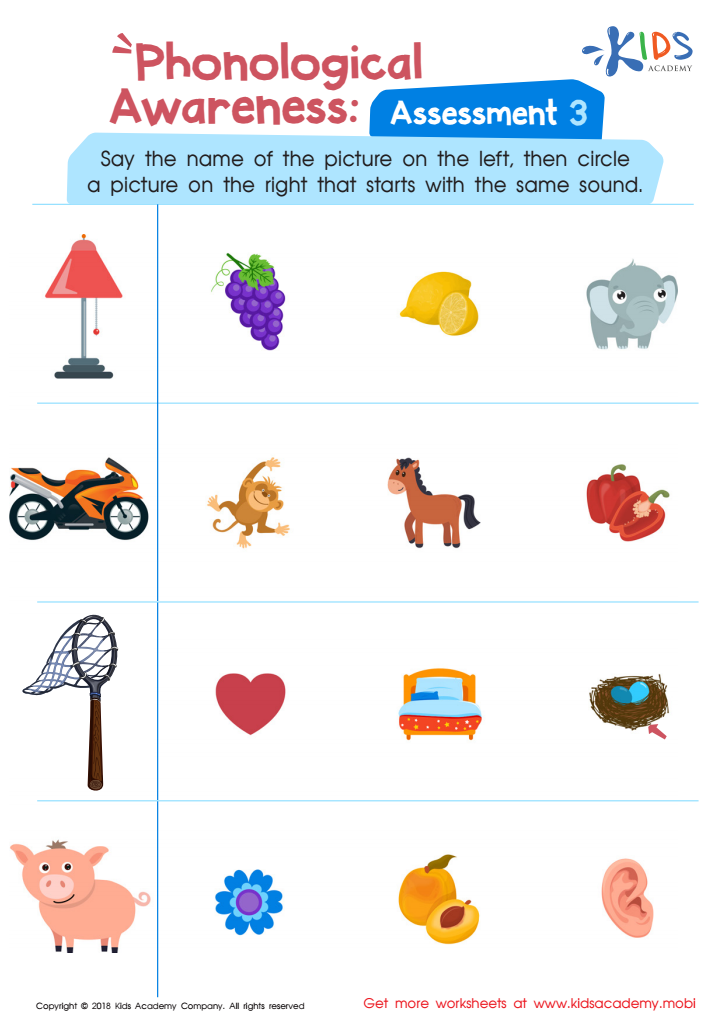
Phonological Awareness: Assessment 3 Worksheet




Listening skills are foundational for young children's language development, especially for 3-year-olds embarking on their phonics journey. Parents and teachers should prioritize these skills because they directly impact literacy and overall communication abilities. At this age, children learn to recognize the sounds of letters, understand word structures, and eventually decode written language, all of which begin with effective listening.
When children develop strong listening skills, they become more adept at distinguishing sounds and phonemes, which are crucial for spelling and reading proficiency. Engaging in phonics activities that emphasize listening helps young learners connect sounds to letters, setting the stage for successful reading experiences. Furthermore, enhanced listening ability promotes better comprehension, vocabulary growth, and social interaction, allowing children to follow directions, engage in conversations, and understand stories.
In a collaborative learning environment, when teachers and parents provide consistent support for listening development, they can create a stronger foundation for literacy. As research shows, early intervention can yield lasting benefits; thus, emphasizing listening skills in phonics instruction for preschoolers can lead to greater academic success later on. Facilitating this skill not only nurtures literacy but also fosters a love for learning that can last a lifetime.







