Sound identification Elementary Phonics Worksheets for 3-Year-Olds
4 filtered results
-
From - To
Introduce your 3-year-olds to the exciting world of phonics with our Sound Identification Elementary Phonics Worksheets! These engaging and educational resources are designed specifically for young learners to develop their listening and sound recognition skills. Each worksheet features fun activities that help children identify and match initial sounds to corresponding pictures, fostering essential auditory discrimination abilities. Perfect for reinforcing early literacy, our phonics worksheets make learning enjoyable and interactive. Give your little ones a solid foundation in reading by incorporating these captivating tools into their everyday educational routine. Start their phonics journey today for a brighter tomorrow!
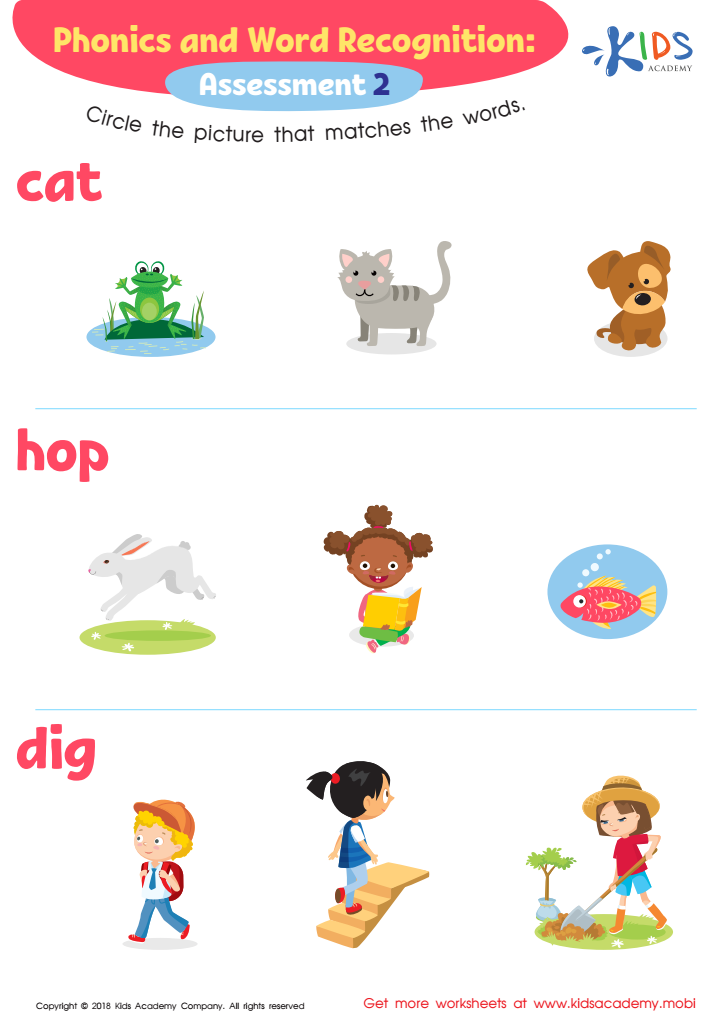
Phonological Awareness: Assessment 2 ELA Worksheet
 Assign to My Students
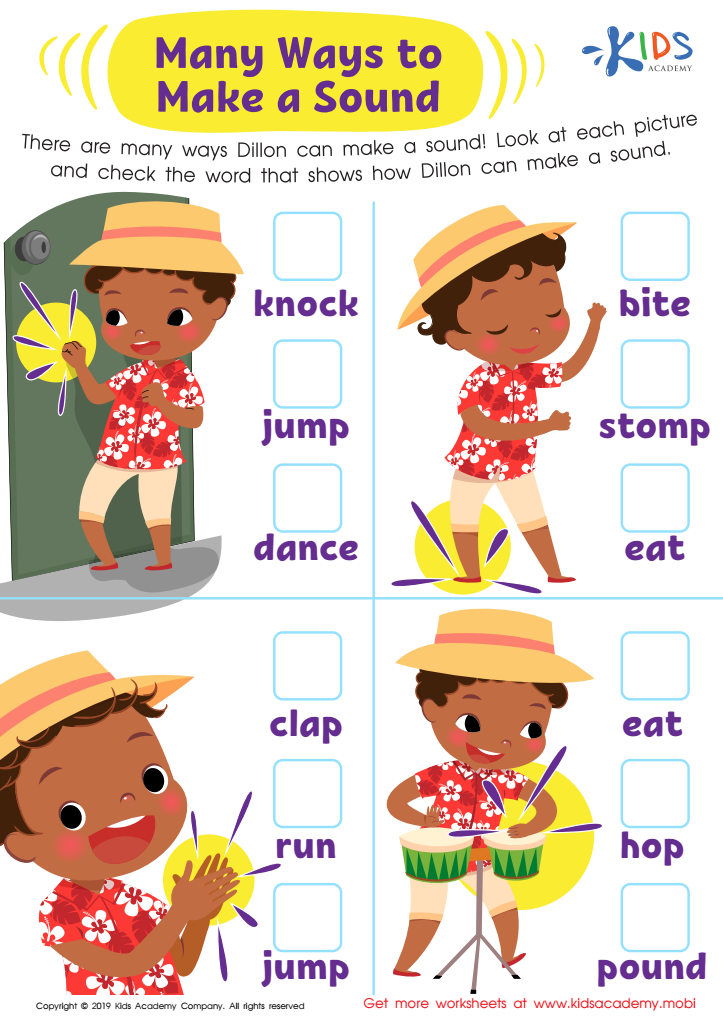
Many Ways to Make a Sound Worksheet
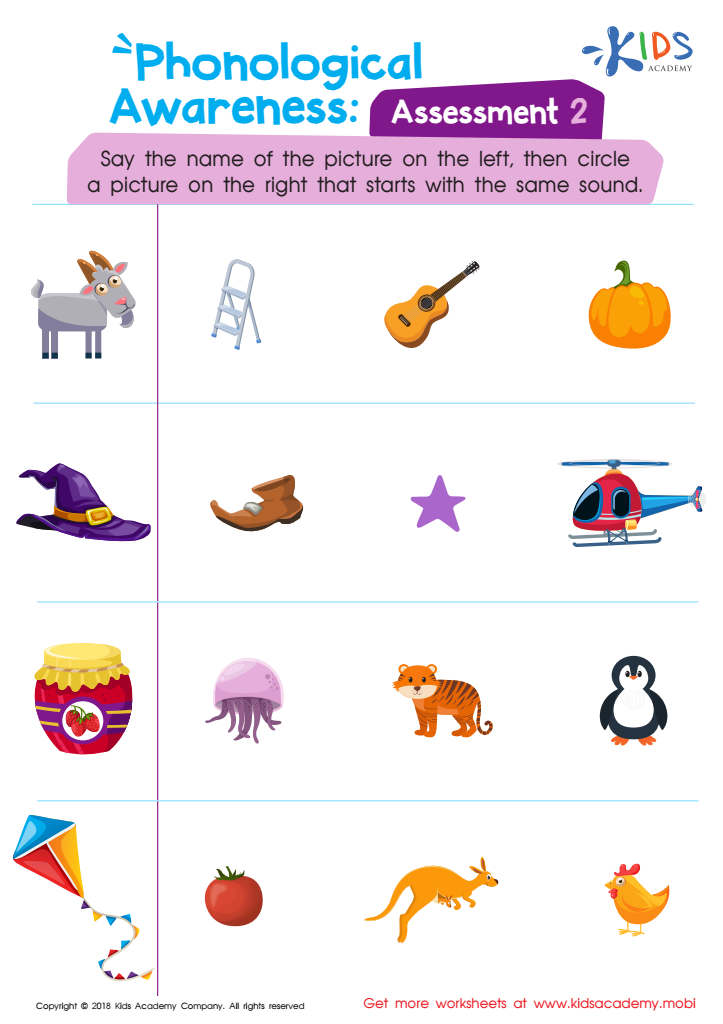
Phonological Awareness: Assessment 2 Worksheet
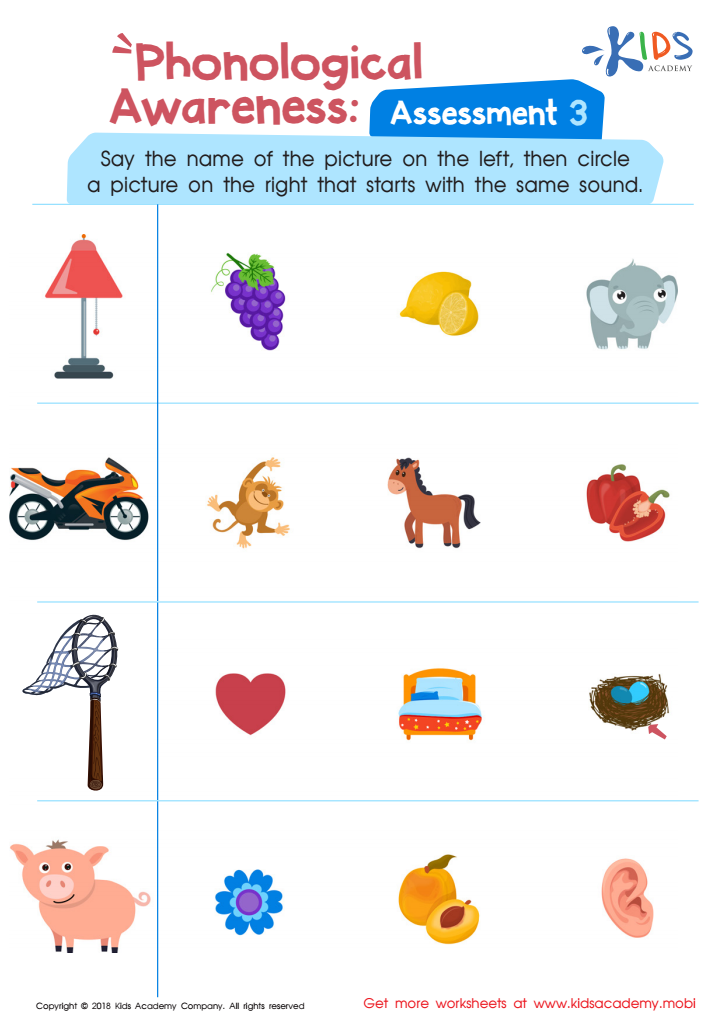
Phonological Awareness: Assessment 3 Worksheet




Parents and teachers should care about sound identification and elementary phonics for 3-year-olds because these foundational skills are crucial for early literacy development. At this age, children's brains are highly receptive to language acquisition, and phonics helps them understand the relationship between sounds and letters. By recognizing and differentiating sounds, children can begin to decode words, an essential step in learning to read.
Early exposure to phonics enhances listening skills and auditory discrimination, both of which contribute to stronger comprehension and communication abilities. As children learn to identify sounds, they also improve their language structure knowledge, which is vital for constructing sentences and expressing ideas effectively.
Moreover, engaging 3-year-olds in fun and interactive phonics activities can boost cognitive development and foster a love for reading. Playful learning experiences, such as singing phonics songs or playing sound-matching games, make learning enjoyable and lay a solid foundation for future academic success.
Intervening early with phonics instruction can also help identify and address potential learning difficulties, allowing for timely support. In sum, early sound identification and phonics instruction are critical for shaping confident, competent readers and communicators as children grow.







