Vocabulary development Elementary Phonics Worksheets for 3-Year-Olds
3 filtered results
-
From - To
Unlock the joy of learning with our Vocabulary Development Elementary Phonics Worksheets designed specifically for 3-year-olds! These engaging and interactive worksheets help young learners build essential vocabulary and phonics skills through fun activities. Tailored to spark curiosity, each worksheet promotes letter recognition, word association, and phonetic awareness, laying a strong foundation for future reading success. With colorful illustrations and playful exercises, children will enjoy expanding their language skills while developing confidence in their abilities. Perfect for parents and educators alike, our worksheets provide a wonderful resource to enhance early literacy in the classroom or at home. Start the adventure today!
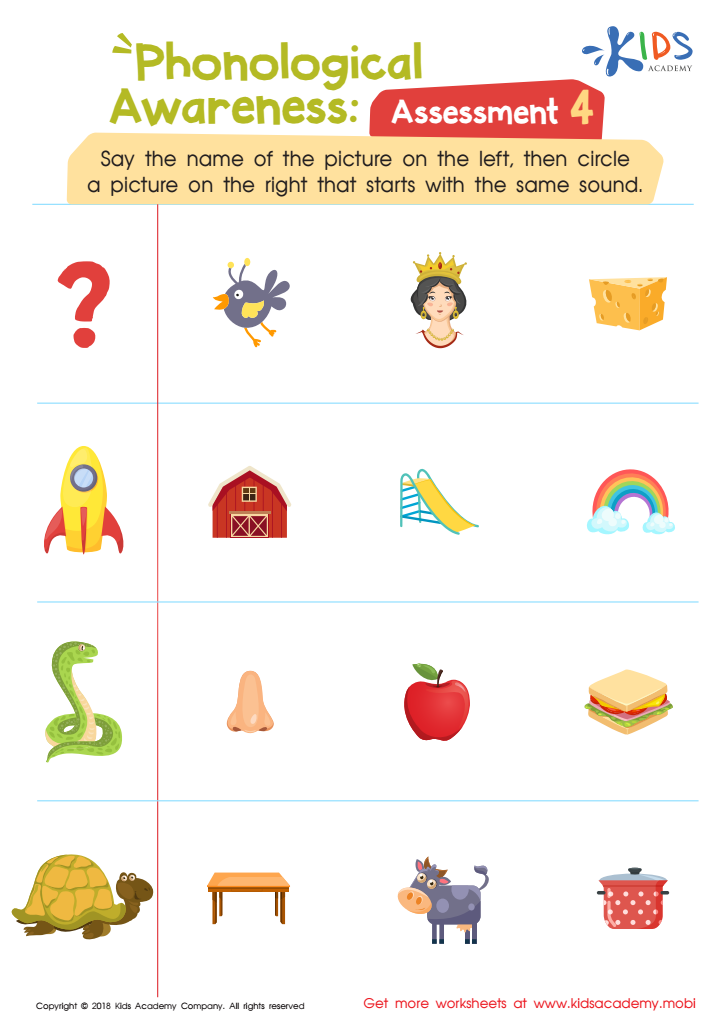
Phonological Awareness: Assessment 4 Worksheet
 Assign to My Students
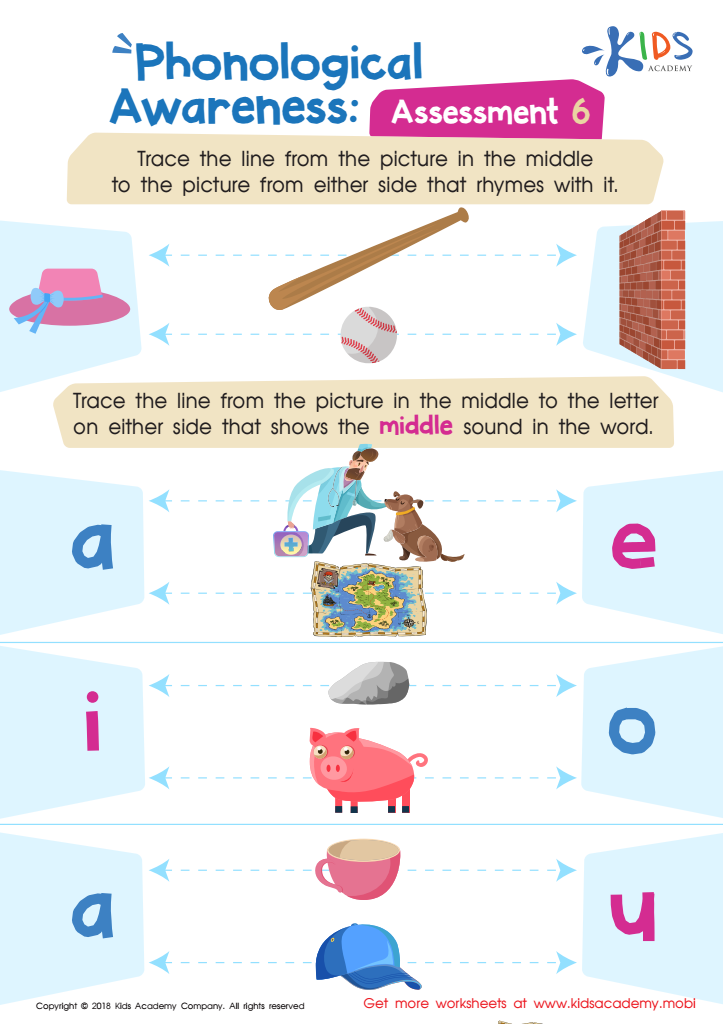
Phonological Awareness: Assessment 6 Worksheet
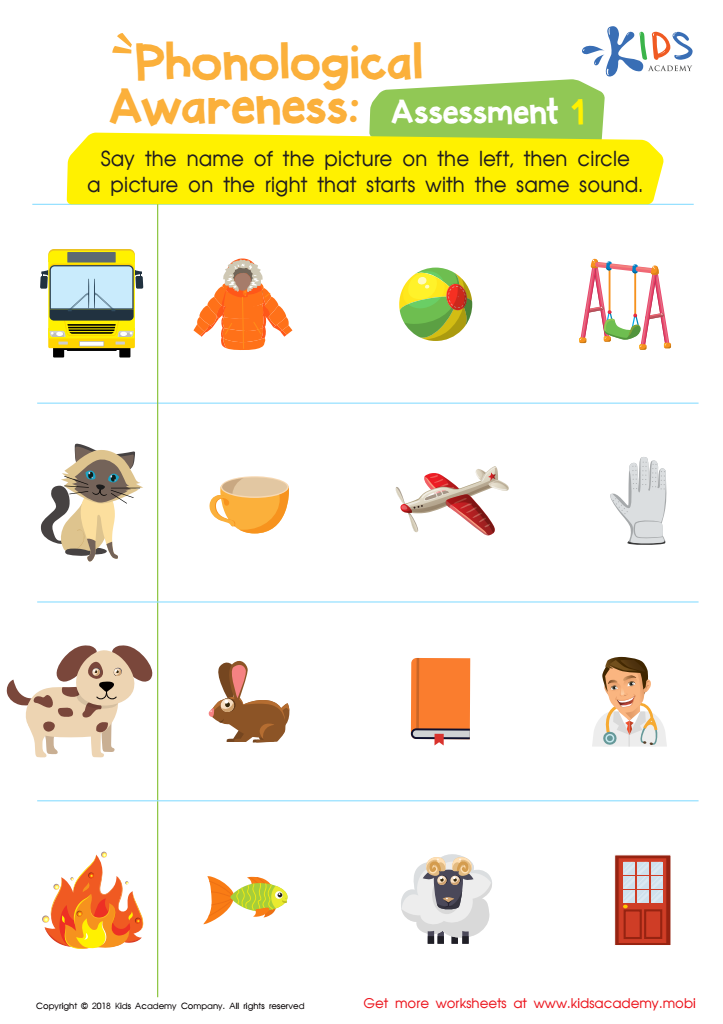
Phonological Awareness: Assessment 1 Worksheet




Vocabulary development and phonics skills are critical components of early childhood education, particularly for 3-year-olds. At this age, children are rapidly acquiring language skills, and the foundation for their future reading and writing abilities is being established. Parents and teachers should focus on vocabulary development because a robust vocabulary enhances comprehension, communication skills, and overall cognitive development. Engaging children in conversations, reading aloud, and exposing them to diverse words equips them with the tools necessary for effective expression and understanding of the world around them.
Phonics, on the other hand, lays the groundwork for reading success by helping children understand the relationship between sounds and letters. Mastering phonics skills at an early stage enables children to decode words, facilitating independent reading and building confidence. When children recognize sounds and letters, they are better prepared to tackle more complex texts in the future.
Moreover, strong vocabulary and phonics skills foster a love for reading, encouraging lifelong learning. For teachers and parents, supporting vocabulary development and phonics learning not only enhances academic readiness but also empowers children to grasp their environment, boosting their self-esteem and critical thinking abilities in the process. Ultimately, these skills pave the way for a successful educational journey.







