Word Recognition Elementary Phonics Worksheets for 3-Year-Olds
6 filtered results
-
From - To
Boost your child's literacy skills with our engaging Word Recognition Elementary Phonics Worksheets designed specifically for 3-year-olds! These interactive resources introduce young learners to foundational phonics concepts through fun activities tailored to their developmental stage. Each worksheet enhances vocabulary and word recognition, promoting essential early literacy skills in a playful manner. Featuring colorful visuals and simple exercises, our worksheets encourage children to identify and connect letters and sounds, setting the stage for future reading success. Explore our collection to support your child's language development and foster a love for reading from an early age. Start their phonics journey today!
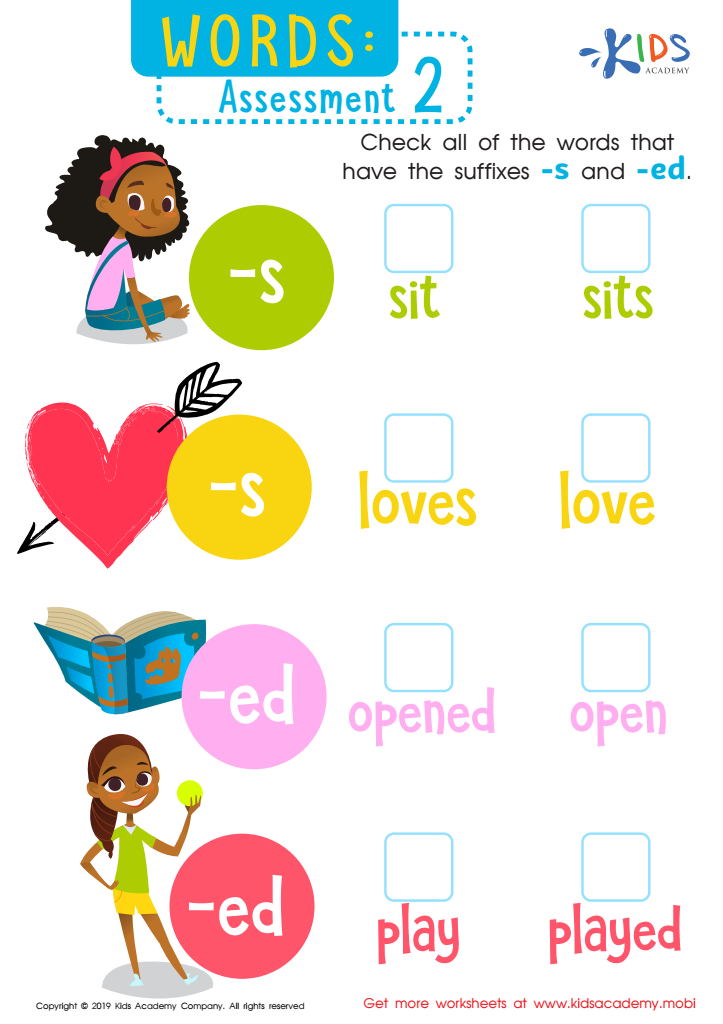
Words: Assessment 2 Worksheet
 Assign to My Students
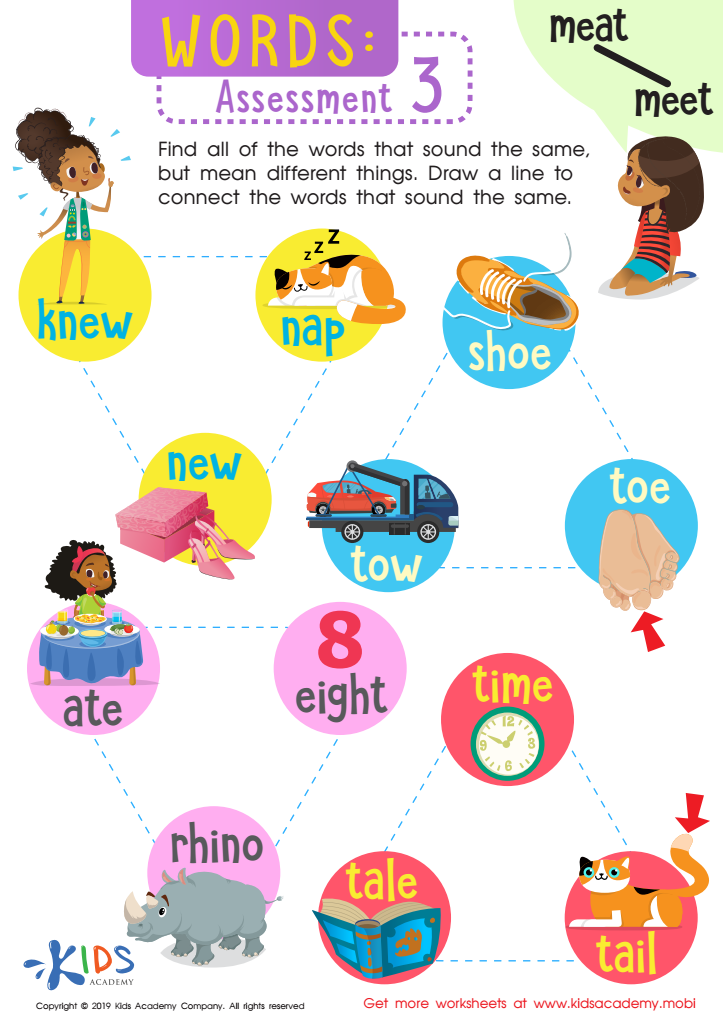
Words: Asessment 3 Worksheet
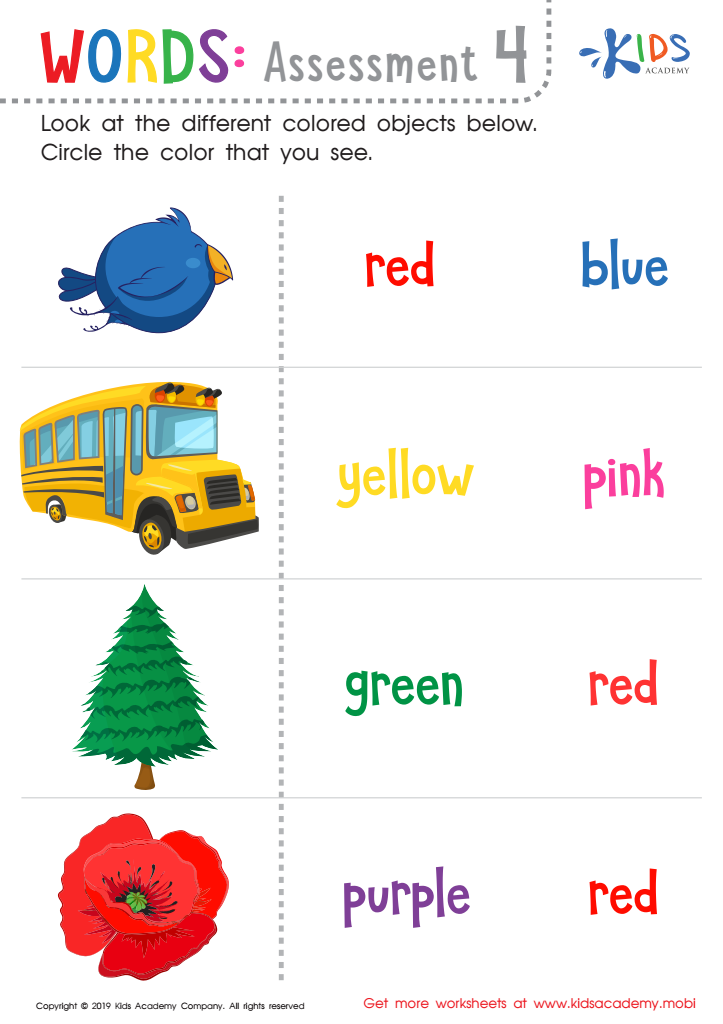
Words: Assessment 4 Worksheet
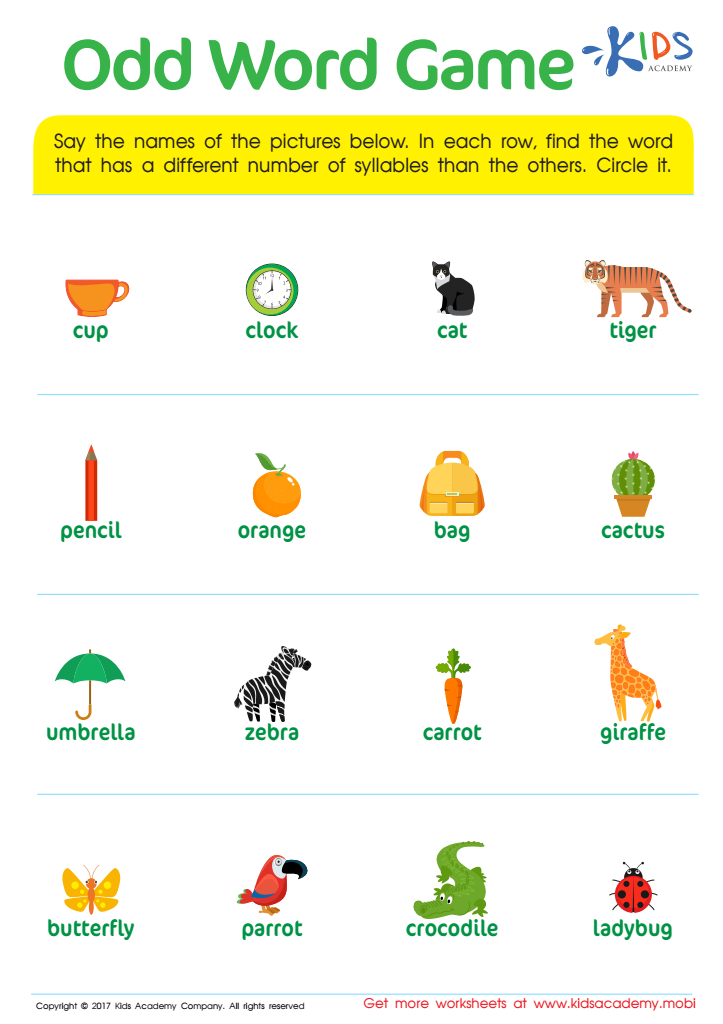
Count Syllables: Odd Word Game Worksheet
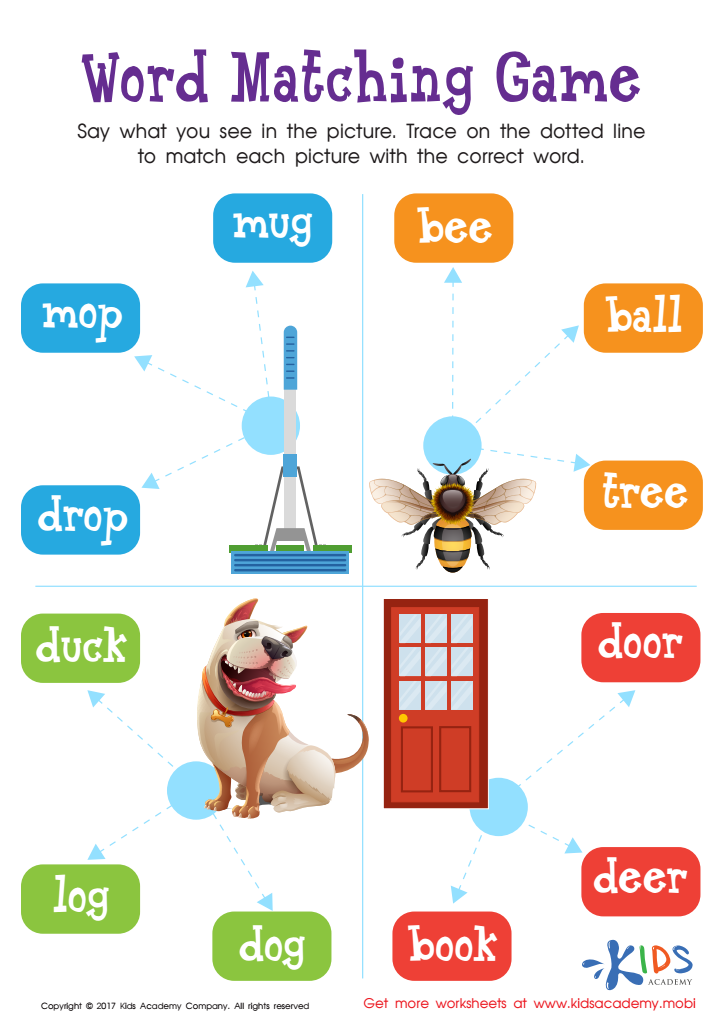
Word Matching Game Worksheet
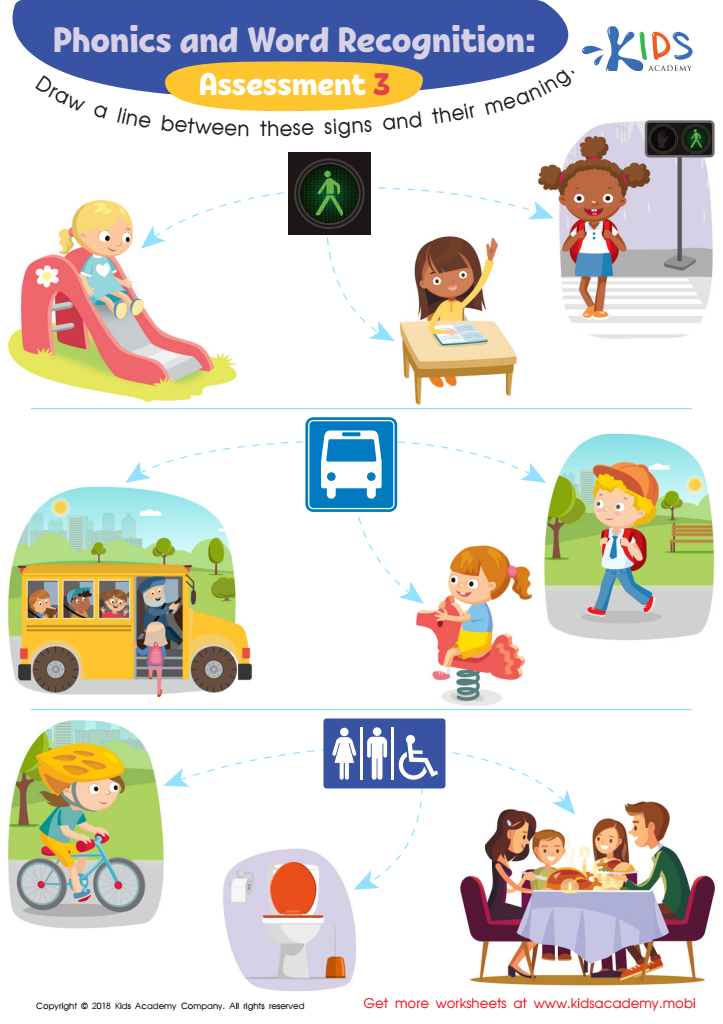
Phonological Awareness: Assessment 3 ELA Worksheet




Word recognition and early phonics play a critical role in a child's literacy development, particularly by the age of three. At this stage, children are absorbing language through interaction with adults and their environment. Early phonics activities significantly build their foundation for reading and writing by helping them understand the relationship between letters and sounds.
Parents and teachers should care about word recognition and phonics because these skills promote early reading proficiency. Developing strong phonics skills enables children to decode words, enhancing their ability to recognize familiar words in print. This recognition boosts their self-confidence and fosters a love for reading, which is essential for academic success.
Moreover, engaging children in phonics activities cultivates essential listening and cognitive skills. For instance, rhyming games and sound matching can sharpen auditory discrimination, which is vital for spelling and overall language development. Thus, when parents and teachers actively support word recognition and phonics at home and in the classroom, they not only enhance a child's future literacy skills but also encourage lifelong learning habits. Ensuring that young learners have these foundational skills sets them on a positive trajectory for academic achievement and personal growth.







