
Reading practice Alphabet Worksheets for 3-Year-Olds
3 filtered results
Difficulty Level
Grade
Age
-
From - To
Subject
Activity
Standards
Enhance your 3-year-old's reading skills with our engaging Alphabet Worksheets! Designed to foster early literacy, these worksheets introduce young learners to letters through fun activities that spark their interest. Each worksheet offers a variety of interactive exercises, such as letter tracing, matching, and identifying letters in fun illustrations. Our resources encourage fine motor skills development while reinforcing letter recognition in a playful and engaging way. Perfect for home or classroom use, these worksheets provide a strong foundation for future reading success. Explore our collection today and watch your child flourish as they embark on their exciting reading journey!
Favorites
With answer key
Interactive
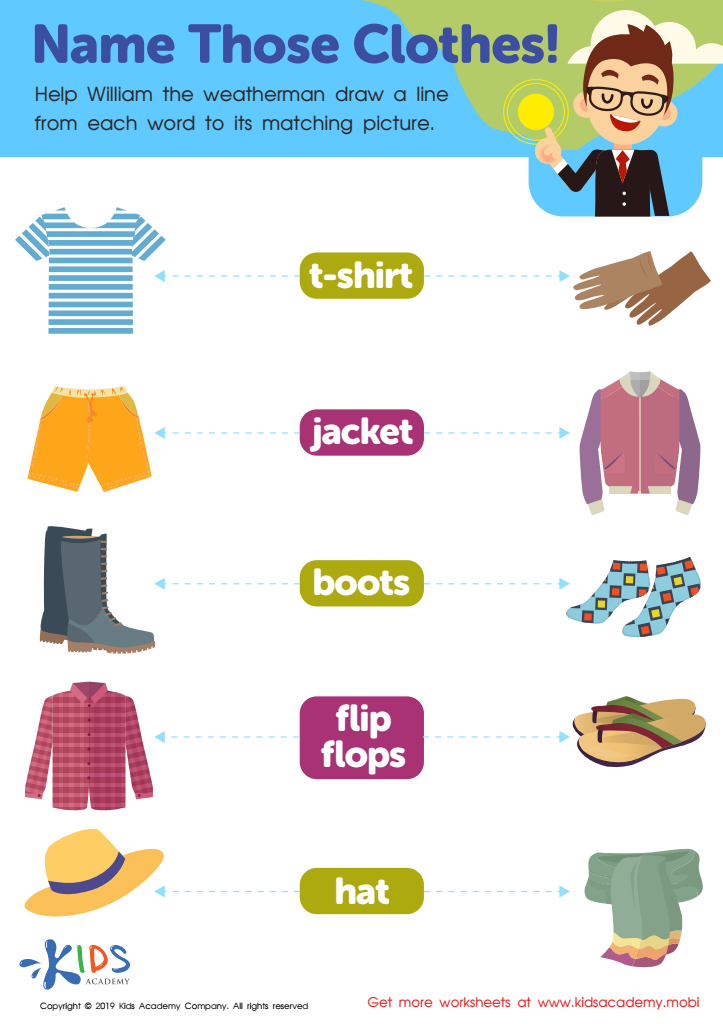
Name Those Clothes Worksheet
This worksheet will help your preschooler build their vocabulary, develop life-skills and work on fine motor skills. They'll analyze which clothing goes with the weatherman and match it to the word. It's a fun and interactive way to recognize high-frequency words.
 Assign to My Students
Name Those Clothes Worksheet
Worksheet
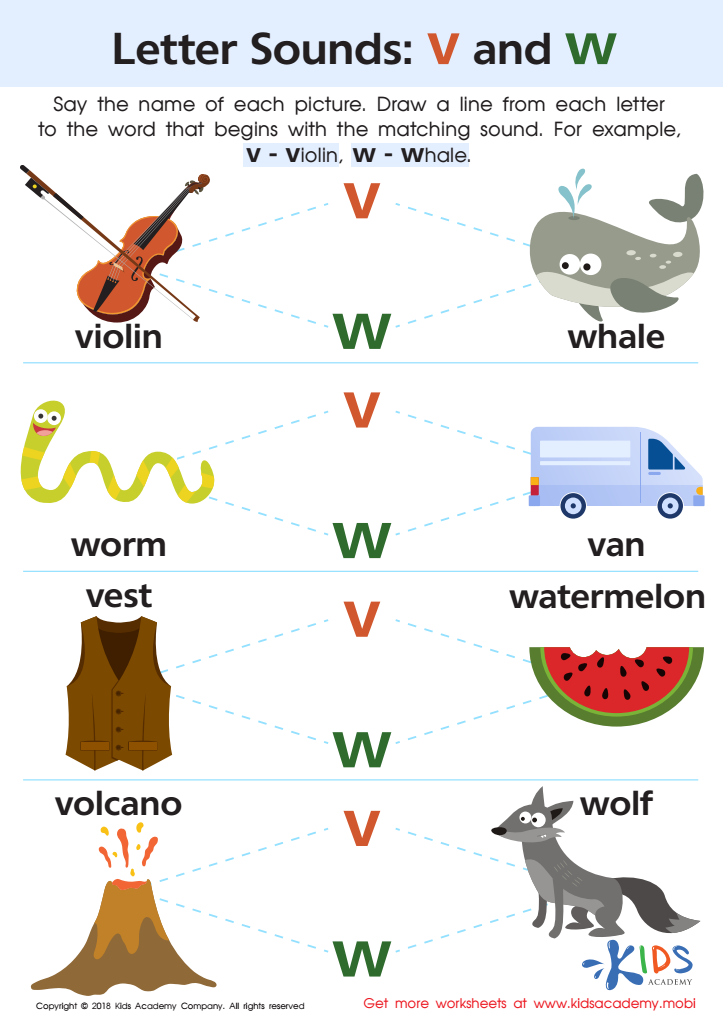
Letter V and W Sounds Worksheet
Help your child master the sounds of W & V while completing this fun phonics worksheet. Have them trace the dotted line from letter to picture while saying words like "worm", "violin" and "van" aloud to notice how each word begins with either W or V. Listen and pay attention to the pronunciation to complete the practice.
Letter V and W Sounds Worksheet
Worksheet
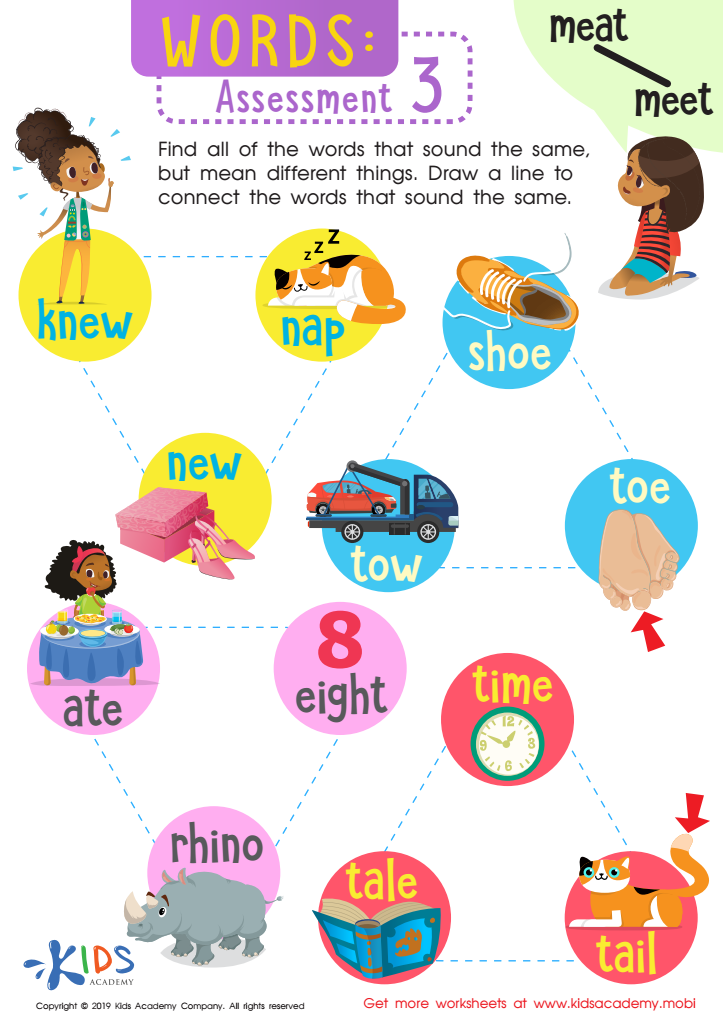
Words: Asessment 3 Worksheet
Assess your child's knowledge of homonyms with words like "toe" and "tow". This fun worksheet helps find words that sound the same but have different meanings and spellings. Use it to introduce homographs--words spelled the same with different meanings!
Words: Asessment 3 Worksheet
Worksheet
Join Kids Academy for Free
Who is primarily going to use this learning content?



.jpg)


Reading practice with the alphabet is essential for 3-year-olds as it lays the foundation for future literacy and academic success. At this age, children are particularly receptive to learning, making it the perfect time for them to explore letters and sounds. Engaging in alphabet activities boosts phonemic awareness—the ability to hear and manipulate sounds—which is crucial for reading.
Additionally, practicing the alphabet fosters fine motor skills through activities like tracing or forming letters with playdough. This kind of hands-on learning not only enhances physical dexterity but also keeps children engaged. Moreover, incorporating reading into daily routines introduces children to new vocabulary and ideas, nurturing their cognitive development.
Parents and teachers play a vital role in creating a rich language environment. Reading together, singing the alphabet song, or playing letter-based games cultivates a love for reading and instills confidence. Early exposure to letters makes the transition to more complex reading easier, ultimately contributing to academic achievement. By prioritizing alphabet practice, adults can ensure that children are not just ready to read, but also excited about it, setting the stage for a lifelong appreciation for learning and literacy.







