
Word identification Alphabet Worksheets for 3-Year-Olds
3 filtered results
Difficulty Level
Grade
Age
-
From - To
Subject
Activity
Standards
Introduce your little learners to the wonderful world of words with our Word Identification Alphabet Worksheets for 3-Year-Olds! Designed to foster early literacy skills, these engaging worksheets help children recognize letters and build vocabulary through fun activities. Each worksheet is crafted to support young minds by incorporating colorful visuals and playful themes, making learning both enjoyable and effective. As toddlers practice identifying words and matching them to corresponding images, they build confidence in their reading abilities. Perfect for parents and educators, our worksheets are an invaluable resource for cultivating a love for reading and language in early childhood. Let’s inspire young readers today!
Favorites
With answer key
Interactive
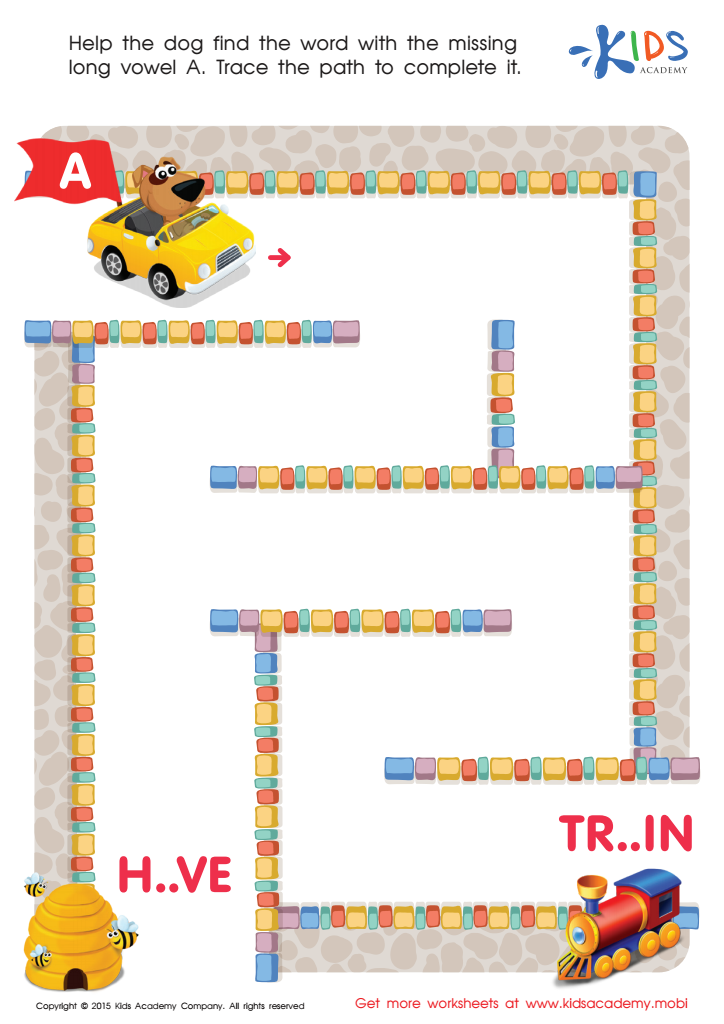
Long Vowel Sound A Worksheet
Teach your young learner about the long vowel A with this colorful free printable phonics worksheet. The long vowel A says its name while the short vowel A does not. Complete the worksheet by tracing the root to the toy train and helping the dog by filling in the missing letter A. Have them practice writing and spelling with phonics while having fun!
 Assign to My Students
Long Vowel Sound A Worksheet
Worksheet
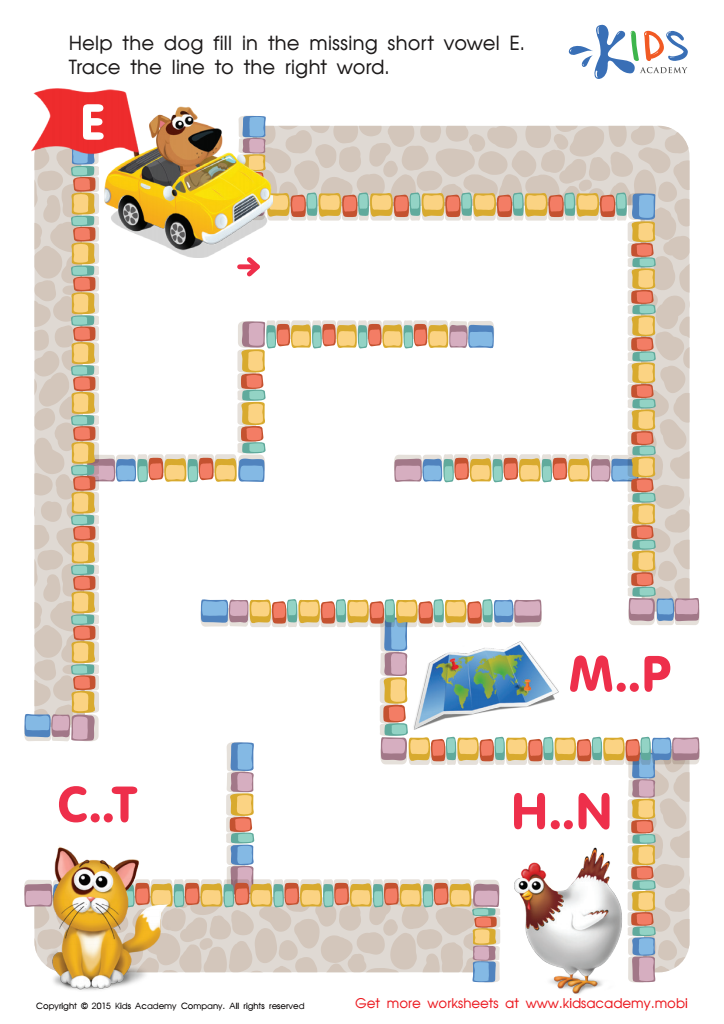
Short Vowel Sound E Worksheet
This free printable phonics worksheet helps kids learn the short vowel sound E. Kids need to help the dog complete the word “hen” by finding their way through a maze. It teaches kids to see the connection between letters and sounds and also strengthens their writing and spelling skills. Fun and educational, this phonics worksheet is great for kids. Want more? Check out here.
Short Vowel Sound E Worksheet
Worksheet
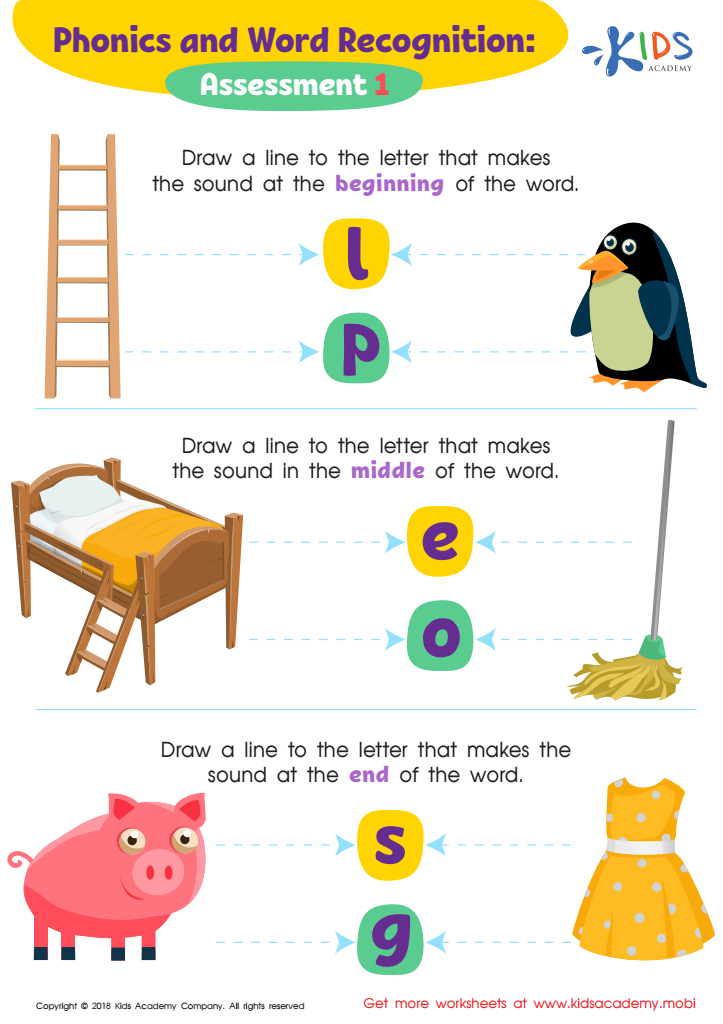
Phonics and Word Recognition: Assessment 1 ELA Worksheet
This fun worksheet tests your child's sound recognition skills for each part of a word. Ask your child to name each image and trace the line to match it with the corresponding letter. Listen for beginning sounds on 1st, middle sounds on 2nd, and ending sounds on 3rd. Encourage learning with this colorful and interactive activity!
Phonics and Word Recognition: Assessment 1 ELA Worksheet
Worksheet
Join Kids Academy for Free
Who is primarily going to use this learning content?






Word identification alphabet for 3-year-olds is a crucial foundation for early literacy development. At this age, children are rapidly acquiring language skills, and recognizing letters and their corresponding sounds sets the stage for reading. When parents and teachers focus on word identification, they are assisting children in understanding the correlation between written and spoken language, which enhances their vocabulary and comprehension abilities.
By engaging in activities that promote word identification, such as alphabet games and storytelling, children develop phonemic awareness and begin to recognize patterns in words. This recognition fosters confidence in their ability to read and communicate, which can lead to a love for books and learning. Moreover, early literacy skills are linked to later academic success; children who reach these benchmarks are oftentimes better equipped for formal schooling.
Additionally, focusing on word identification can aid in emotional and social development. As children learn to identify words, they gain the ability to express their thoughts and feelings more effectively, improving interactions with peers and adults. Parents and teachers play a vital role in this developmental stage, and prioritizing word identification activities can foster a child’s self-esteem and enthusiasm for learning, setting a positive trajectory for future educational experiences.







