Introduce your 3-year-old to the magical world of reading with our Phonics Skills Letter Sounds Worksheets. Specially designed for little learners, these fun, engaging printables help children recognize and articulate letter sounds, building a strong foundation for literacy. Each worksheet features vibrant illustrations and simple exercises to keep young minds interested and excited about learning. By integrating playful activities, parents and educators can aid in the development of essential phonics skills, making reading an enjoyable and rewarding experience. Unlock your child's reading potential and set them on the path to academic success with our expertly crafted worksheets!

Check out this FREE Trial Lesson on Letter Sounds for age 3!

Letter Sound Relationship X-Y-Z

Favorites
With answer key
Interactive
  • 3
  • Phonics Skills
  • Letter Sounds
Letter Q Sounds Worksheet

Letter Q Sounds Worksheet

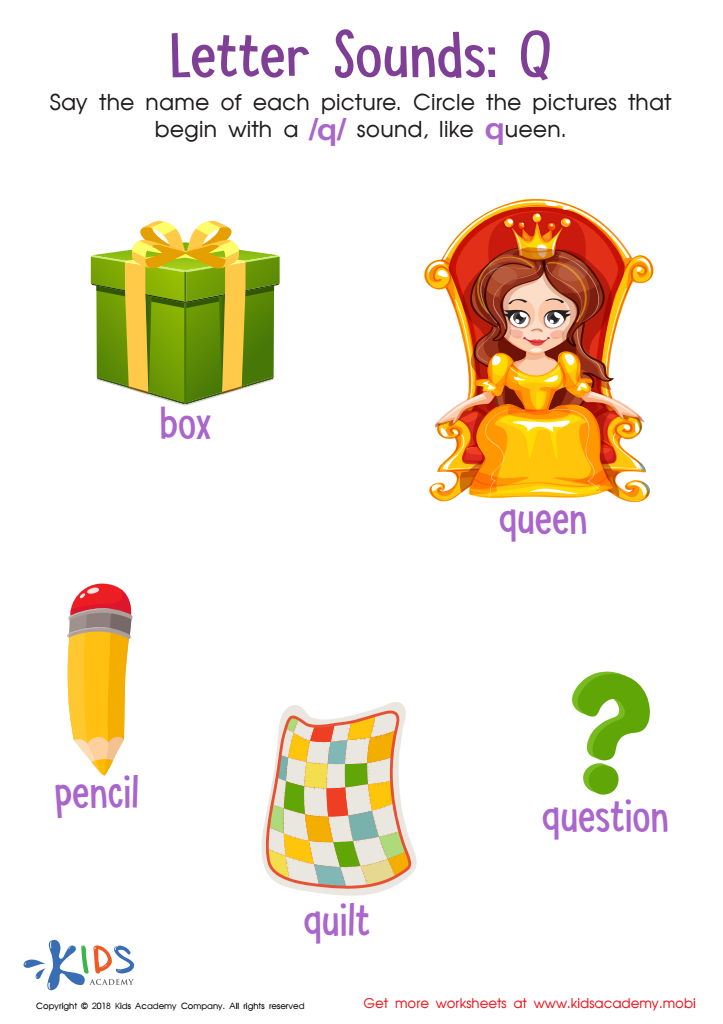
Kids can get confused between "K" and "Q" sounds. Help them learn with this phonics worksheet. They'll name each image and read the word underneath. Point out that words with "Q" also have a "U" which affects how it sounds. Have them circle the matching pictures and watch as they learn this unique letter sound.
Letter Q Sounds Worksheet
Worksheet
Letter B and C Sounds Worksheet

Letter B and C Sounds Worksheet

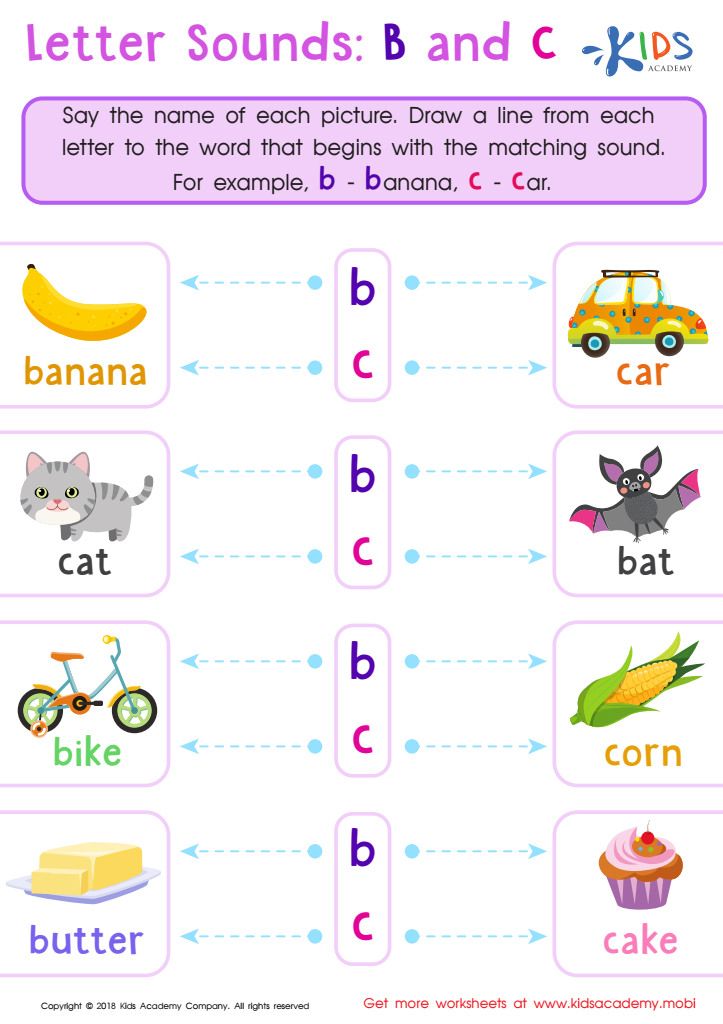
This fun worksheet offers bright, engaging pictures and helps kids learn to distinguish between the sounds of "B" and "C". With the use of pictures and familiar items, kids will trace lines to the correct initial consonant sound, while also developing fine-motor skills. It's a great way to build decoding ability!
Letter B and C Sounds Worksheet
Worksheet
Letter f sounds worksheet

Letter F Sounds Worksheet

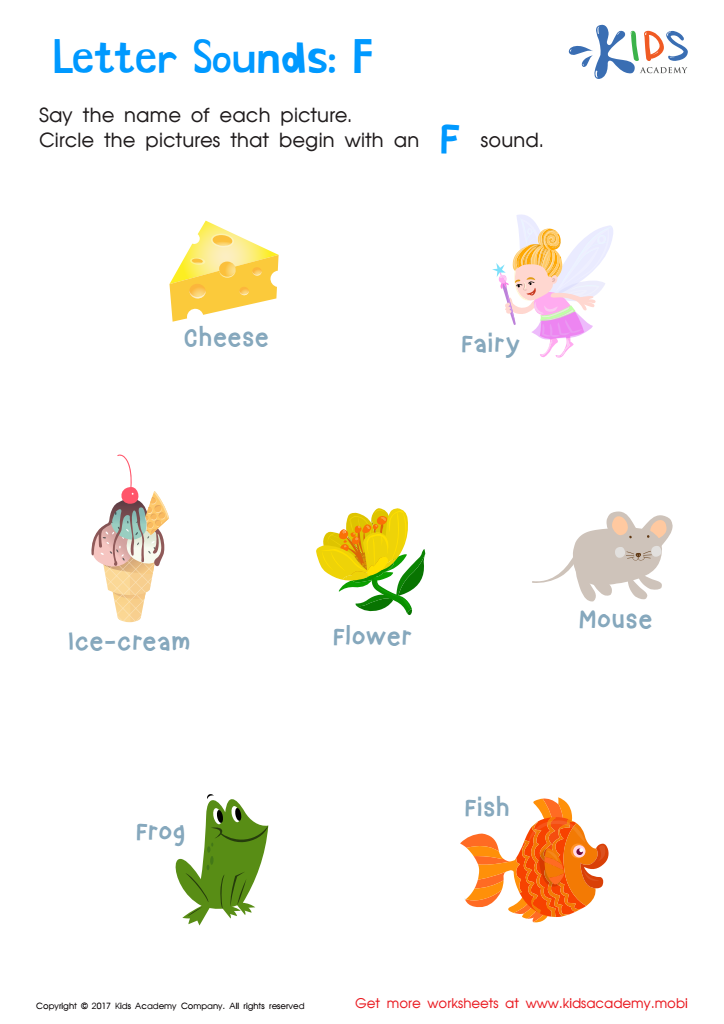
Kids will practice identifying 'f' words, tracing, and coloring the letter F for a great way to learn phonics. Help your child discover the wonders of the letter 'F' with this fun worksheet! Kids will practice identifying 'F' words, tracing and coloring the letter, and building early reading skills. Stimulate their learning and let them connect letter sounds to words they know. An enjoyable way to practice phonics!
Letter F Sounds Worksheet
Worksheet
Letter t sounds worksheet

Letter T Sounds Worksheet

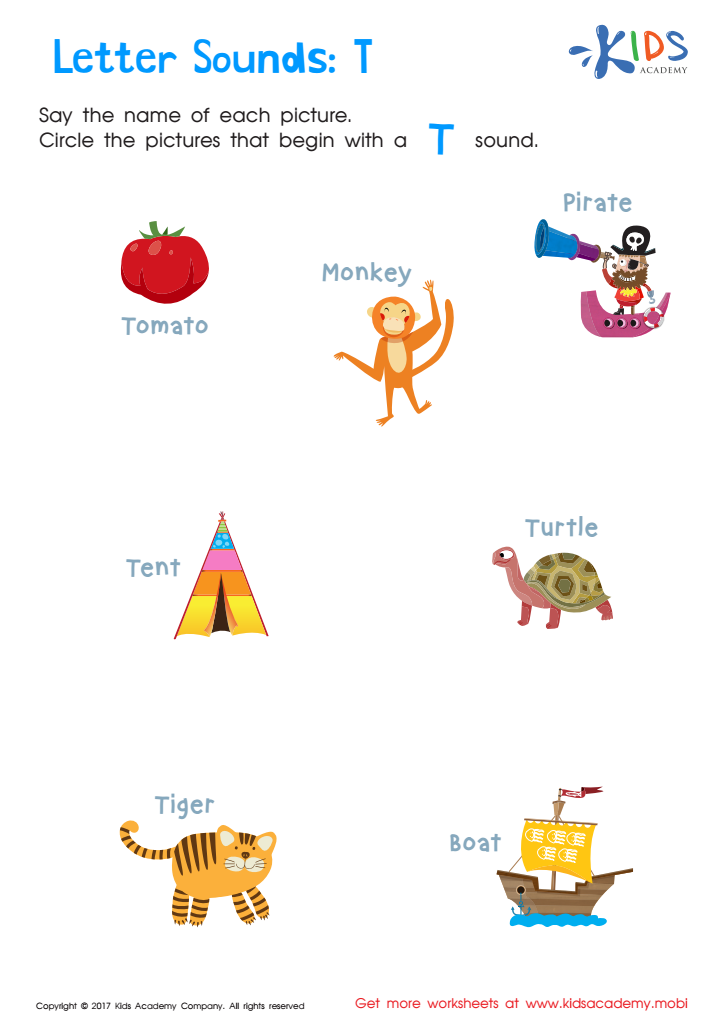
This worksheet is a fun way to help kids learn the t sound. It has familiar pictures and an easy-to-follow format, so kids can quickly recognize and learn the letter t.
Letter T Sounds Worksheet
Worksheet
Letter X Sounds Worksheet
Letter X Sounds Worksheet

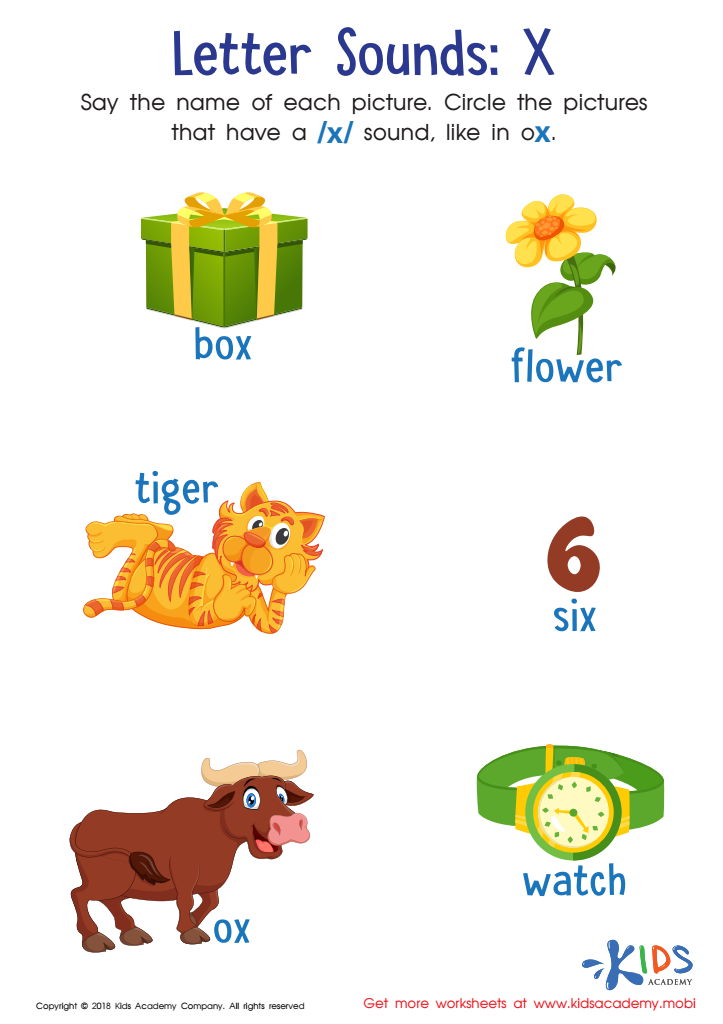
Help your early learner master the letter X sound with this fun, illustrated phonics worksheet. Have kids name the pictures, listening for the pronunciation of each. Have them circle only the pictures with the X sound, then double check by looking for the letter in the word below.
Letter X Sounds Worksheet
Worksheet
Letter l and M Sounds Worksheet


Letter l and M Sounds Worksheet

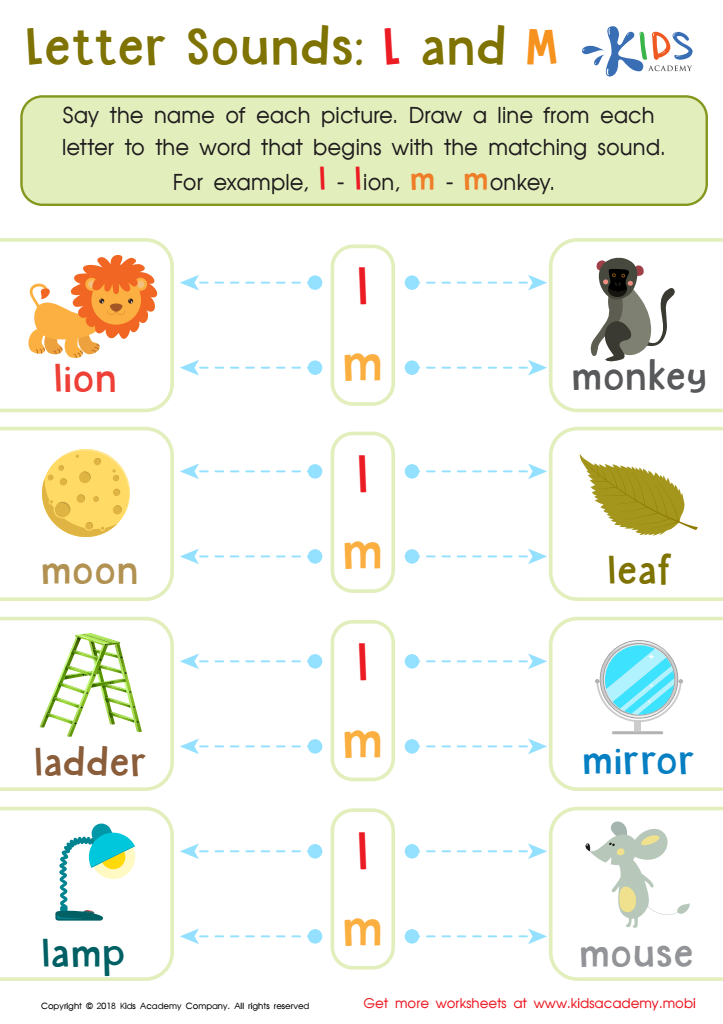
Our Kids Academy phonics practice pages give clear instructions and captivating pictures to pique children's interest. This fun worksheet helps kids identify a picture, then match its beginning sound. Listen and say each word - does it start with "L" or "M"? Trace the dotted line from the letter to the correct match and listen closely to the sound it makes.
Letter l and M Sounds Worksheet

Worksheet


Phonics skills, particularly letter sounds, are crucial for 3-year-olds because they lay the foundation for future reading and literacy development. At this age, children are like sponges, quickly absorbing new information. Introducing them to phonics helps them understand that letters and sounds work together to form words, a fundamental concept in language acquisition.

By focusing on letter sounds, parents and teachers can enhance a child's ability to recognize patterns in words, which is vital for early decoding skills. Decoding involves breaking down words into their component sounds, making it easier for children to read unfamiliar words as they encounter them. This skill boosts their confidence and encourages a positive association with reading.

Furthermore, early mastery of phonics can improve listening and pronunciation skills, fostering clear communication. It also supports other cognitive skills like memory and concentration. Engaging in phonics activities strengthens bonding between parents, teachers, and children, turning learning into a collaborative and enjoyable process.

In sum, by prioritizing phonics and letter sounds at such an early age, we are setting children up for academic success, better communication, and a lifelong love for reading. This early investment can yield significant long-term benefits for their educational journey.