Sound recognition Phonics Worksheets for 3-Year-Olds
4 filtered results
-
From - To
Discover our engaging Sound Recognition Phonics Worksheets specially designed for 3-year-olds! These worksheets provide a fun and interactive way to introduce young learners to the sounds of letters and enhance their phonemic awareness. Through a variety of activities, children will explore sound recognition, helping them connect sounds to letters in an enjoyable manner. Our worksheets promote essential early literacy skills and encourage participation through colorful illustrations and playful exercises. Perfect for at-home learning or classroom use, these resources lay a strong foundation for reading and language development. Start your child’s phonics journey today with our fun-filled worksheets!
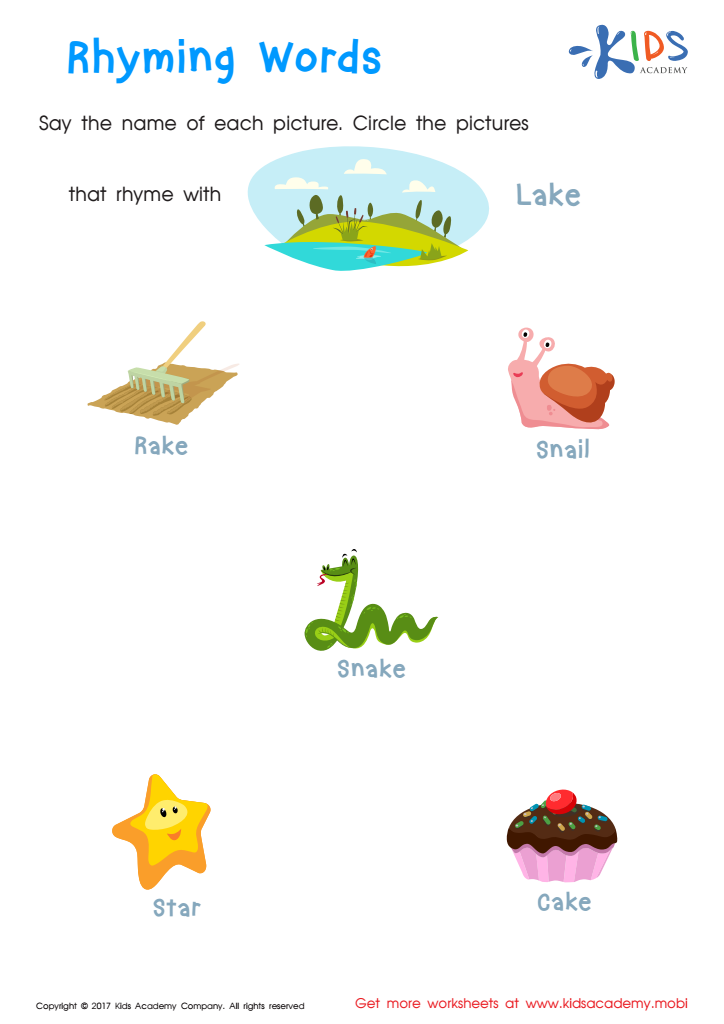
Rhyming Words Rhyming Worksheet

Long and Short U Worksheet
 Assign to My Students
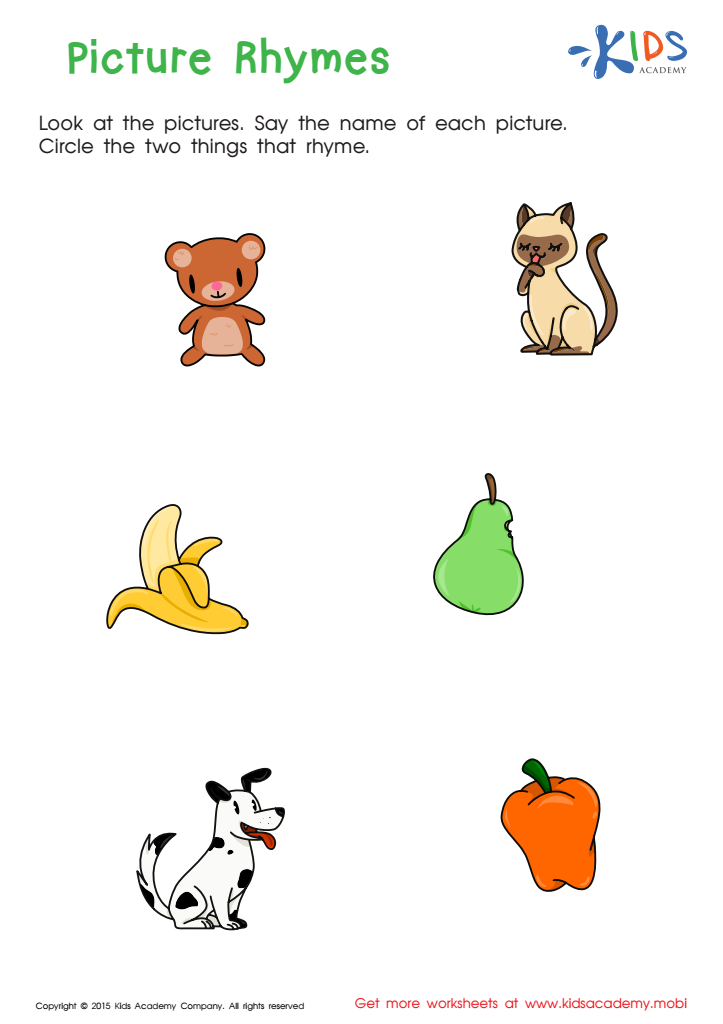
First Words: Picture Rhymes Worksheet
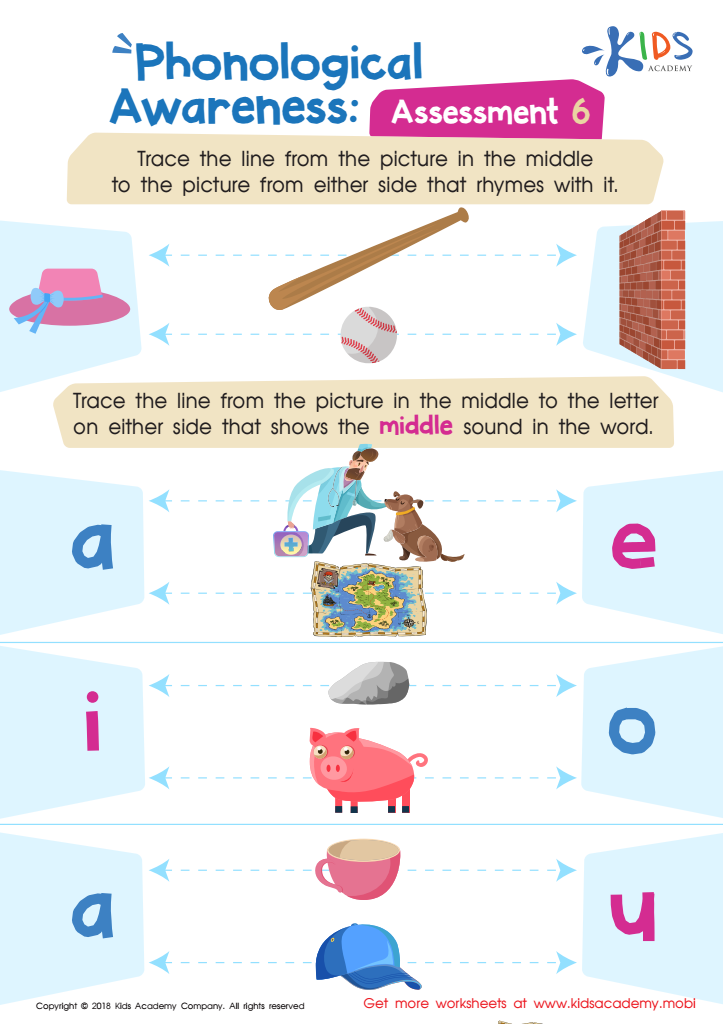
Phonological Awareness: Assessment 6 Worksheet








Sound recognition phonics is a crucial part of early literacy development for 3-year-olds, and it is essential for both parents and teachers to prioritize it. At this age, children's brains are primed for language acquisition, making it an optimal time to introduce the foundational skills of reading. Sound recognition phonics focuses on helping children identify and manipulate sounds in spoken words, a skill that later directly translates to reading ability.
Understanding sounds can enhance vocabulary growth, improve listening skills, and pave the way for successful reading experiences. This foundational skill assists young learners in recognizing letters and their corresponding sounds, ultimately making it easier for them to decode words as they begin to read more independently.
Additionally, when parents and teachers invest time in sound recognition phonics, they foster a love for language and reading in young children. Engaging activities, such as rhyming games, songs, and storytelling, stimulate cognitive development and create a positive learning environment.
By promoting sound recognition phonics, adults can provide an enriching experience that not only prepares children for future academic success but also equips them with vital communication skills for life. It lays the groundwork for confident readers and lifelong learners.







