Letter recognition Tracing Letters Worksheets for 3-Year-Olds - Page 2
26 filtered results
-
From - To
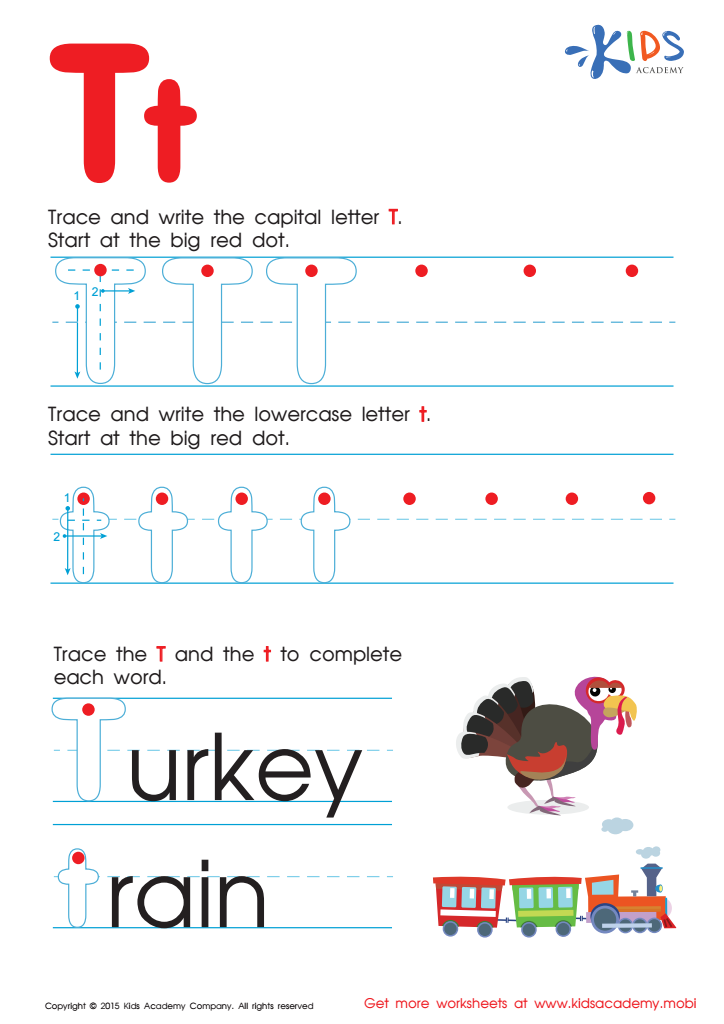
Letter T Tracing Page
 Assign to My Students

Letter D Tracing Page








Letter recognition and tracing letters are foundational skills for 3-year-olds that play a crucial role in their literacy development. At this age, children's brains are highly receptive to language and letters, making it an ideal time for them to begin recognizing and connecting with the alphabet.
Engaging in letter tracing helps enhance fine motor skills, which are important for later tasks like writing and drawing. As children trace letters, they improve their hand-eye coordination and muscle control, setting the stage for more complex writing tasks in the future.
Moreover, recognizing letters is essential for phonemic awareness, which is the ability to hear and manipulate sounds in words. This awareness is a critical precursor to reading and spelling. When children trace letters, they also reinforce the visual aspects of letter shapes, cementing their understanding.
Parents and teachers benefit from fostering these skills, as children who are proficient in letter recognition often display greater confidence in their early learning experiences. Cultivating early literacy abilities gives children a head start in their educational journey, leading to lifelong learning advantages. Investing time in letter recognition and tracing is not just about preparing for school; it's about nurturing a love for language and facilitating cognitive growth.








