Check out this FREE "Animal recognition" Trial Lesson for age 3!

Writing Number Sentences for Addition Picture Problems

Favorites
With answer key
Interactive
  • 3
  • Animal recognition
Dot to Dot Numbers 1-10

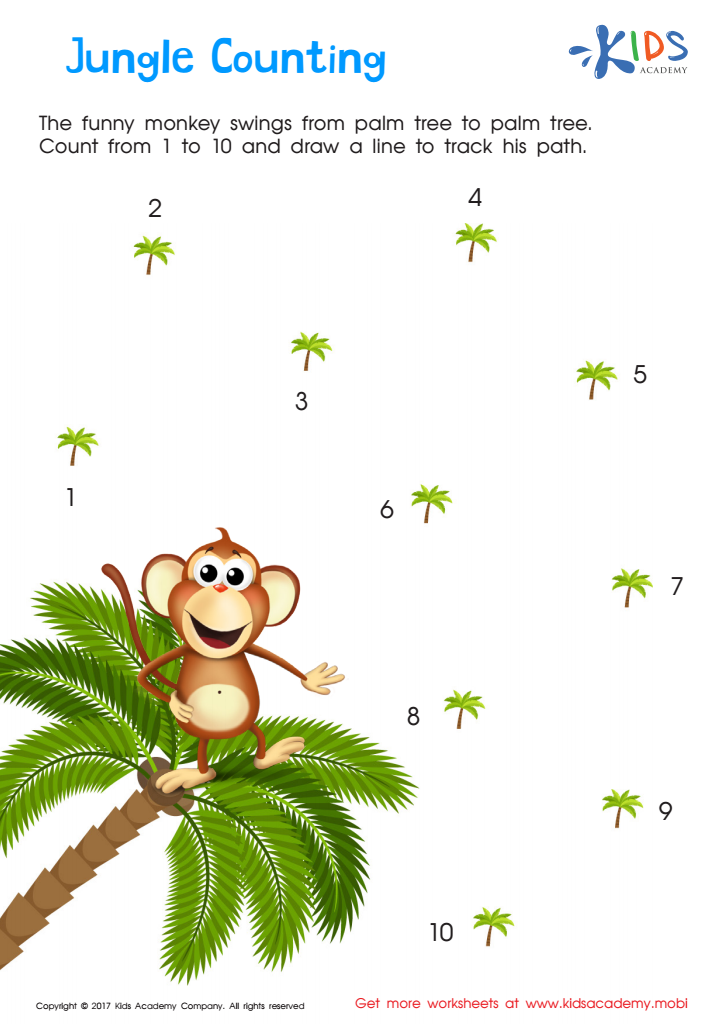
Jungle Counting Connect Dots Worksheet

Help your child count from 1-10 and practice problem solving skills with this dot to dot worksheet. Your child will enjoy helping the cute monkey swing from tree to tree while honing their math skills. Let them have a jungle-themed counting adventure!
Jungle Counting Connect Dots Worksheet
Worksheet
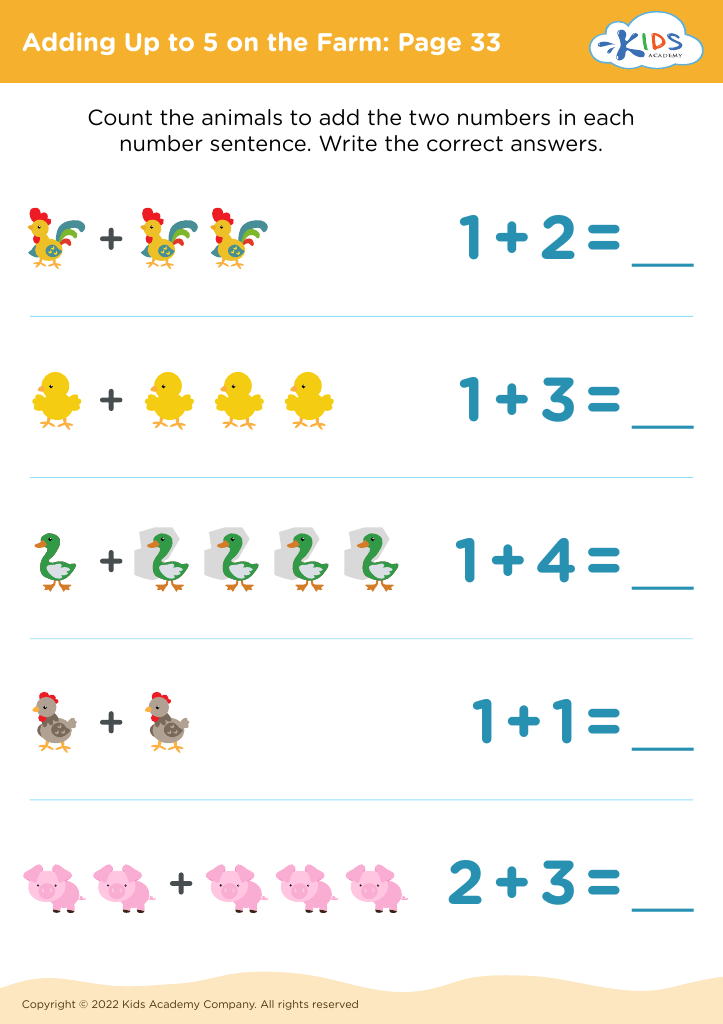
Adding Up to 5 on the Farm: Page 33
Worksheet
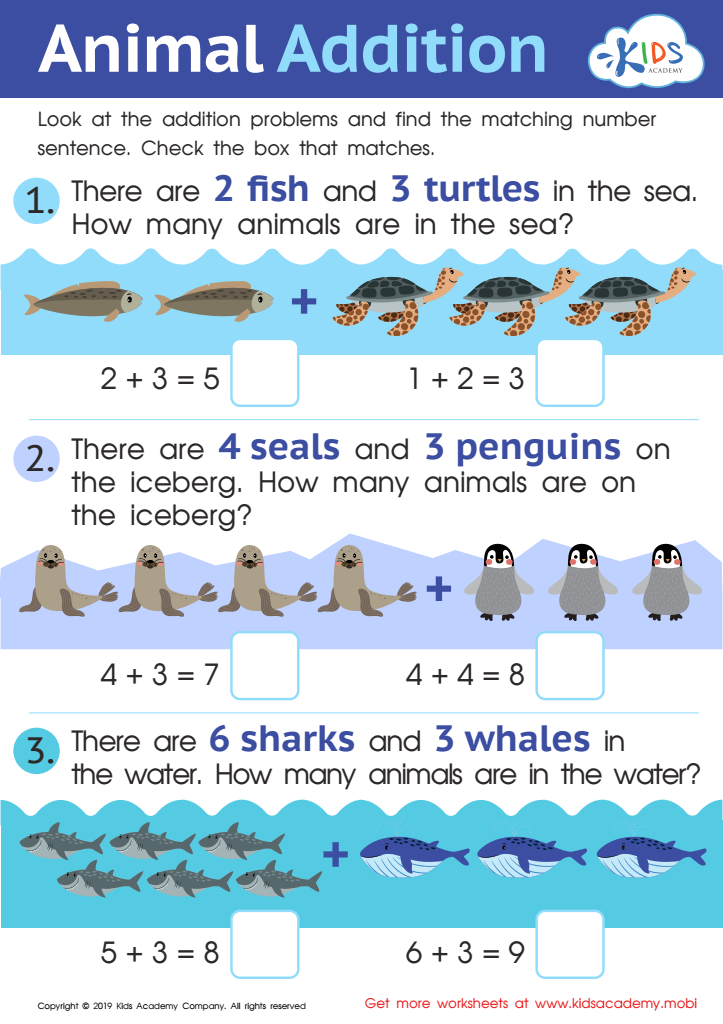
Animal Addition Worksheet

Animal Addition Worksheet

Get your kids learning addition and subtraction with this fun worksheet! Show them that solving equations can be enjoyable and help them match number sentences to the correct boxes. By doing this together, you'll create a positive learning experience that your kids won't forget.
Animal Addition Worksheet
Worksheet
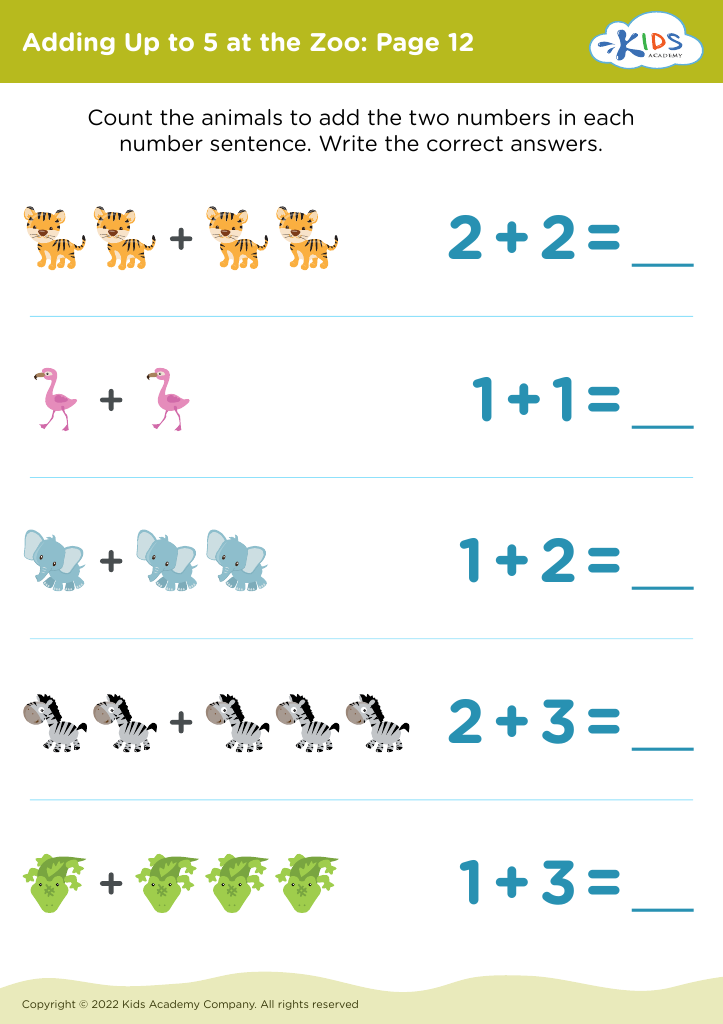
Adding Up to 5 at the Zoo: Page 12
Worksheet
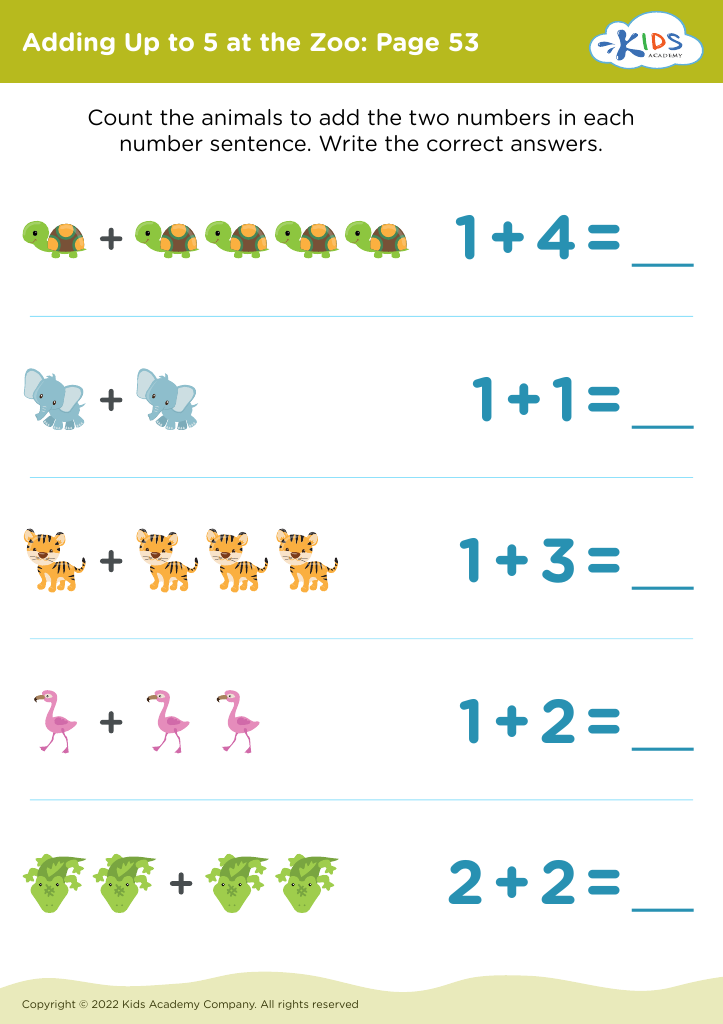
Adding Up to 5 at the Zoo: Page 53
Worksheet
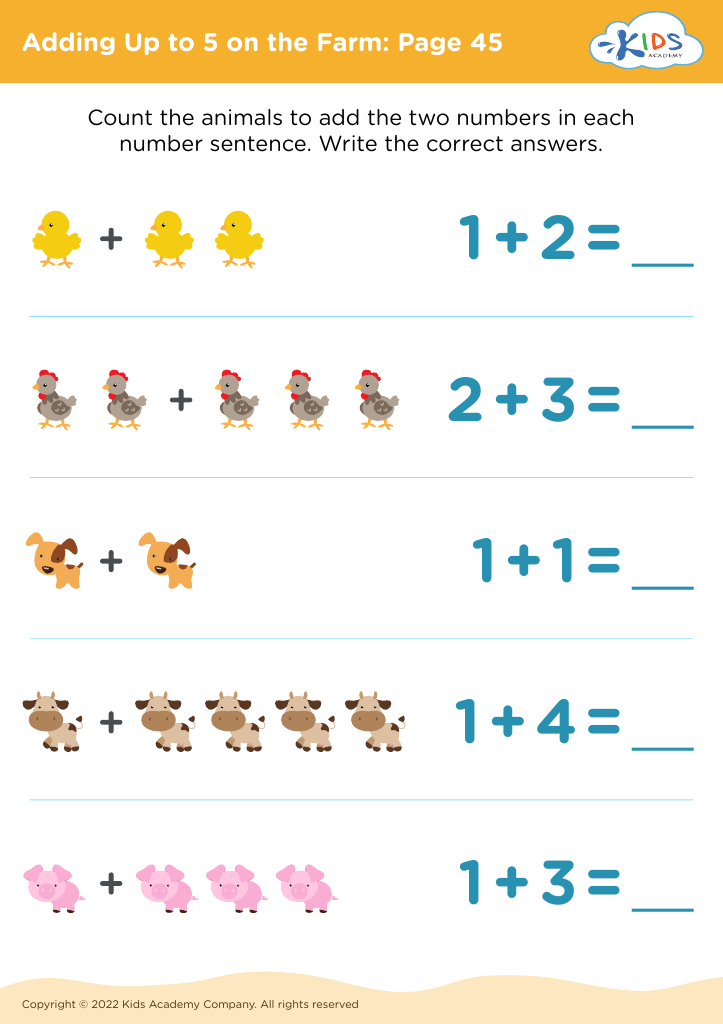
Adding Up to 5 on the Farm: Page 45
Worksheet
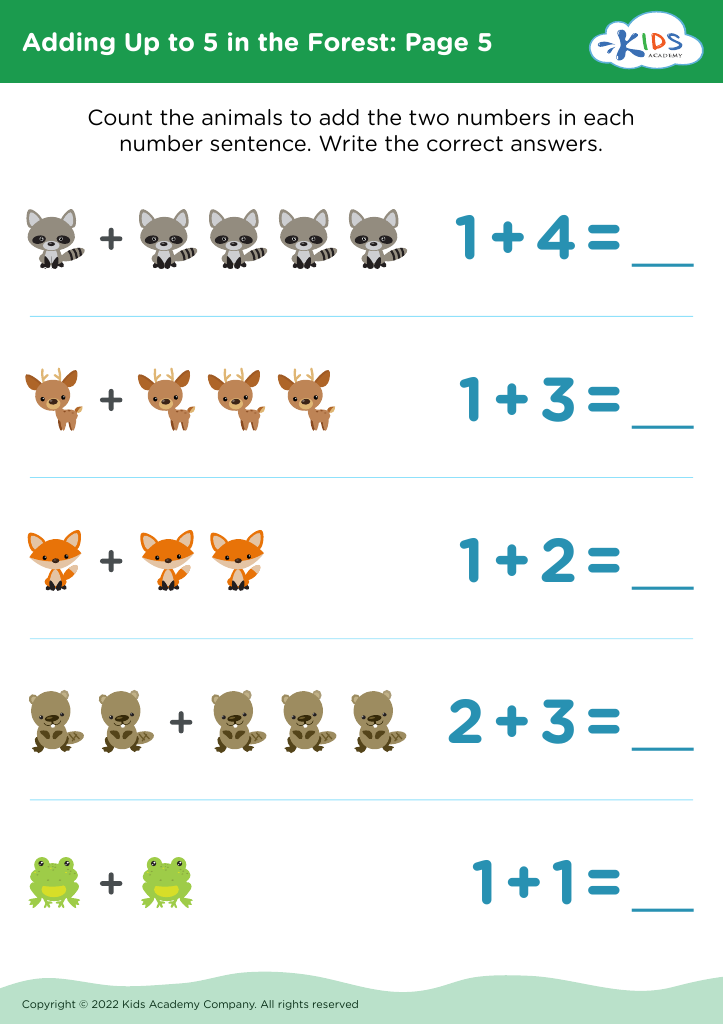
Adding Up to 5 in the Forest: Page 5
Worksheet
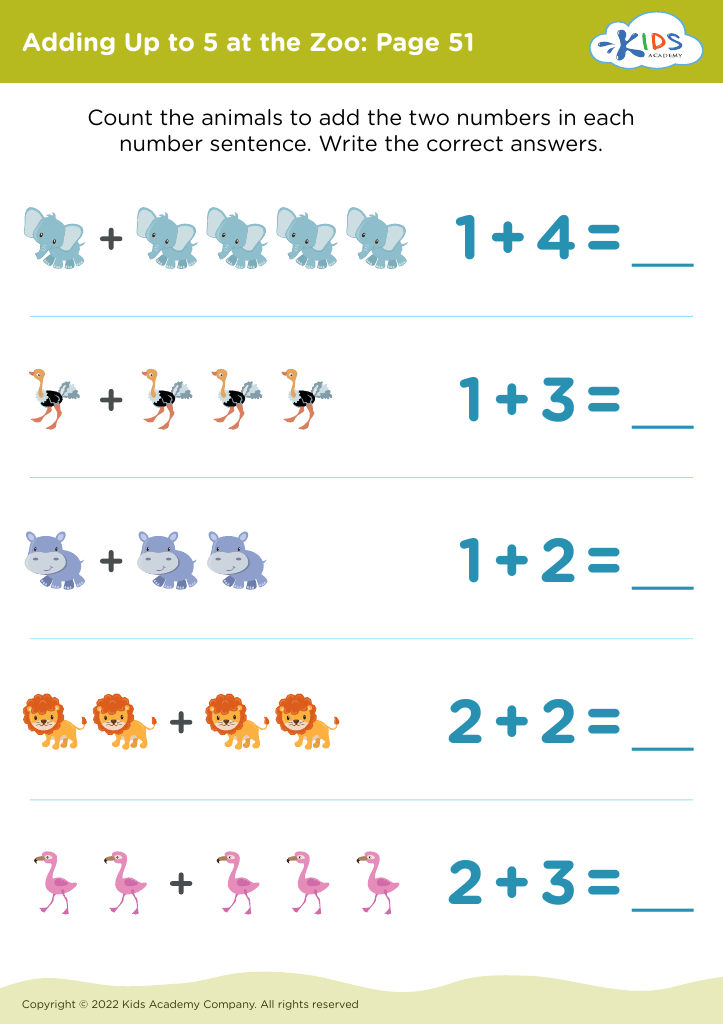
Adding Up to 5 at the Zoo: Page 51
Worksheet
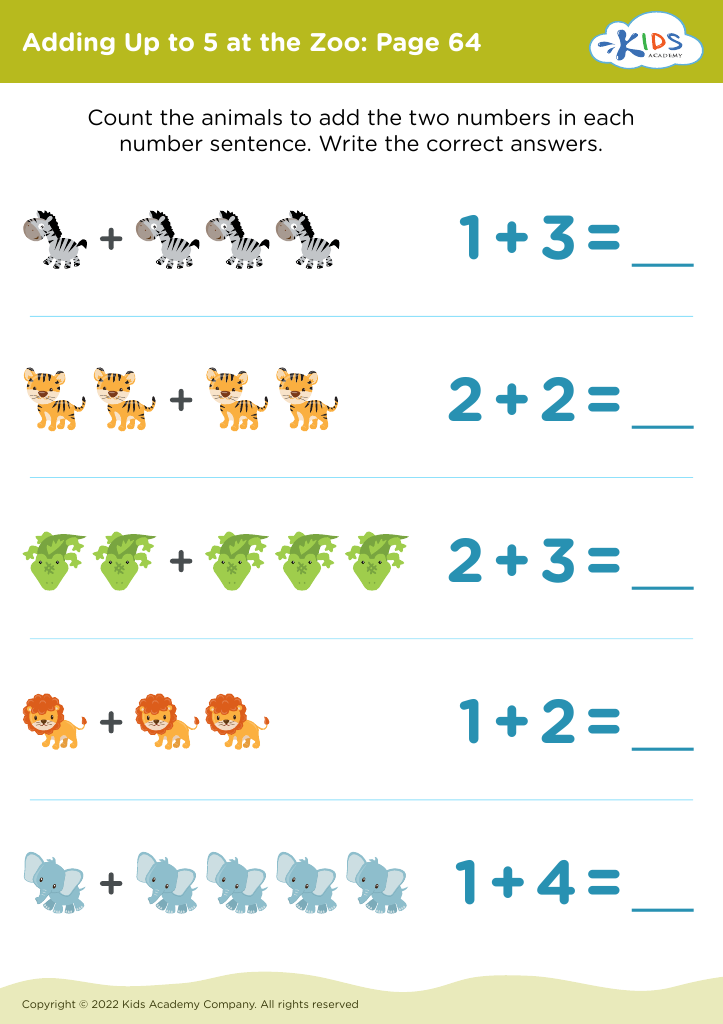
Adding Up to 5 at the Zoo: Page 64
Worksheet
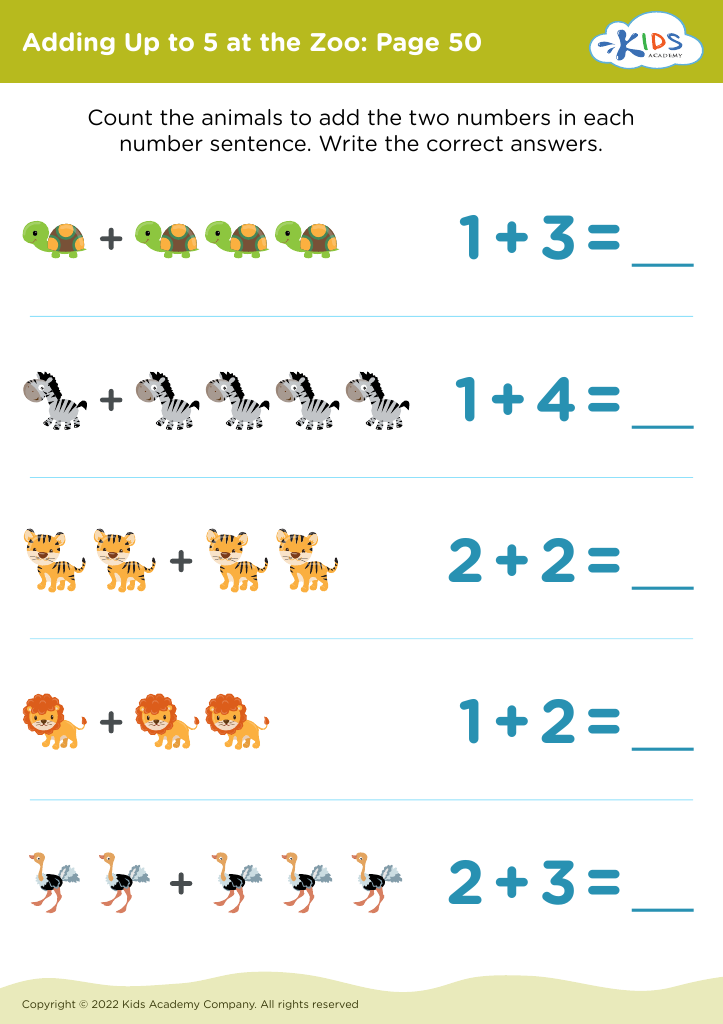
Adding Up to 5 at the Zoo: Page 50
Worksheet
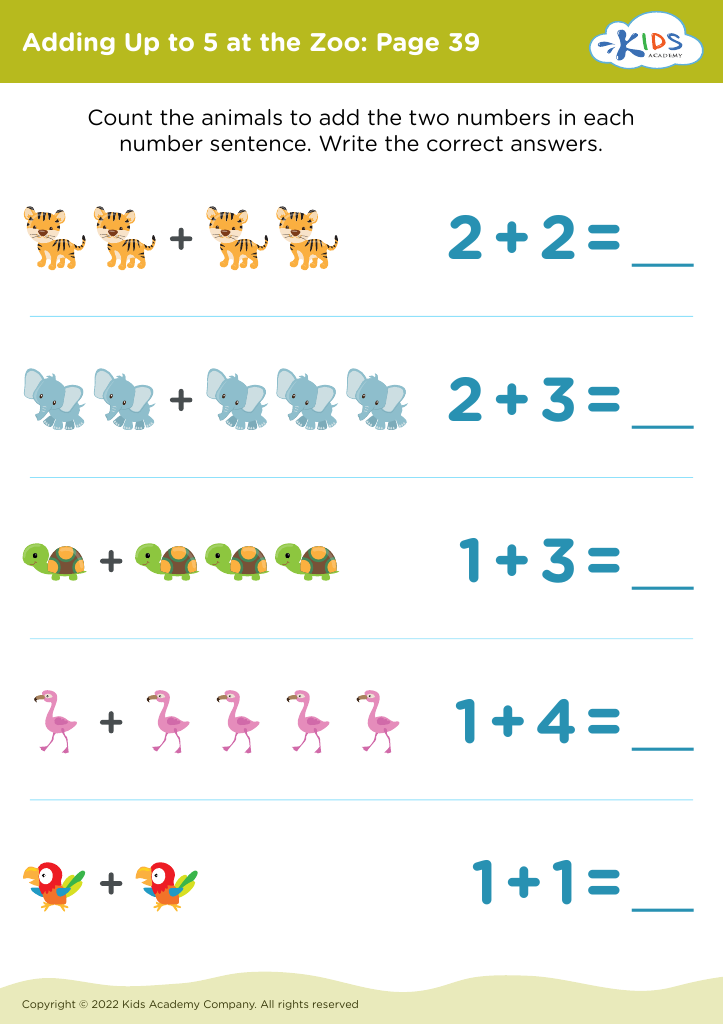
Adding Up to 5 at the Zoo: Page 39
Worksheet
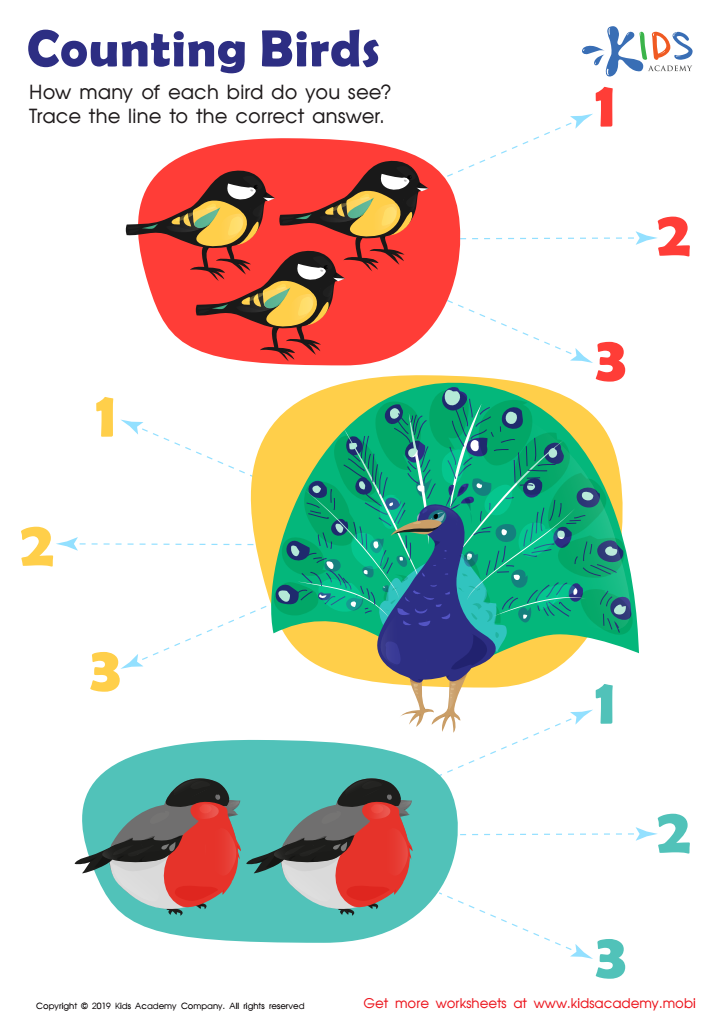
Counting Birds Worksheet

Counting Birds Worksheet

Kids love counting! With each number they learn, they can make a one-to-one representation with an item. The more practice they get, the better. Try this counting worksheet with traceable lines, to give your children practice and work on their fine motor skills. They will enjoy connecting the picture to the right number, and will feel like mathematicians with each success!
Counting Birds Worksheet
Worksheet
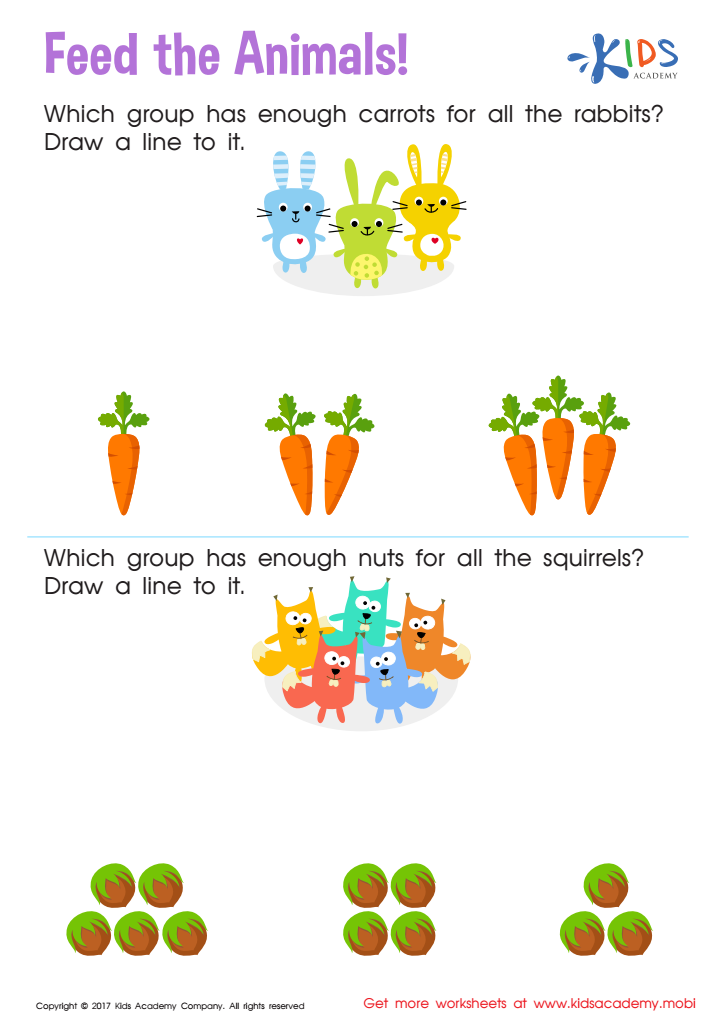
Count and Match: Feed the Animals Worksheet

Count and Match: Feed the Animals Worksheet

Learning and growing involves more than just numbers, phonics and comparison. This Feed the Animals worksheet helps kids to exercise their reasoning skills. They must work out how many rabbits and carrots there are, and then repeat the process for the squirrels. This encourages problem solving and counting skills.
Count and Match: Feed the Animals Worksheet
Worksheet
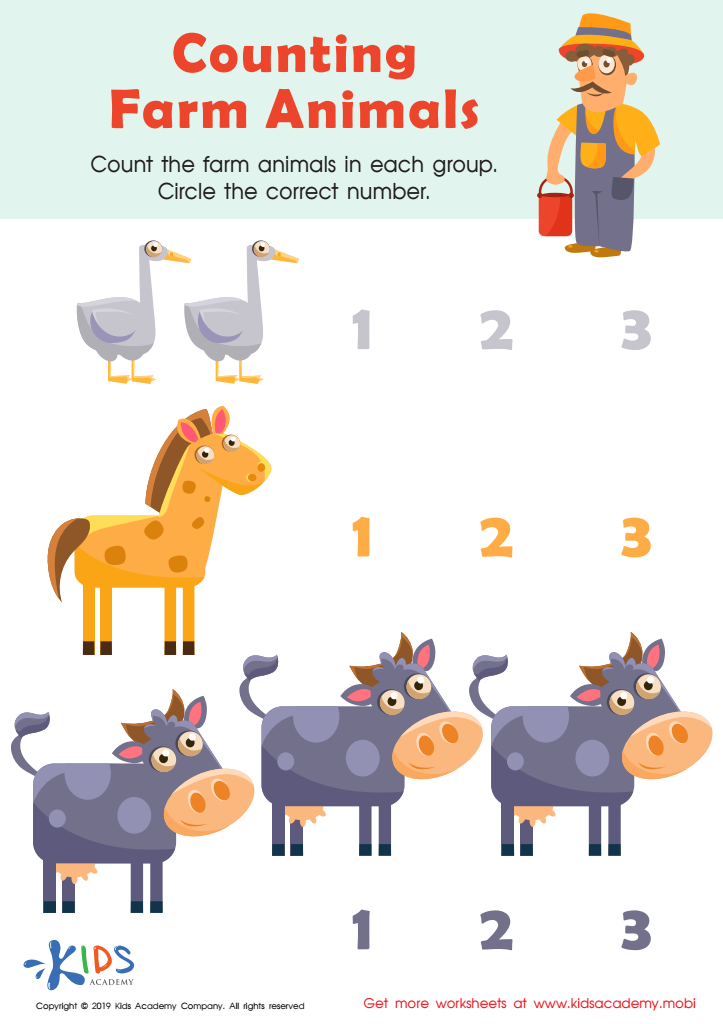
Counting Farm Animals Worksheet

Counting Farm Animals Worksheet

Kids love farms! That's why this free farm animals counting worksheet is great for building number sense and counting skills. Have your young mathematician count the pictures, then circle the corresponding number. It's a fun and meaningful way to practice counting.
Counting Farm Animals Worksheet

Worksheet
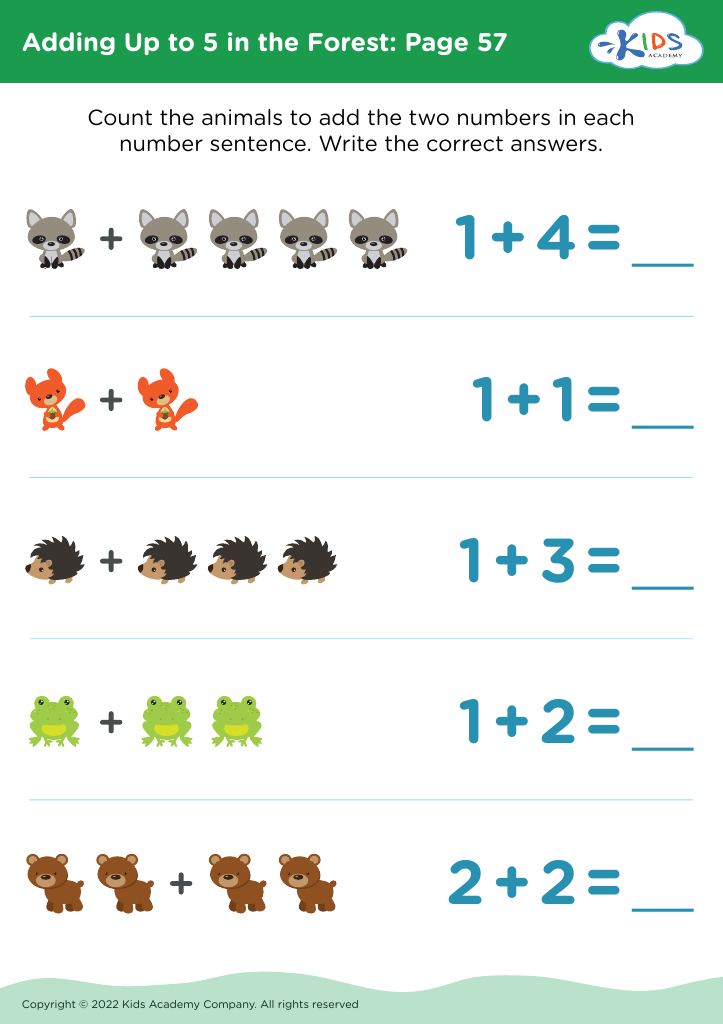
Adding Up to 5 in the Forest: Page 57
Worksheet


... 4 5

Animal recognition is a vital aspect of early childhood development, and parents and teachers should prioritize it for several reasons. First, recognizing animals fosters cognitive development in 3-year-olds by enhancing their memory and observation skills. When children learn to identify various animals, they engage in critical thinking as they differentiate between species and their unique traits.

Second, animal recognition supports language development. As children learn the names of animals, they expand their vocabulary and improve their communication skills. This early exposure can also facilitate an interest in storytelling and creative play involving animals, enriching their language experiences.

Moreover, connecting children to animals cultivates empathy and emotional intelligence. By understanding the needs and behaviors of different animals, kids learn to care for living beings, developing skills in empathy, compassion, and responsibility.

Lastly, teaching animal recognition can enhance children’s understanding of biodiversity and the environment, laying essential groundwork for educational topics such as conservation and ecology. This foundational knowledge promotes curiosity and a sense of stewardship for the world around them. In summary, emphasizing animal recognition in early education is crucial for overall development, language growth, empathy, and environmental awareness.