Check out this FREE "Basic Addition Skills" Trial Lesson for age 3!

T

Favorites
With answer key
Interactive
  • 3
  • Basic Addition Skills
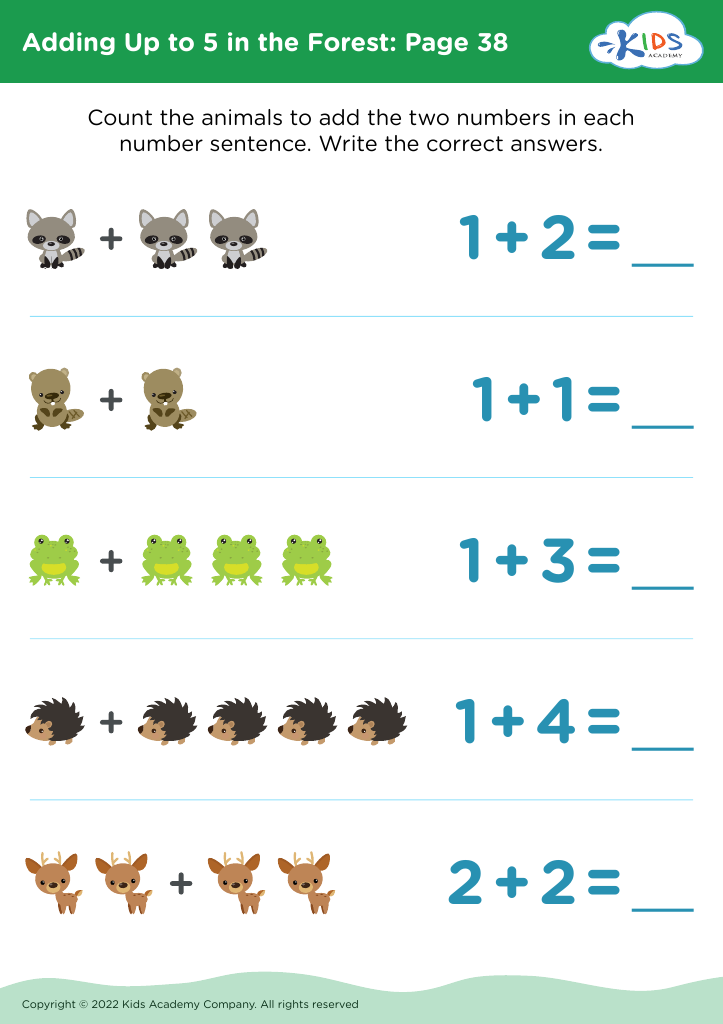
Adding Up to 5 in the Forest: Page 38
Worksheet
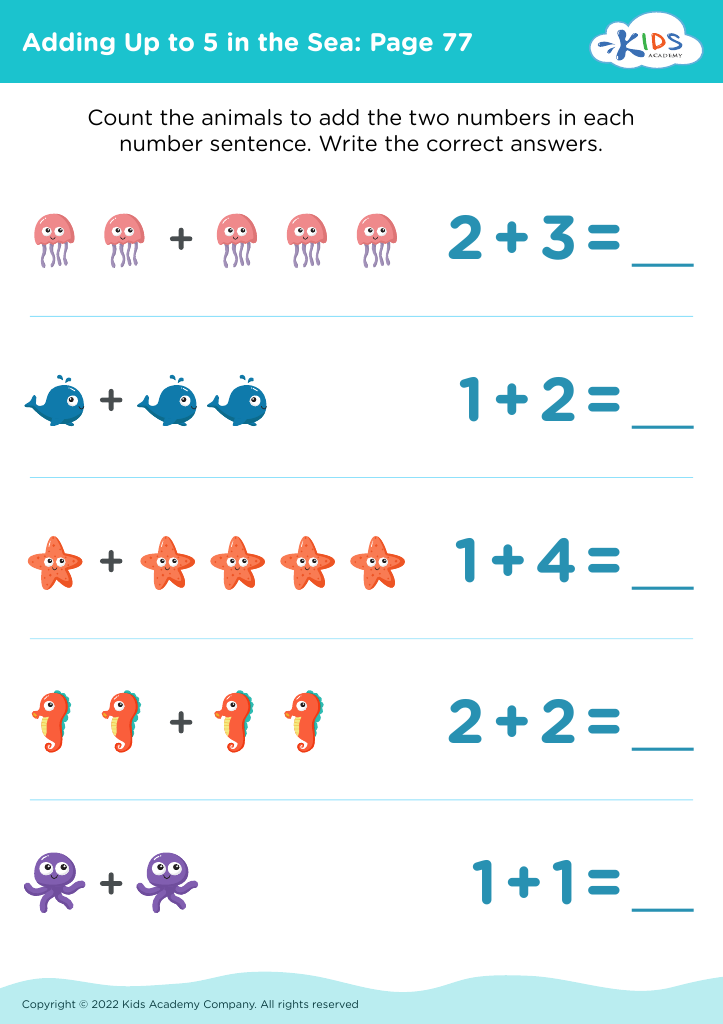
Adding Up to 5 in the Sea: Page 77
Worksheet
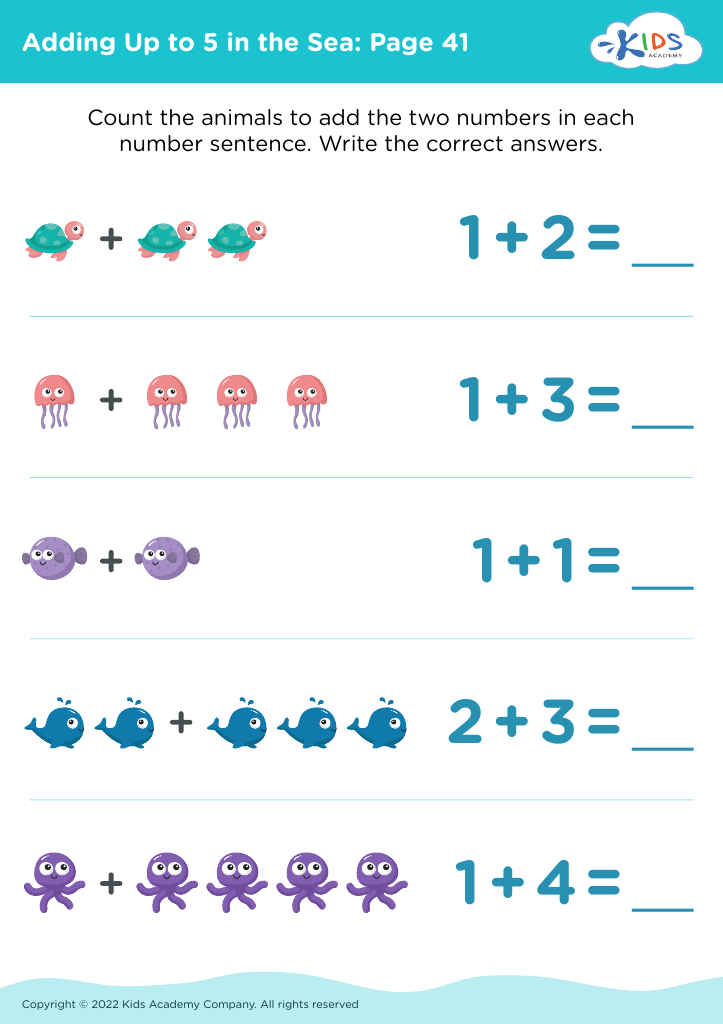
Adding Up to 5 in the Sea: Page 41
Worksheet
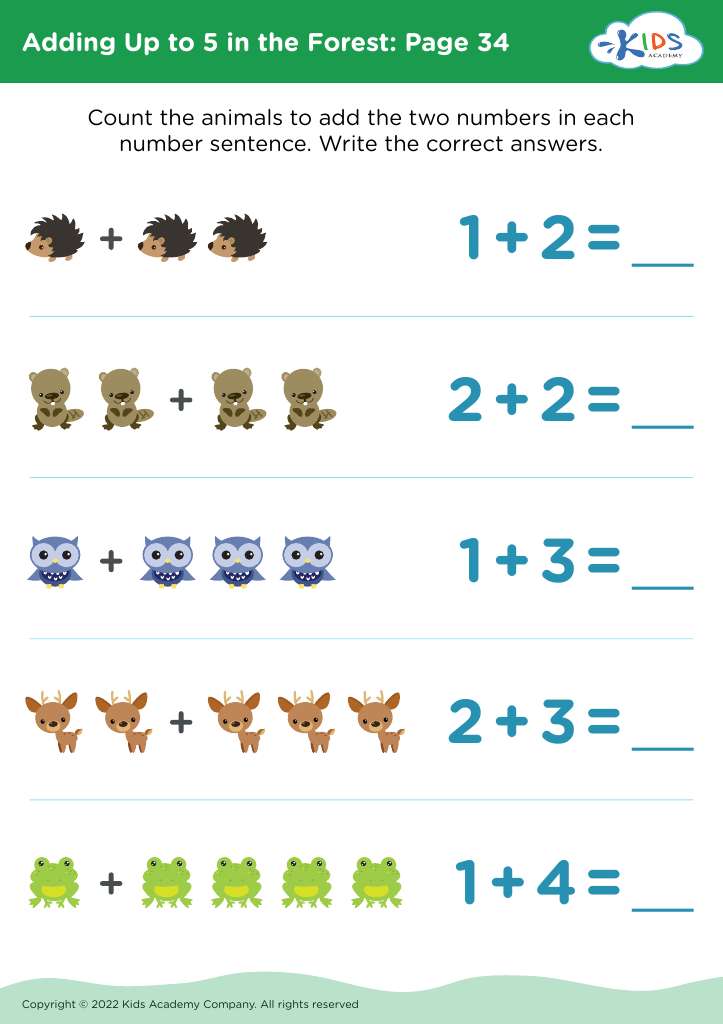
Adding Up to 5 in the Forest: Page 34
Worksheet
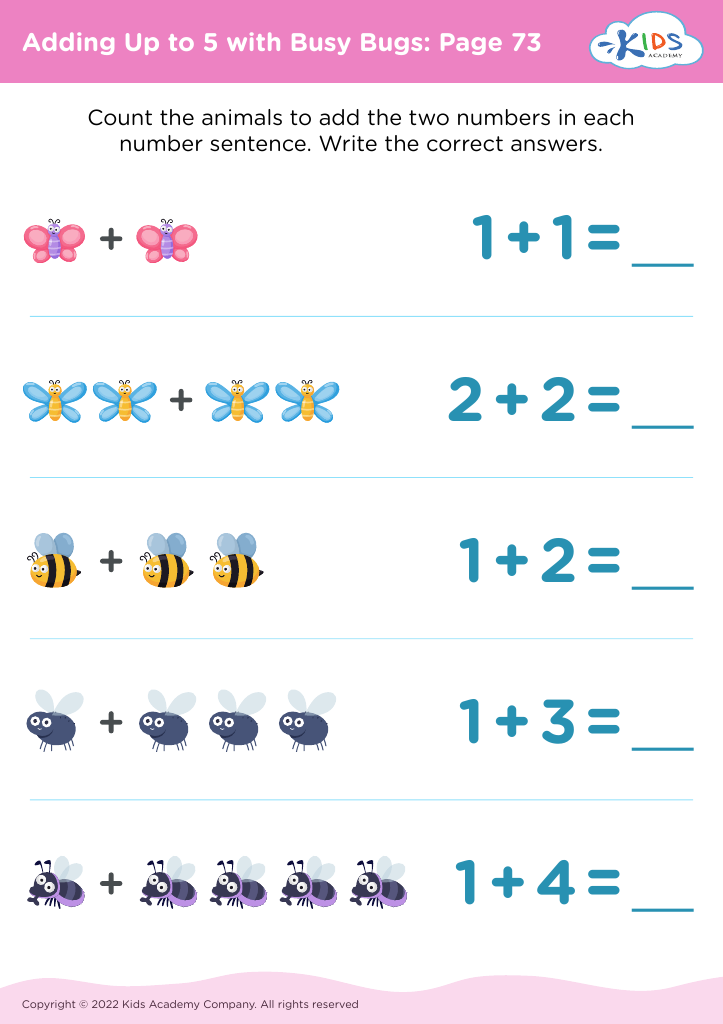
Adding Up to 5 with Busy Bugs: Page 73
Worksheet
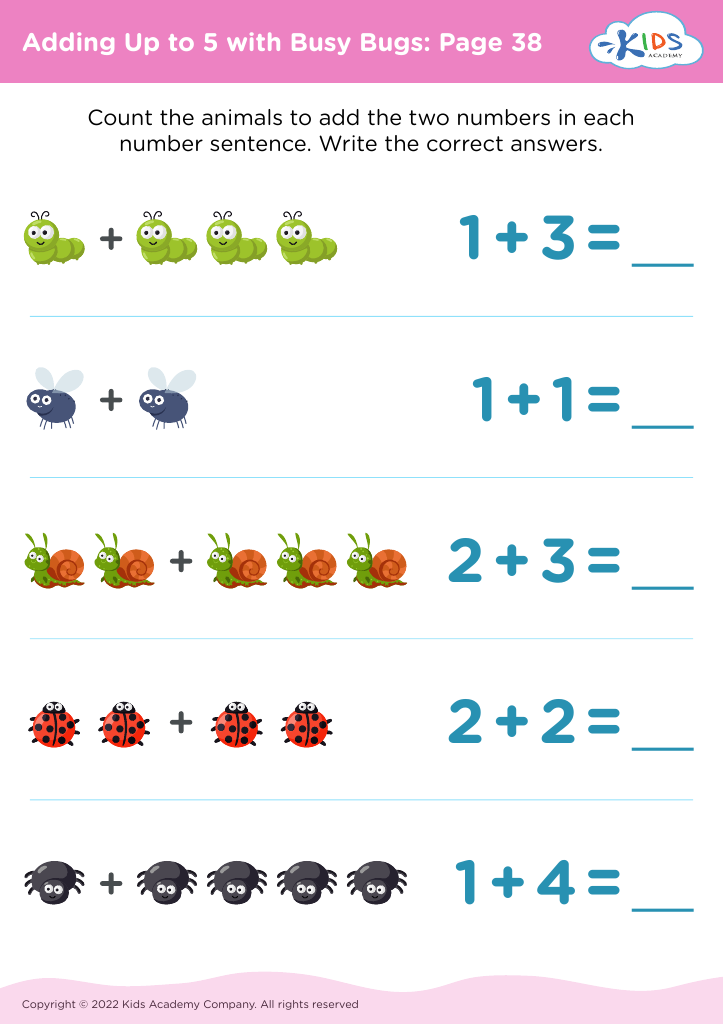
Adding Up to 5 with Busy Bugs: Page 38
Worksheet
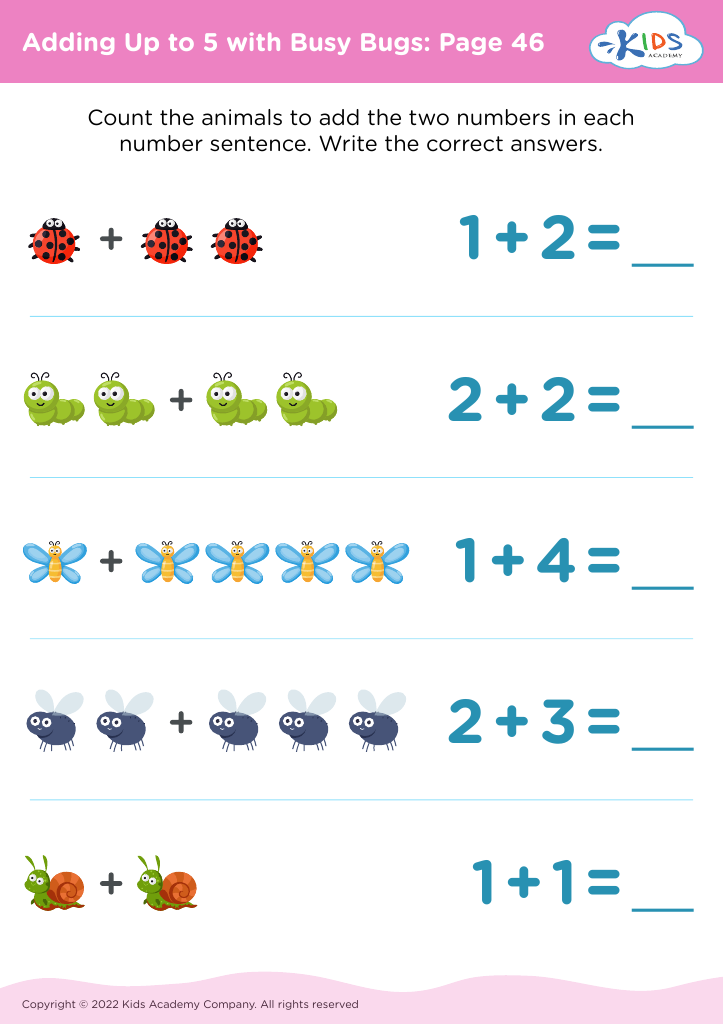
Adding Up to 5 with Busy Bugs: Page 46
Worksheet
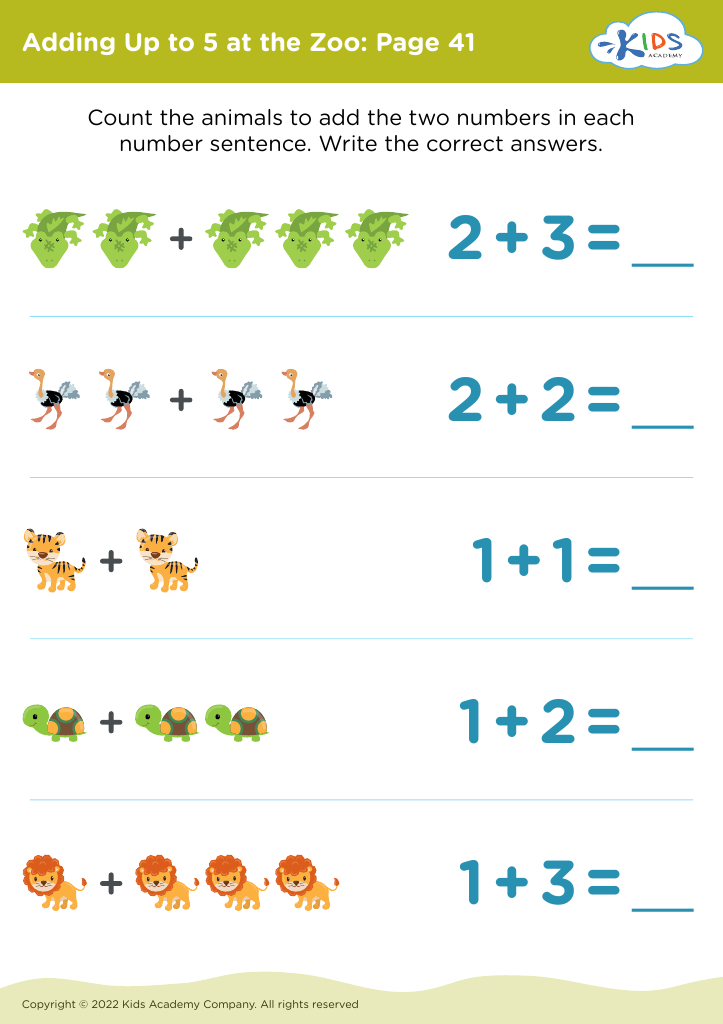
Adding Up to 5 at the Zoo: Page 41
Worksheet
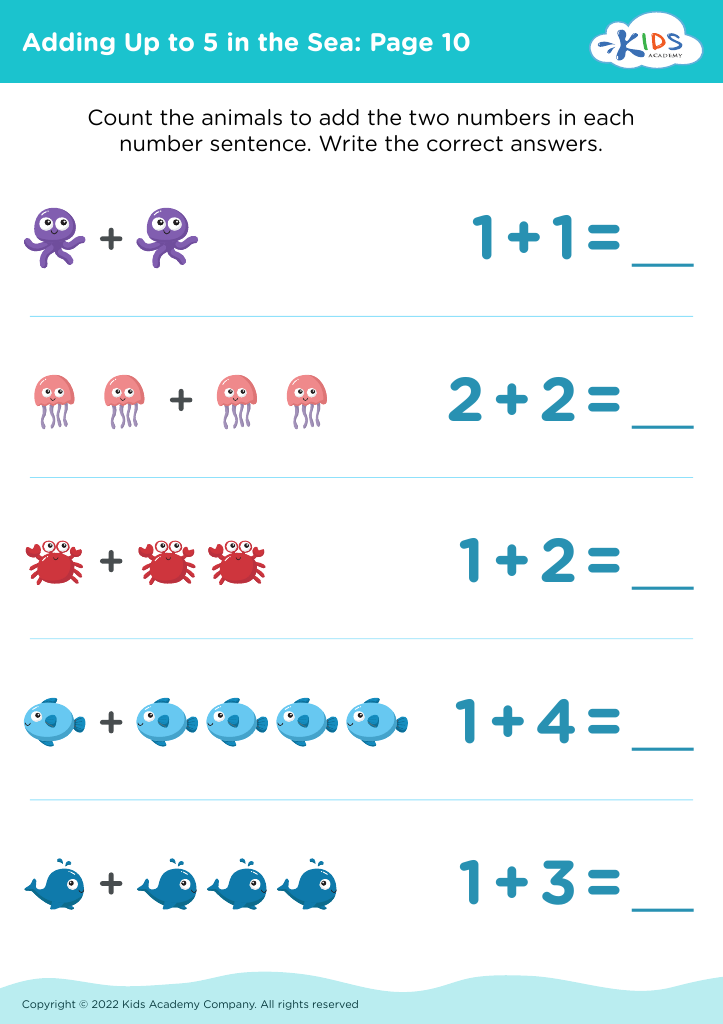
Adding Up to 5 in the Sea: Page 10
Worksheet
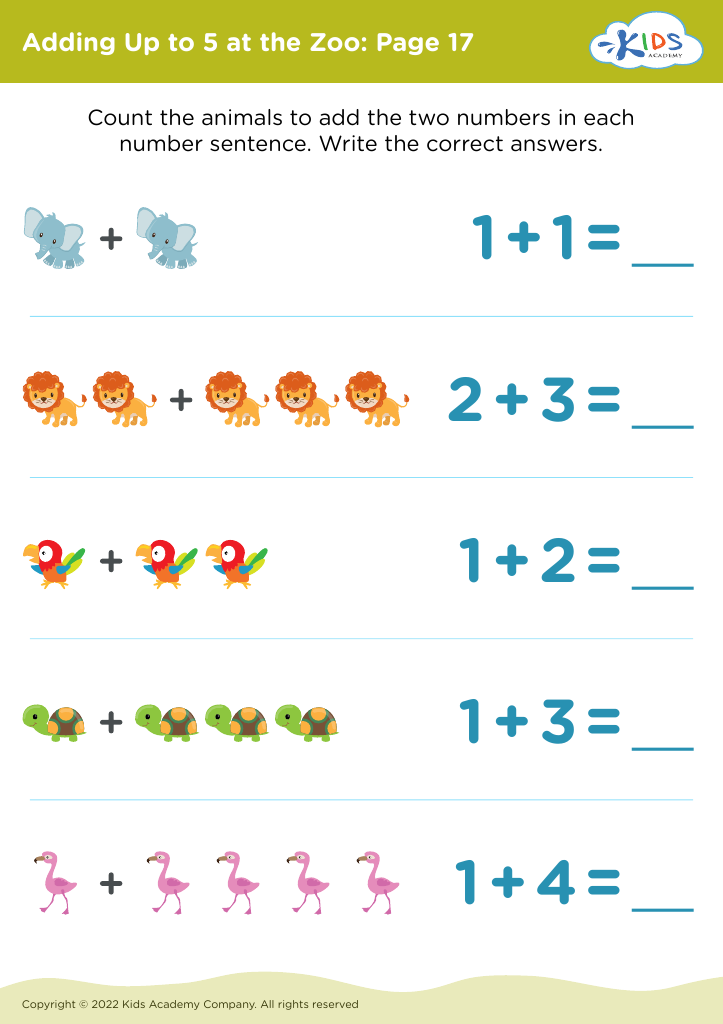
Adding Up to 5 at the Zoo: Page 17
Worksheet
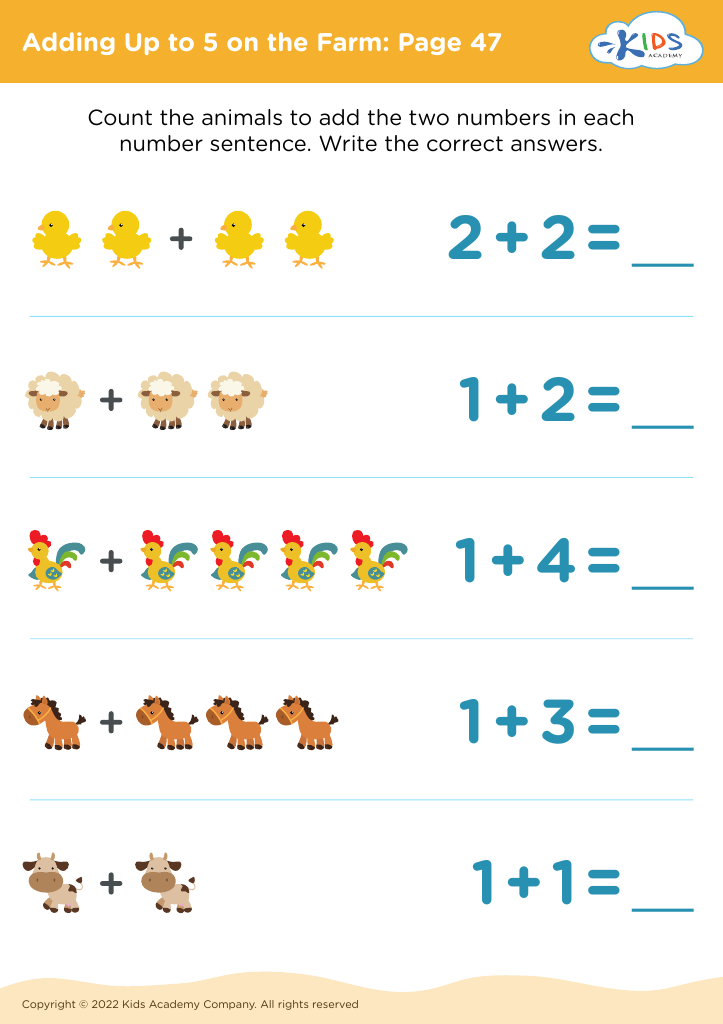
Adding Up to 5 on the Farm: Page 47
Worksheet
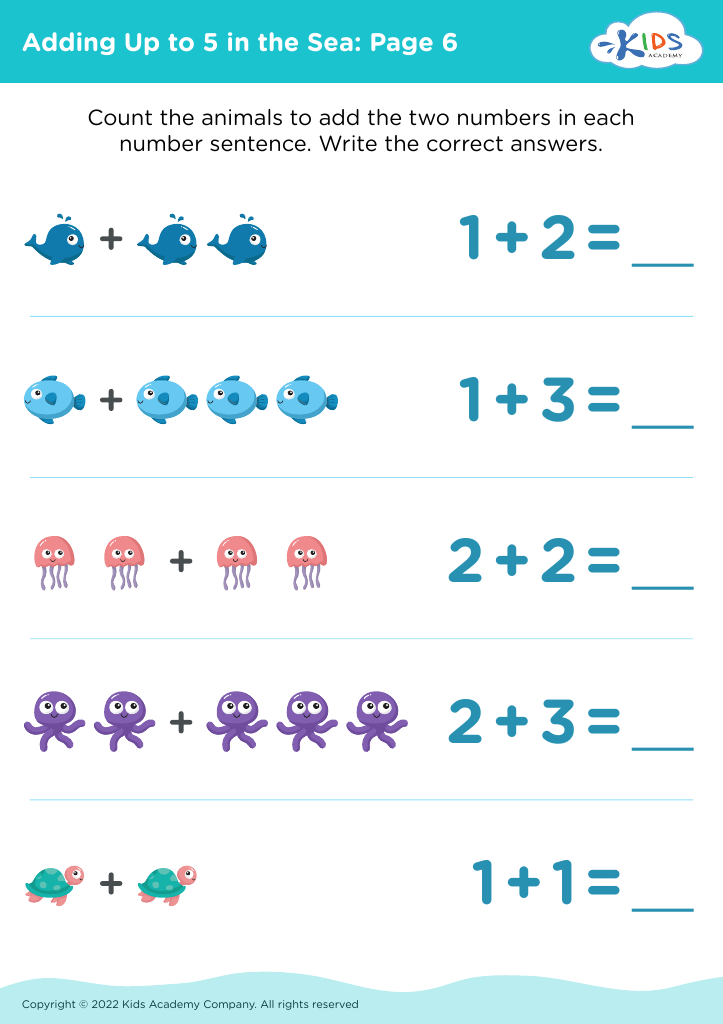
Adding Up to 5 in the Sea: Page 6

Adding Up to 5 in the Sea: Page 6

Adding Up to 5 in the Sea: Page 6
Worksheet
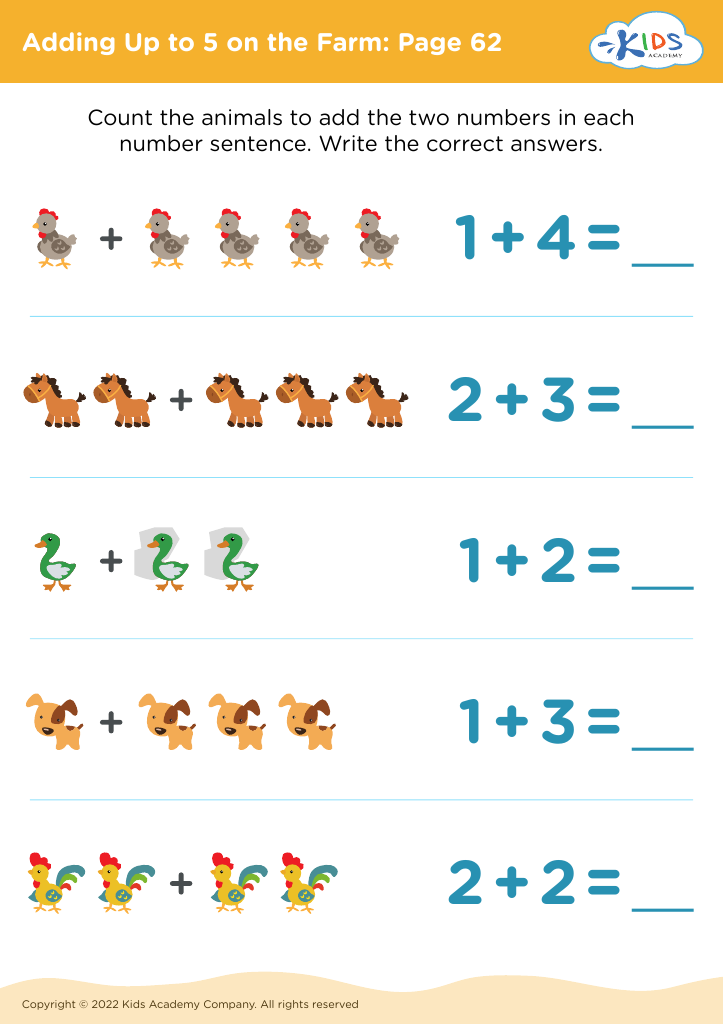
Adding Up to 5 on the Farm: Page 62
Worksheet
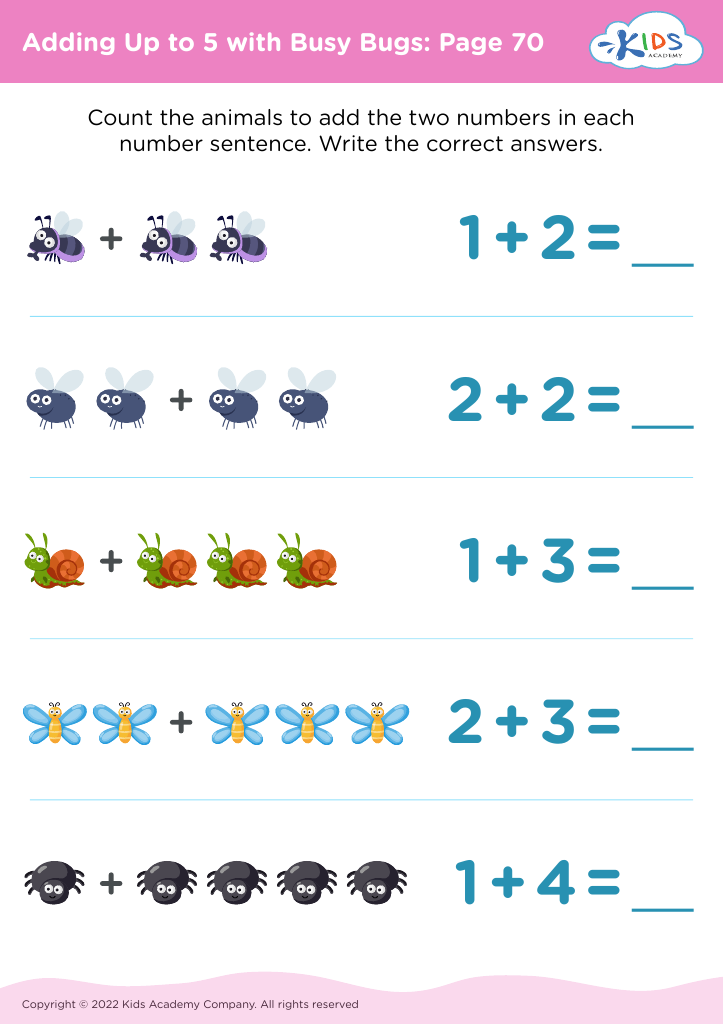
Adding Up to 5 with Busy Bugs: Page 70
Worksheet
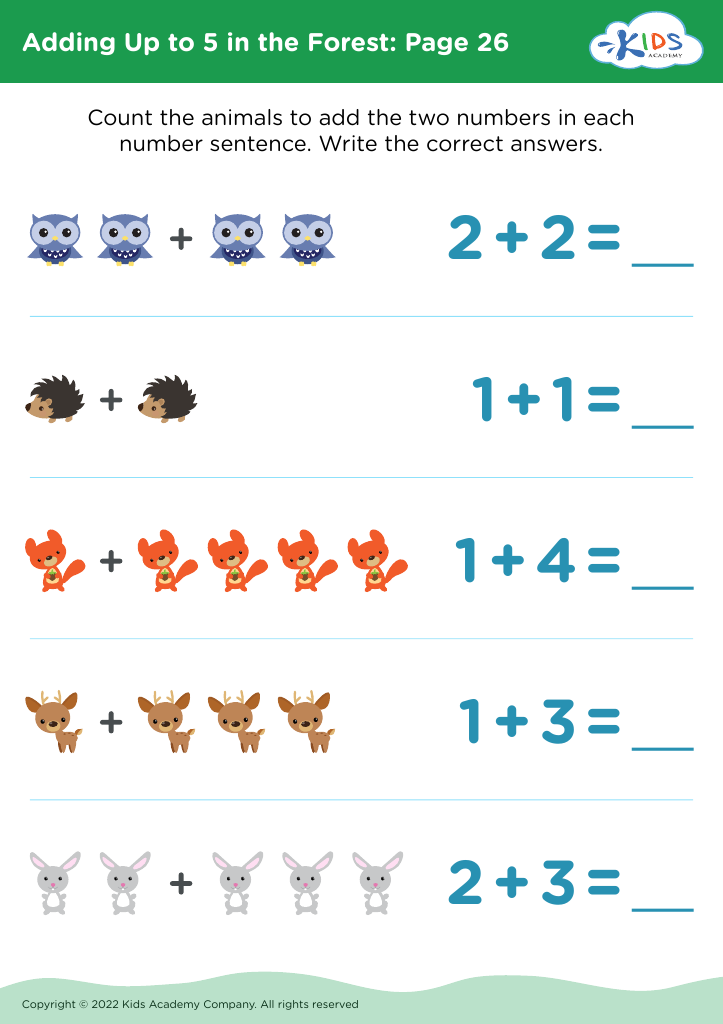
Adding Up to 5 in the Forest: Page 26
Worksheet
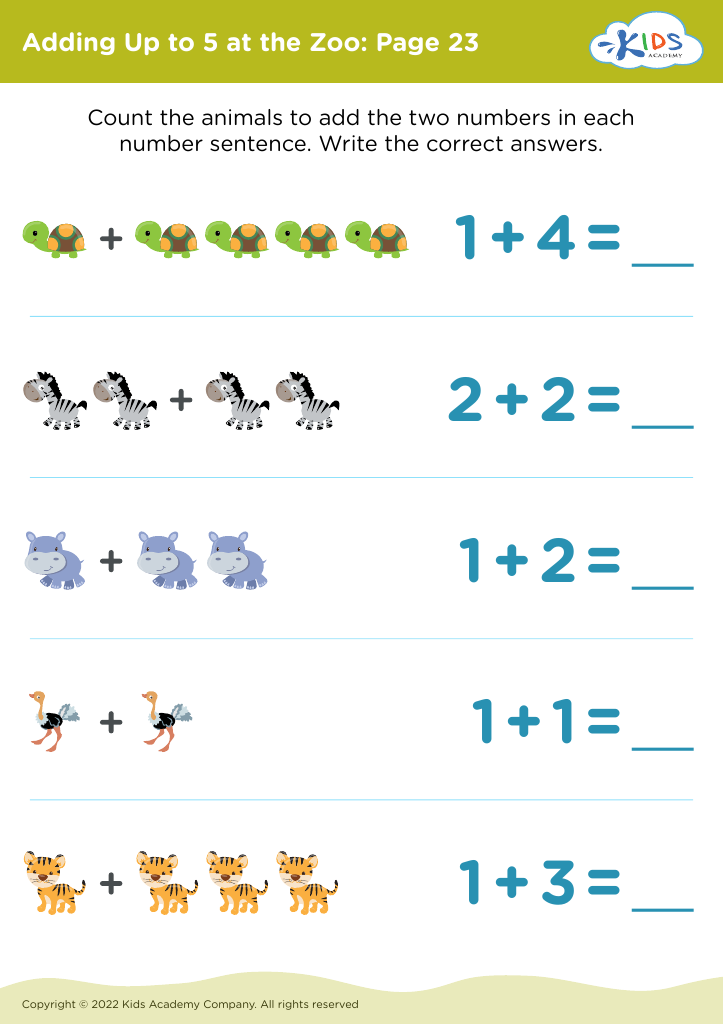
Adding Up to 5 at the Zoo: Page 23
Worksheet
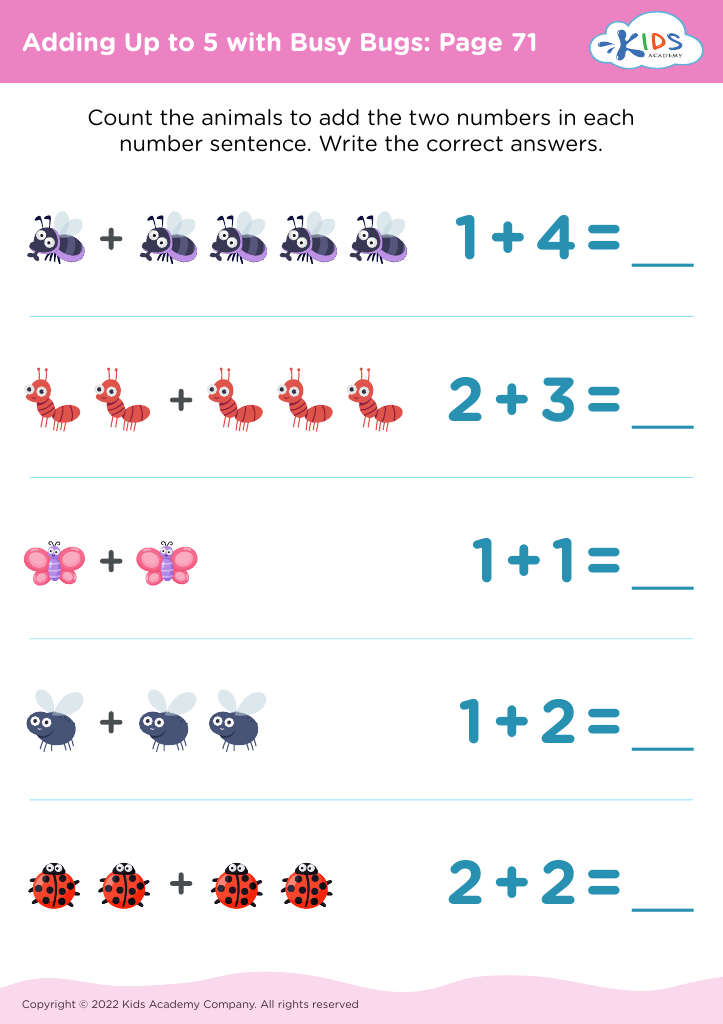
Adding Up to 5 with Busy Bugs: Page 71
Worksheet
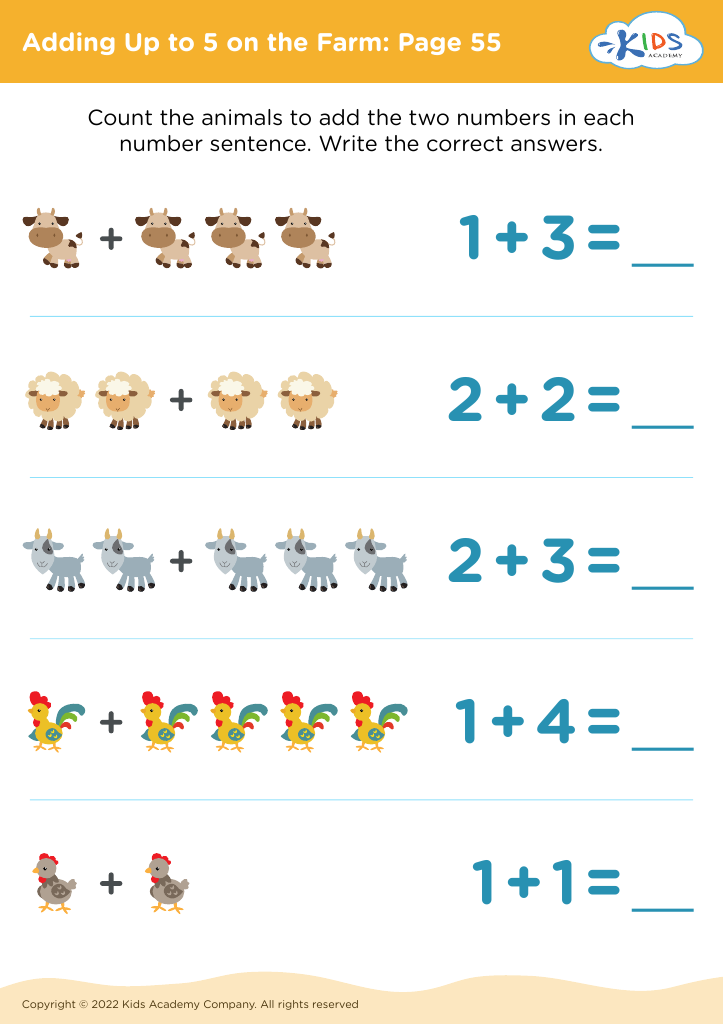
Adding Up to 5 on the Farm: Page 55
Worksheet
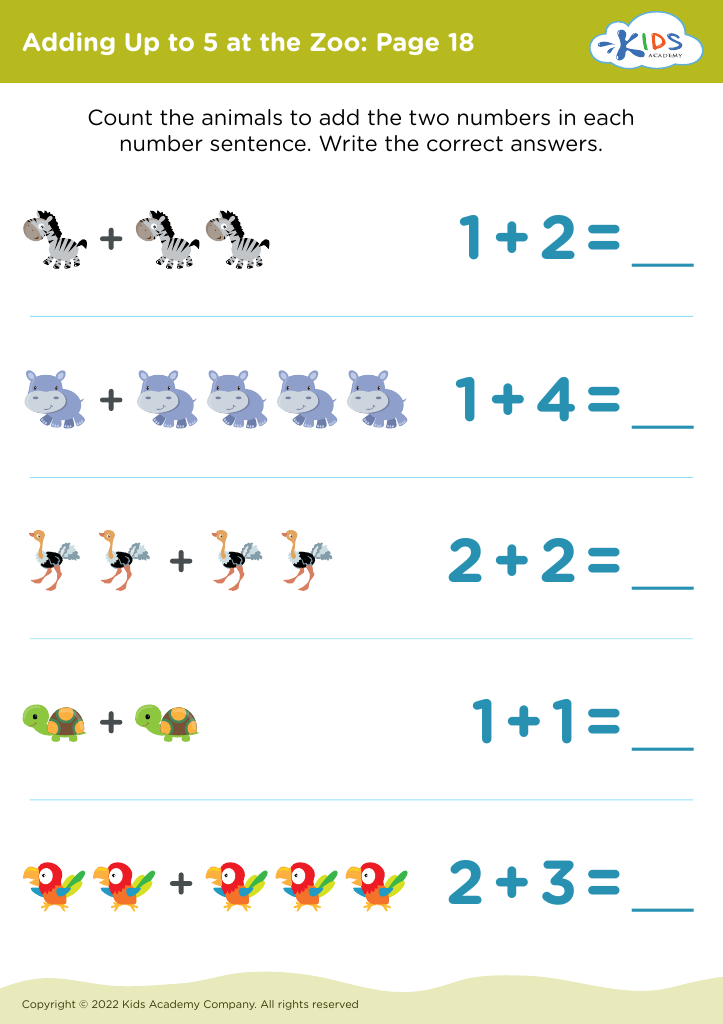
Adding Up to 5 at the Zoo: Page 18
Worksheet
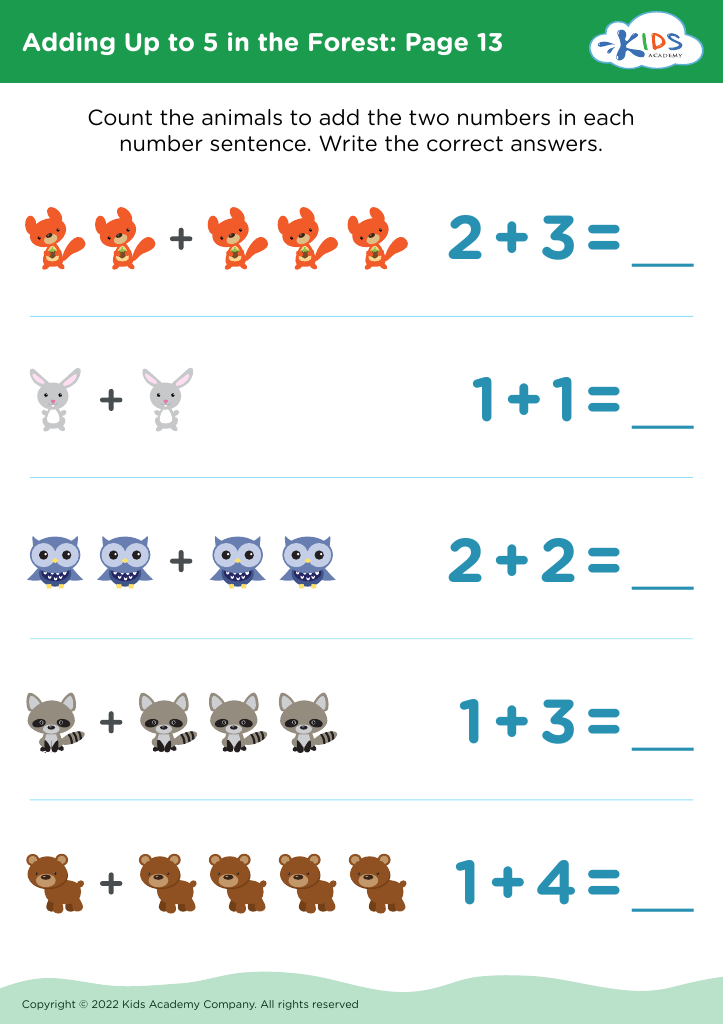
Adding Up to 5 in the Forest: Page 13
Worksheet
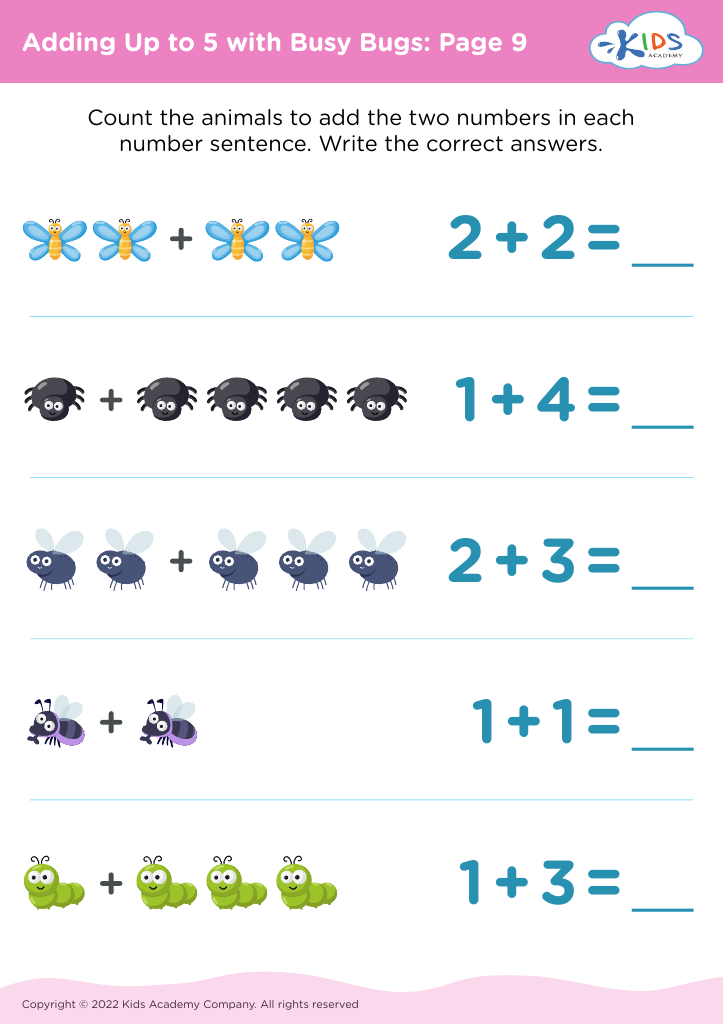
Adding Up to 5 with Busy Bugs: Page 9
Worksheet
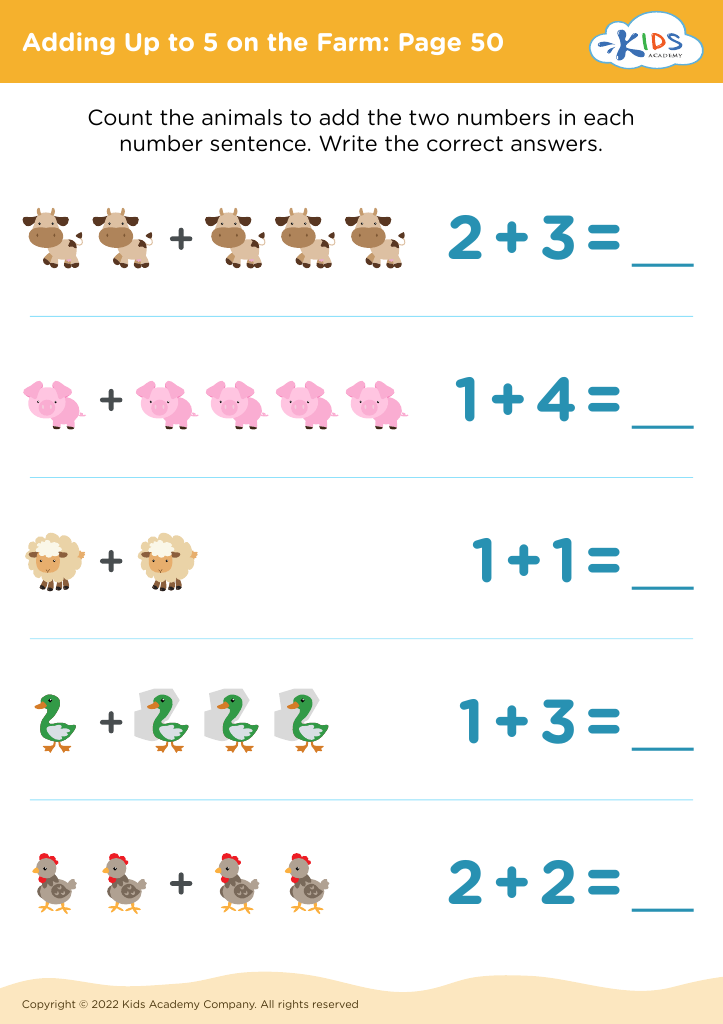
Adding Up to 5 on the Farm: Page 50
Worksheet
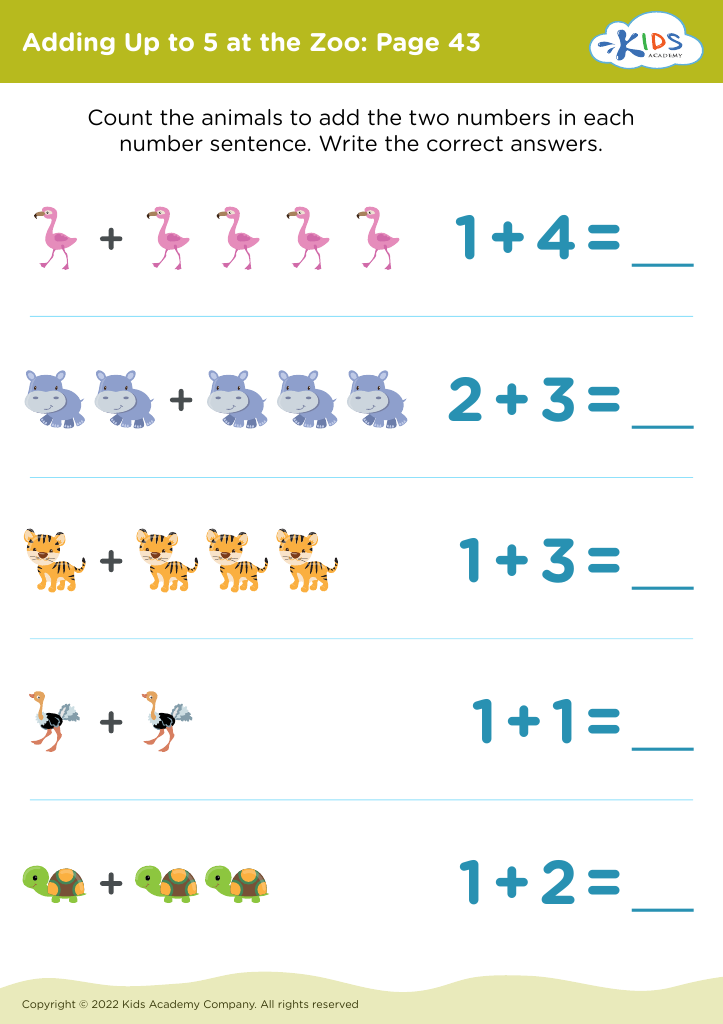
Adding Up to 5 at the Zoo: Page 43
Worksheet
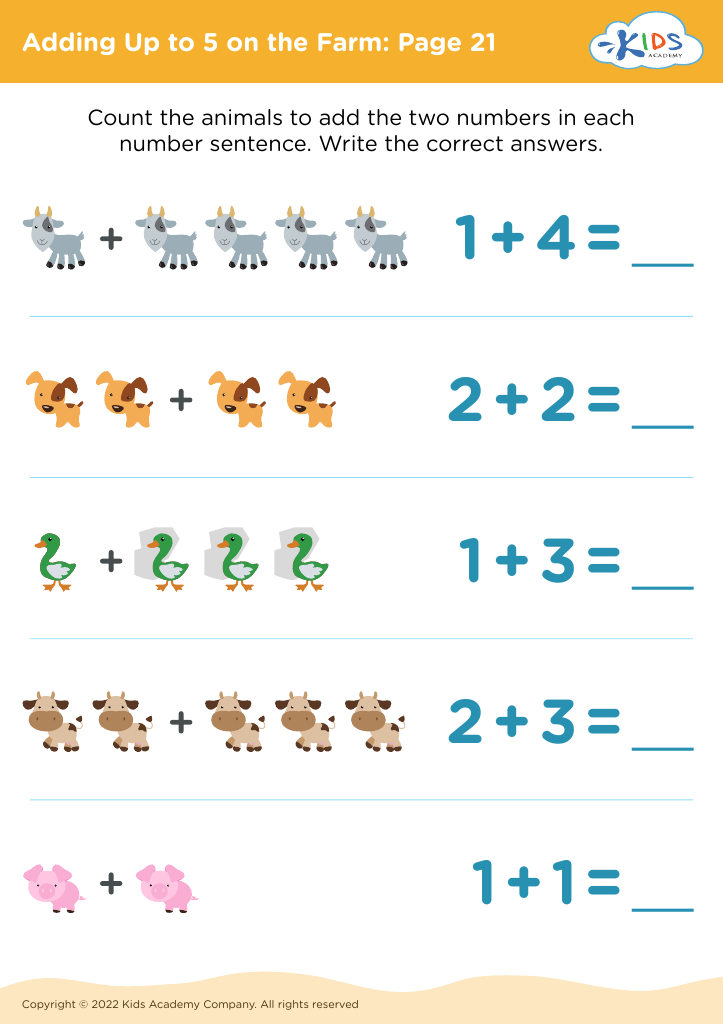
Adding Up to 5 on the Farm: Page 21
Worksheet


Teaching basic addition skills to 3-year-olds is essential for several reasons. First, early math skills lay a strong foundation for a child’s future academic success. Introducing basic addition in a fun and engaging manner helps children develop number sense and fosters a positive attitude toward learning. When children begin to understand simple addition, they also enhance their problem-solving and critical-thinking abilities.

Moreover, engaging in basic addition activities cultivates essential cognitive and social-emotional skills. It encourages children to think logically, compare quantities, and make connections between numbers, promoting their overall cognitive development. Activities like counting objects, using fingers, or incorporating play with toys and games can make learning enjoyable.

Also, focusing on these skills helps build a strong parent-teacher partnership. Parents who engage with their children in early math activities can reinforce what is being taught in preschool, creating a consistent learning environment.

Sharing these learning experiences can foster a love for math that persists through later years. By prioritizing basic addition skills, parents and teachers not only prepare children for academic challenges but also enrich their daily activities and interactions, ultimately enhancing their overall development.