
Basic arithmetic comprehension Worksheets for 3-Year-Olds
4 filtered results
Difficulty Level
Grade
Age
-
From - To
Subject
Activity
Standards
Discover our engaging Basic Arithmetic Comprehension Worksheets designed specifically for 3-year-olds. Tailored to boost early math skills, these printable worksheets make learning fun and interactive. Each activity is crafted to finely balance simplicity with educational value, ensuring young minds grasp foundational arithmetic concepts. Watch kids enjoy exercises on counting, recognizing numbers, and basic addition—all subtly woven into delightful themes your child will love. Perfect for at-home learning or classroom settings, these worksheets lay a strong foundation for future mathematical success. Join us in nurturing your child's early numeracy skills in the most enjoyable way possible!
Favorites
With answer key
Interactive
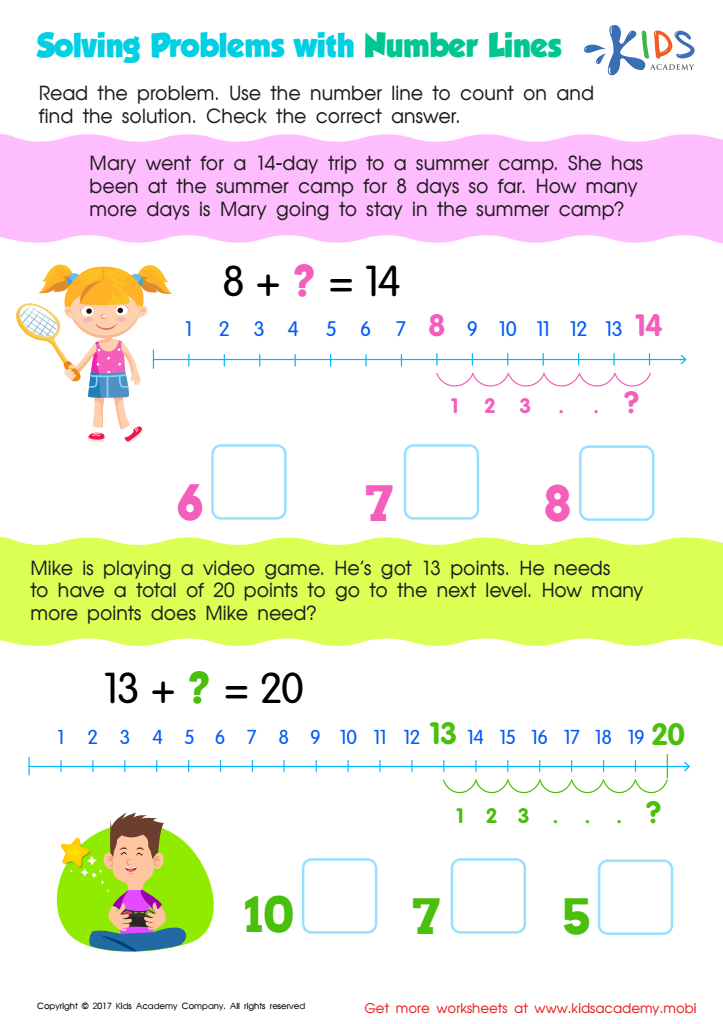
Solving Problems: Number Lines Worksheet
Number lines are fun and help build number sense and reasoning. This worksheet uses them to help students count on to find a solution to an equation. They'll have fun counting with familiar numbers and 10-bases, while also working on algebraic reasoning.
 Assign to My Students
Solving Problems: Number Lines Worksheet
Worksheet
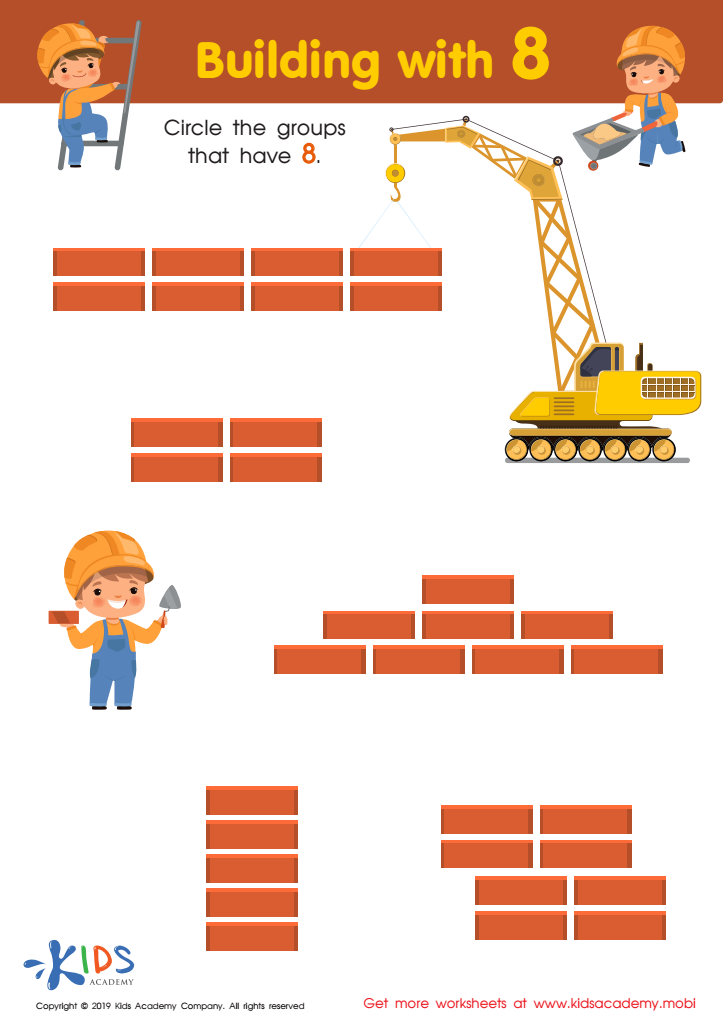
Building with 8 Worksheet
Your child can learn more with this simple exercise! Get them counting and help them circle the groups of 8 bricks. It's a great addition to their post-school lessons, supporting their counting skills. Plus, it's a fun way to learn!
Building with 8 Worksheet
Worksheet
Join Kids Academy for Free
Who is primarily going to use this learning content?







Basic arithmetic comprehension for 3-year-olds is fundamental for several important reasons. Early exposure to numbers and counting sets the stage for future academic success in mathematics and other logical subjects. By fostering an understanding of basic arithmetic, parents and teachers can help children develop critical thinking skills, including problem-solving, pattern recognition, and logical reasoning.
At this young developmental stage, the brain is highly adaptable and capable of absorbing new information rapidly. Introducing simple arithmetic concepts such as counting objects, recognizing numerals, and understanding basic additions and subtractions can enhance this natural learning process. It stimulates cognitive growth and aids in the development of fine motor skills as children often learn these concepts through interactive play and physical activities.
Moreover, an early grasp of arithmetic fosters a positive attitude toward learning. When children gain confidence in their ability to understand and work with numbers, they are more likely to approach more challenging tasks with enthusiasm and self-assurance later on. This builds a solid foundation for lifelong learning and a positive educational experience.
In conclusion, cultivating basic arithmetic comprehension in 3-year-olds not only equips them with essential foundational skills but also encourages cognitive development, confidence, and a love for learning, all of which are crucial for their overall growth and future success.








