
Basic math practice Worksheets for 3-Year-Olds
3 filtered results
Difficulty Level
Grade
Age
-
From - To
Subject
Activity
Standards
Welcome to your go-to resource for Basic Math Practice Worksheets designed specifically for 3-Year-Olds! Our engaging and colorful worksheets introduce young learners to fundamental math concepts in a fun and interactive way. These worksheets are perfect for developing essential skills, including counting, number recognition, and basic addition. Each activity is crafted to capture your child's interest, making learning enjoyable and effective. With easy-to-follow instructions and a variety of exercises, your preschooler will build confidence as they explore the world of numbers. Download our printable worksheets today and take the first step towards a strong mathematical foundation for your little ones!
Favorites
With answer key
Interactive
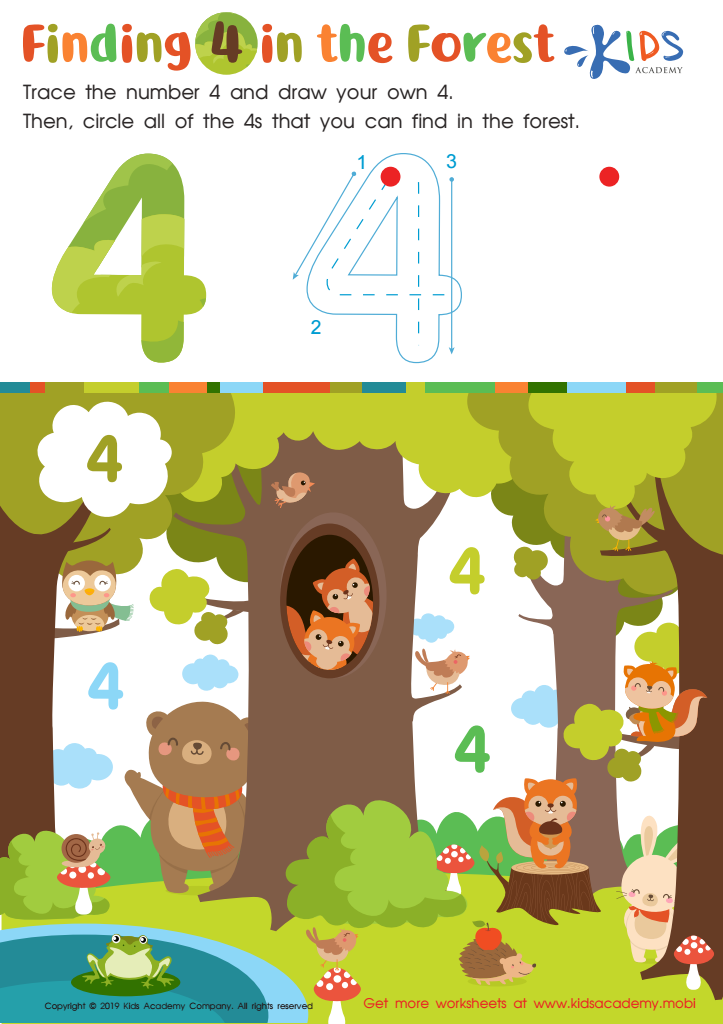
Finding 4 in the Forest Worksheet
Before starting, have your kids count as high as they can. Ask them to identify the setting and point out the 4s. Trace 4 and draw your own. Help your kids circle all the 4s they can find in the forest. How far can they count? How well did they find the hidden 4s?
 Assign to My Students
Finding 4 in the Forest Worksheet
Worksheet
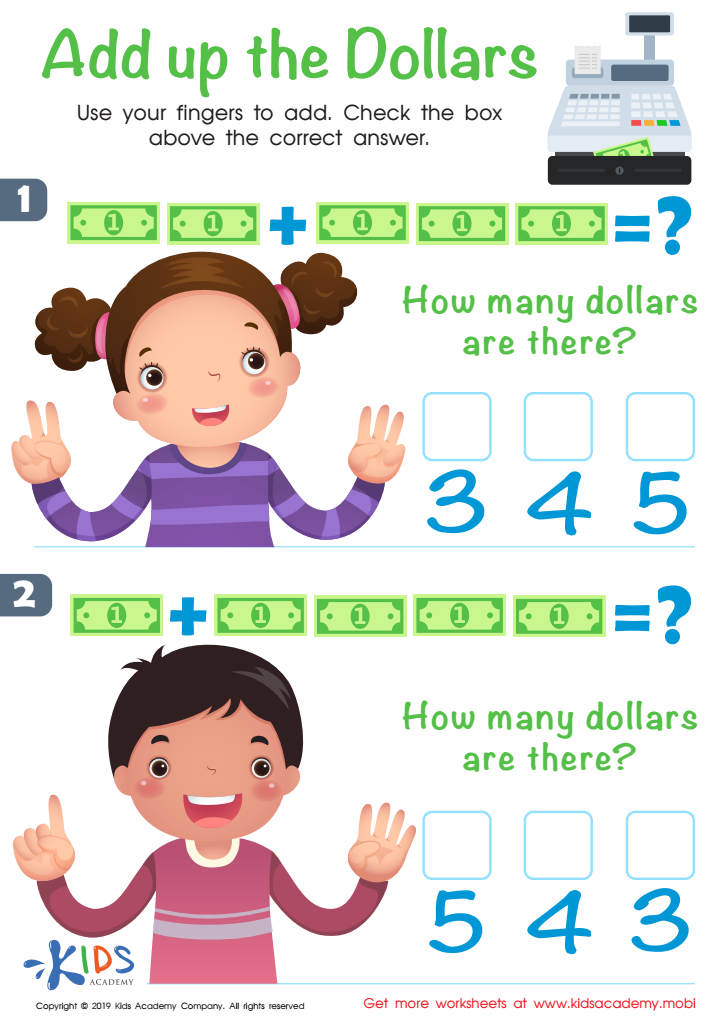
Add up the Dollars Worksheet
Money is key in life. It buys what we love and need. Get students to learn with exercises full of colour and familiar items like this worksheet. It shows two kids and some money. Ask pupils to use their fingers to add the money and check the box with the right answer.
Add up the Dollars Worksheet
Worksheet
Join Kids Academy for Free
Who is primarily going to use this learning content?



.jpg)




Basic math practice for 3-year-olds is crucial for several reasons. At this age, children are naturally curious and eager to explore the world around them, making it an ideal time to introduce foundational math concepts through play and everyday activities. Engaging in basic math practice helps children develop essential skills such as counting, recognizing numbers, and understanding patterns. These skills are the building blocks for more complex mathematical reasoning they'll encounter later in life.
Moreover, early math skills are closely linked to future academic success. Research indicates that children who have solid math foundations in preschool are more likely to excel in school and beyond. Math practice at this young age can also boost critical thinking and problem-solving abilities, as children learn to approach challenges with a numerical perspective.
Furthermore, involving parents and teachers in this process reinforces language skills, as they engage in discussions about quantities, shapes, and sizes. This collaborative learning fosters a positive attitude towards math, making it less intimidating as children grow. Ultimately, caring about basic math practice at this stage lays the groundwork for lifelong learning and confidence in one’s mathematical abilities.








