
Emotional identification Worksheets for 3-Year-Olds
3 filtered results
Difficulty Level
Grade
Age
-
From - To
Subject
Activity
Standards
Enhance your child's emotional awareness with our engaging Emotional Identification Worksheets for 3-year-olds. Designed to help little ones recognize and express their feelings, these worksheets offer fun illustrations and interactive activities that promote emotional literacy. As children identify emotions like happiness, sadness, anger, and surprise, they develop essential social skills and empathy. Each worksheet encourages discussion and reflection, making it a perfect tool for parents and educators alike. Nurture emotional intelligence early by incorporating these easy-to-use resources into your daily activities, and watch your child thrive both socially and emotionally. Explore our collection and support your child's emotional growth today!
Favorites
With answer key
Interactive
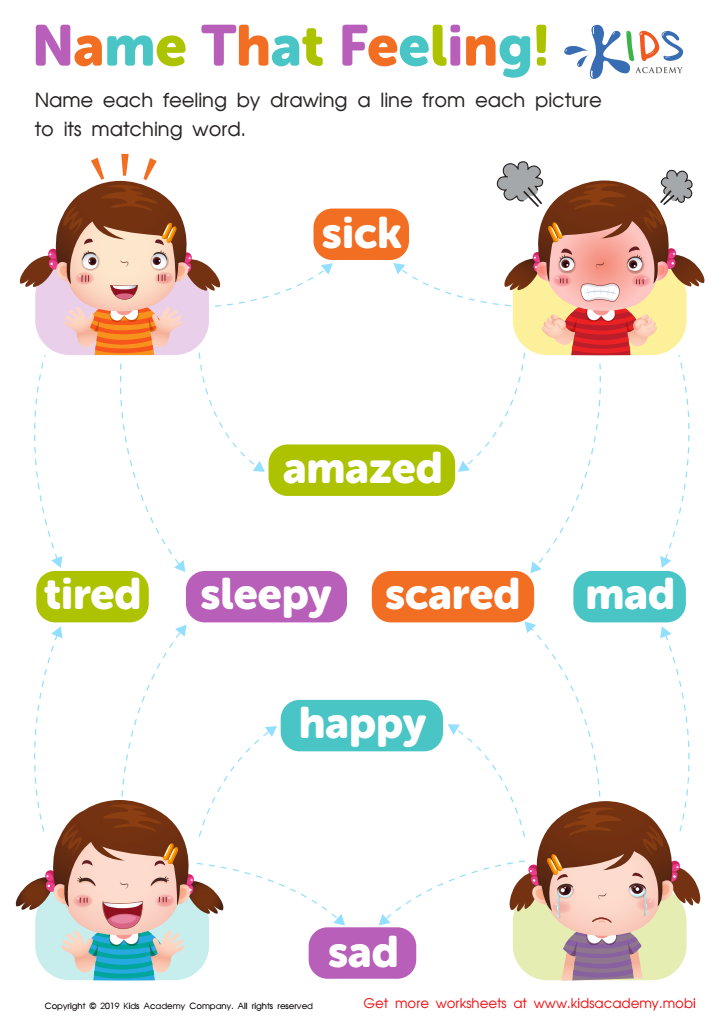
Name that Feeling Worksheet
Fostering your child's emotional intelligence is essential for their development. This worksheet helps them associate feelings with words, improving their social skills and fine motor coordination. They'll trace pictures and words to learn the feeling vocabulary.
Name that Feeling Worksheet
Worksheet
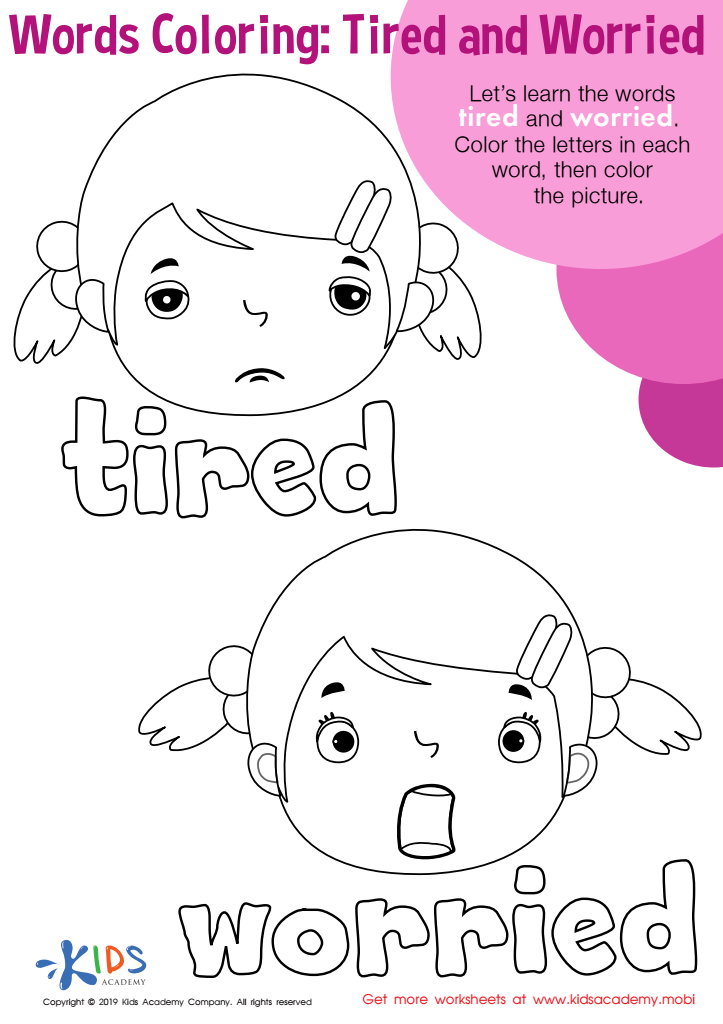
Tired and Worried Words Coloring Worksheet
Teach your students about "tired" and "worried" with this worksheet. Have them read and color the emotion words, then color the pictures of a tired girl and a worried girl. Discuss what makes them tired and worried. Expand their vocabulary with this fun coloring activity!
Download (PDF)
 Assign to My Students
Assign to My Students
Tired and Worried Words Coloring Worksheet
Worksheet
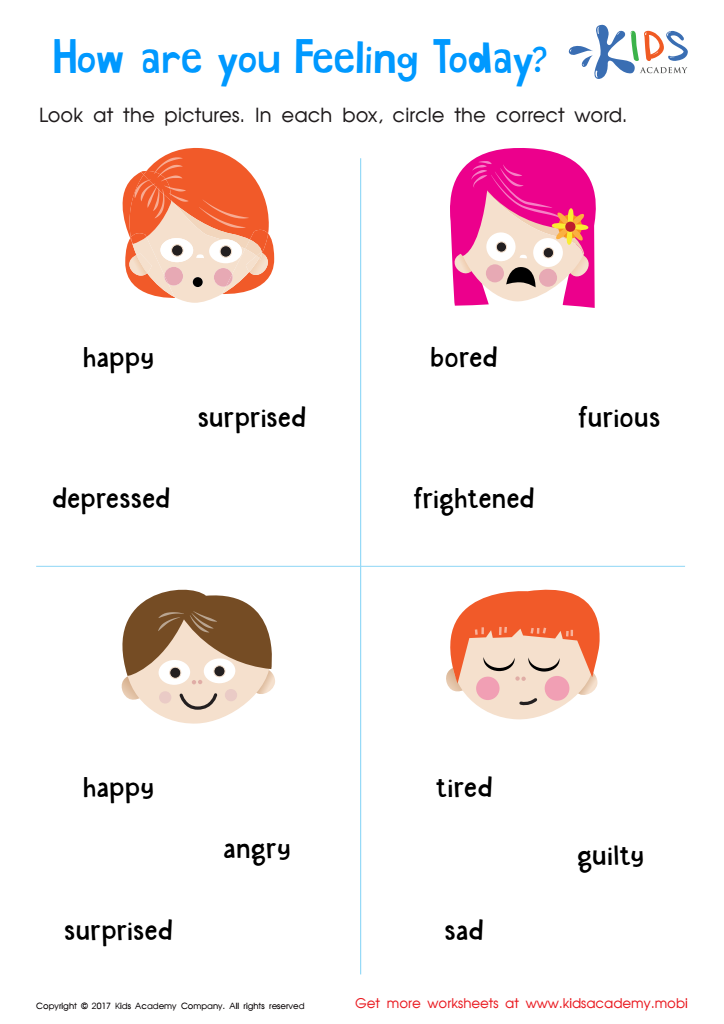
Understanding Feelings Worksheet
It helps them learn to empathize with others and regulate their own emotions. Try it today!
Develop your child's understanding of empathy and emotional regulation with this worksheet! It is a great way to help them acquire important life skills beyond academic knowledge. Print it and start using it to take their social and emotional skills to the next level. Try it now!
Understanding Feelings Worksheet
Worksheet
Join Kids Academy for Free
Who is primarily going to use this learning content?







Understanding emotional identification in 3-year-olds is crucial for both parents and teachers, as it lays the groundwork for children's social and emotional development. At this age, children are beginning to articulate their feelings and recognize emotional cues in themselves and others. Encouraging emotional identification fosters empathy, communication skills, and self-awareness.
When parents and teachers help children label and understand their emotions, they provide them with tools to navigate social interactions and resolve conflicts effectively. Children who can identify how they feel are more likely to express their needs and concerns, leading to healthier relationships and better behavioral outcomes.
Additionally, enhanced emotional identification helps to reduce behavioral problems. When children can articulate feelings like frustration or sadness, they are less likely to engage in temper tantrums or withdraw into silence, since they have better coping mechanisms.
Moreover, nurturing this skill plays a significant role in overall mental health. Children who feel understood by caregivers are more likely to develop self-esteem and resilience. In fostering a supportive environment where feelings are acknowledged and validated, both parents and teachers contribute to creating emotionally intelligent children who are better equipped to face life's challenges.








