Enhancing observation skills Worksheets for 3-Year-Olds
6 filtered results
-
From - To
Our "Enhancing Observation Skills Worksheets for 3-Year-Olds" are meticulously designed to foster attention to detail in young learners. These engaging, visually stimulating activities help children sharpen their ability to notice patterns, identify differences, and develop critical thinking. Perfect for nurturing early development, each worksheet blends fun with learning. Through playful exercises involving colors, shapes, and everyday objects, kids improve focus and observational acuity. Ideal for at-home practice or supplemental classroom materials, these worksheets build a strong foundation for higher learning skills. Spark your child’s curiosity and give them the tools to explore the world around them with keen eyes!
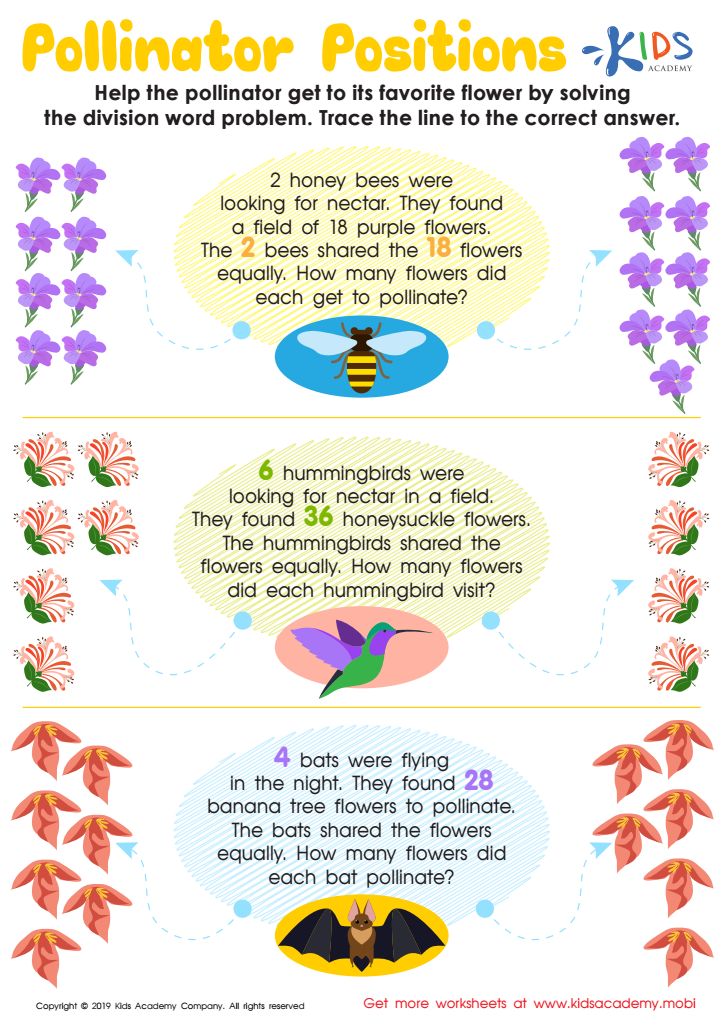
Pollinator Positions Worksheet
 Assign to My Students
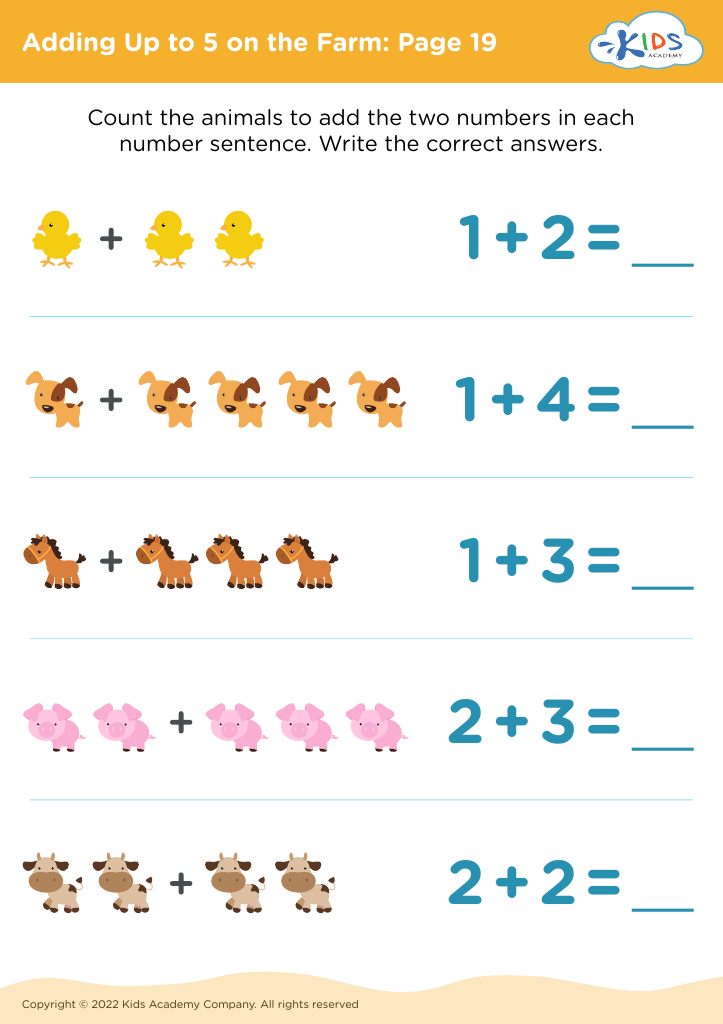
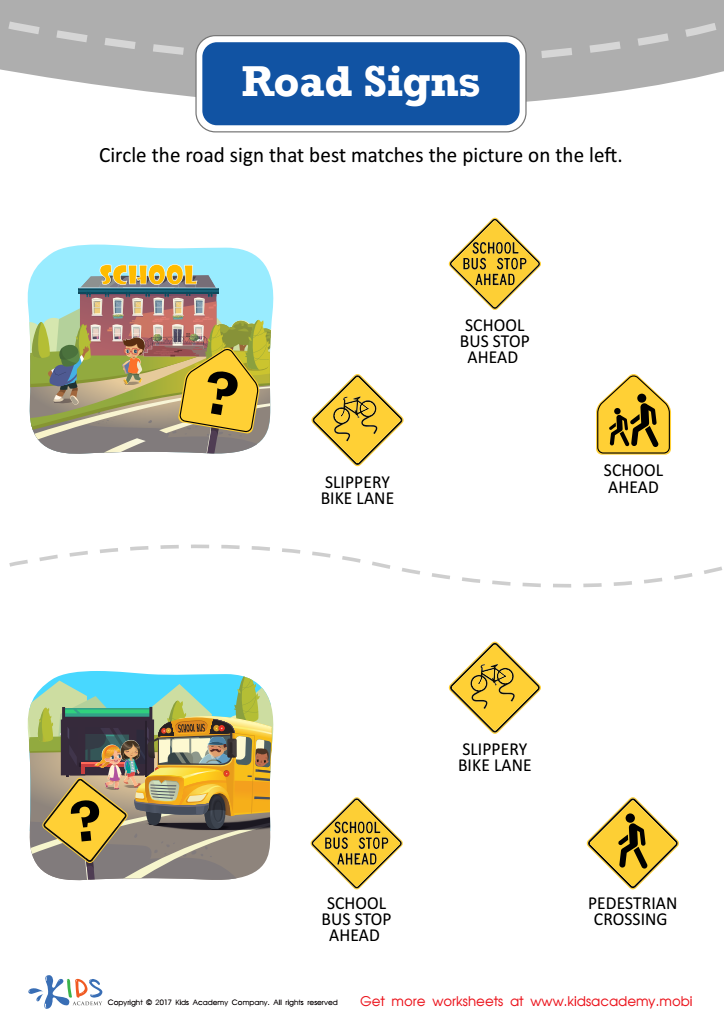
Road Signs (Part 1) Worksheet
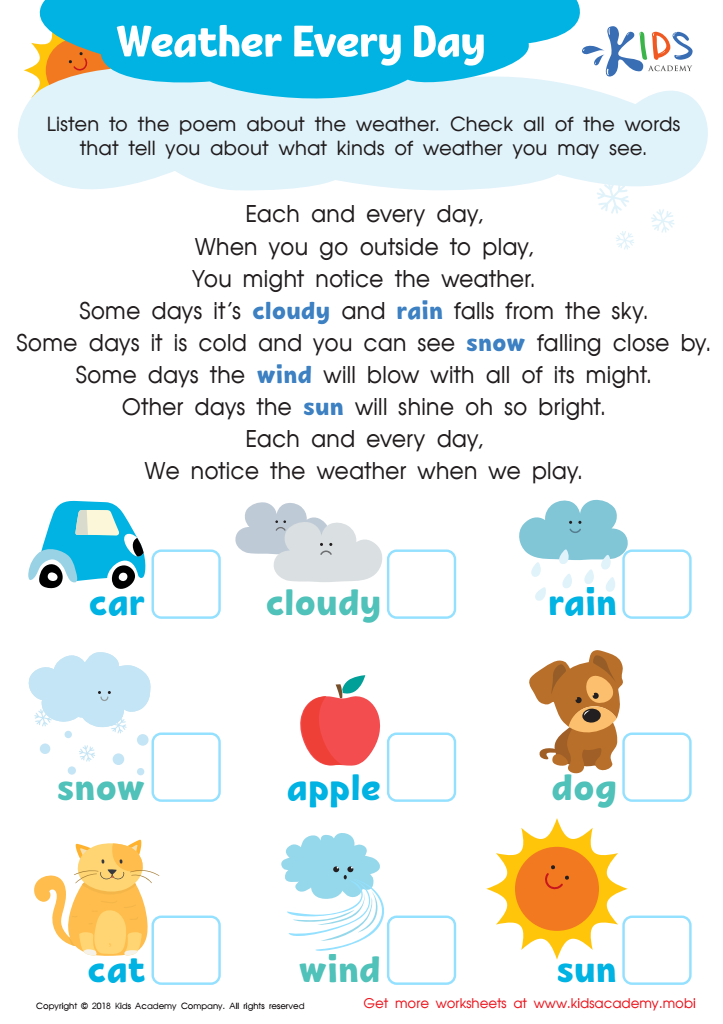
Weather Every Day Worksheet
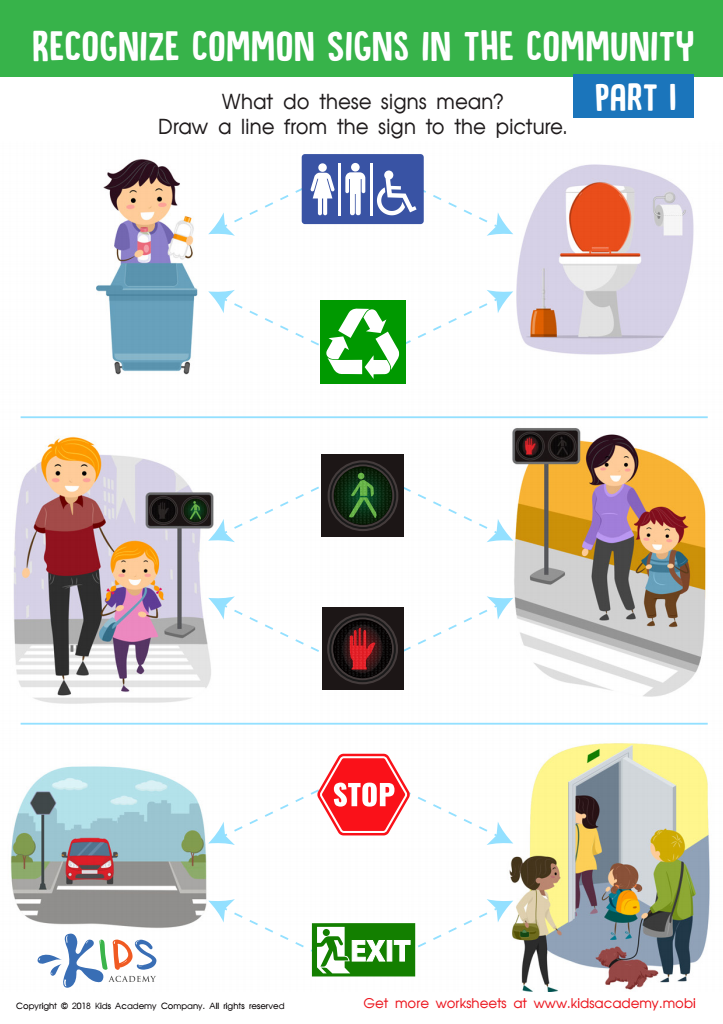
Recognize Common Signs: Part 1 Worksheet
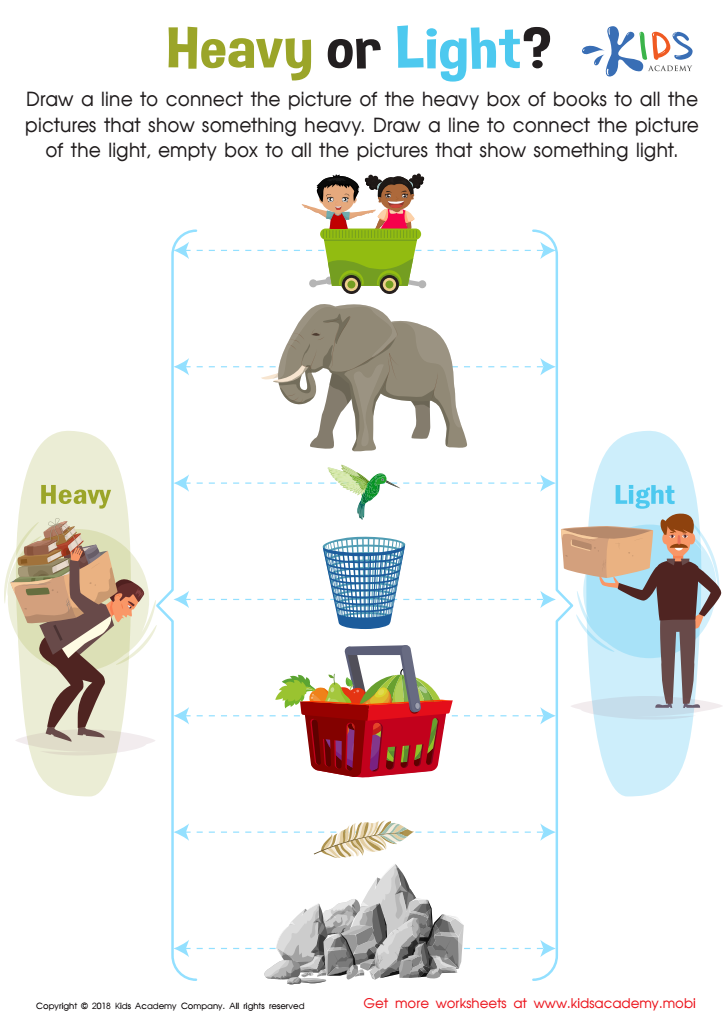
Heavy or Light? Worksheet








Enhancing observation skills in 3-year-olds is essential as these early years are a crucial period for cognitive and emotional development. When parents and teachers foster strong observational skills, they help children fine-tune their abilities to notice and interpret the world around them. This foundational skill sets the stage for successful learning experiences, as it enables children to identify patterns, make connections, and understand cause-and-effect relationships.
Developing keen observation skills promotes language development. As children describe what they see and experience, their vocabulary and ability to communicate effectively grow. Additionally, these skills support social-emotional learning. Observant children are more adept at reading social cues, understanding others' emotions, and developing empathy.
Encouraging observation through playful exploration and guided activities stimulates curiosity and natural inquiry. For example, engaging a child in a nature walk where they describe various textures, colors, and sounds promotes attentiveness and analytical thinking.
In essence, by nurturing observation skills, parents and teachers lay the groundwork for lifelong learning and success. Children become better learners, more effective communicators, and emotionally intelligent individuals. Enhanced observation skills support holistic development, equipping children with the ability to navigate their world thoughtfully and creatively.








