Welcome to our engaging collection of fine motor skills worksheets designed specifically for 3-year-olds, focusing on writing numbers! These printable activities provide young learners with a fun and interactive way to develop essential hand-eye coordination and fine motor abilities. Our worksheets feature colorful, kid-friendly designs that encourage children to trace and write numbers, enhancing their writing skills and confidence. Perfect for home or classroom use, these worksheets are a fantastic resource for parents and educators looking to lay a strong foundation for early number recognition and writing. Explore our selection today to support your child's artistic journeys with numbers!

Check out this FREE "Fine motor skills (writing numbers)" Trial Lesson for age 3!

A

Favorites
With answer key
Interactive
  • 3
  • Fine motor skills (writing numbers)
Count Together with the Ants Worksheet
Count Together with the Ants Worksheet
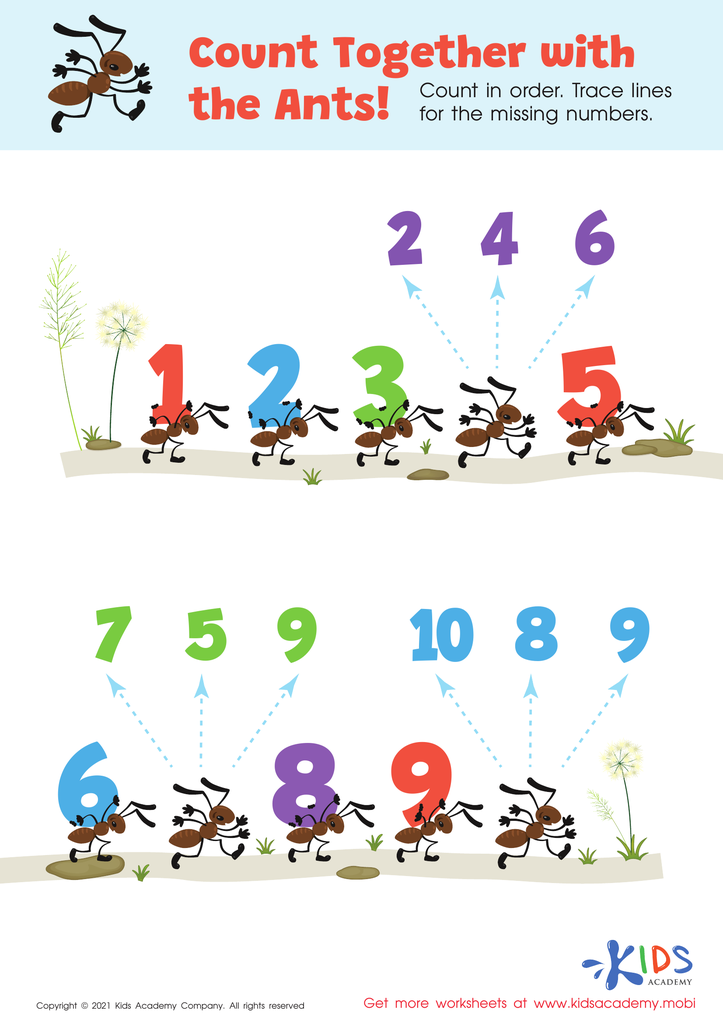
Rather than letting kids get too deep in online games, keep them engaged with learning worksheets. Ask them to identify the insect in the picture, then count the ants. Help them trace lines to the missing numbers. It's simple and straightforward for young children to comprehend.
Count Together with the Ants Worksheet
Worksheet
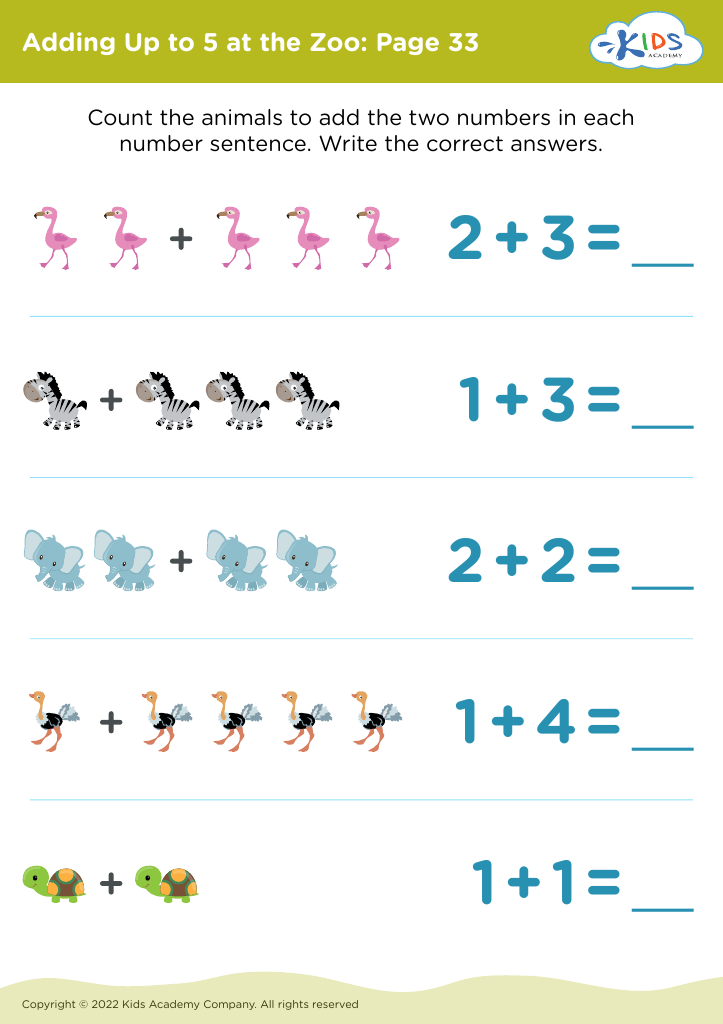
Adding Up to 5 at the Zoo: Page 33
Worksheet
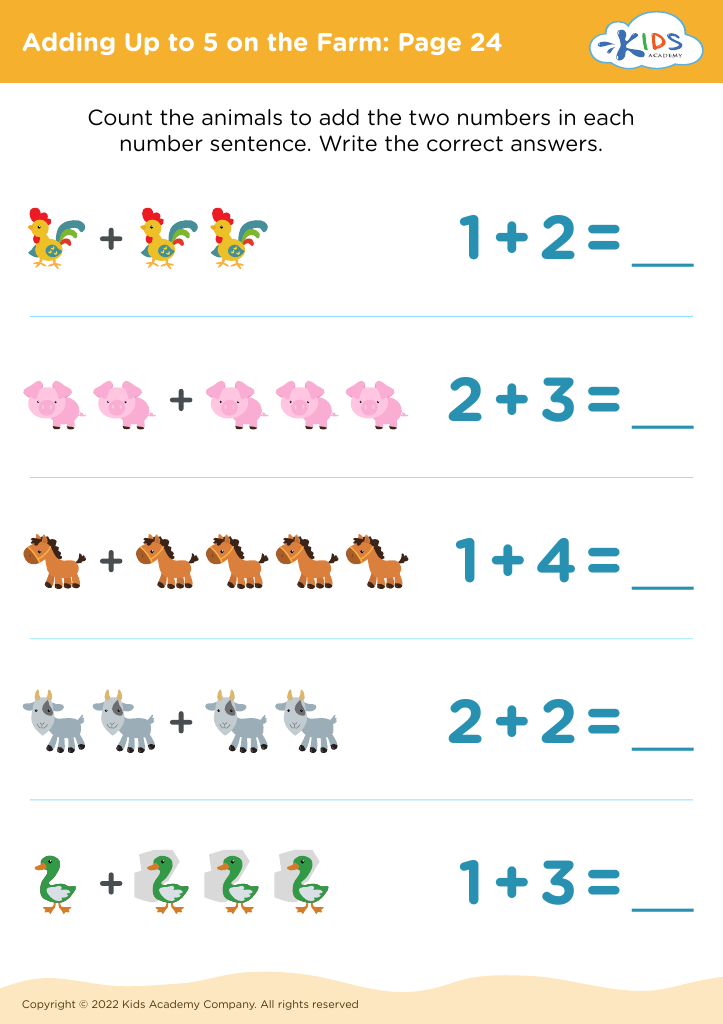
Adding Up to 5 on the Farm: Page 24
Worksheet
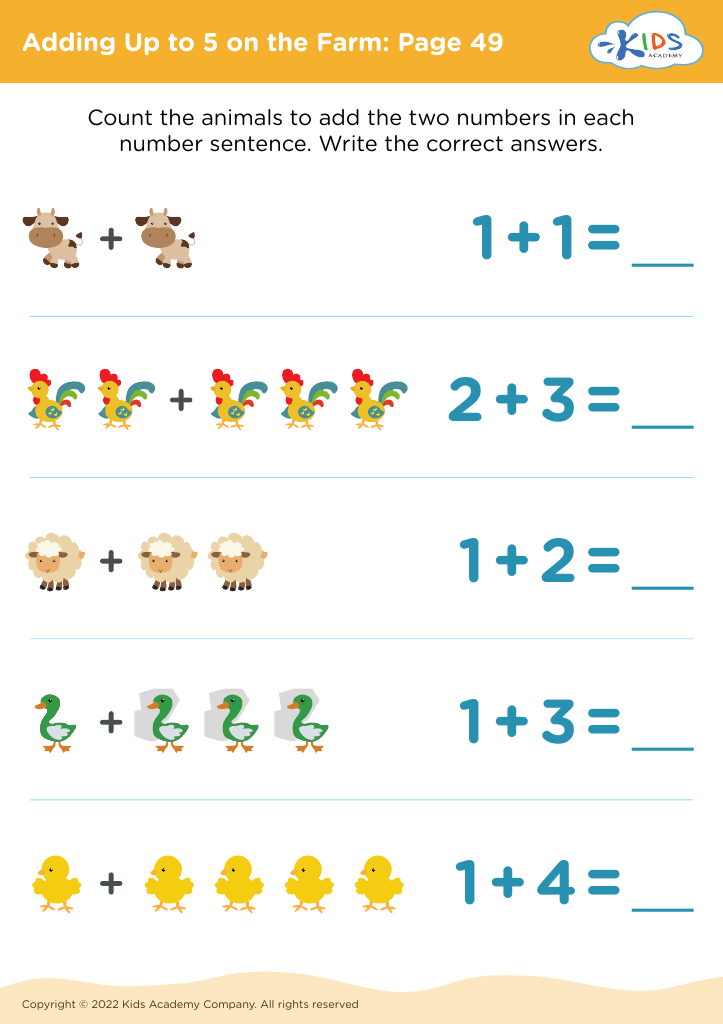
Adding Up to 5 on the Farm: Page 49
Worksheet
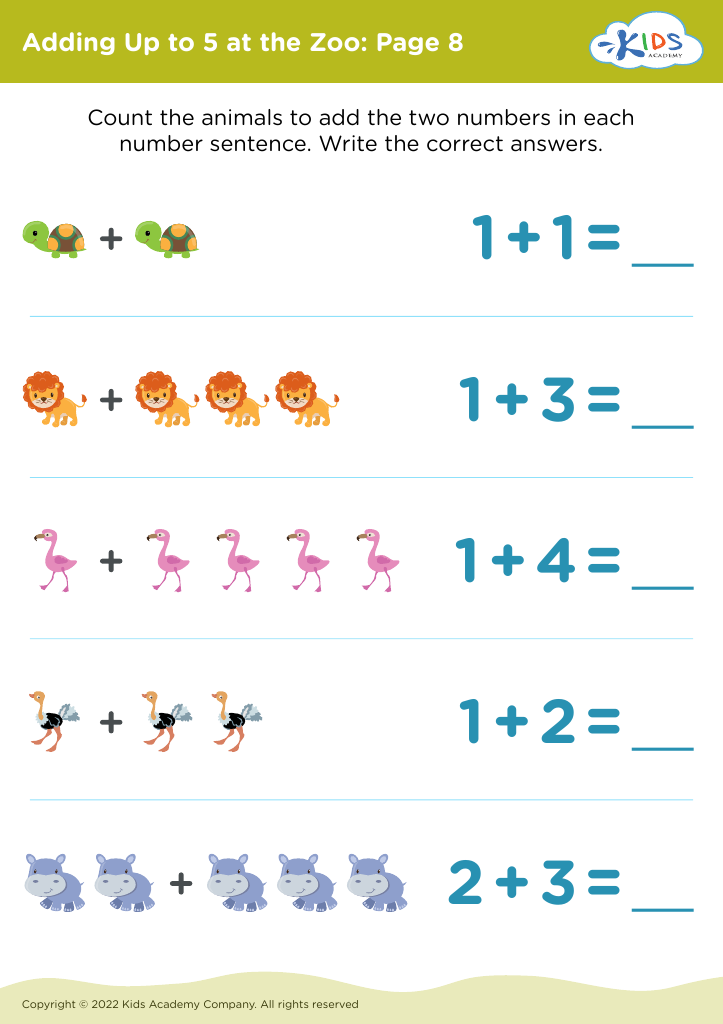
Adding Up to 5 at the Zoo: Page 8

Adding Up to 5 at the Zoo: Page 8

Adding Up to 5 at the Zoo: Page 8
Worksheet
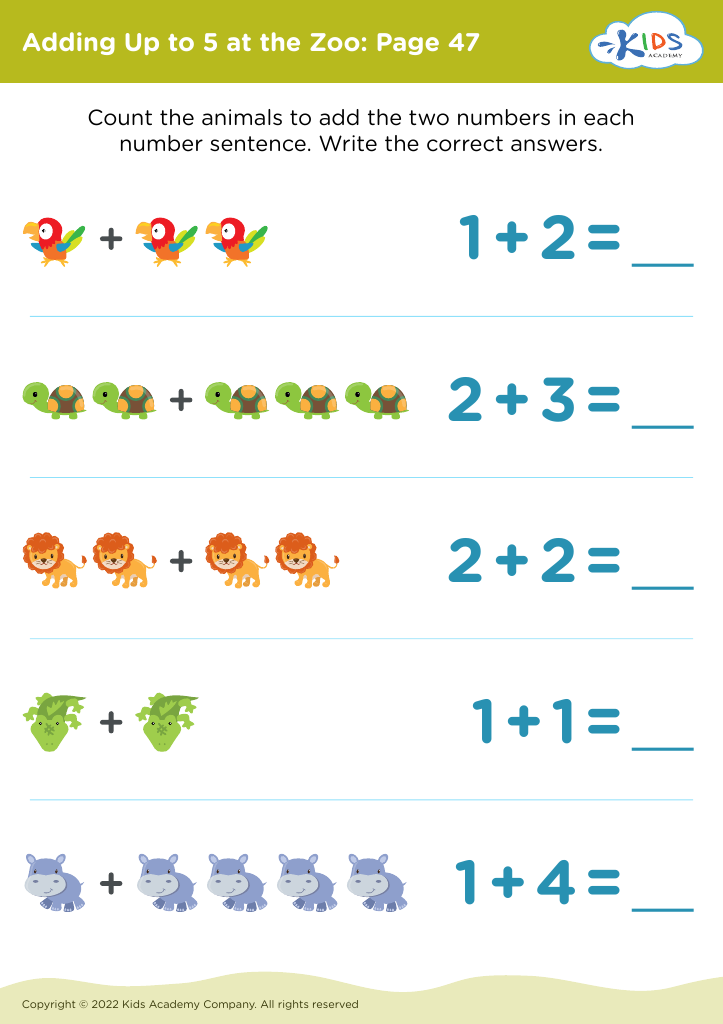
Adding Up to 5 at the Zoo: Page 47
Worksheet
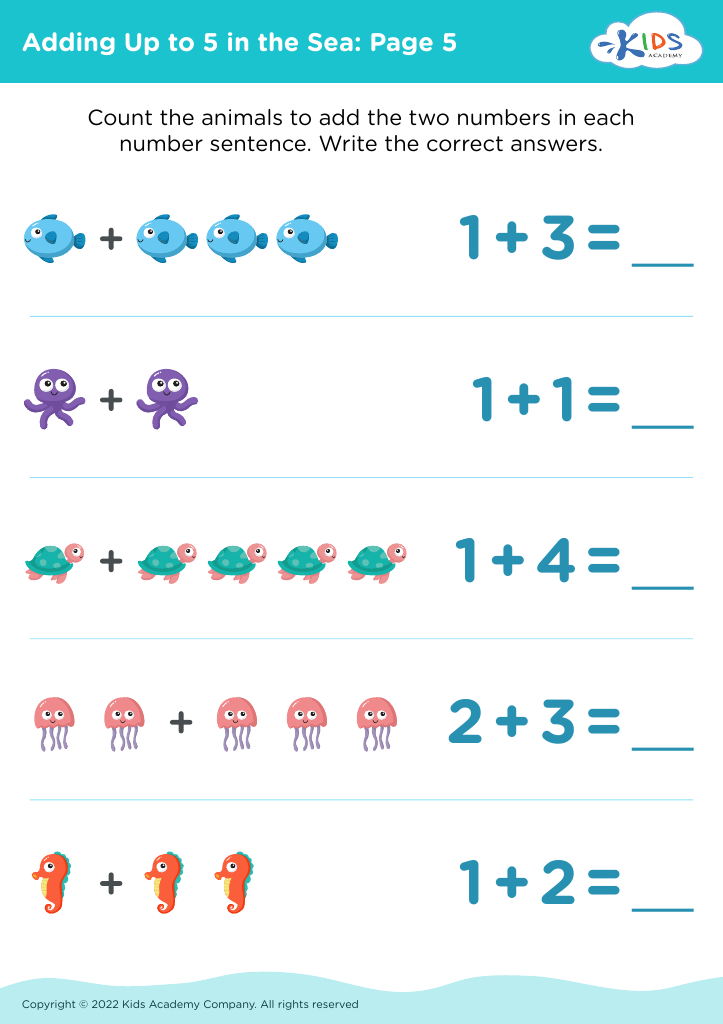
Adding Up to 5 in the Sea: Page 5

Adding Up to 5 in the Sea: Page 5

Adding Up to 5 in the Sea: Page 5
Worksheet
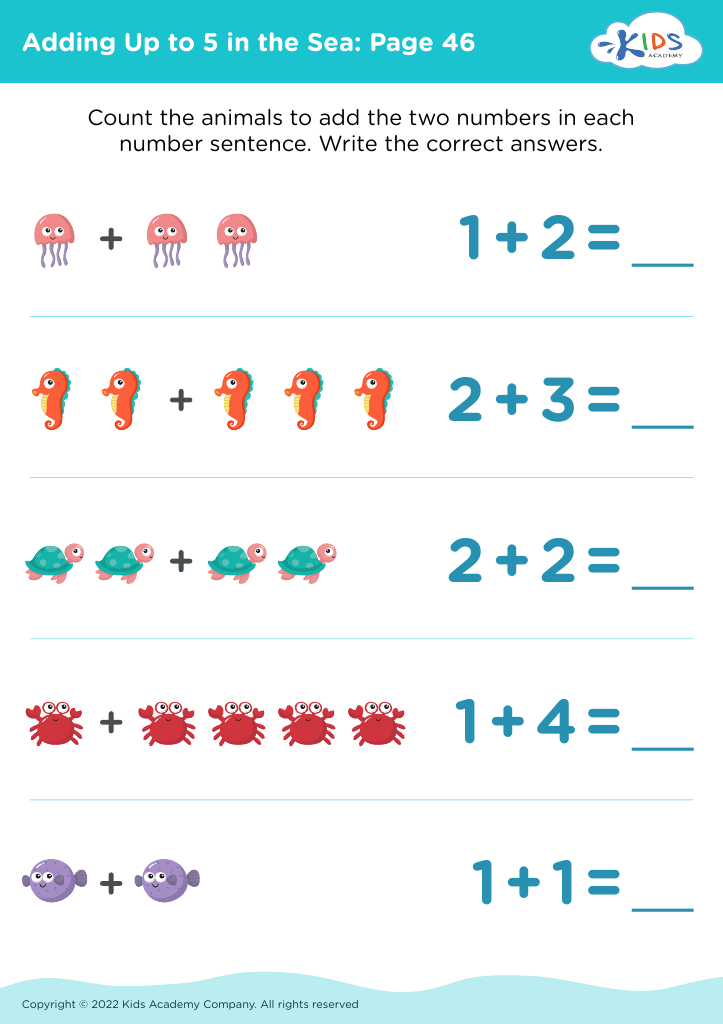
Adding Up to 5 in the Sea: Page 46
Worksheet
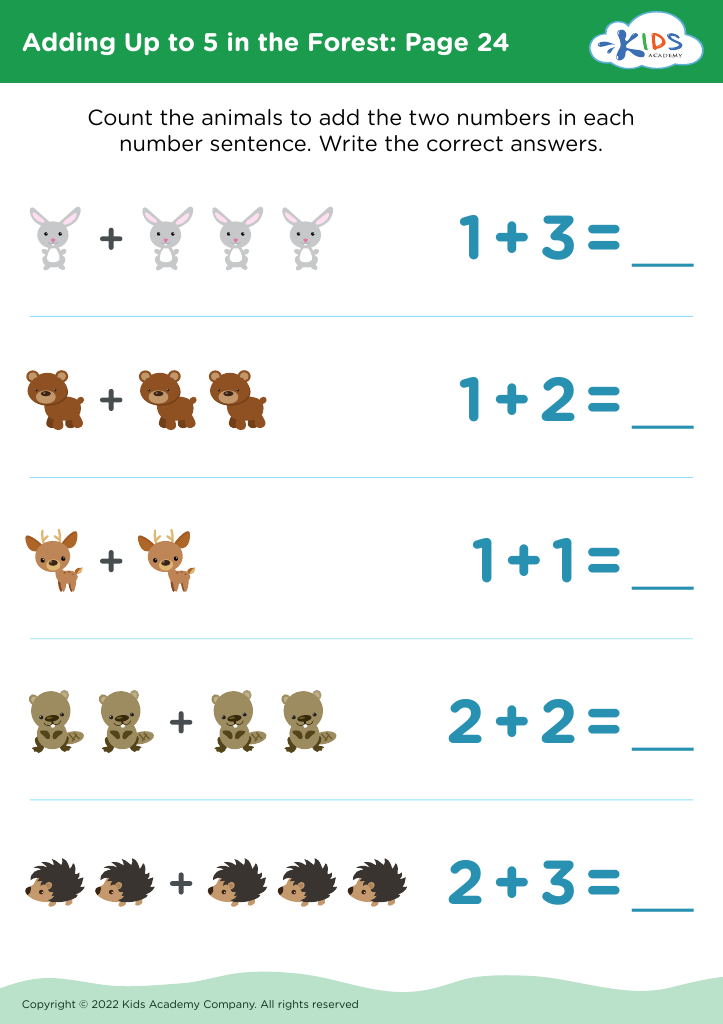
Adding Up to 5 in the Forest: Page 24
Worksheet
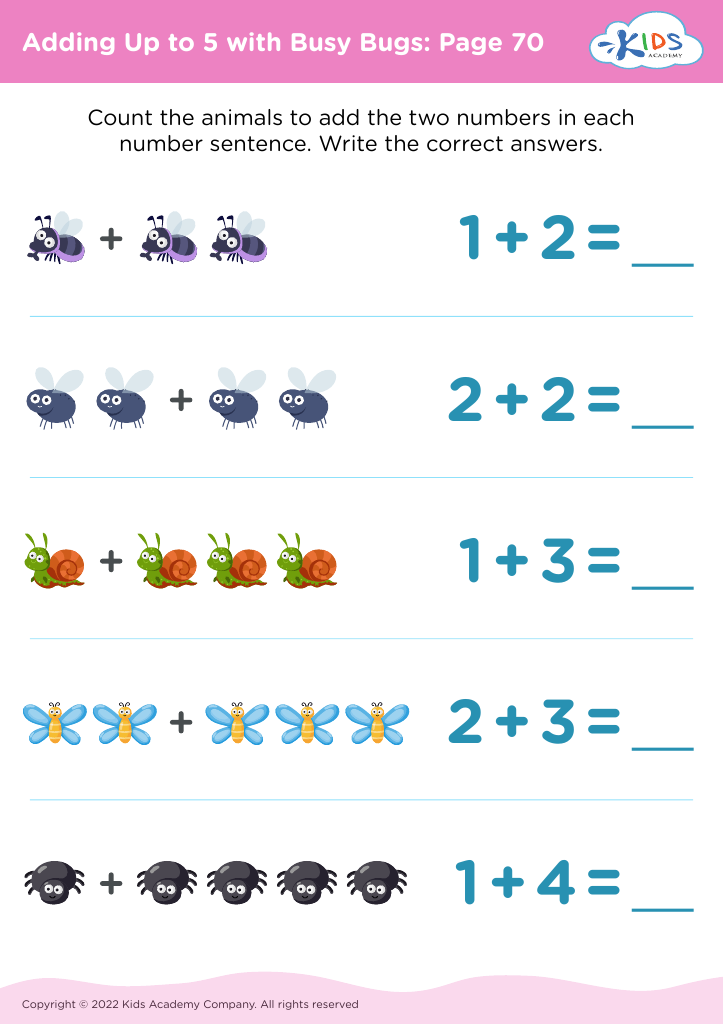
Adding Up to 5 with Busy Bugs: Page 70
Worksheet
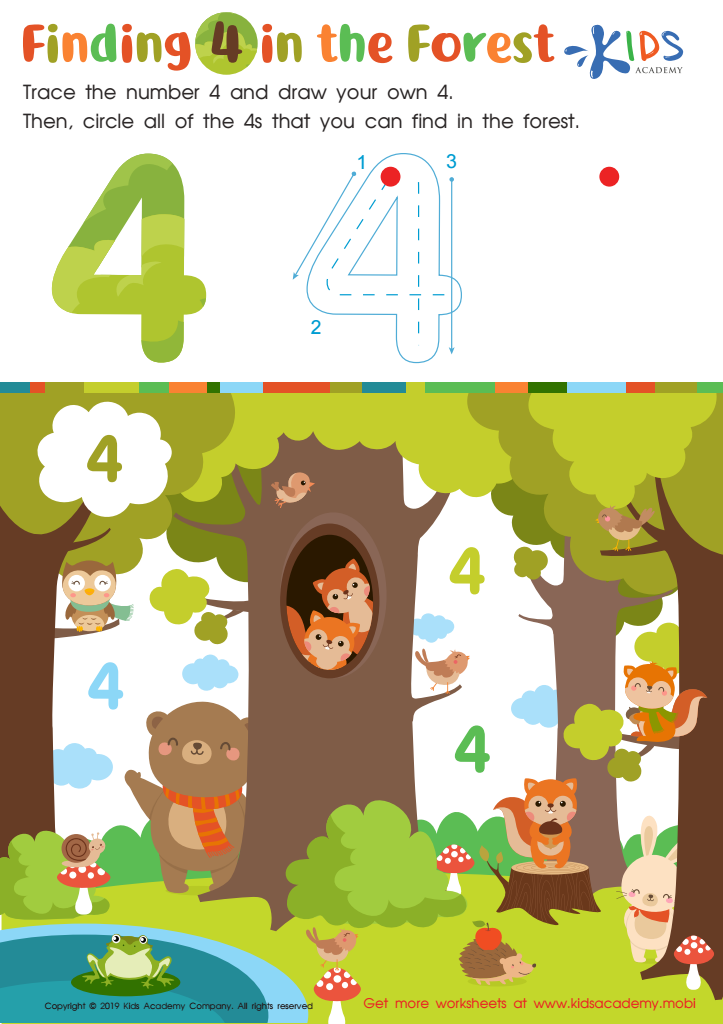
Finding 4 in the Forest Worksheet

Finding 4 in the Forest Worksheet

Before starting, have your kids count as high as they can. Ask them to identify the setting and point out the 4s. Trace 4 and draw your own. Help your kids circle all the 4s they can find in the forest. How far can they count? How well did they find the hidden 4s?
Finding 4 in the Forest Worksheet
Worksheet
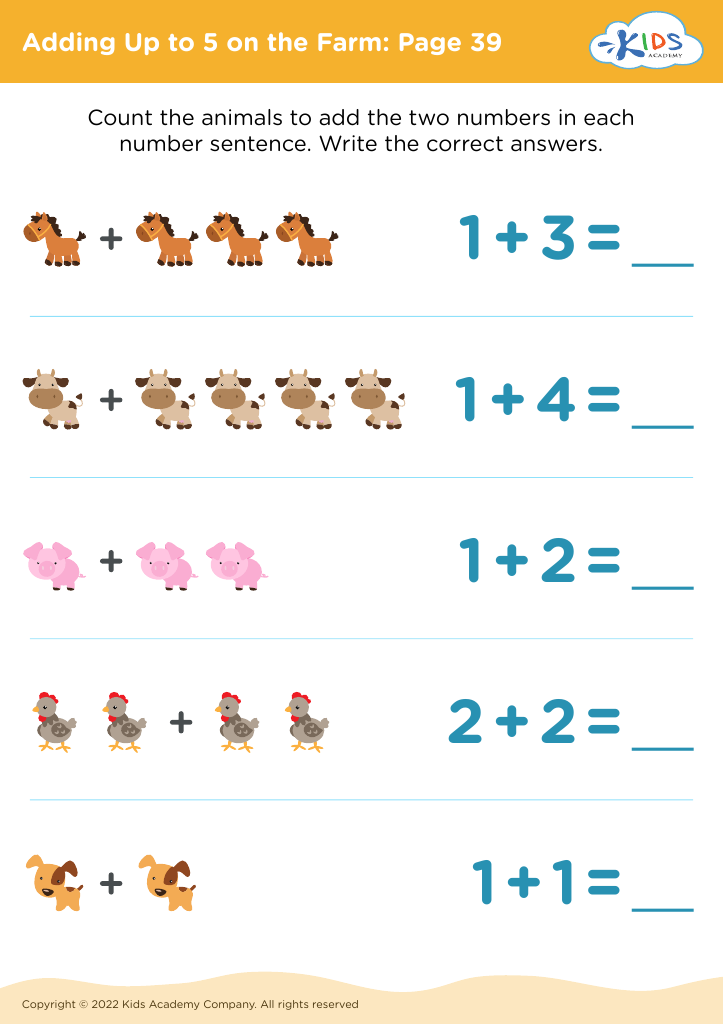
Adding Up to 5 on the Farm: Page 39
Worksheet
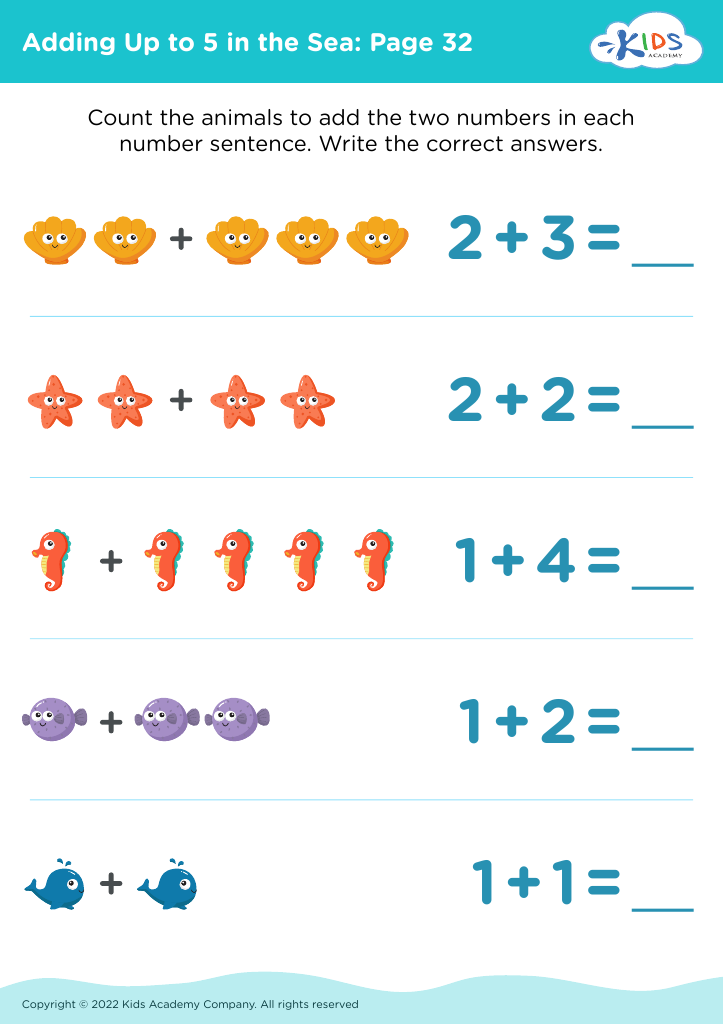
Adding Up to 5 in the Sea: Page 32
Worksheet
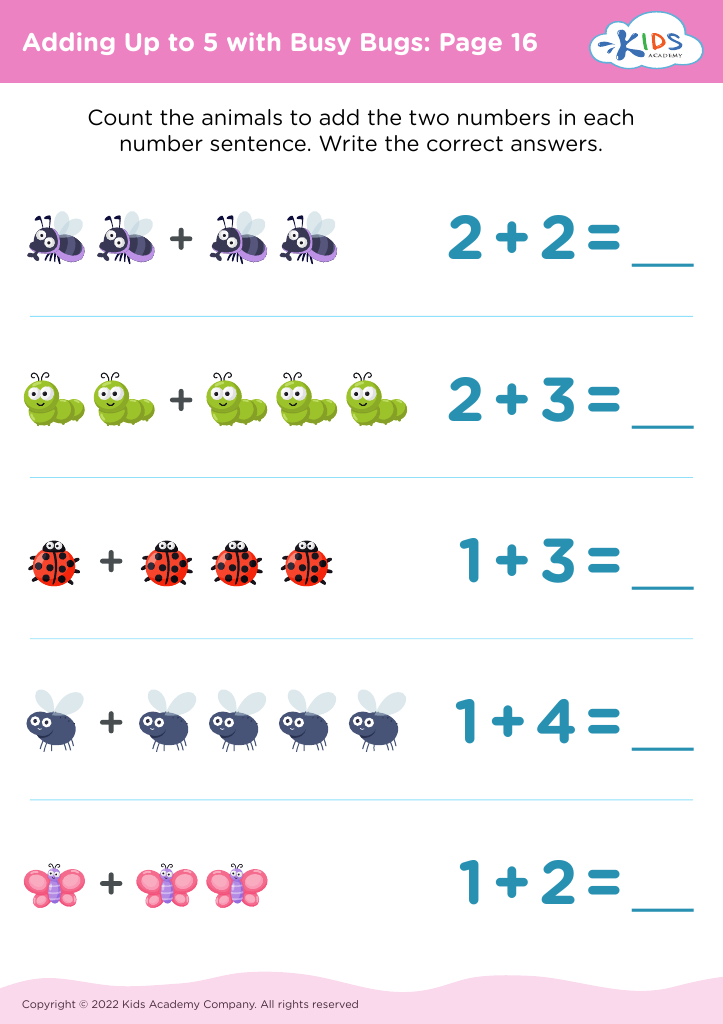
Adding Up to 5 with Busy Bugs: Page 16
Worksheet
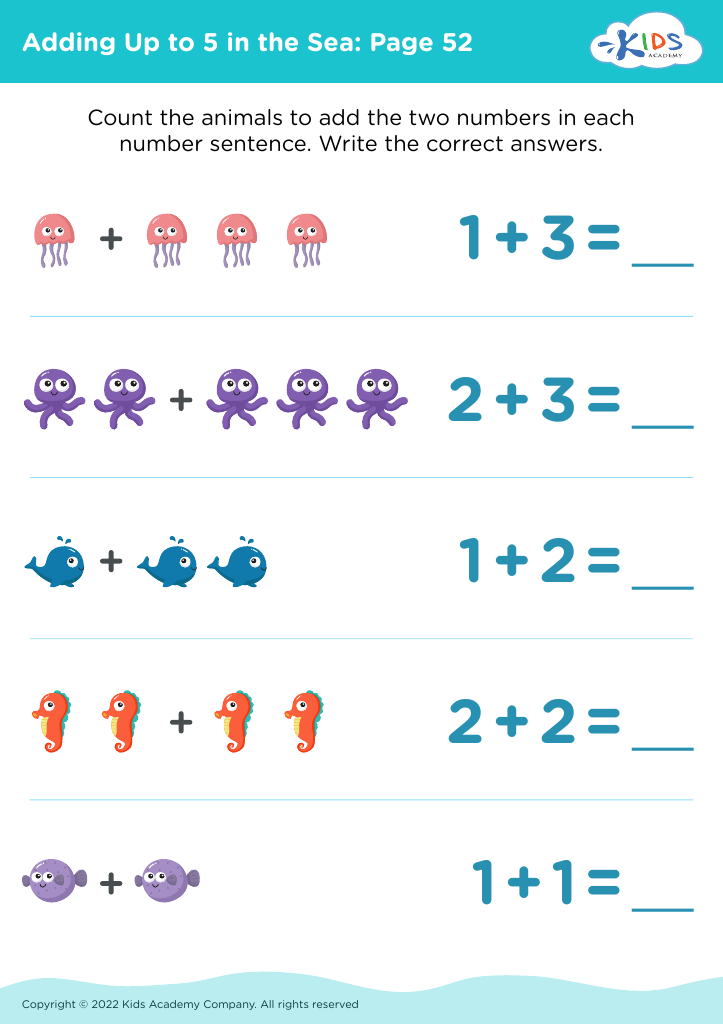
Adding Up to 5 in the Sea: Page 52
Worksheet


Fine motor skills, particularly in writing numbers, are crucial for 3-year-olds as they lay the foundation for future learning and everyday tasks. At this developmental stage, children are refining their hand-eye coordination and dexterity, which are essential for tasks like writing, using scissors, and manipulating objects. By focusing on fine motor skills, parents and teachers can help children develop the necessary muscles and coordination in their hands and fingers.

Moreover, writing numbers early fosters skills in math and literacy. Recognizing and writing numbers not only enhances a child's ability to understand basic math concepts, but it also promotes early literacy by teaching them how to form shapes and letters carefully. Engaging in activities that promote fine motor development can also boost a child’s confidence as they master new skills, leading to a positive attitude towards learning.

Additionally, strong fine motor skills can positively influence a child’s social interactions. As they develop these skills, children engage in play activities that require cooperation and communication, further supporting their social-emotional growth. In essence, nurturing fine motor skills through number writing is an investment in a child's academic readiness and overall development, making it paramount for parents and educators.