Identifying shapes Worksheets for 3-Year-Olds
4 filtered results
-
From - To
Discover our engaging "Identifying Shapes Worksheets for 3-Year-Olds," designed to introduce young learners to the world of shapes through fun and interactive activities. Our worksheets feature colorful illustrations and simple exercises that help your child recognize and name basic shapes such as circles, squares, triangles, and rectangles. Perfect for preschool and homeschooling, these printable resources encourage kids to develop their visual perception and fine motor skills while enhancing their vocabulary. Each worksheet is tailored to keep little ones entertained and focused as they embark on their shape-learning journey. Download today and watch your child’s excitement grow as they explore shapes!
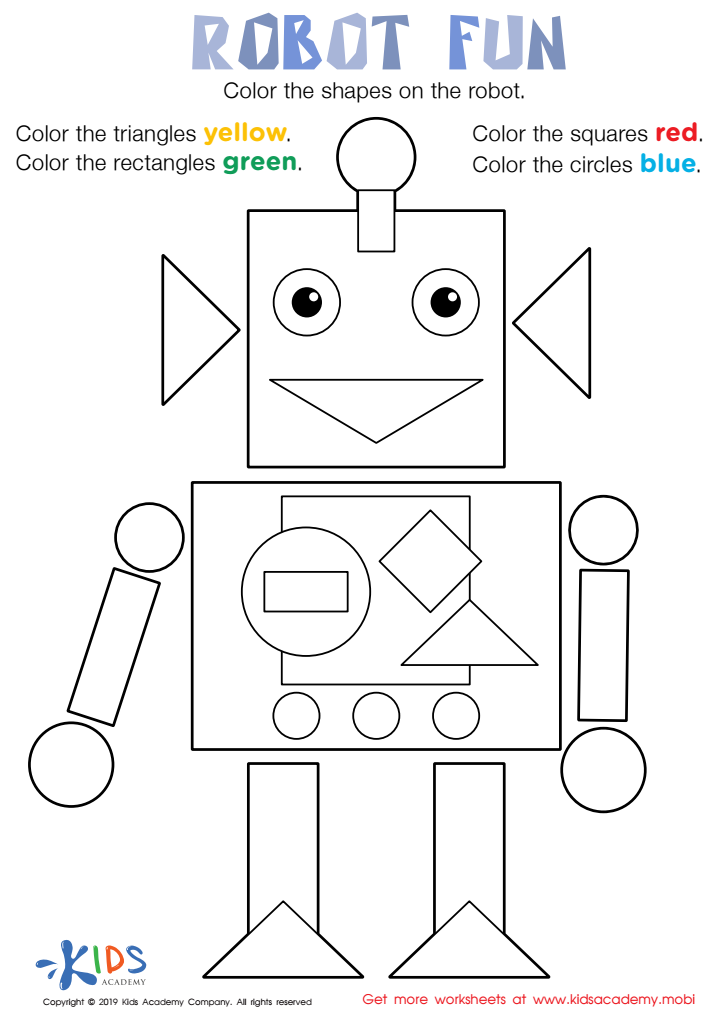
Robot Fun Worksheet
 Assign to My Students
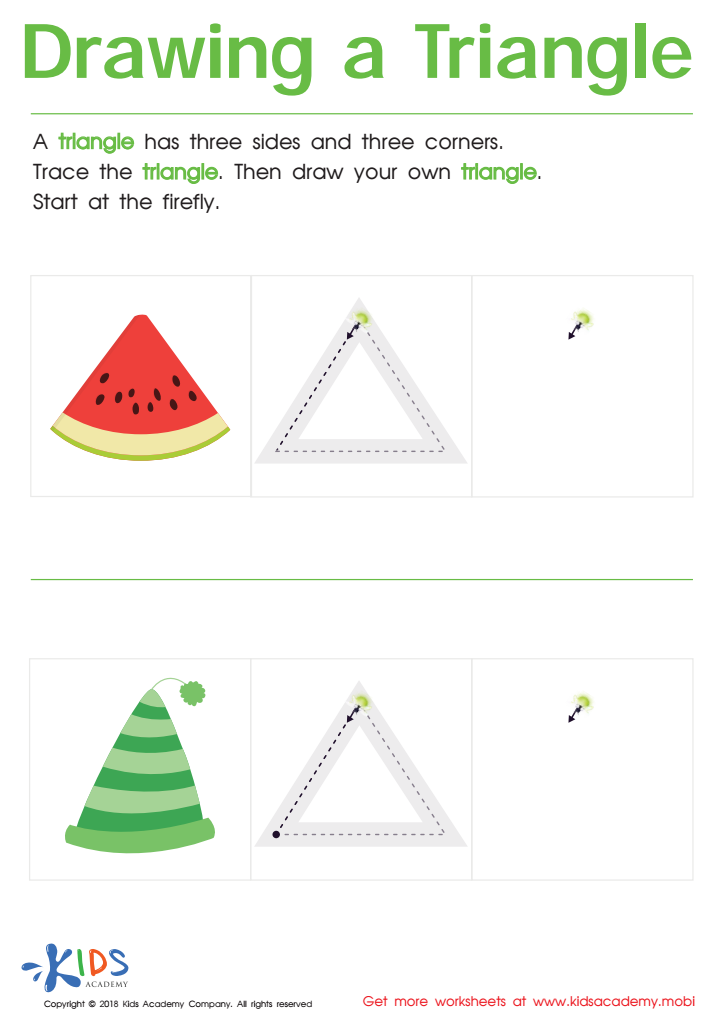
Drawing a Triangle Worksheet








Identifying shapes is a foundational skill that plays a crucial role in early childhood development. For 3-year-olds, engaging with shapes fosters not just basic geometric understanding, but also critical cognitive, social, and motor skills. Recognizing shapes helps young children make sense of the world around them, as shapes are a significant part of everyday objects — from toys to buildings. This recognition encourages the development of observation skills and memory, as children learn to differentiate between various forms and their attributes.
Furthermore, learning about shapes lays the groundwork for more complex mathematical concepts, such as symmetry, area, and spatial awareness. These skills are essential for problem-solving and logical thinking. Incorporating shape identification into play enhances a child's learning experience, making it fun and interactive.
From a social perspective, identifying shapes can enhance communication skills, as children learn to describe and categorize the things they see. Parents and teachers can use simple activities like singing songs, playing games, or creating art projects using shapes, making learning engaging and effective. By prioritizing shape identification, caregivers help children build confidence and familiarity with mathematics, paving the way for academic success in the future.








