Logical thinking development Worksheets for 3-Year-Olds
7 filtered results
-
From - To
Enhance your child's cognitive skills with our engaging Logical Thinking Development Worksheets for 3-Year-Olds! These thoughtfully designed worksheets help young learners develop critical thinking abilities through enjoyable activities tailored for their age group. Each worksheet focuses on problem-solving, pattern recognition, and reasoning, ensuring a strong foundation in logical thinking. As children color, sort, and match, they not only boost their cognitive skills but also enjoy collaborative learning experiences. Perfect for home or classroom use, our worksheets encourage creativity and self-expression in early learners. Explore our collection and watch your little ones thrive as they discover the world of logic!
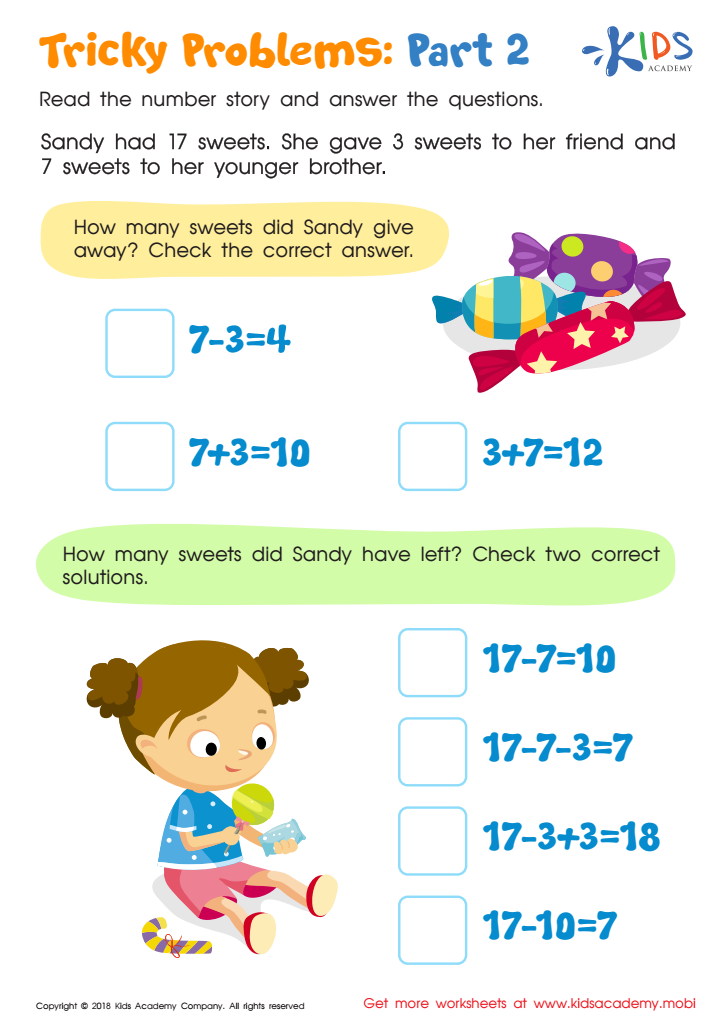
Tricky Problems Worksheet: Part 2
 Assign to My Students
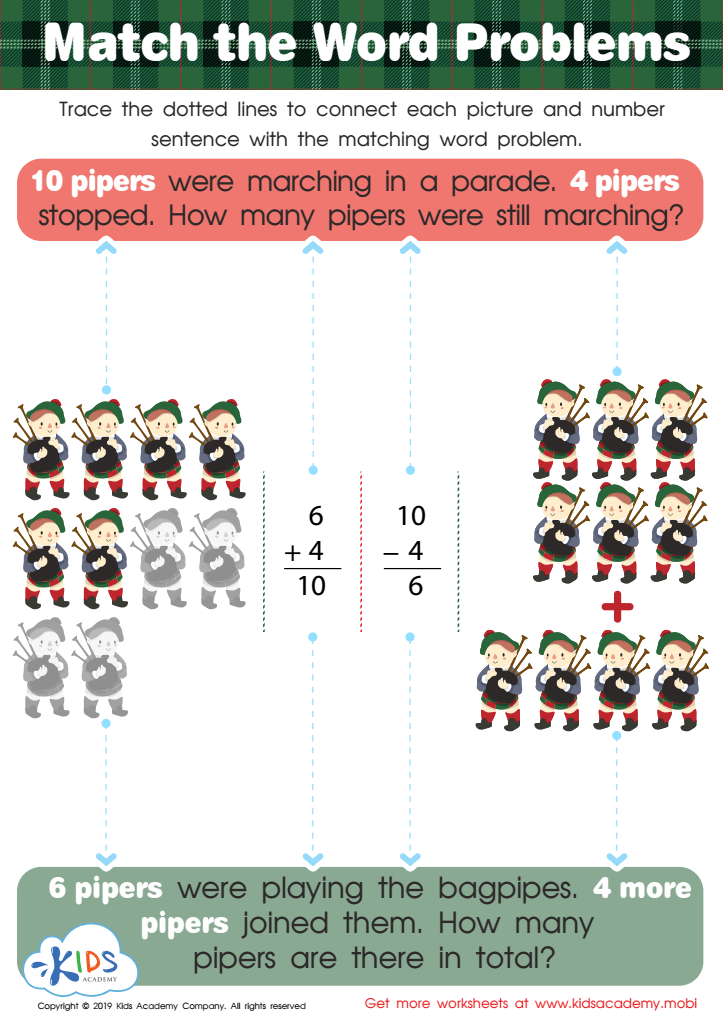
Match the Word Problems Worksheet
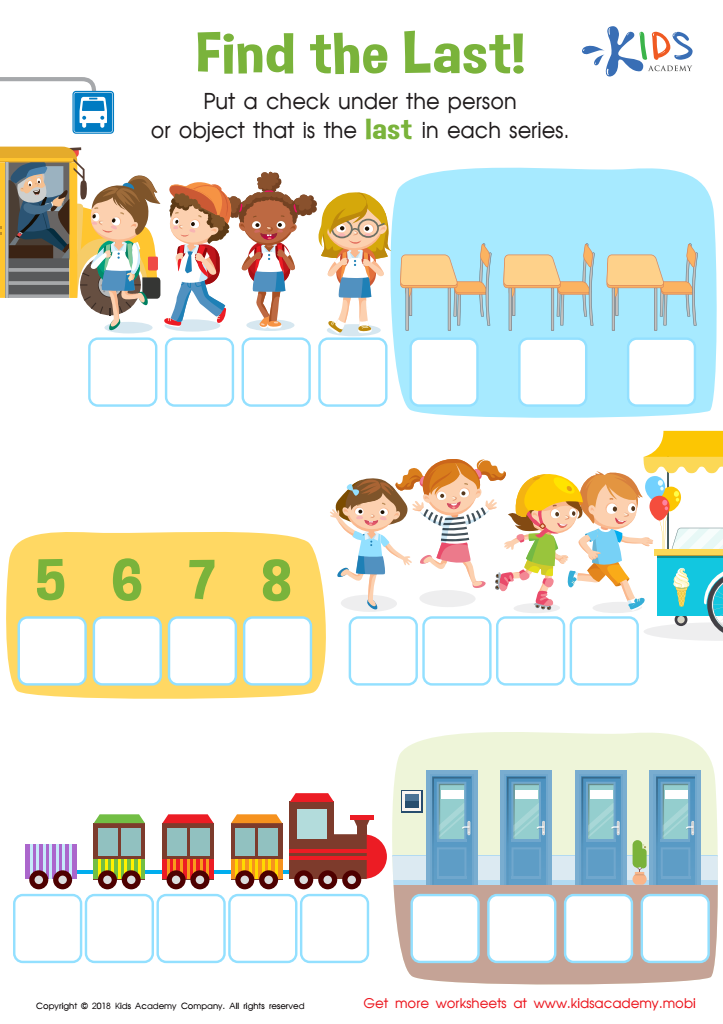
Find the Last! Worksheet
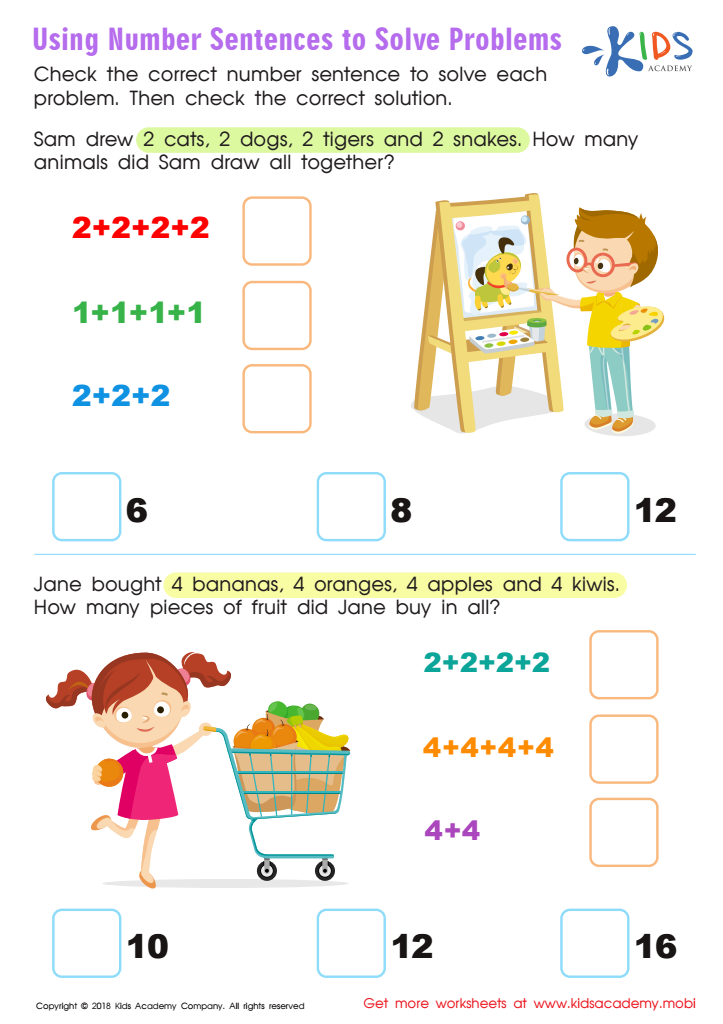
Using Number Sentences to Solve Problems Worksheet
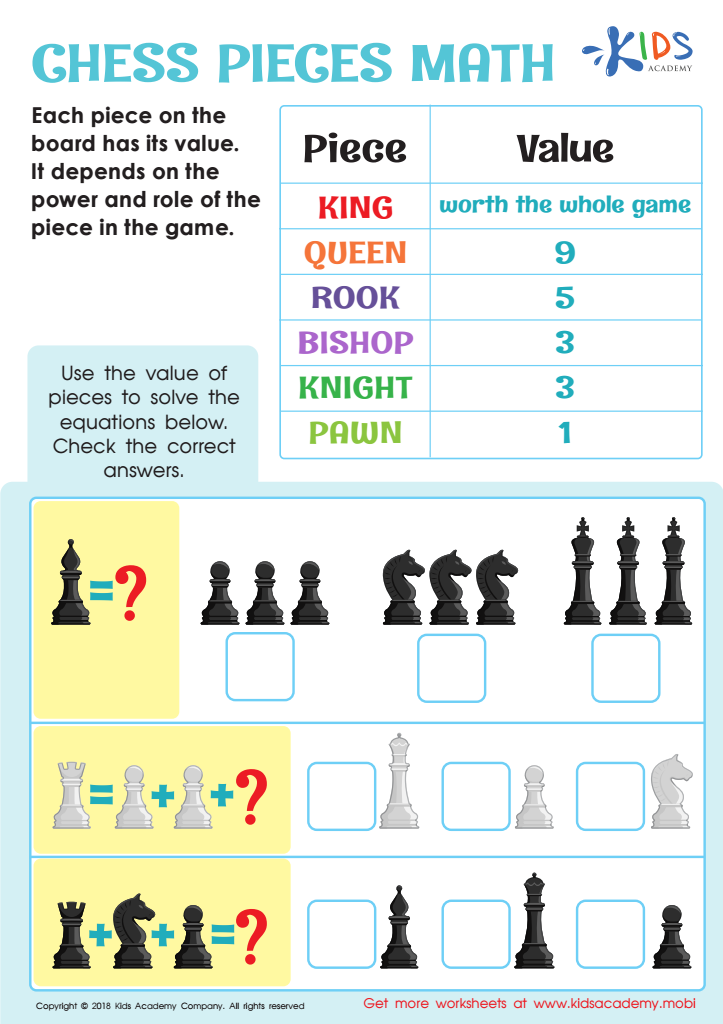
Chess Pieces Math Worksheet
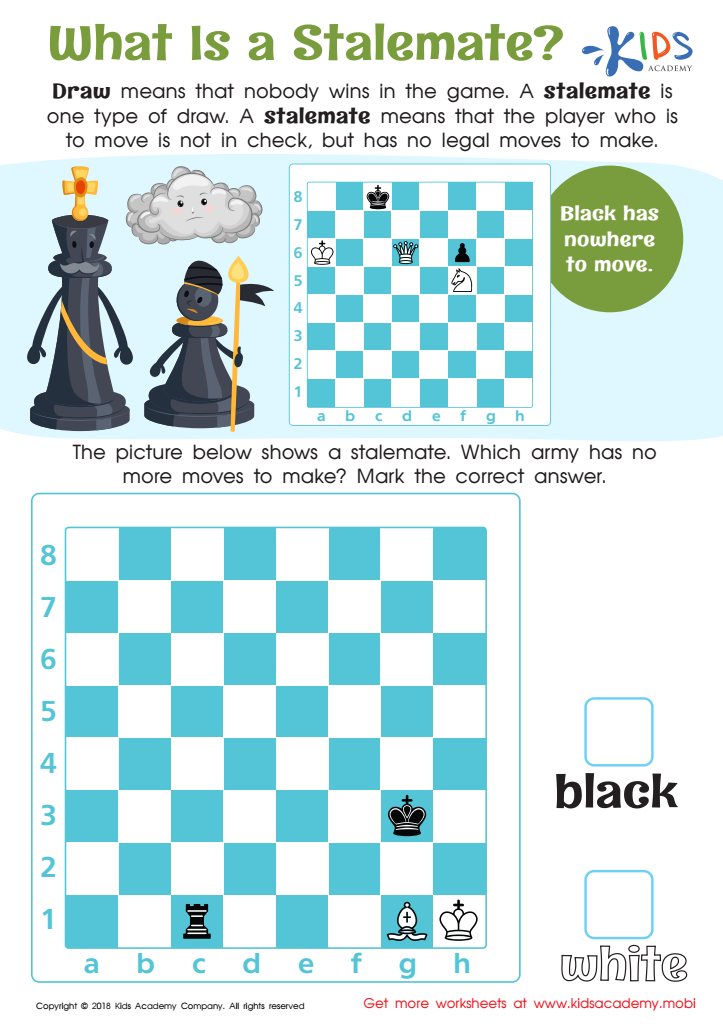
What Is a Stalemate? Worksheet
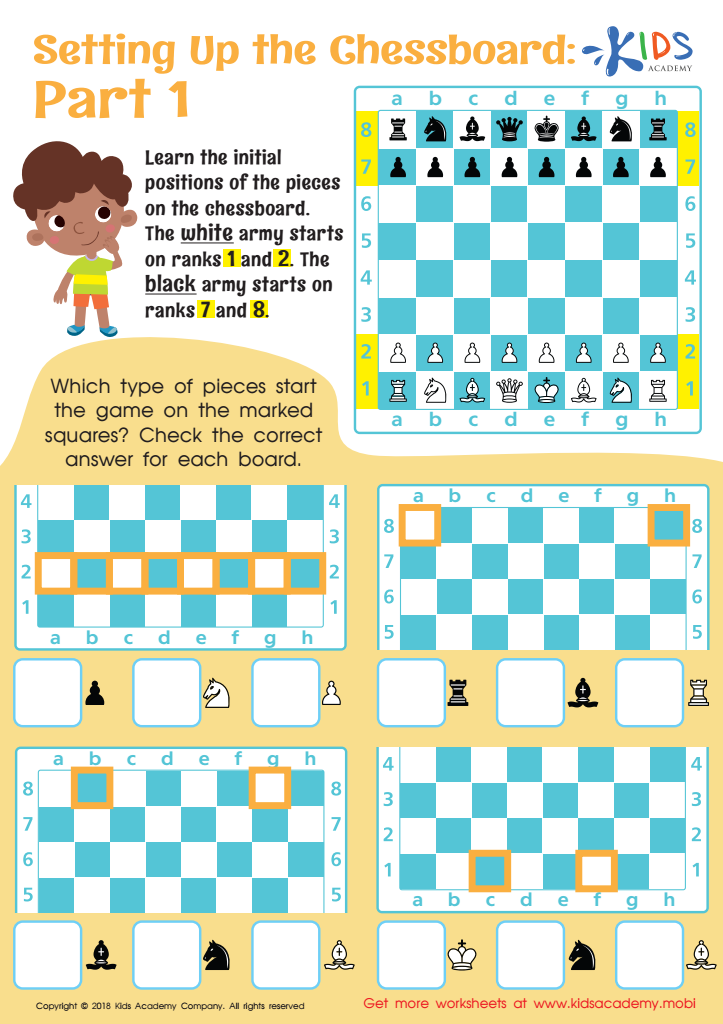
Setting up the Chessboard: Part 1 Worksheet








Logical thinking development is crucial for 3-year-olds as it lays the foundation for lifelong learning and problem-solving skills. At this age, children are naturally curious and eager to explore their world. Encouraging logical thinking helps them make connections, understand cause and effect, and develop reasoning abilities. By nurturing this critical thinking, parents and teachers empower children to navigate everyday challenges and understand complex concepts as they progress in their education.
Logical thinking also enhances communication skills, enabling children to express their thoughts and ideas cohesively. Engaging in activities that promote logic, such as puzzles, sorting games, and pattern recognition, can be both fun and educational. These experiences foster creativity and imagination alongside cognitive development.
Moreover, strong logical thinking skills contribute to emotional intelligence, as children learn to assess situations, understand others' perspectives, and navigate interpersonal interactions. Parents and teachers who prioritize logical thinking not only support academic success but also help develop well-rounded individuals capable of approaching life's challenges thoughtfully and strategically. In essence, by nurturing logical thinking from an early age, adults play a vital role in preparing children for future learning and helping them become capable, confident thinkers.








