Number comparison skills Worksheets for 3-Year-Olds
3 filtered results
-
From - To
Foster your child's early math skills with our engaging Number Comparison Skills Worksheets for 3-year-olds! Designed to promote numbers recognition, these worksheets provide delightful activities that facilitate understanding of more than, less than, and equal to concepts. Young learners will explore interactive exercises that make comparing numbers fun and intuitive. Each worksheet combines colorful designs with age-appropriate challenges, ensuring your little one stays motivated and excited about learning. Whether at home or in the classroom, our resources are perfect for sparking a love for mathematics at an early age. Start your child’s educational journey today with these valuable worksheets!
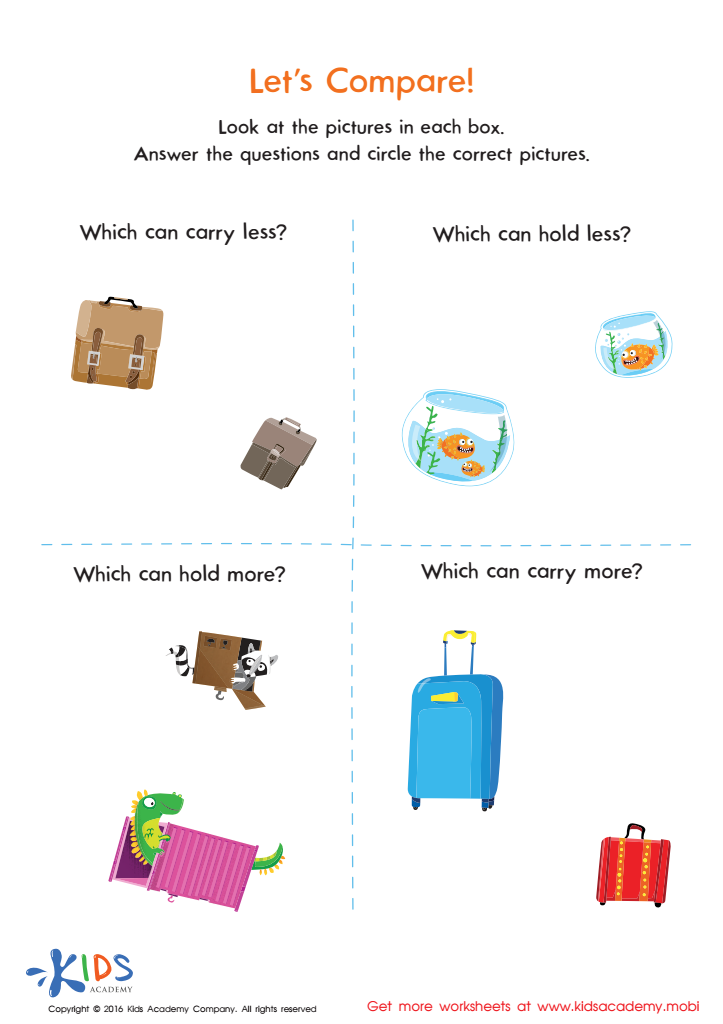
Let's Compare Worksheet: Big or Small
 Assign to My Students
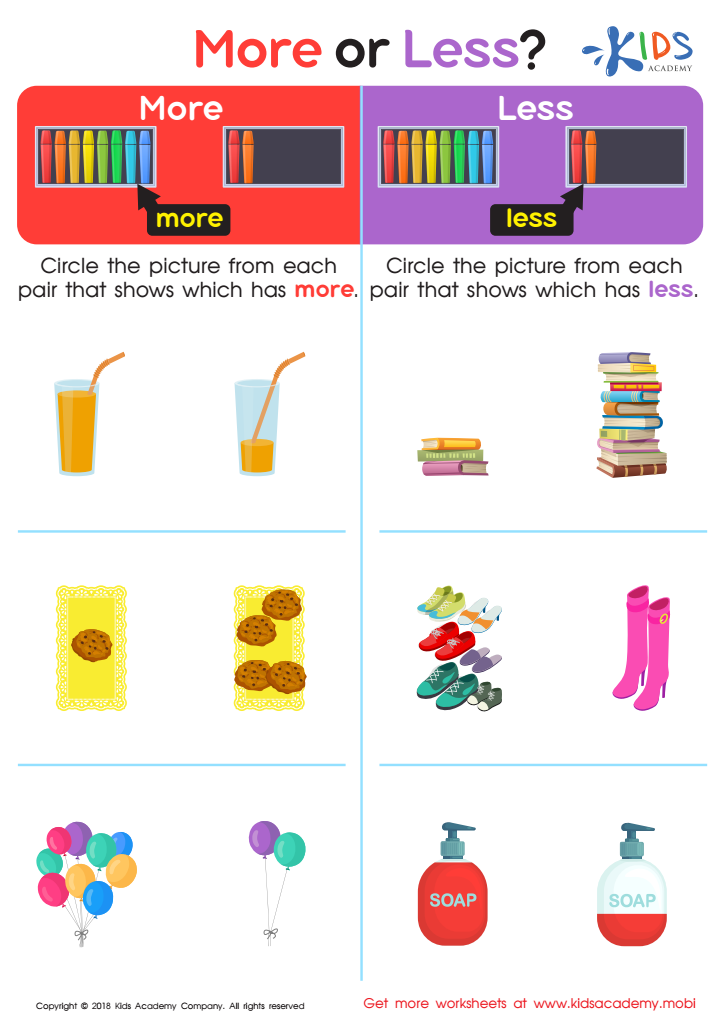
More or Less? Worksheet
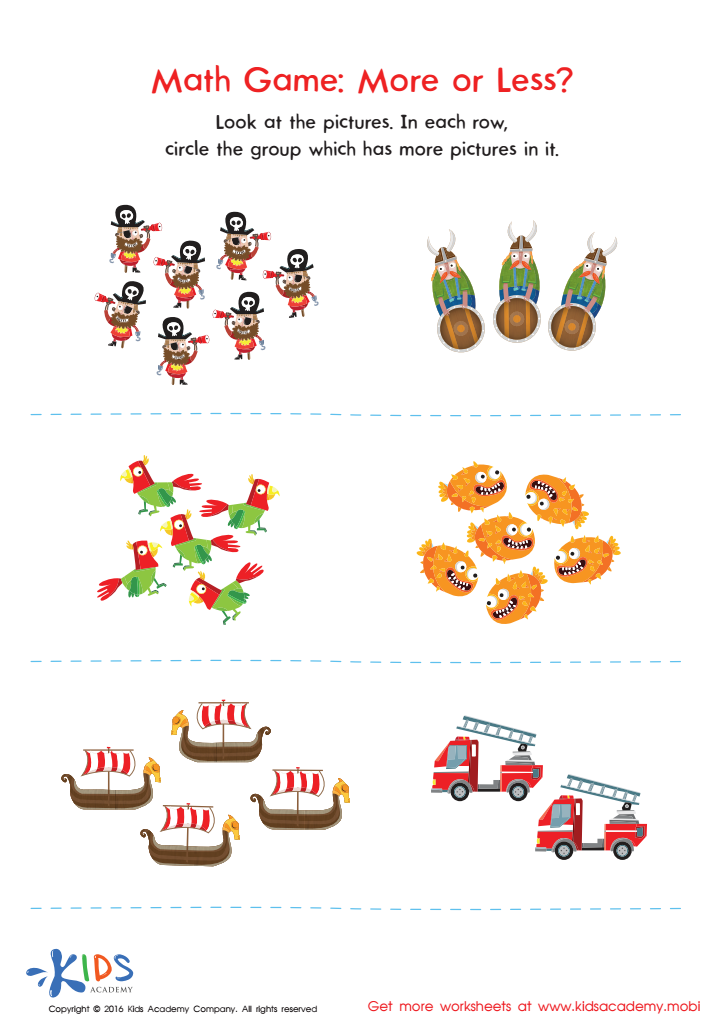
More or Less Worksheet








Number comparison skills are foundational for a child’s early mathematical development and have significant implications for future academic success. For 3-year-olds, developing these skills involves understanding concepts such as “more,” “less,” and “equal,” enabling children to make sense of quantities in their environment. Parents and teachers should care about fostering these abilities at this age for several reasons.
Firstly, mastering number comparison lays the groundwork for basic math concepts like addition and subtraction, which are crucial as children progress in their education. Engaging in activities that promote these skills—like counting objects or comparing sizes—can enhance cognitive development and analytical thinking.
Secondly, number comparison skills promote problem-solving abilities and critical thinking, important competencies in both academic and everyday settings. Encouraging children to articulate their comparisons helps improve language skills and boost confidence.
Additionally, early exposure to number comparison can diminish math anxiety in the long term by creating positive associations with numbers. Lastly, these experiences foster a love of learning and curiosity about the world around them. By nurturing number comparison skills, parents and teachers contribute significantly to a child’s holistic development, setting a solid foundation for future learning and success.








