
Sight word recognition Worksheets for 3-Year-Olds
5 filtered results
Difficulty Level
Grade
Age
-
From - To
Subject
Activity
Standards
Discover our engaging sight word recognition worksheets tailored specifically for 3-year-olds! Designed to enhance early literacy skills, these worksheets offer a fun and interactive way for young learners to recognize and practice essential sight words. Our vibrant and playful activities capture children's attention while promoting focus and retention. With a variety of exercises, including tracing, matching, and coloring, these resources cater to diverse learning styles. Ideal for both home and classroom settings, our sight word worksheets support foundational reading skills essential for personal and academic growth. Start your child's literacy journey today with our exciting sight word recognition resources!
Favorites
With answer key
Interactive
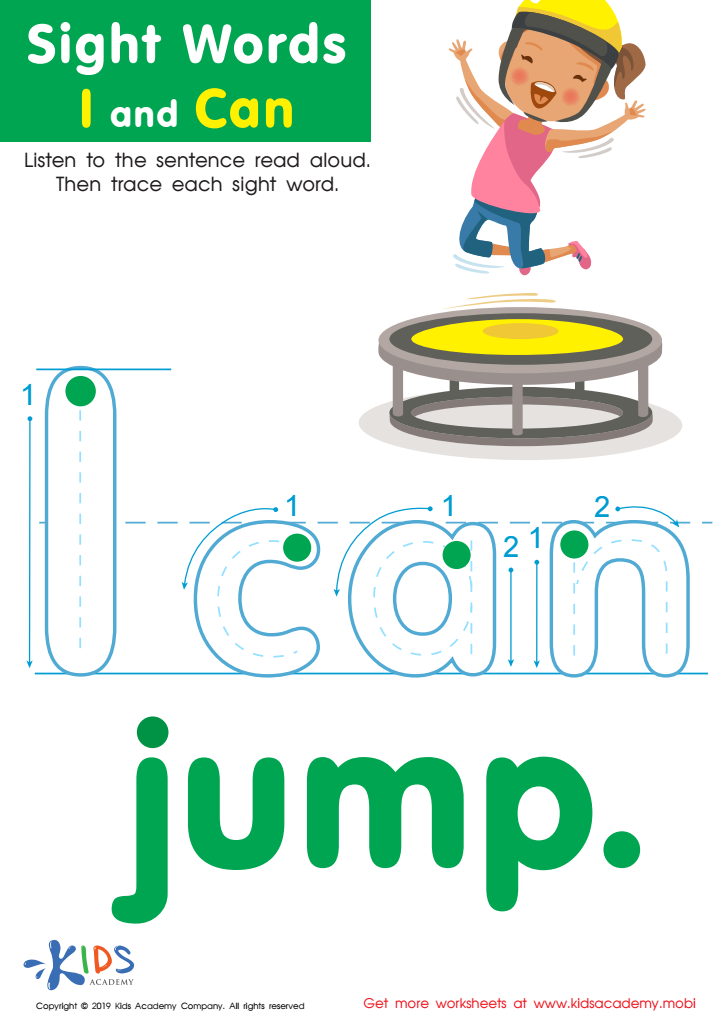
Sight Words I Can Worksheet
Emerging readers can build confidence and improve reading skills with this free worksheet! They'll trace the lines to complete the "I Can" phrase then use the picture clue to decode the last word. This activity encourages reading and writing, and is empowering for kids as they explore all the things they can do!
Sight Words I Can Worksheet
Worksheet
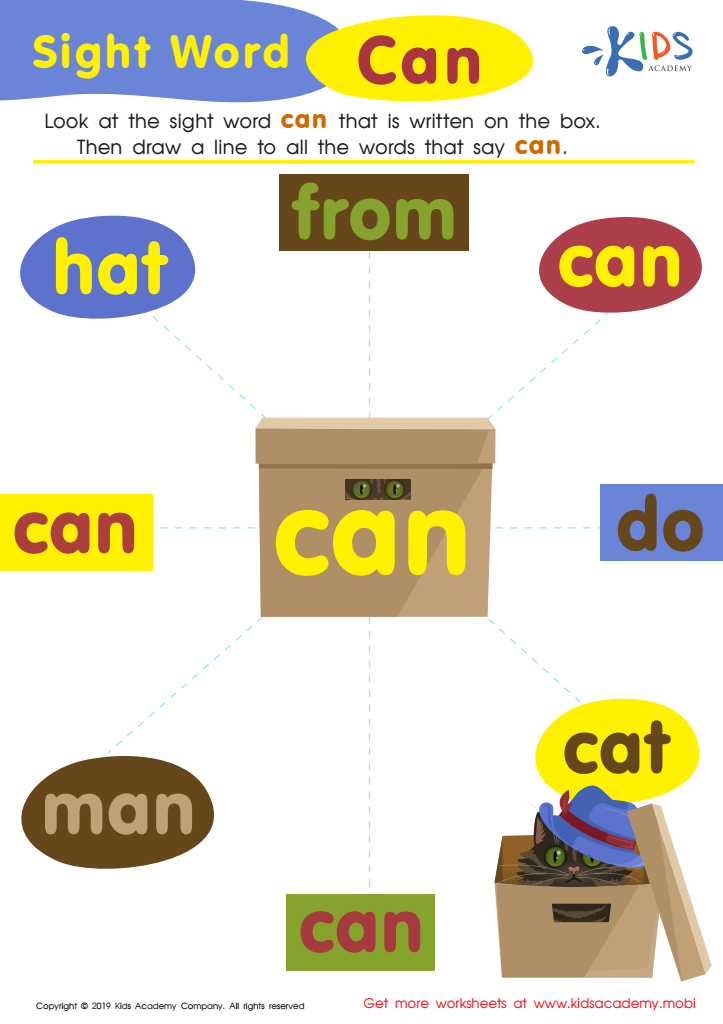
Sight Word Can Worksheet
Learning sight words is key for strong readers. Kids with large word bases find reading simpler, since they don't have to decode words they already know. This free worksheet uses the word 'can' to help kids improve their visual discrimination and refine motor skills, while providing pictures to help them along.
Sight Word Can Worksheet
Worksheet
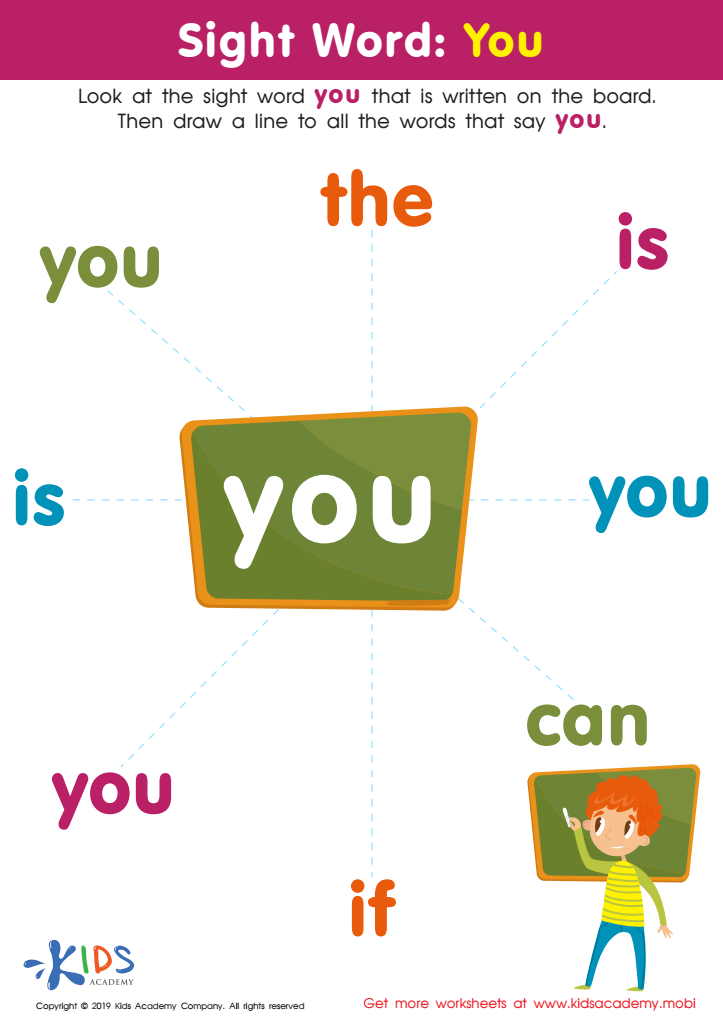
Sight Word You Worksheet
This free worksheet features the word 'you' and helps beginning readers practice visual-discriminatory skills. Using traceable lines and different colored words, it's an easy way to reinforce their identification of the word and build fluency.
Sight Word You Worksheet
Worksheet
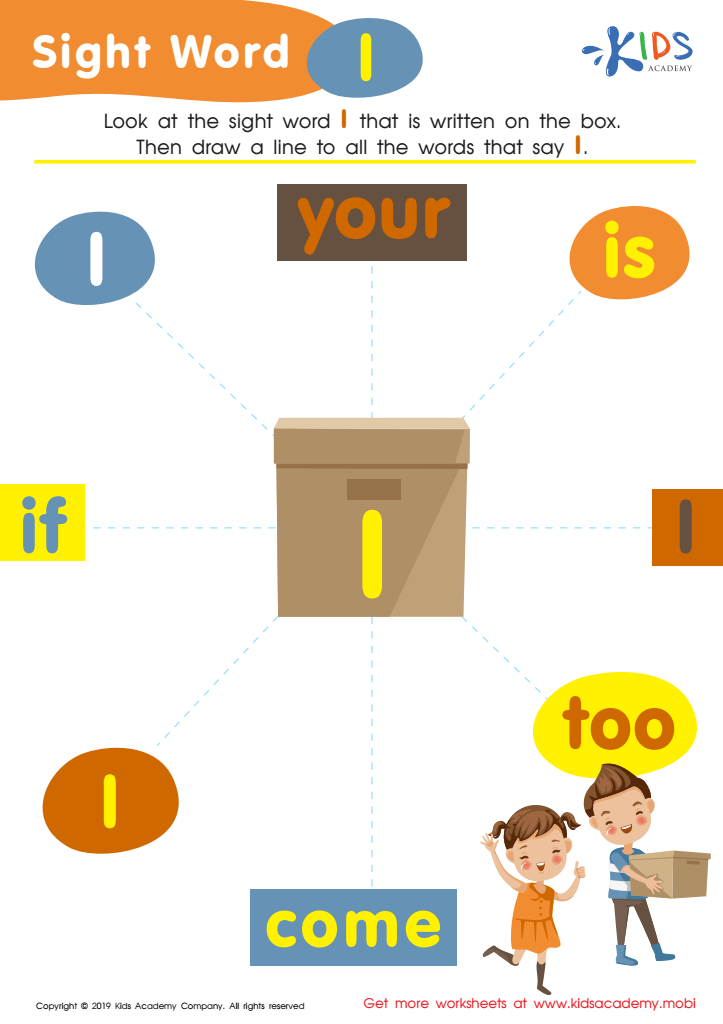
Sight Word I Worksheet
Recognizing the sight word 'I' is harder than it looks! When kids are learning to read, they understand 'I' by its sound, not as a word. This free worksheet gives them practice with 'I', letting them work on their fine motor skills too. They'll join 'I' to shapes containing the same letter. It's a great way to give kids confidence in their reading skills!
Sight Word I Worksheet
Worksheet
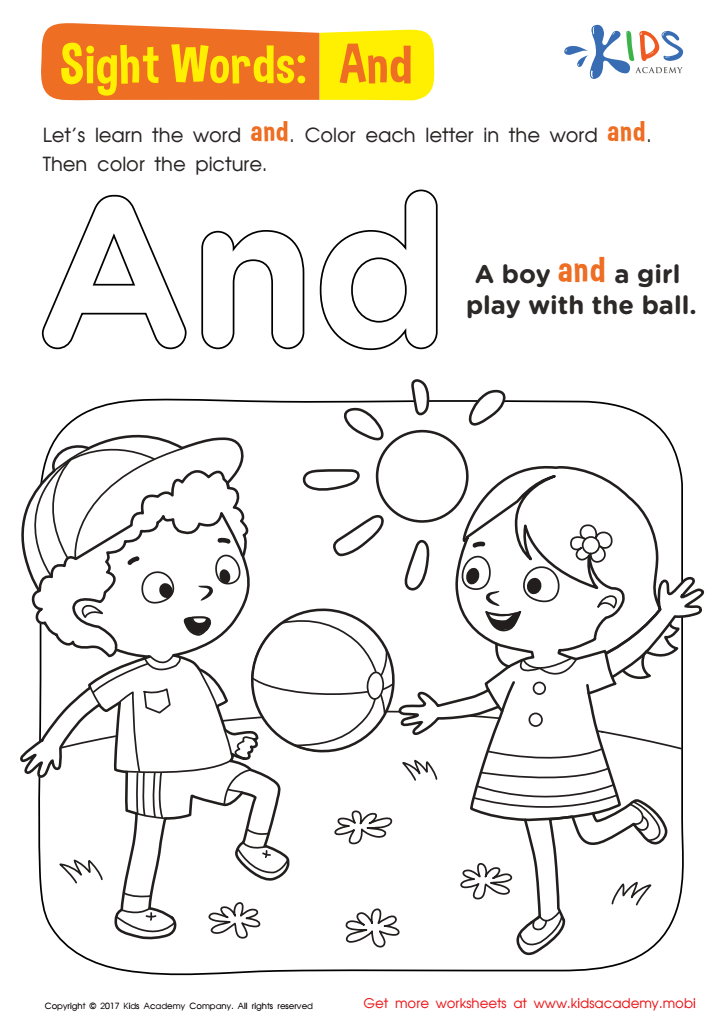
And Worksheet Sight Words Worksheet
Help your child get a jumpstart on reading with sight words! Print out this fun worksheet and get your child to read the sentence. Point out the word "and", then color the word and enjoy the rest of the scene! It's a great way to introduce sight words and get their early reading skills going!
Download (PDF)
 Assign to My Students
Assign to My Students
And Worksheet Sight Words Worksheet
Worksheet
Join Kids Academy for Free
Who is primarily going to use this learning content?








Sight word recognition is crucial for 3-year-olds as it lays the foundation for literacy development and overall academic success. At this age, children are beginning to develop language skills and a recognition of letters, sounds, and words. Understanding sight words—common words that children should recognize without needing to sound them out—enhances their reading fluency. When kids can identify sight words quickly, they can focus on comprehension rather than the decoding process, making reading more enjoyable and less frustrating.
For parents and teachers, promoting sight word recognition is essential because it strengthens vocabulary and fosters a love for reading. Children who recognize sight words tend to have better confidence in their reading abilities, which promotes a positive attitude towards learning. Engaging in activities such as flashcards, interactive games, or read-aloud sessions can quickly enhance sight word learning through repetition and enjoyment.
Moreover, sight word mastery supports overall cognitive development. As children develop these skills, they become better equipped to tackle more complex reading materials as they progress through school. In summary, the emphasis on sight word recognition at an early age is invaluable in setting up children for future success in literacy and learning.








