Time reading skills Worksheets for 3-Year-Olds
4 filtered results
-
From - To
Welcome to our "Time Reading Skills Worksheets for 3-Year-Olds" page! Here, you’ll discover a collection of engaging worksheets designed to introduce your little ones to the concept of reading time. Our resources feature colorful illustrations and interactive activities that make learning both fun and effective. These worksheets focus on basic time-telling skills, helping children recognize clocks, understand time concepts, and develop foundational math skills. Perfect for parents and educators alike, our worksheets foster independent learning while supporting cognitive development. Explore our collection and watch your child embark on an exciting journey to mastering the art of telling time!
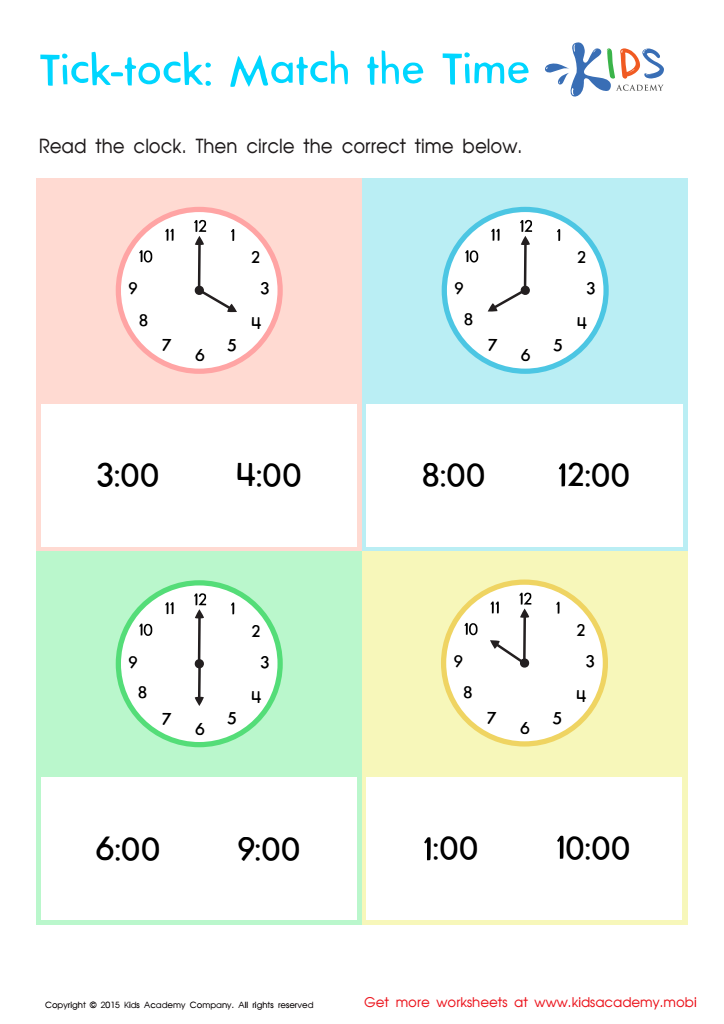
Telling The Time Worksheet: Part 4
 Assign to My Students
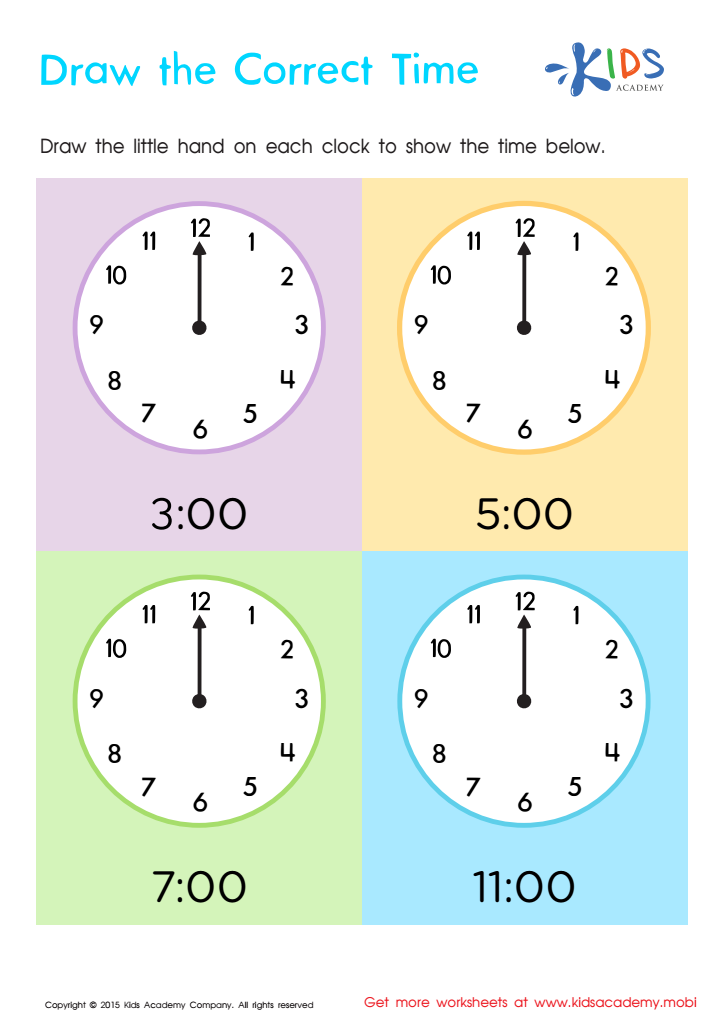
Telling The Time Worksheet: Part 1
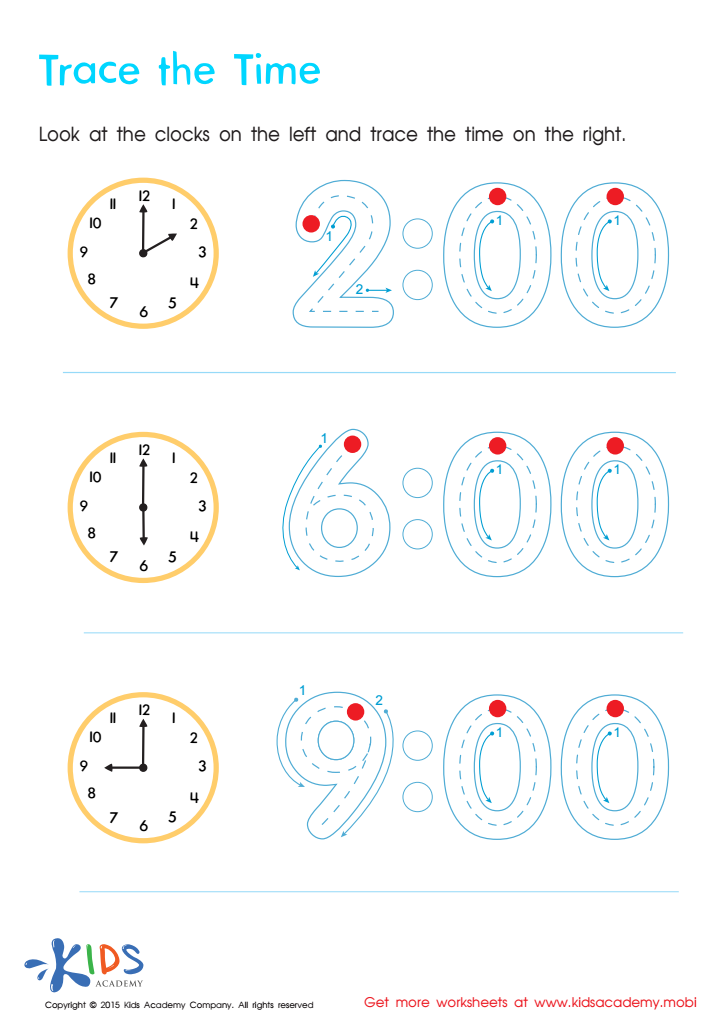
Telling The Time Worksheet: Part 2
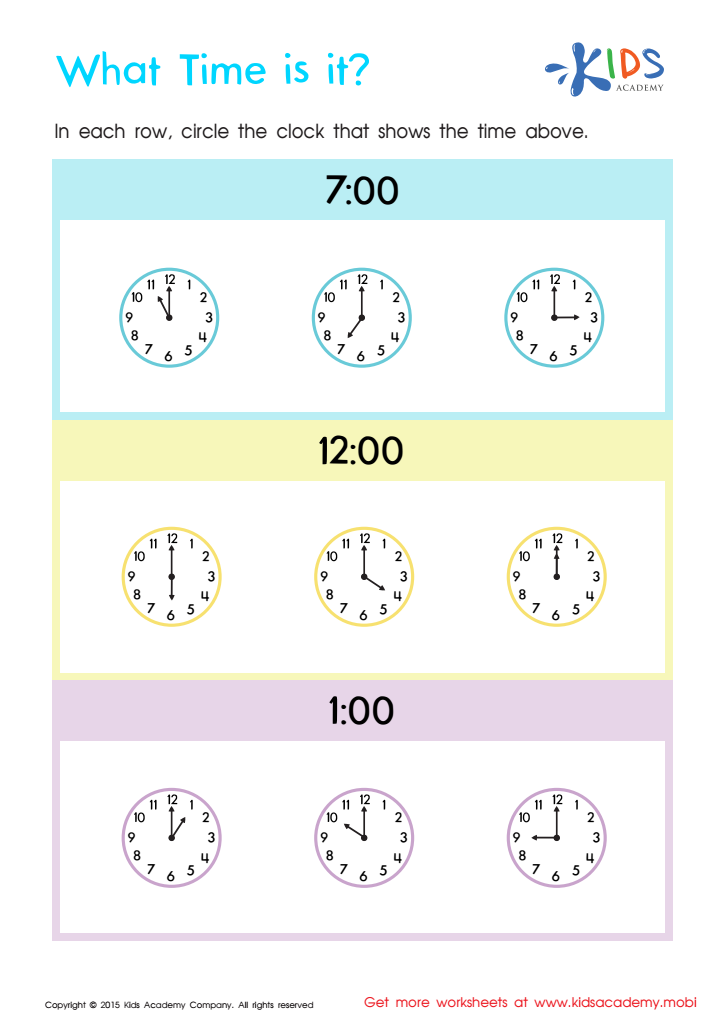
Telling The Time Worksheet: Part 3






.jpg)
.jpg)
Parents and teachers should prioritize reading skills for 3-year-olds because early literacy lays the foundation for a child's future academic success and overall development. At this age, children are like sponges, eagerly absorbing words, sounds, and concepts. Reading aloud to them not only fosters language acquisition but also enhances their vocabulary and comprehension abilities.
Engaging with books at a young age stimulates cognitive development, fosters creativity, and encourages curiosity. It also helps develop listening skills and attention span, both of which are essential for effective learning later on. Additionally, reinforcing phonemic awareness—the recognition of sounds in spoken language—during this stage can significantly boost a child's ability to read and write as they progress to kindergarten and beyond.
Furthermore, establishing a reading routine cultivates a love for books and storytelling, nurturing a child's imagination and emotional intelligence. Engaging with stories invites discussions about feelings, morals, and different perspectives, contributing to social-emotional growth. Consequently, when parents and teachers emphasize reading skills, they not only equip children with essential educational tools but also bond with them, creating precious shared moments that positively impact their overall development.








