Basic addition practice Adding in the Sea Worksheets for 3-Year-Olds
3 filtered results
-
From - To
Introduce your 3-year-old to the fun world of basic math with "Adding in the Sea" worksheets. These engaging printable sheets from Kids Academy are designed to help your child practice simple addition while exploring an exciting underwater adventure. Bright and colorful sea creatures make learning interactive and enjoyable, motivating young learners to build their foundational math skills. Perfect for early education, these worksheets support cognitive development and enhance number recognition. Created by experts, each activity is crafted to ensure your child gains confidence with basic arithmetic in a playful, curious, and educational environment. Dive into learning today!
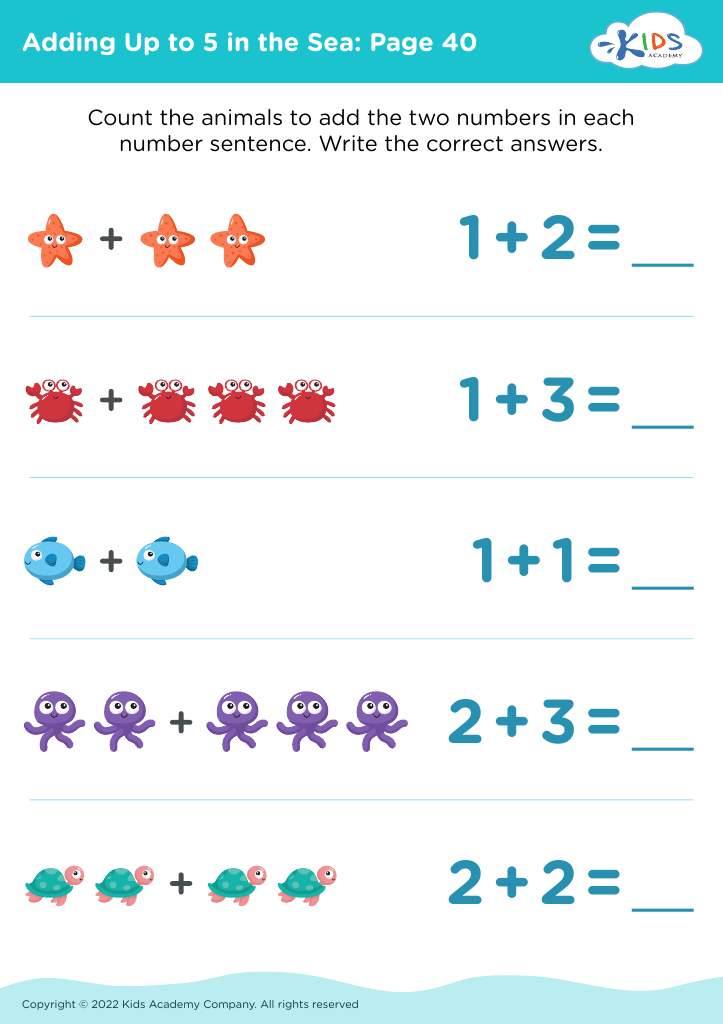
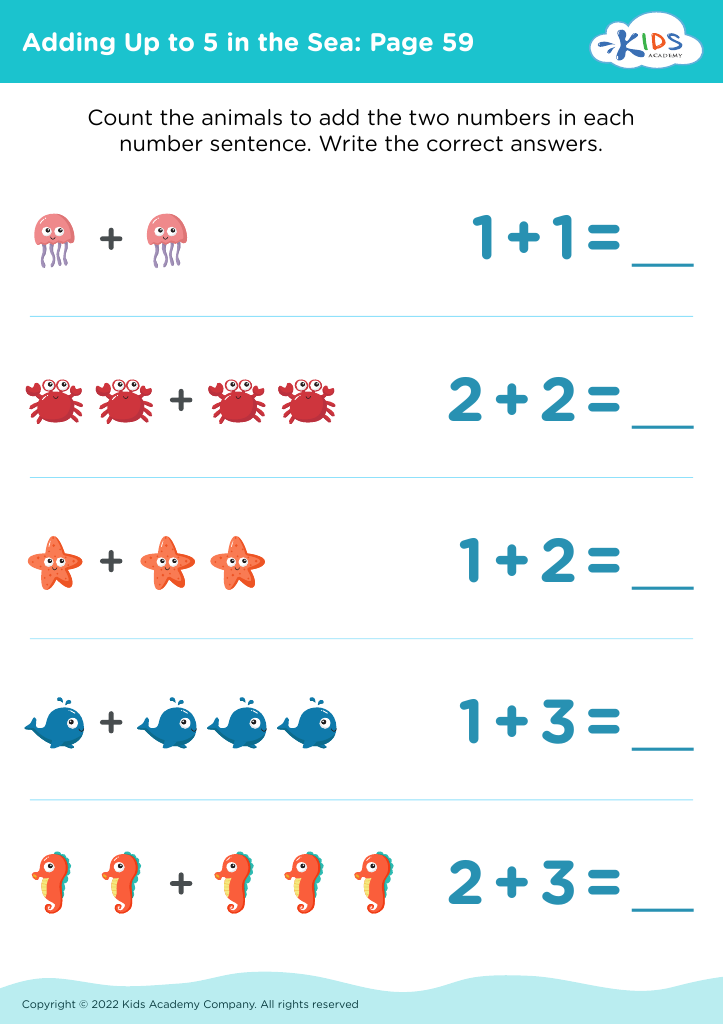
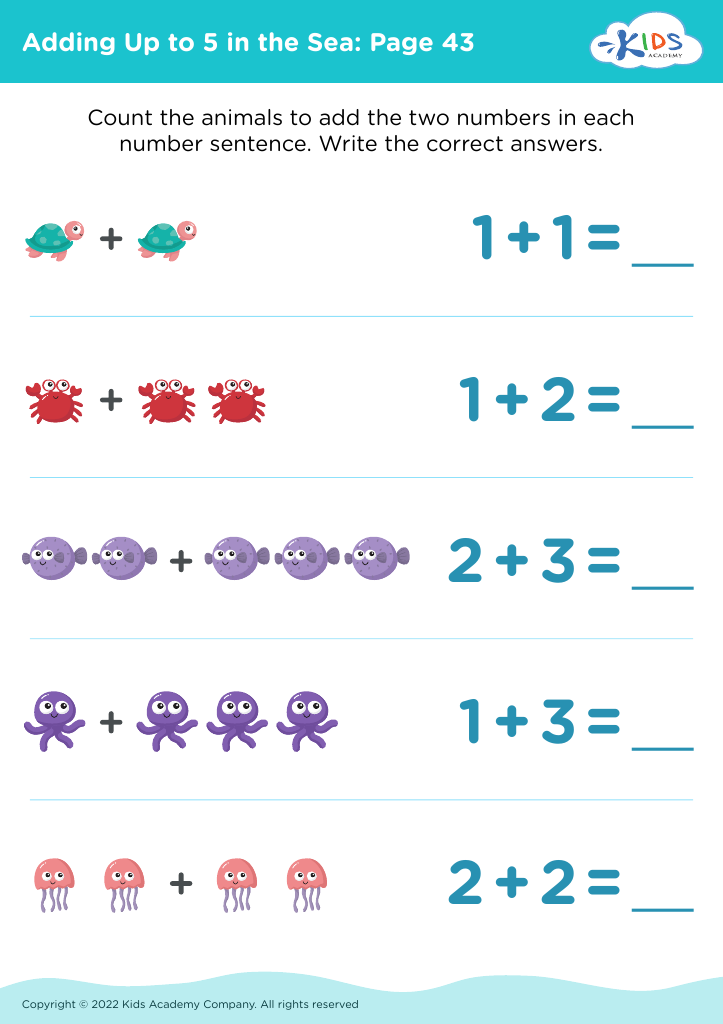



Basic addition practice, such as the "Adding in the Sea" activity for 3-year-olds, is crucial for early childhood development. First and foremost, engaging in basic addition sets the groundwork for mathematical literacy. Early exposure to math concepts equips children with a solid foundation, fostering analytical thinking and problem-solving skills crucial for their academic journey.
Using fun and themed activities like "Adding in the Sea" captures children's interest and makes learning enjoyable. Imaginative scenarios hold their attention better than simple number recitation, making it easier for them to grasp abstract concepts like addition. Additionally, the vibrant sea theme integrates creative and cognitive development, stimulating their imagination while teaching them addition.
At this age, children learn best through play and tangible experiences. Manipulatives, visual aids, and thematic activities turn abstract numbers into relatable and understandable experiences. This blend of visual and tactile learning accelerates comprehension, making the transition to more advanced math concepts smoother in later years.
Moreover, early math skills are linked to better outcomes in both academic and everyday life. Children who gain confidence in numeracy at a young age are more likely to excel in school and develop a positive attitude towards learning. Hence, as parents or teachers, facilitating this engaging early experience promotes long-term educational success and confidence in young learners.