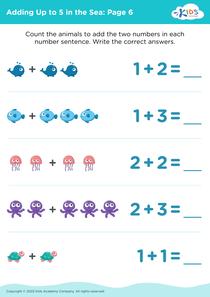
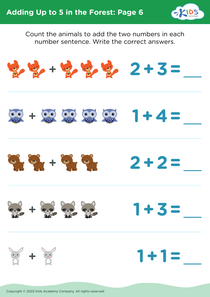
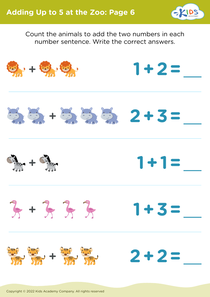
Addition skills Adding on the Farm Worksheets for 3-Year-Olds
7 filtered results
-
From - To
Explore our engaging "Addition Skills: Adding on the Farm" worksheets designed specifically for 3-year-olds! These fun, interactive activities introduce young learners to basic addition concepts using delightful farm-themed illustrations. Children will enjoy counting animals, such as cows and chickens, making the learning process enjoyable and memorable. Each worksheet promotes number recognition and develops fine motor skills while encouraging critical thinking. These resources are perfect for homeschooling parents and educators alike, offering a hands-on approach to foster a love for math early on. Jump into a world of fun and learning with our farm-themed addition worksheets today!
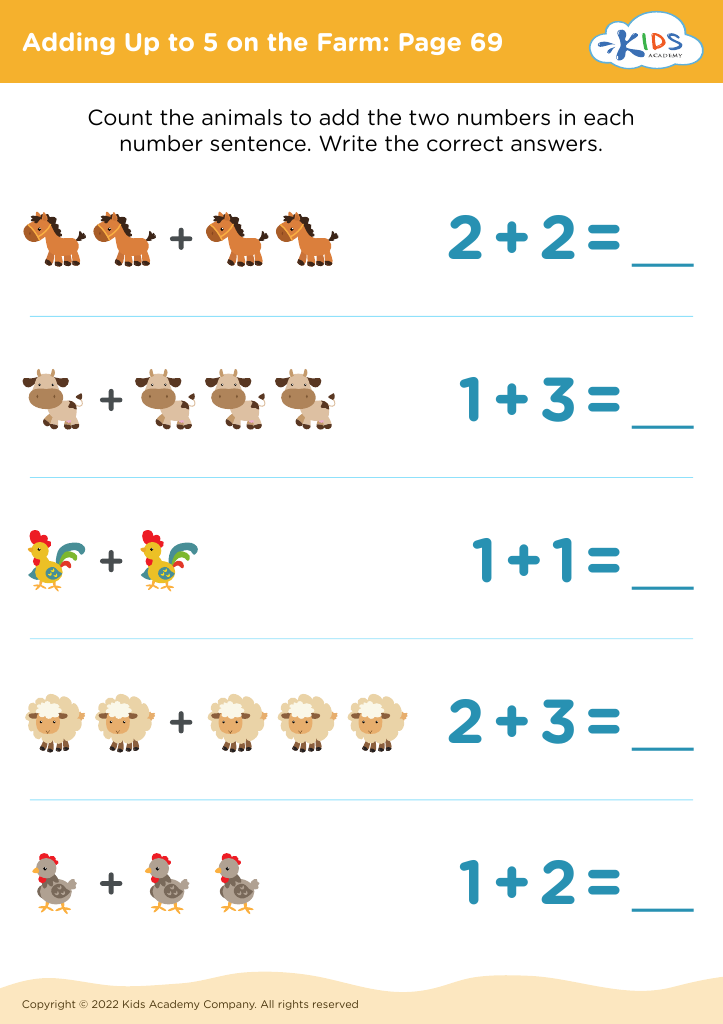
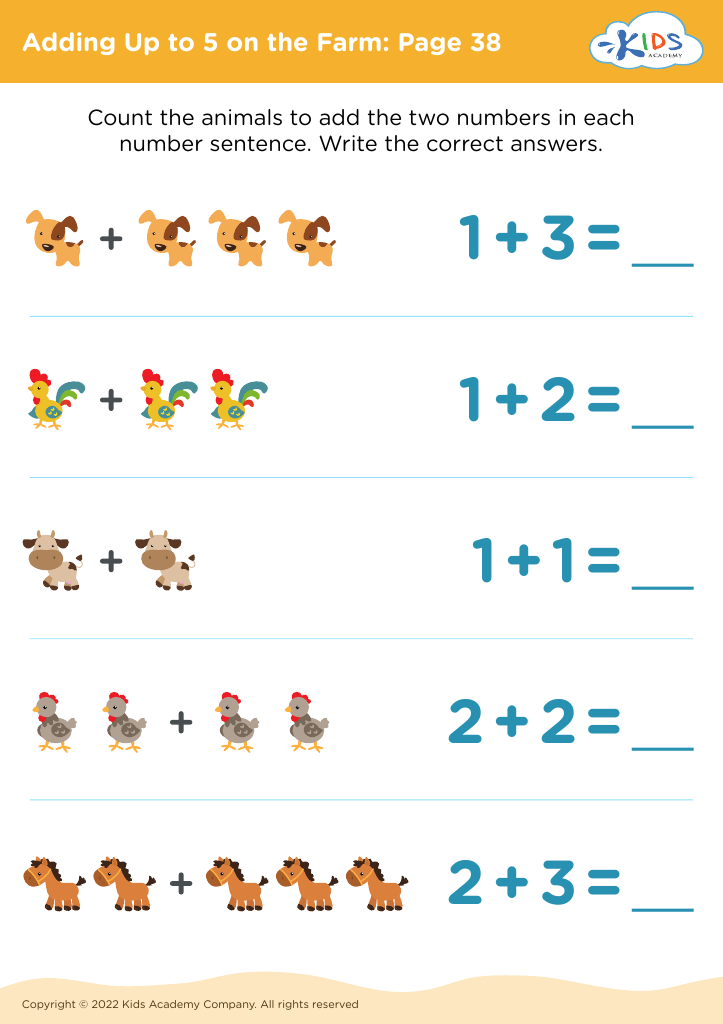
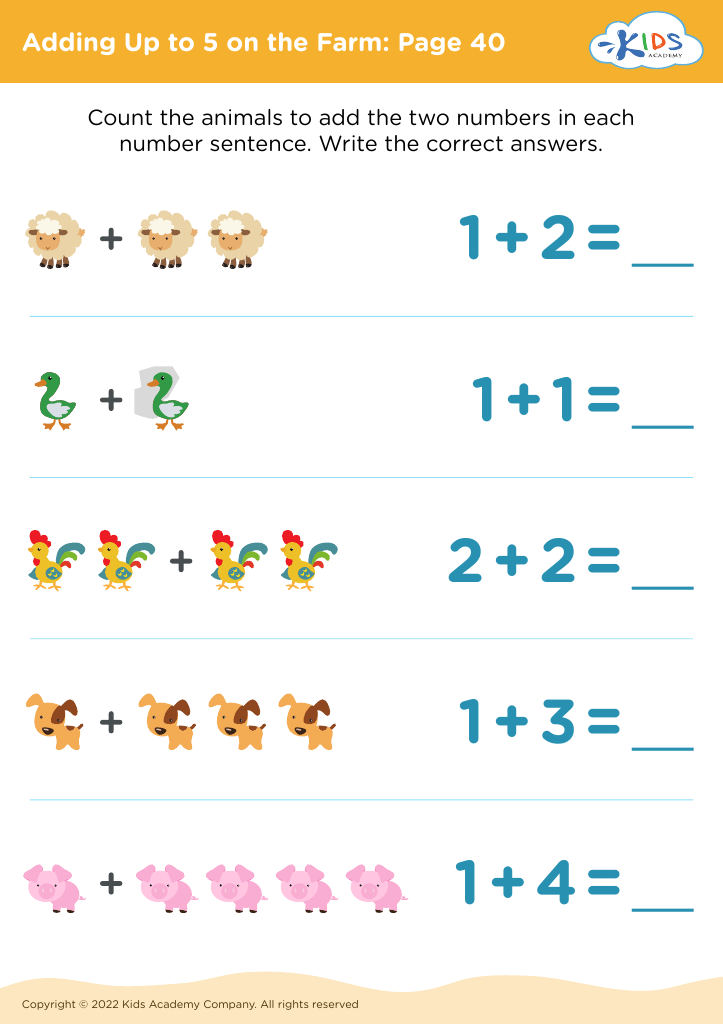
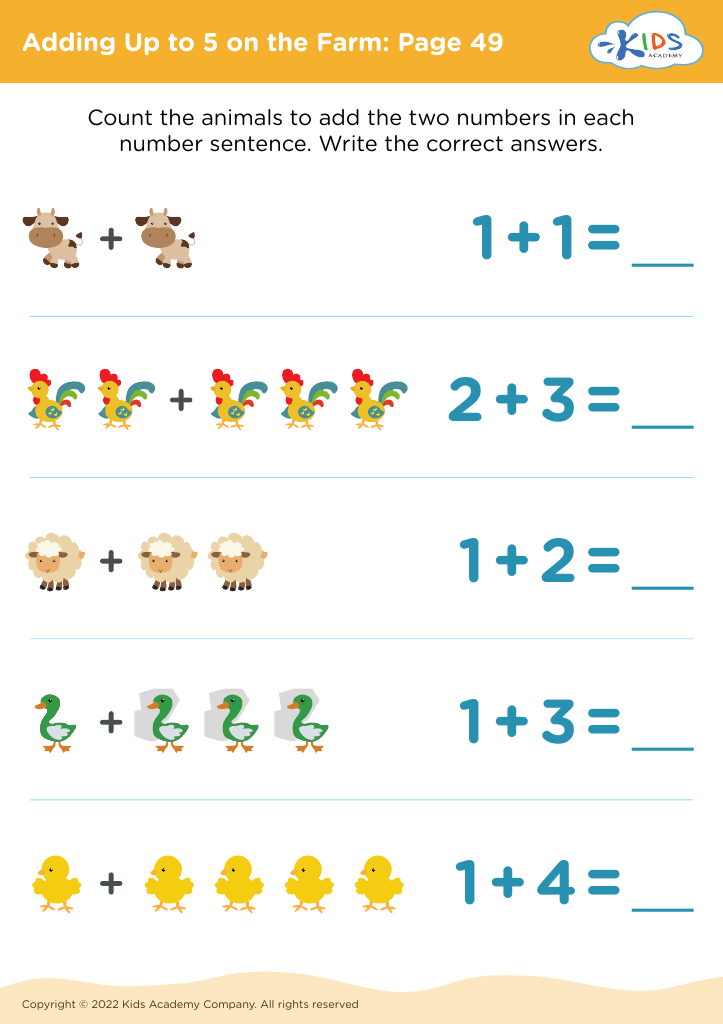
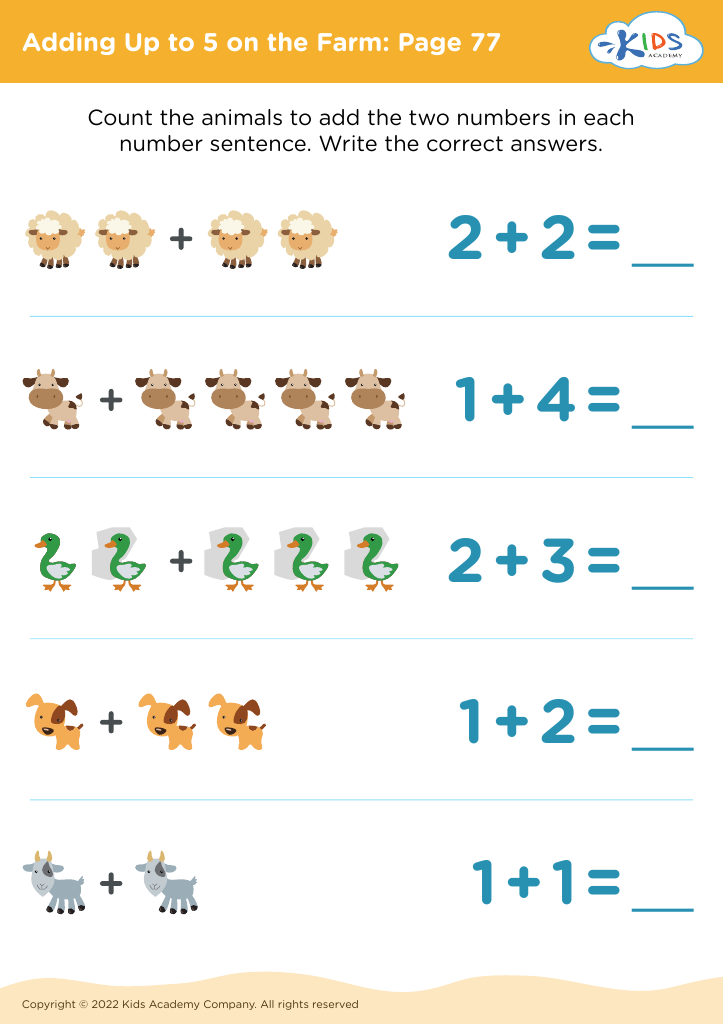
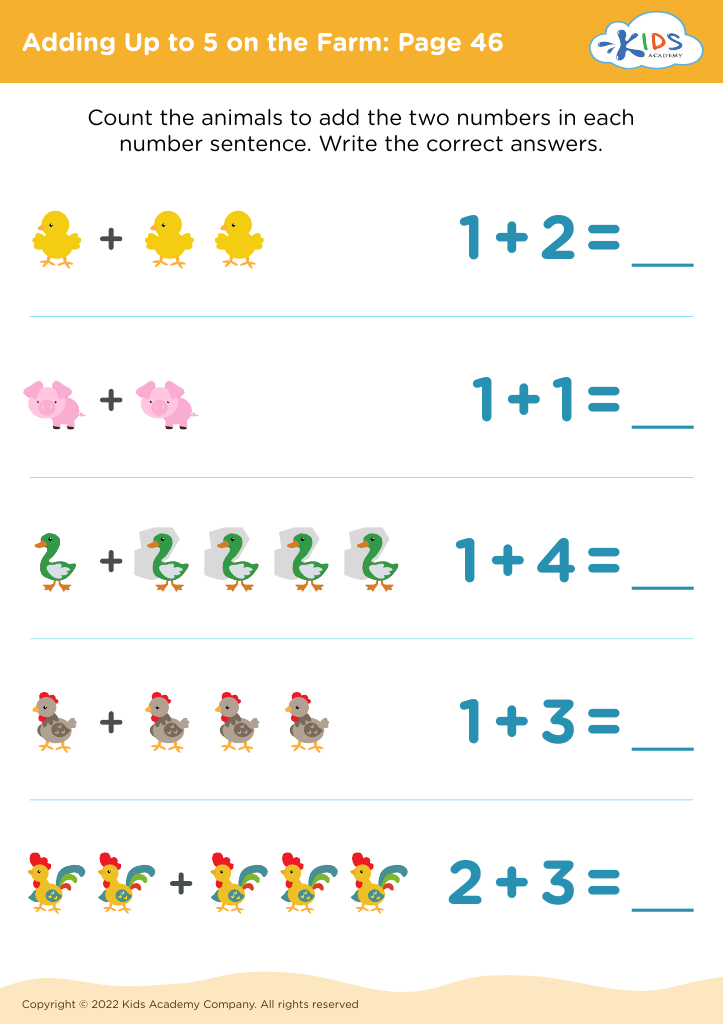
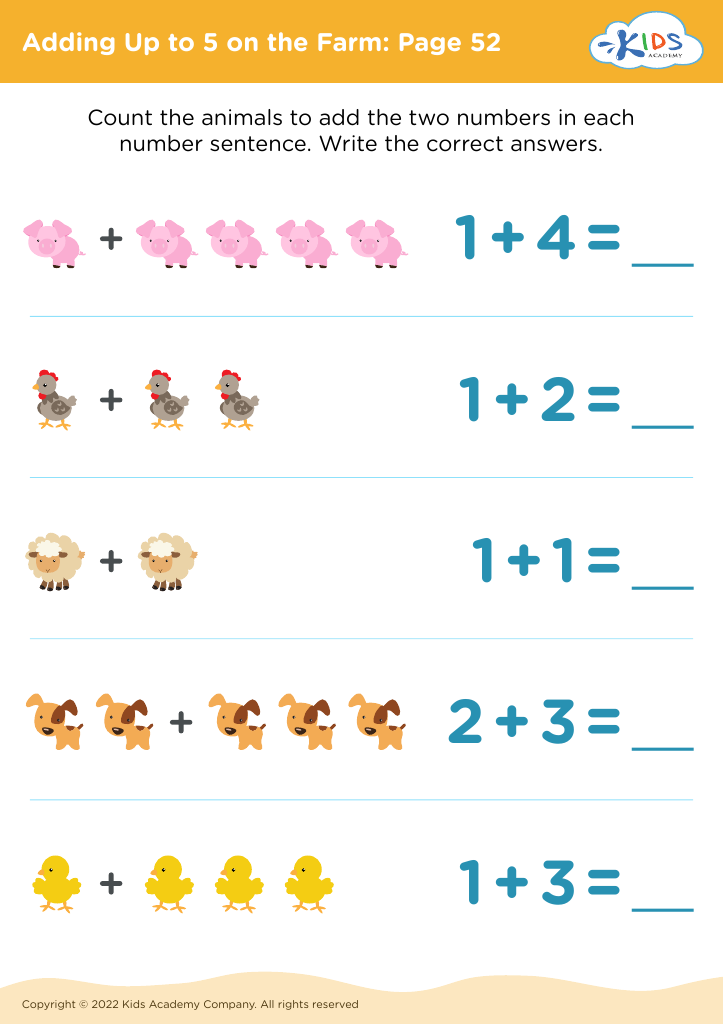



Addition skills, such as “Adding on the Farm,” are critical for 3-year-olds because they lay the foundational mathematical understanding that children will build upon in later years. Engaging young children with concepts of addition through relatable experiences—like counting animals on a farm—makes learning enjoyable and relevant. For parents and teachers, fostering these skills is key to developing a child's cognitive abilities, including problem-solving and critical thinking.
At this age, children are naturally curious and open to exploration. Integrating addition into everyday situations, such as counting cows, chickens, or crops, transforms math from abstract concepts to concrete experiences. It encourages children to use their fingers, objects, or drawings, enhancing fine motor skills and promoting active participation in learning.
Moreover, early exposure to basic math concepts fosters a positive attitude toward math. Parents and teachers can cultivate a lifelong interest in mathematics by presenting these skills in a fun, engaging way. As children gain confidence in their ability to add, they build a solid foundation for more complicated math problems and encourage analytical thinking. Ultimately, developing addition skills at this young age promotes overall cognitive development, preparing children for future academic success and daily life challenges.