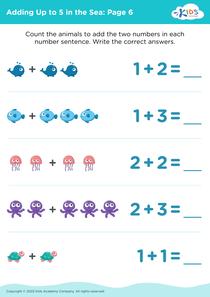
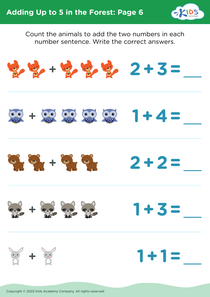
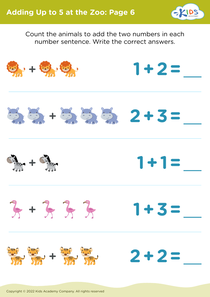
Animal identification Adding on the Farm Worksheets for 3-Year-Olds
15 filtered results
Difficulty Level
Grade
Age
-
From - To
Subject
Activity
Standards
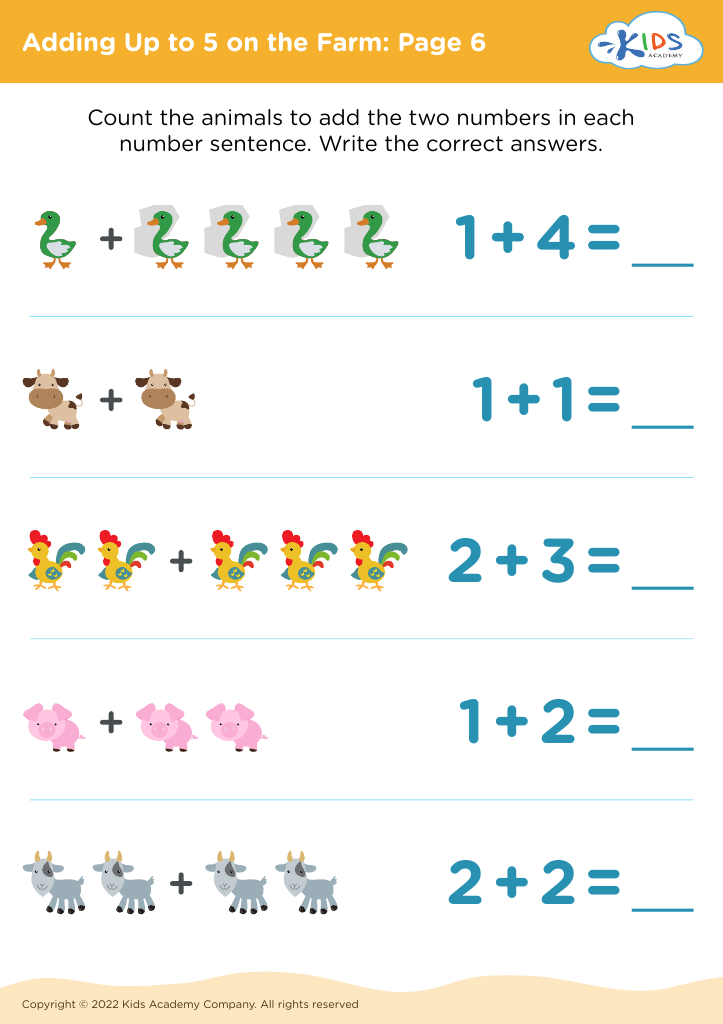
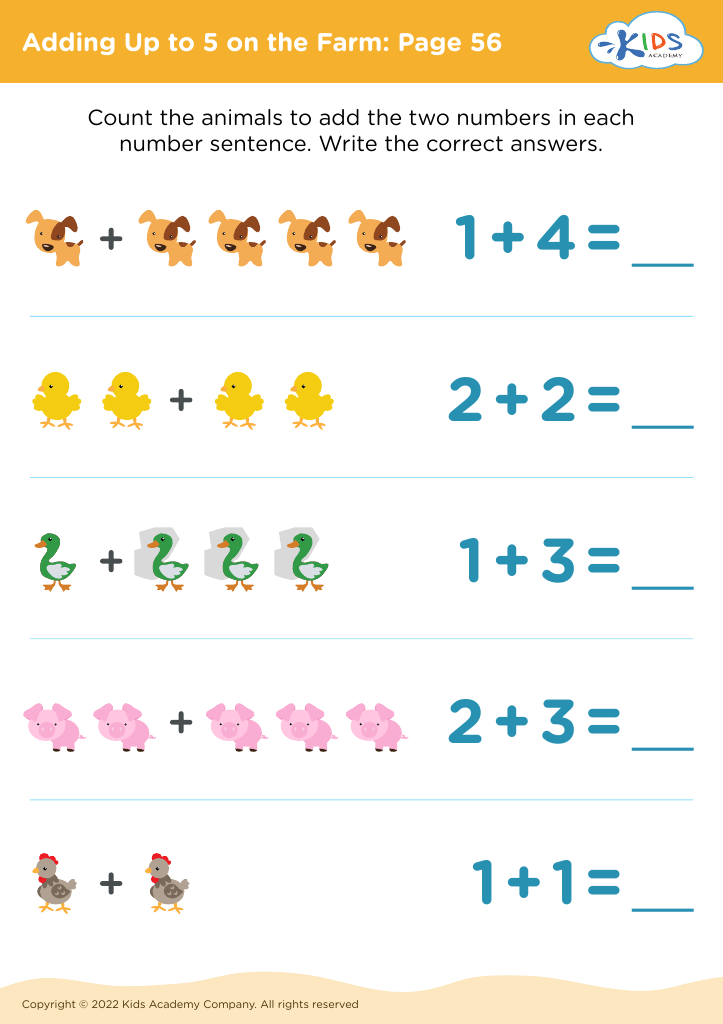
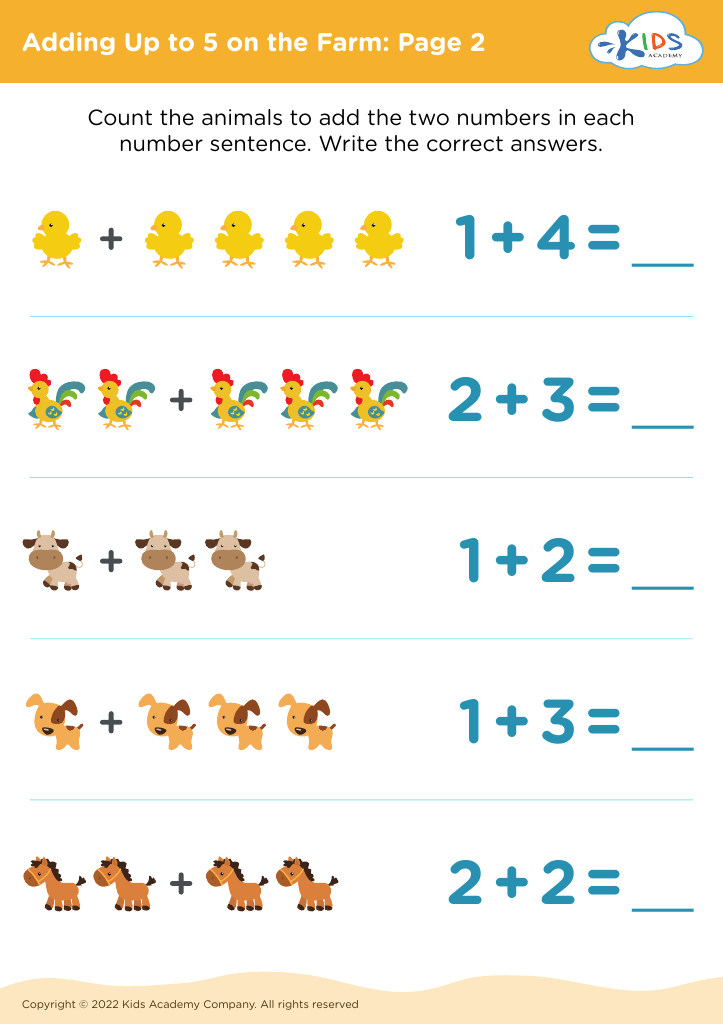
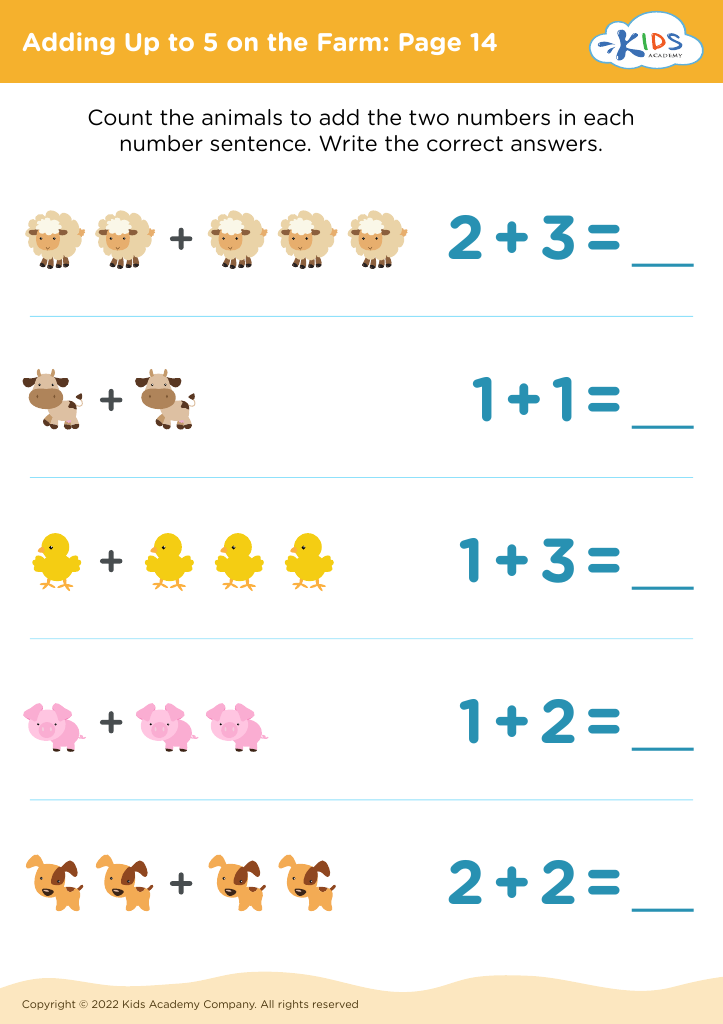
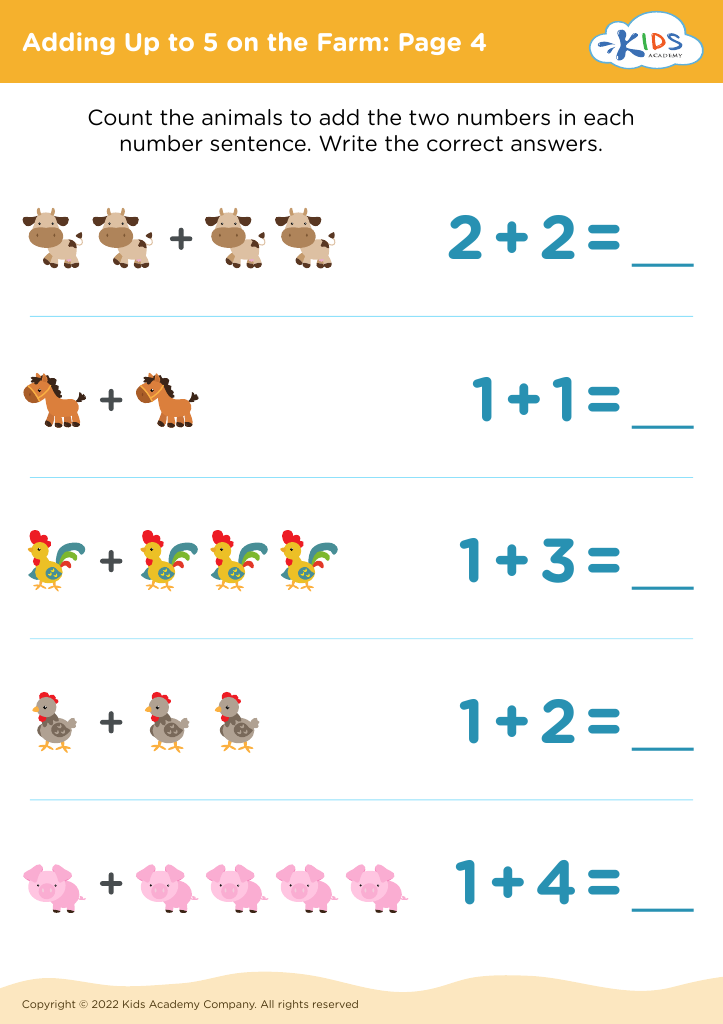
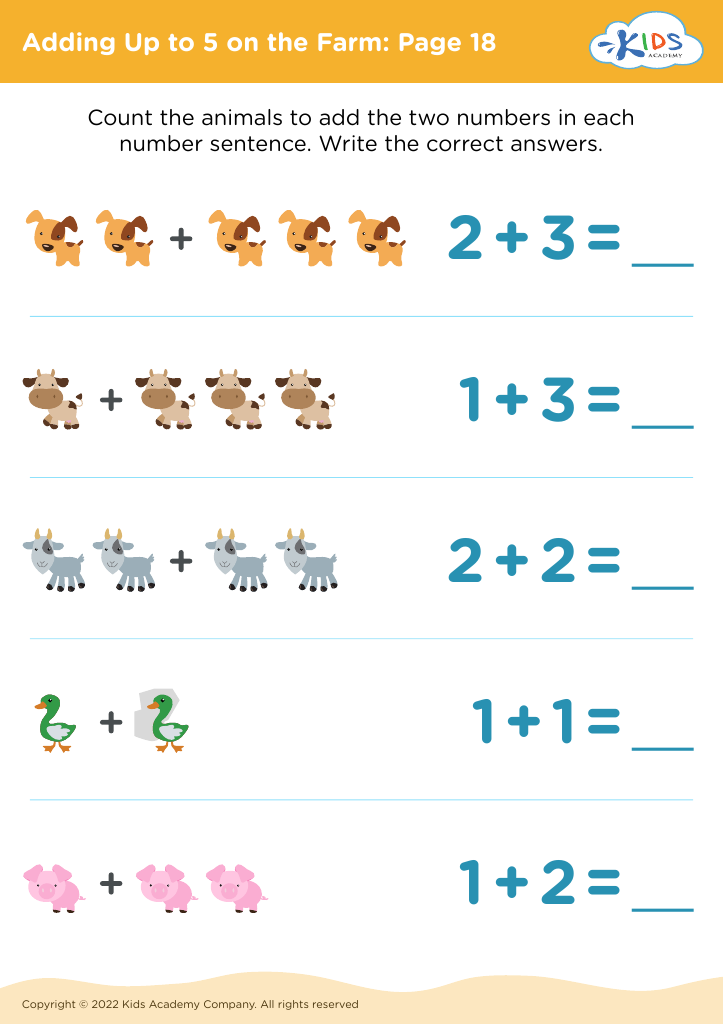
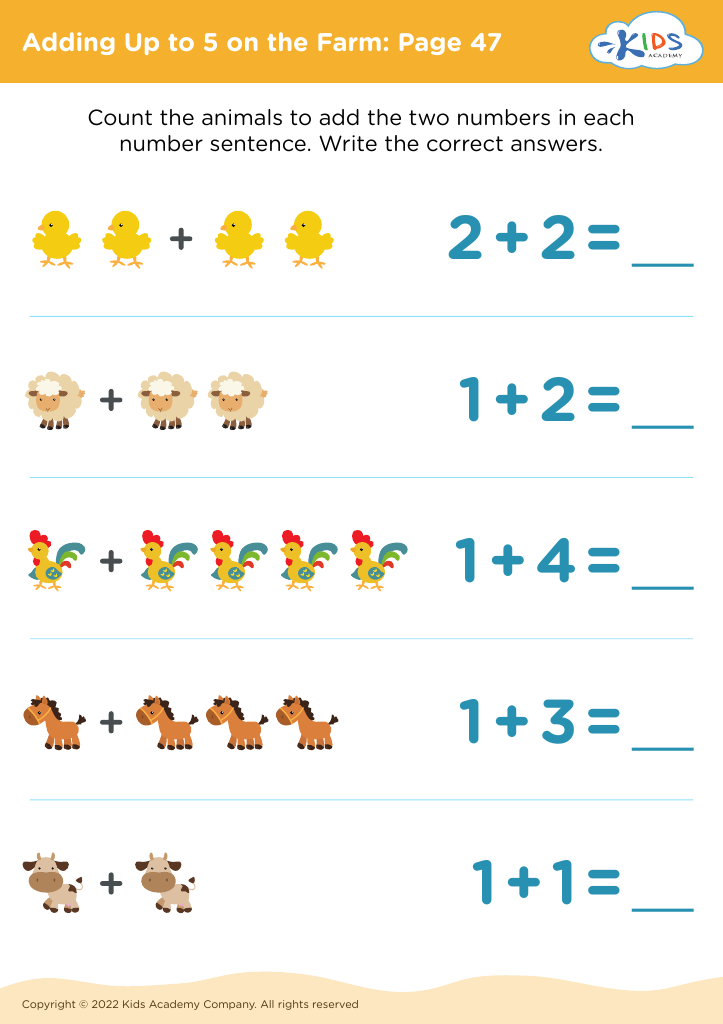
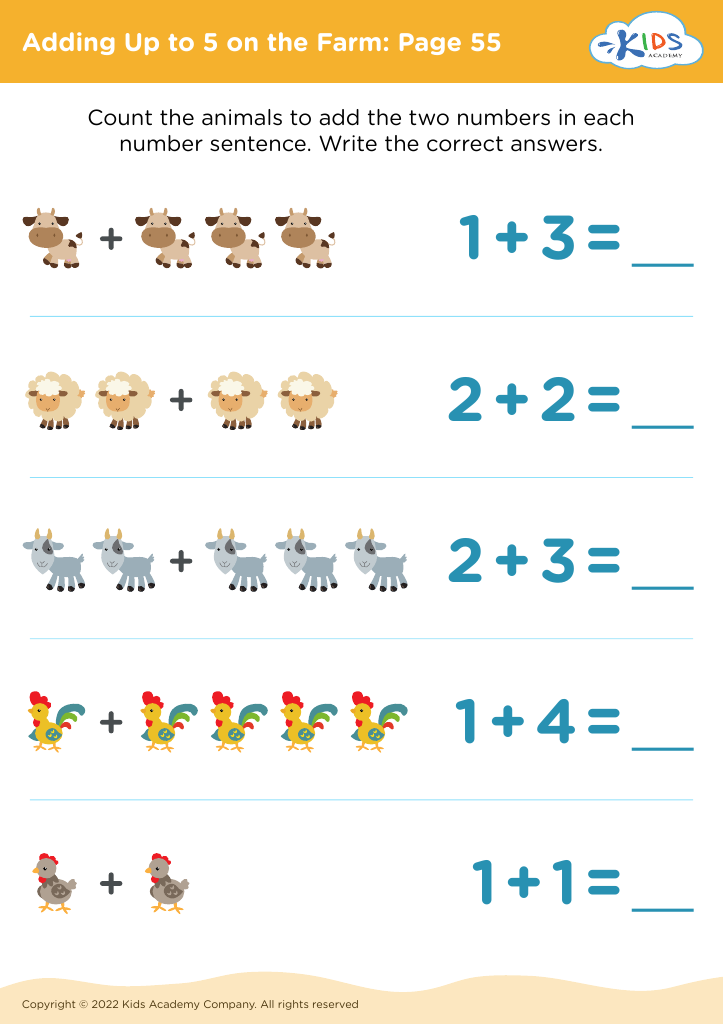
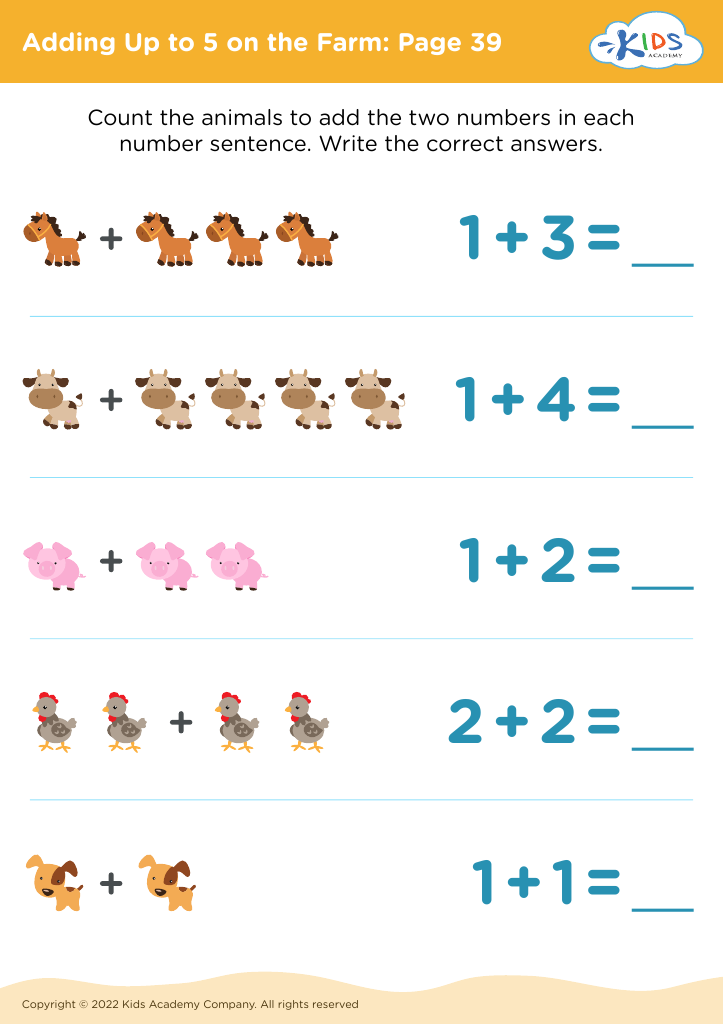
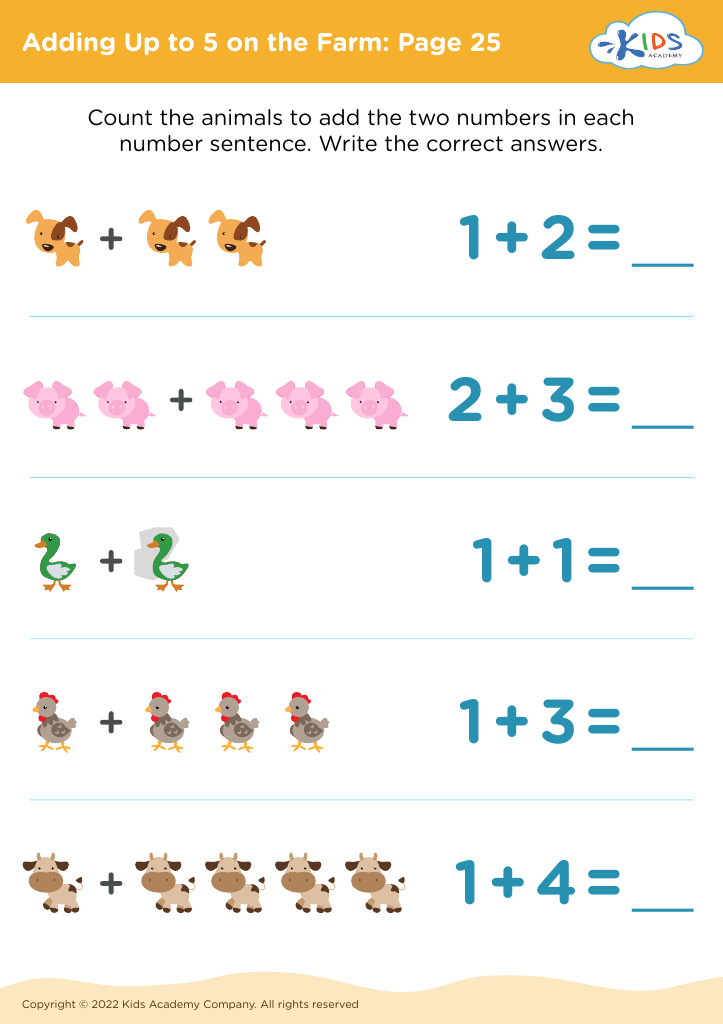
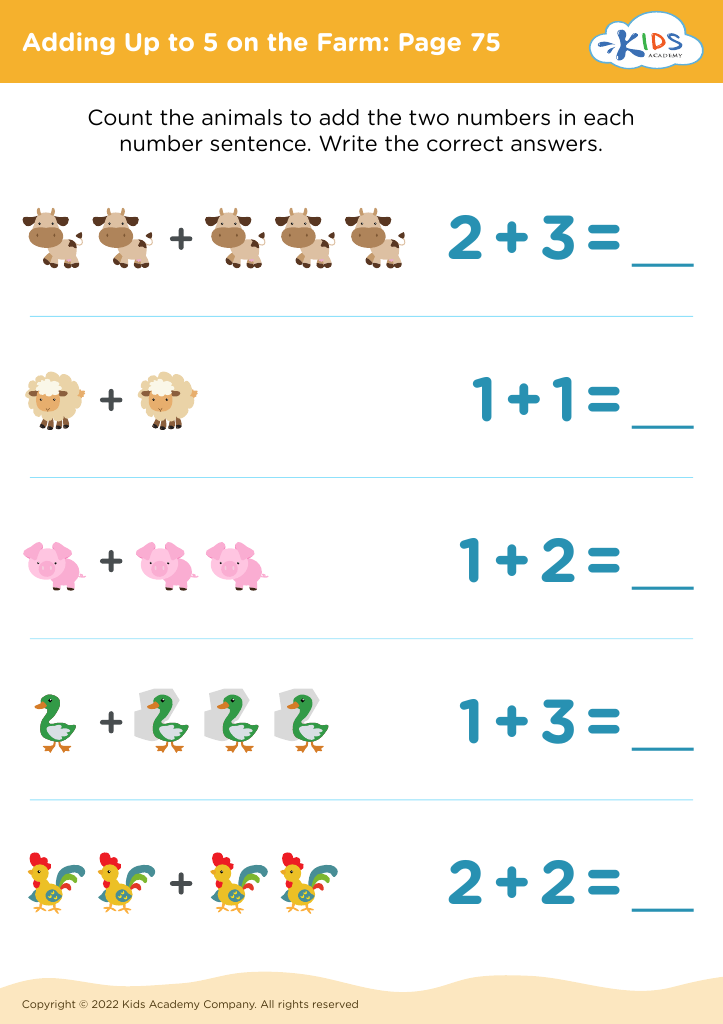
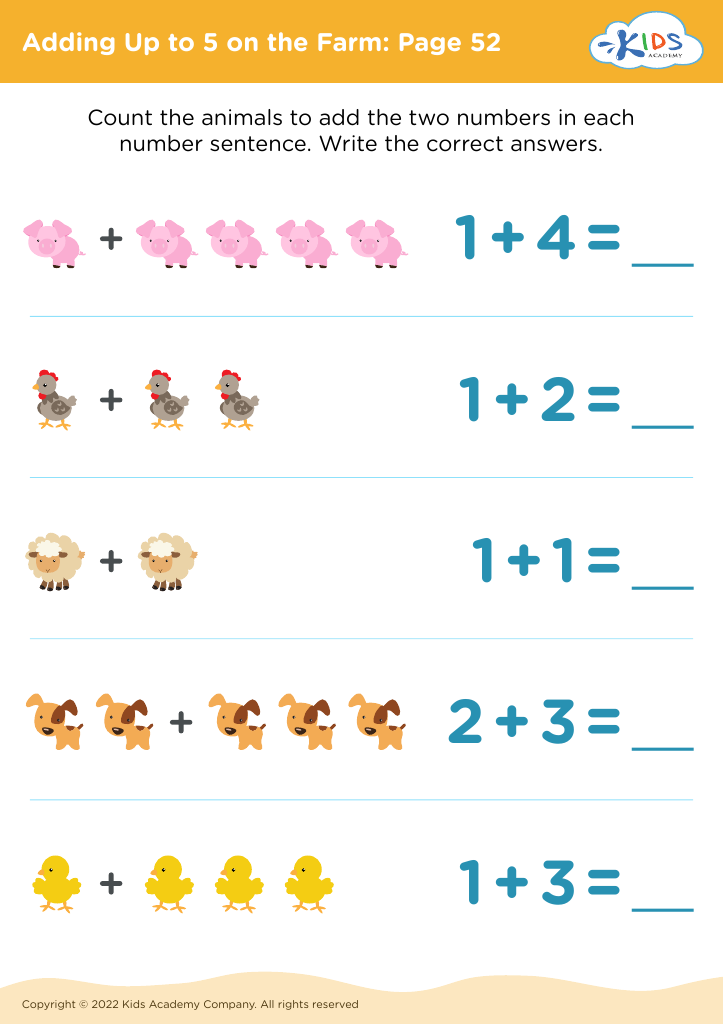
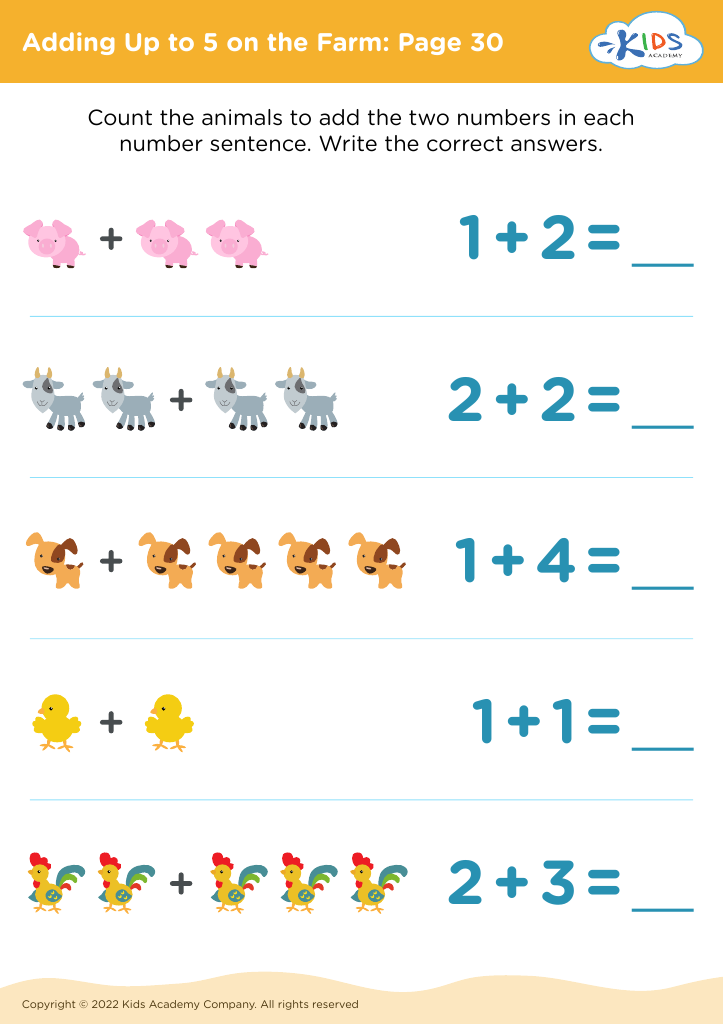
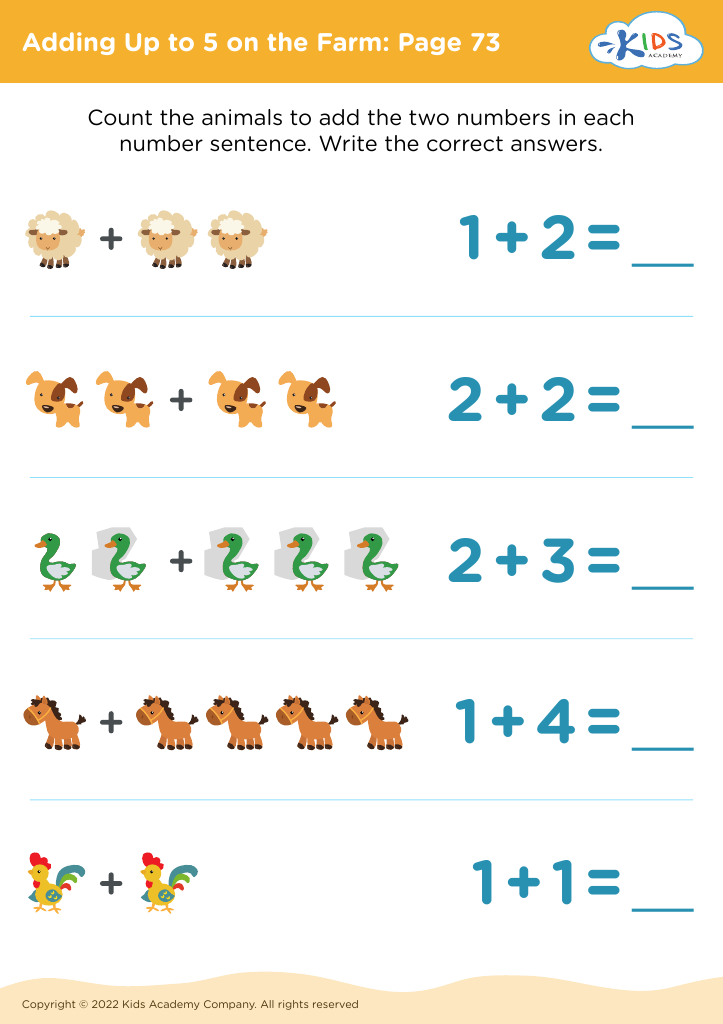
Introducing "Animal Identification Adding on the Farm Worksheets for 3-Year-Olds"! These engaging and educational worksheets combine animal recognition with simple addition skills, making learning fun for toddlers. Designed to stimulate curiosity, children will identify various farm animals while enhancing their mathematical abilities through interactive activities. With colorful illustrations and easy-to-follow instructions, young learners will practice counting and adding animals, fostering critical thinking and cognitive development. Perfect for early childhood educators and parents, these worksheets cater to little ones' boundless energy and help them grasp foundational concepts in a delightful way. Join the adventure on the farm and watch your child's learning soar!
Favorites
With answer key
Interactive
Join Kids Academy for Free
Who is primarily going to use this learning content?



Animal identification on the farm is essential for parents and teachers to teach 3-year-olds for several reasons. First, understanding animal identification helps children develop recognition skills, which are foundational for their cognitive development. By learning the names, colors, and sounds of various animals, kids can enhance their vocabulary and language skills in a fun way.
Additionally, starting this education at a young age promotes empathy and respect for living beings. Children learn to appreciate the role of animals in our lives, fostering kindness and nurturing behavior. Discussions about farm animals can also introduce concepts like responsibility, as children begin to understand that these animals need care and attention.
Moreover, teaching about farm animal identification can provide hands-on learning experiences. For example, visits to local farms or virtual tours can make learning engaging and interactive. This real-world connection helps children make sense of abstract concepts, linking them directly to their surroundings.
Finally, early exposure to agricultural themes aids in promoting awareness about where our food comes from and the importance of farm sustainability. In conclusion, incorporating animal identification not only enriches children's knowledge but also builds a foundation for a future appreciation of nature and animals.