Filters

27 filtered results

Clear all filters
Favorites
With answer key
Interactive

27 filtered results

Difficulty Level

Grade


Our "Animal Identification Adding Up to 5 Worksheets for 3-Year-Olds" offer an engaging way to blend early math skills with animal identification. Perfectly designed for young learners, these worksheets introduce children to basic addition while helping them recognize different animals. By incorporating adorable animal images, kids can count furry friends and add up to five, enhancing both their numeracy and observational skills. These fun, educational activities make learning entertaining, ensuring that children develop a love for math and science from an early age. Ideal for use at home or in preschool settings, these worksheets foster a well-rounded educational foundation.
Check out this FREE Trial Lesson on Adding Up to 5 for age 3!

Match Exactly the Same

Favorites
With answer key
Interactive
  • 3
  • Animal identification
  • Adding Up to 5
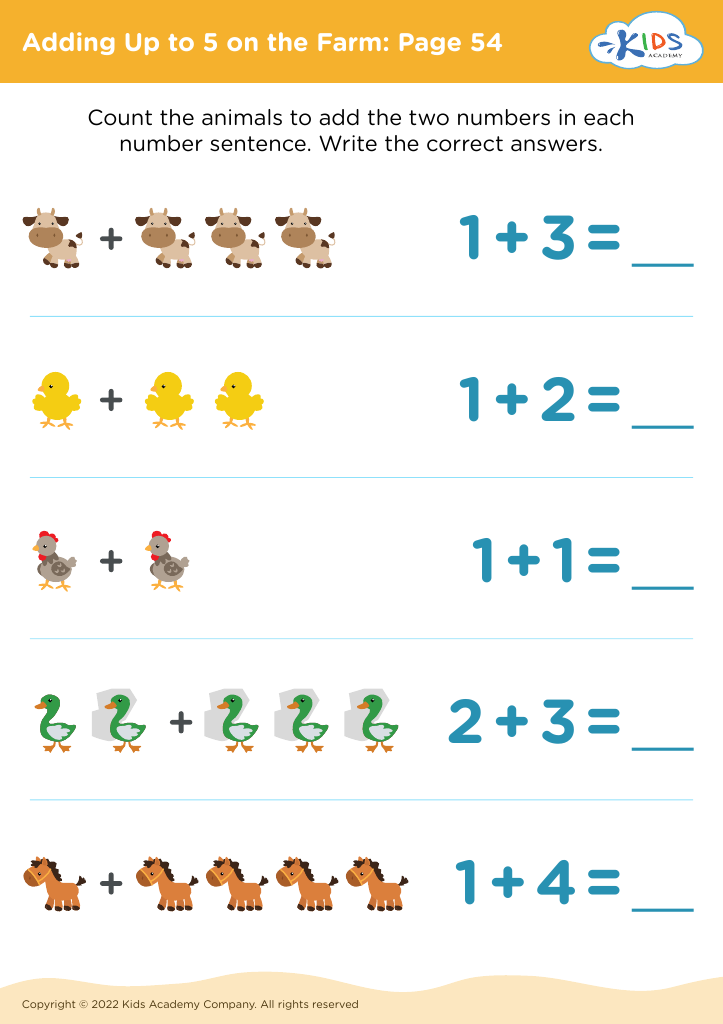
Adding Up to 5 on the Farm: Page 54
Worksheet
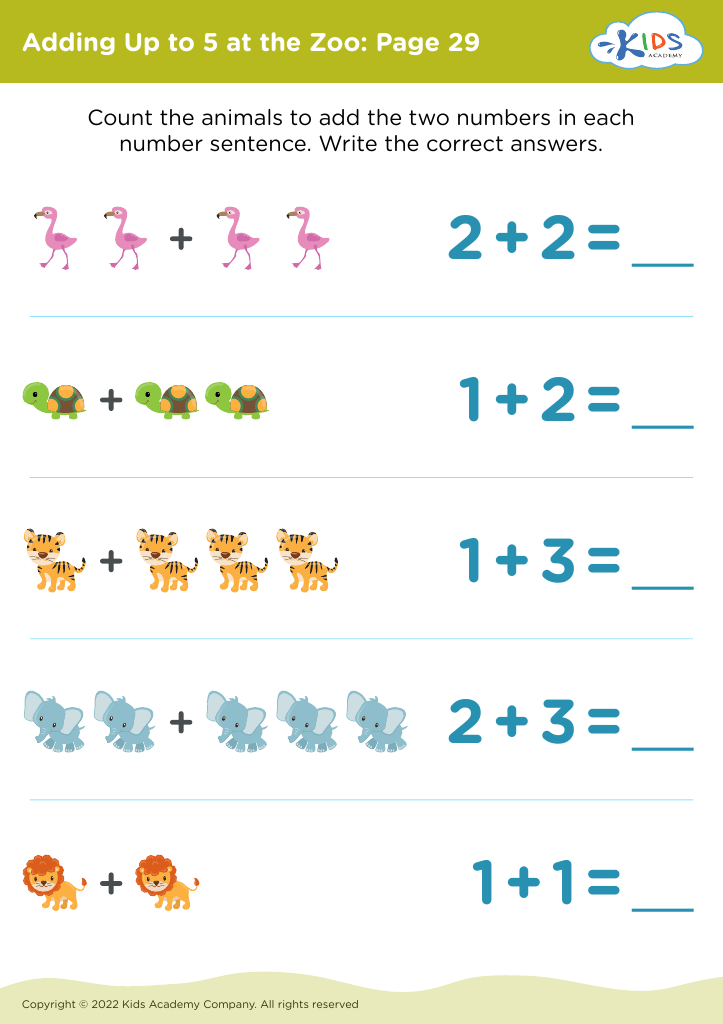
Adding Up to 5 at the Zoo: Page 29
Worksheet
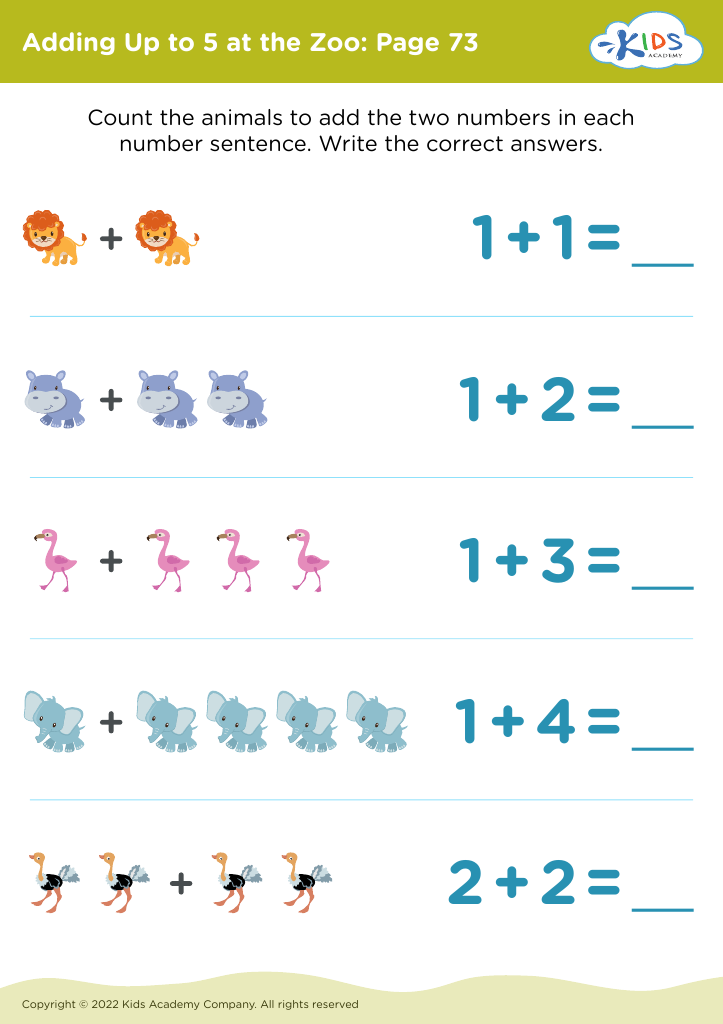
Adding Up to 5 at the Zoo: Page 73
Worksheet
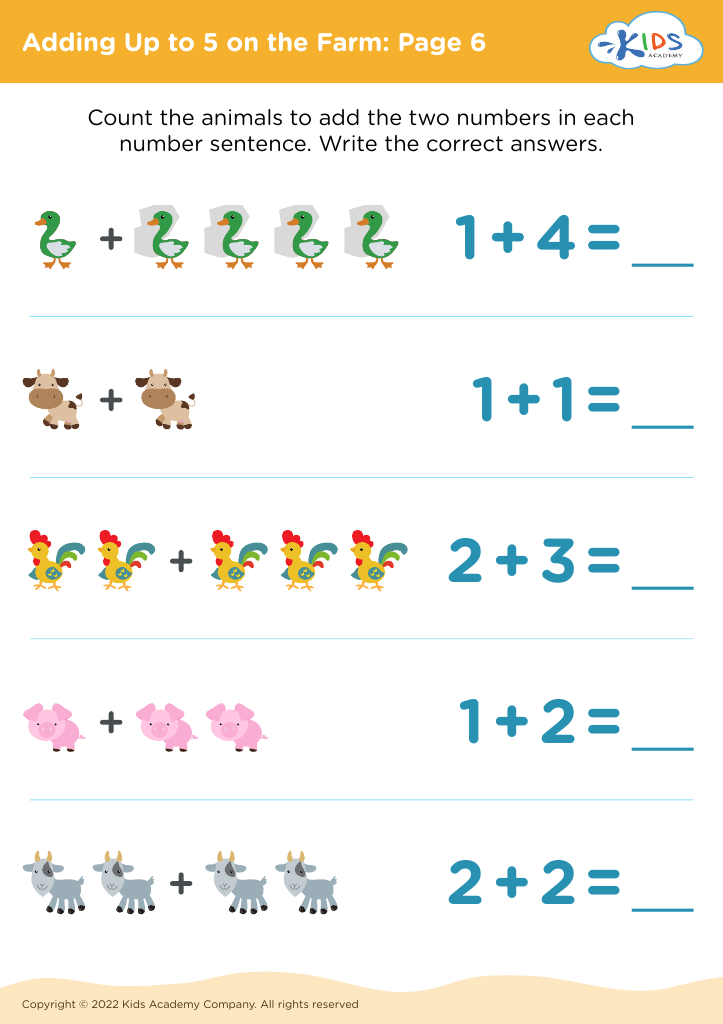
Adding Up to 5 on the Farm: Page 6
Worksheet
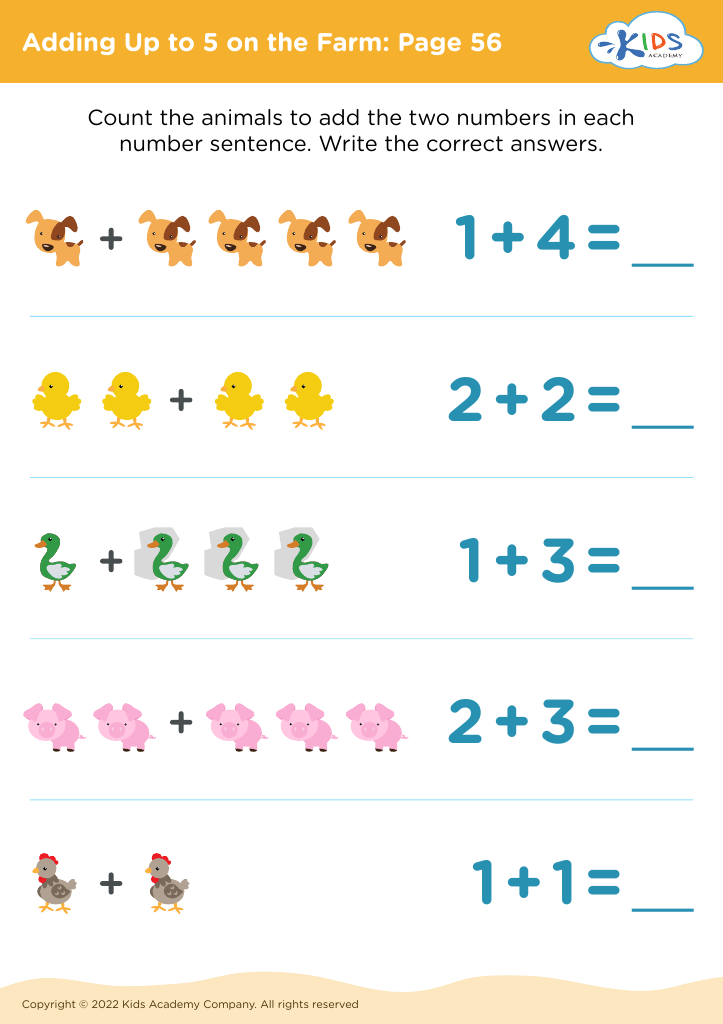
Adding Up to 5 on the Farm: Page 56
Worksheet
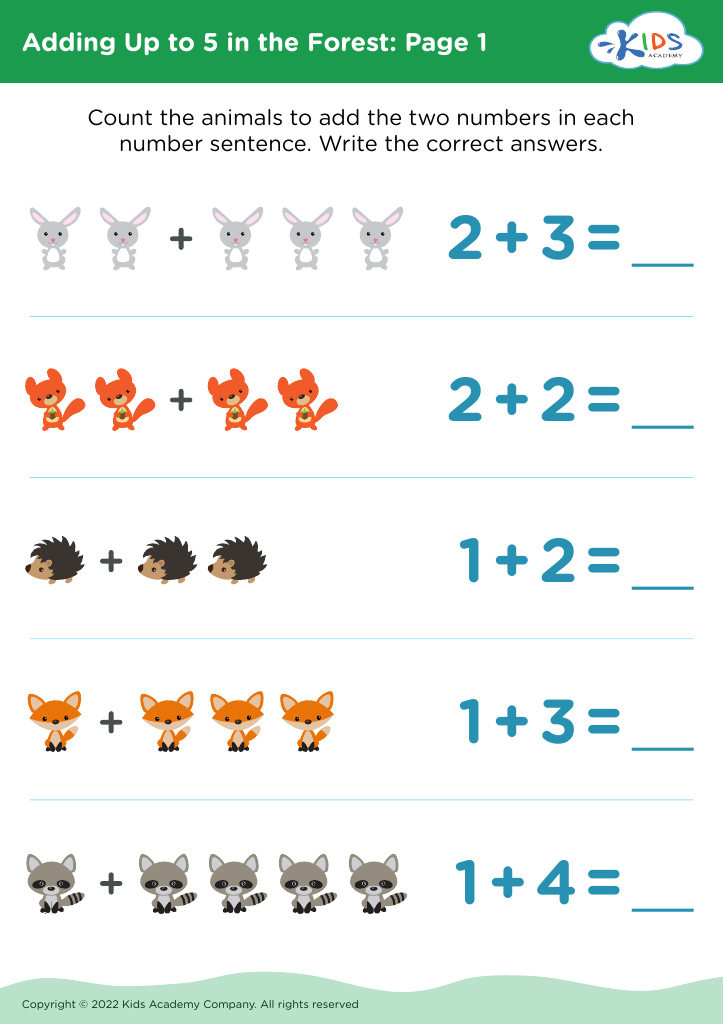
Adding Up to 5 in the Forest: Page 1
Worksheet
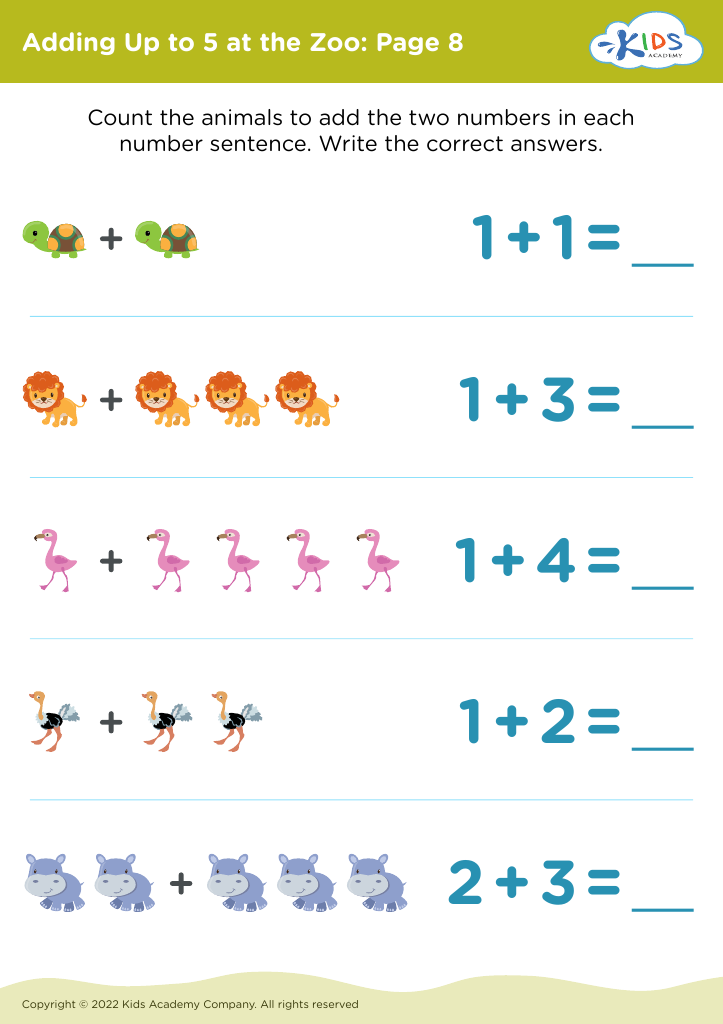
Adding Up to 5 at the Zoo: Page 8

Adding Up to 5 at the Zoo: Page 8

Adding Up to 5 at the Zoo: Page 8
Worksheet
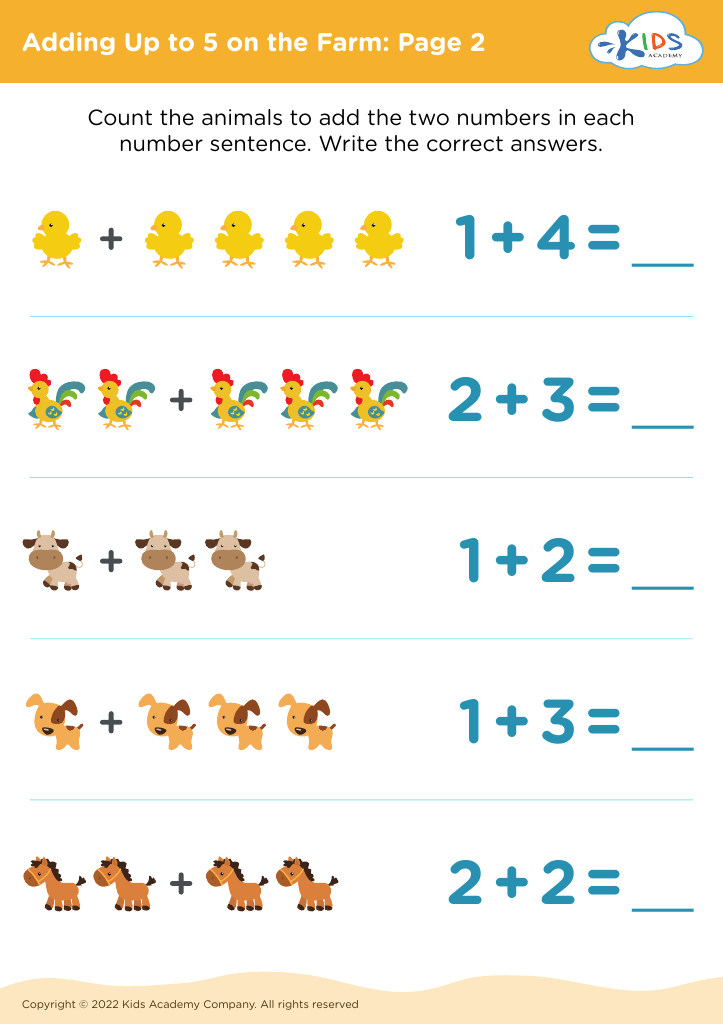
Adding Up to 5 on the Farm: Page 2
Worksheet
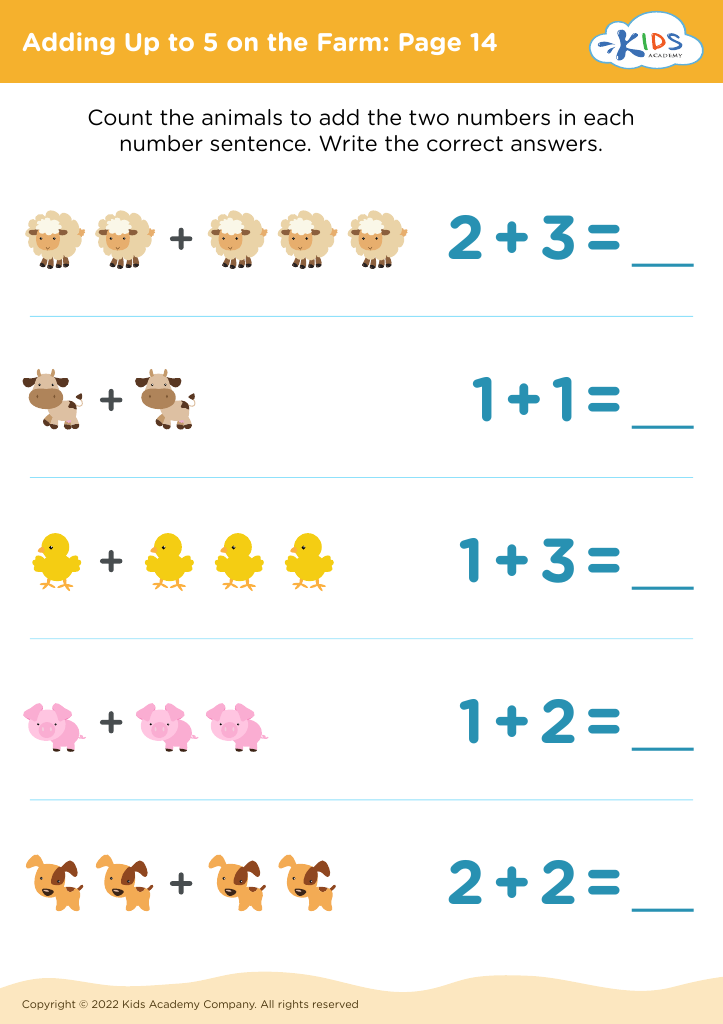
Adding Up to 5 on the Farm: Page 14
Worksheet
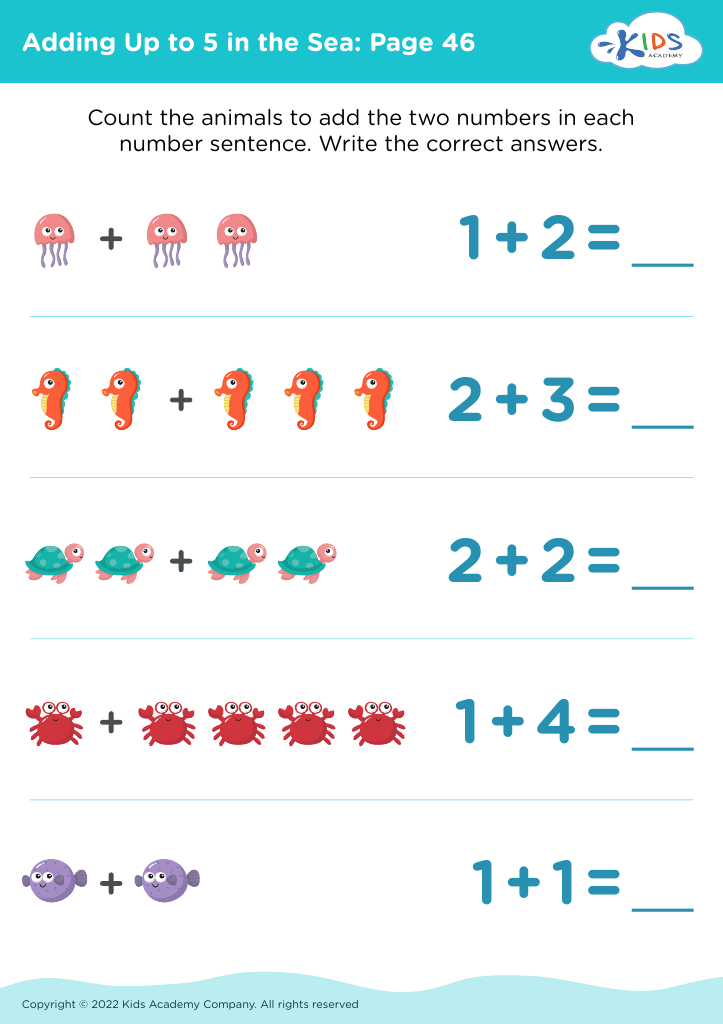
Adding Up to 5 in the Sea: Page 46
Worksheet
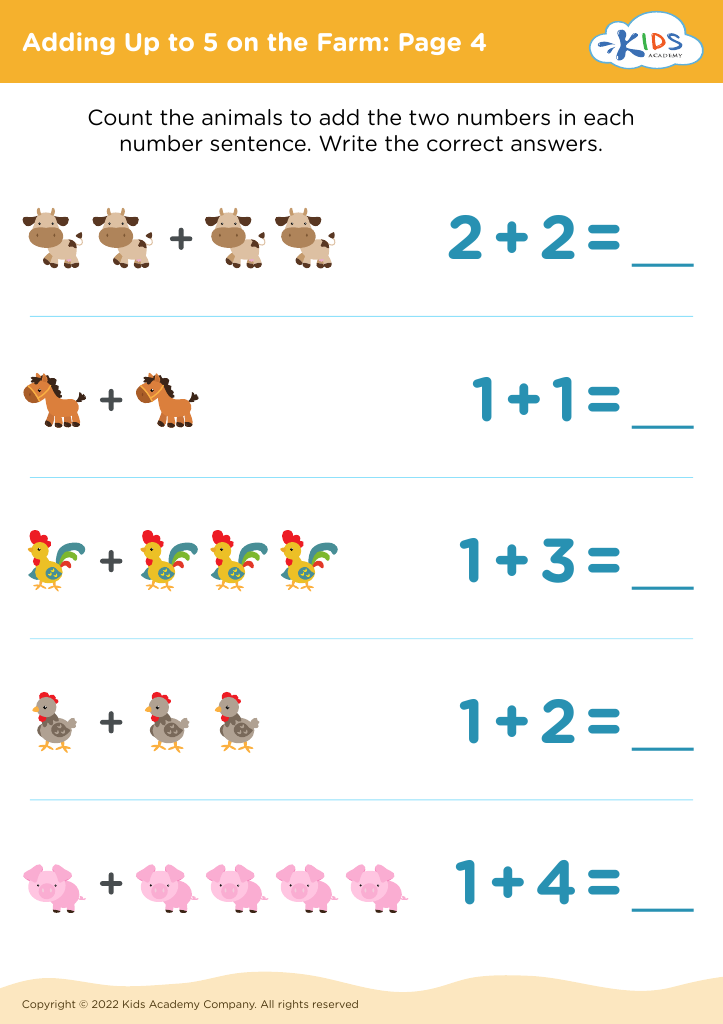
Adding Up to 5 on the Farm: Page 4
Worksheet
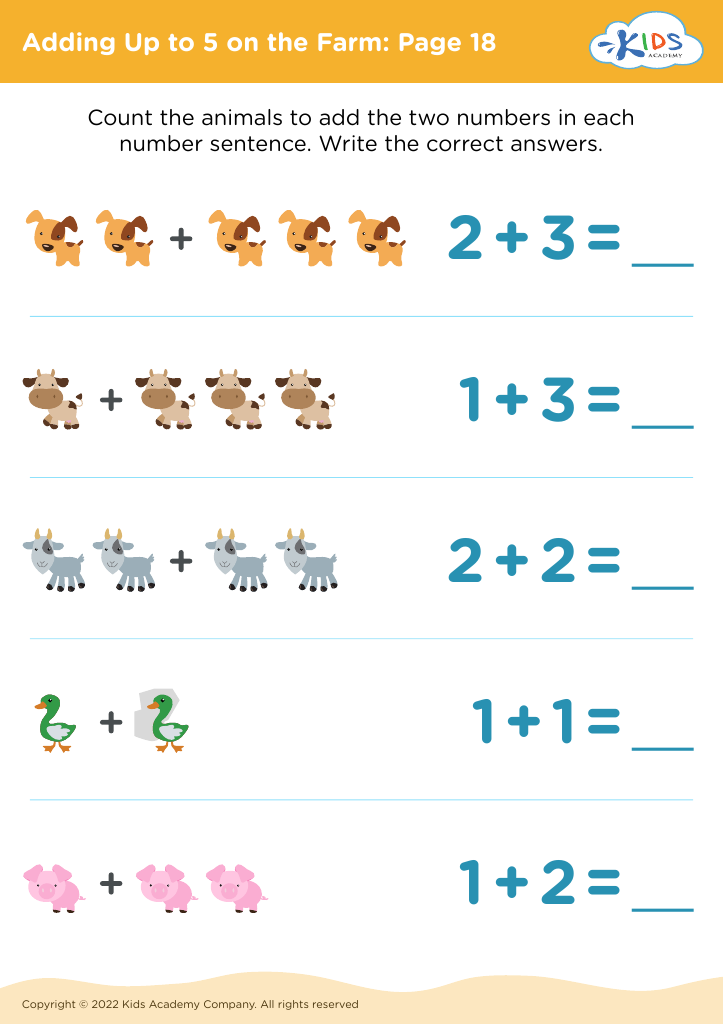
Adding Up to 5 on the Farm: Page 18
Worksheet
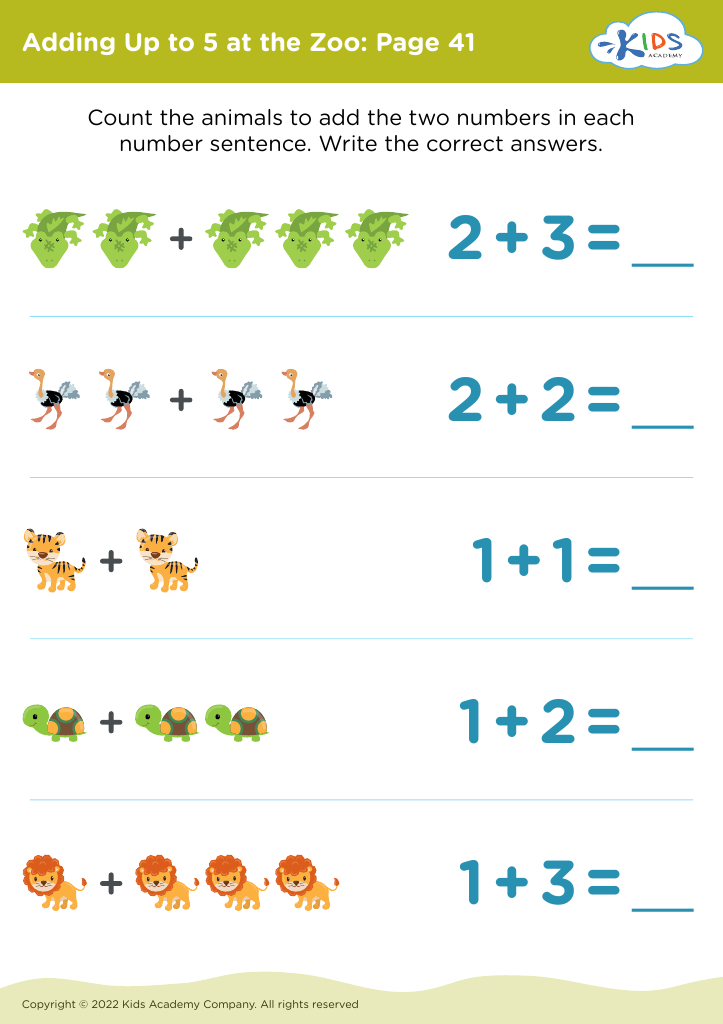
Adding Up to 5 at the Zoo: Page 41
Worksheet
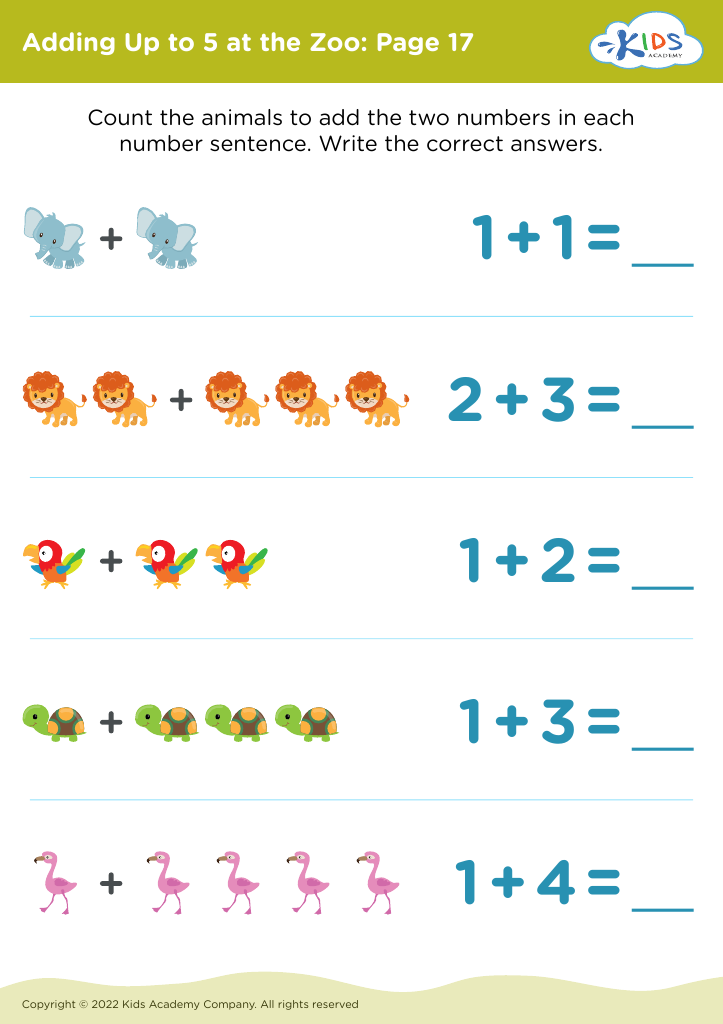
Adding Up to 5 at the Zoo: Page 17
Worksheet
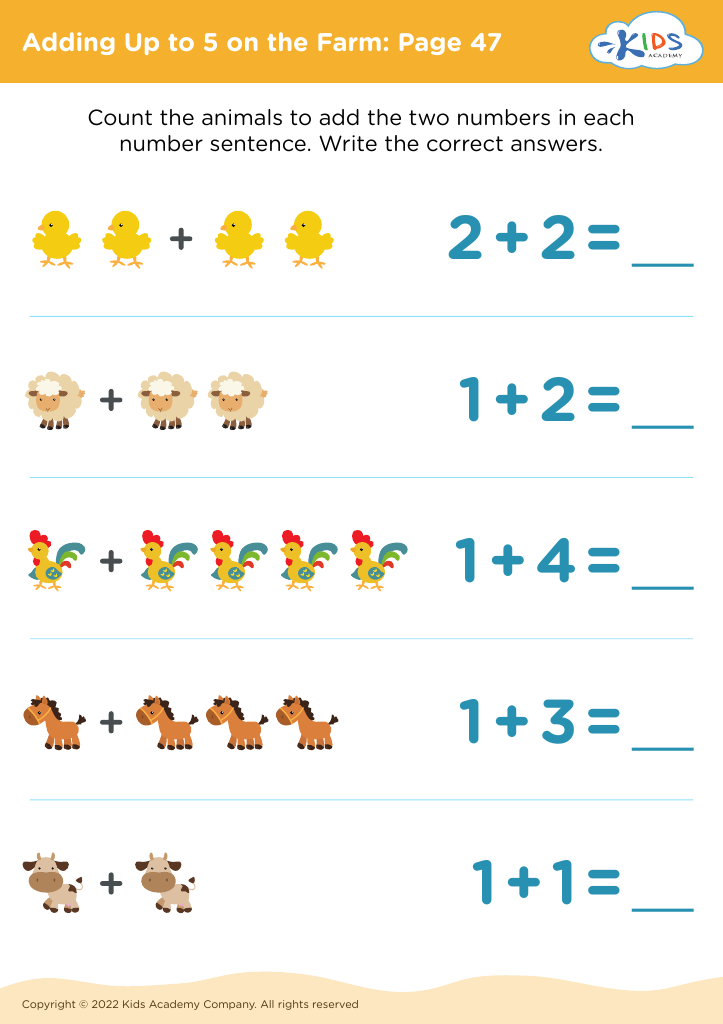
Adding Up to 5 on the Farm: Page 47
Worksheet
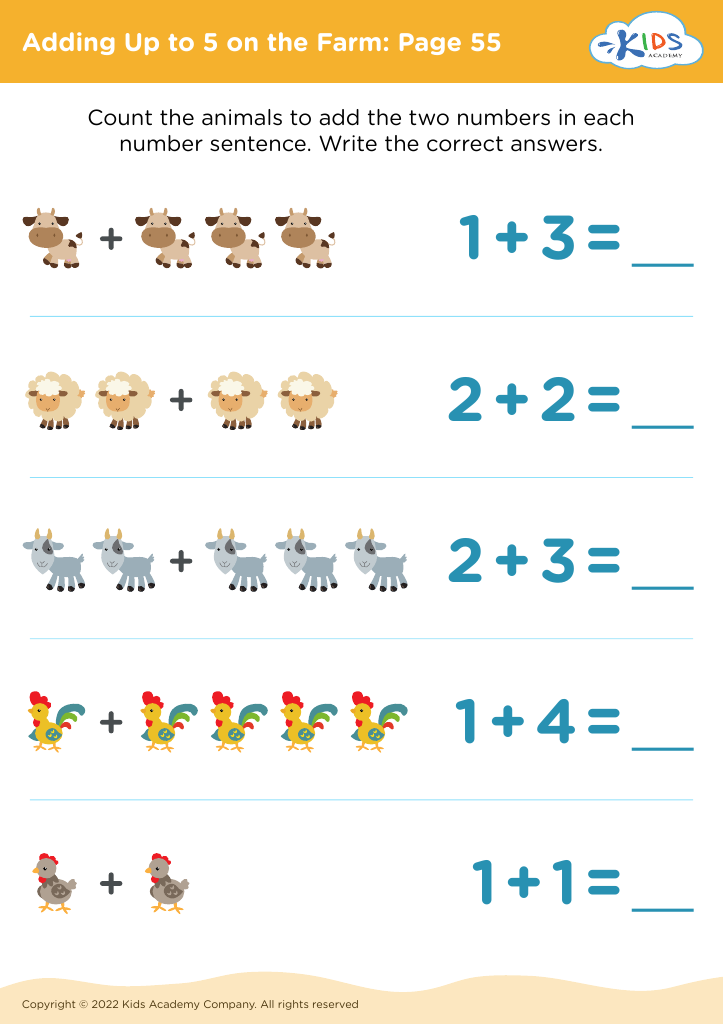
Adding Up to 5 on the Farm: Page 55
Worksheet
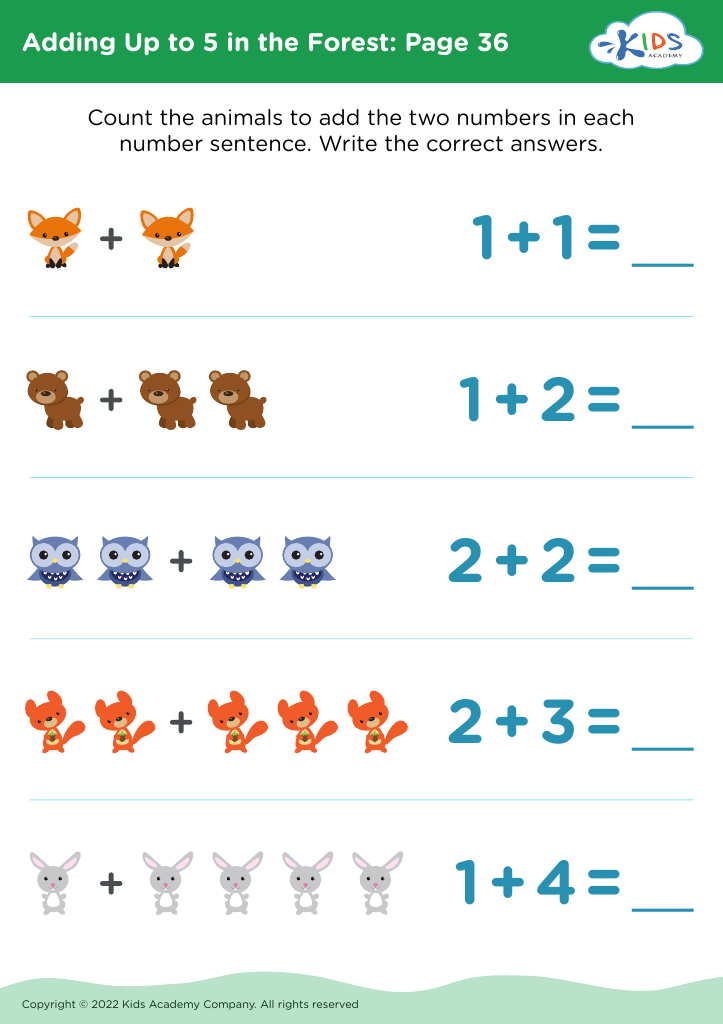
Adding Up to 5 in the Forest: Page 36
Worksheet
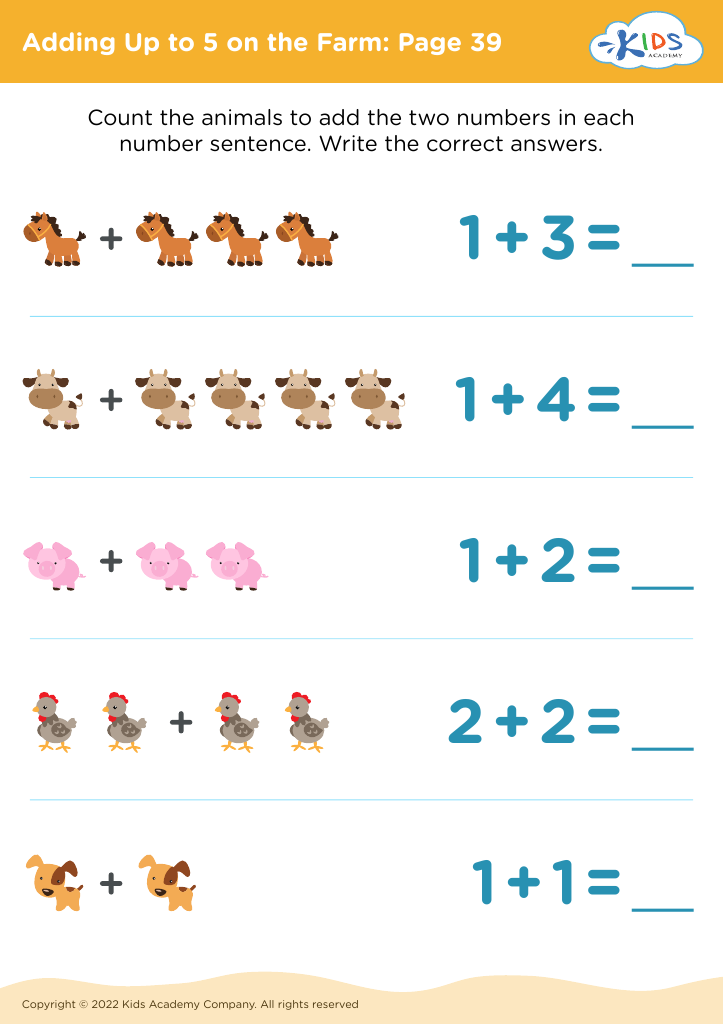
Adding Up to 5 on the Farm: Page 39
Worksheet
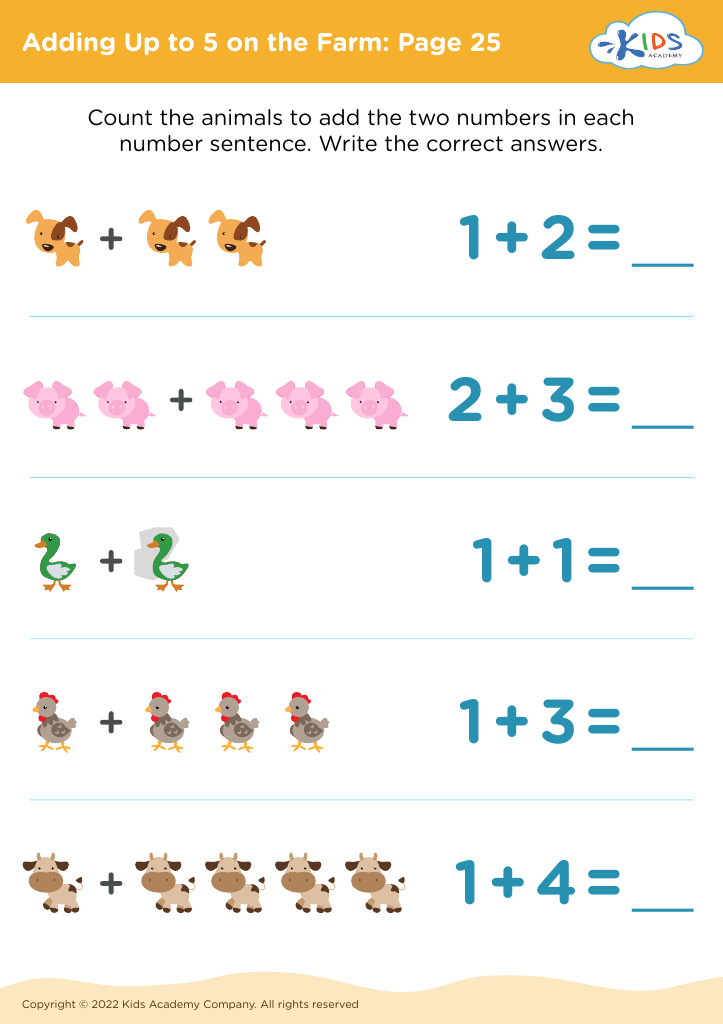
Adding Up to 5 on the Farm: Page 25
Worksheet
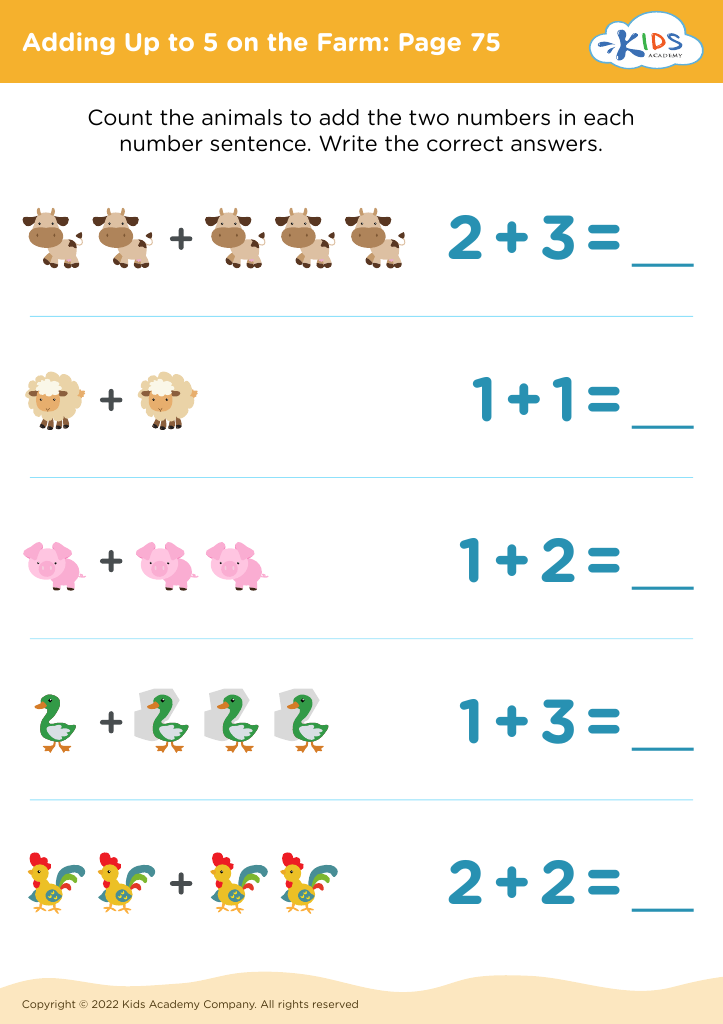
Adding Up to 5 on the Farm: Page 75
Worksheet
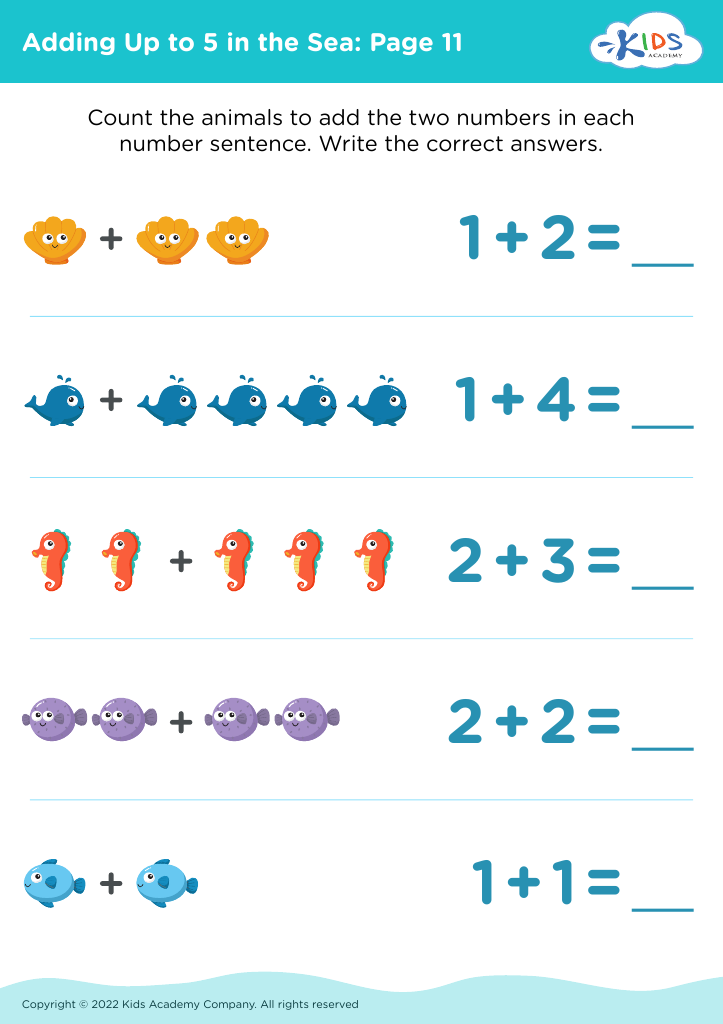
Adding Up to 5 in the Sea: Page 11
Worksheet
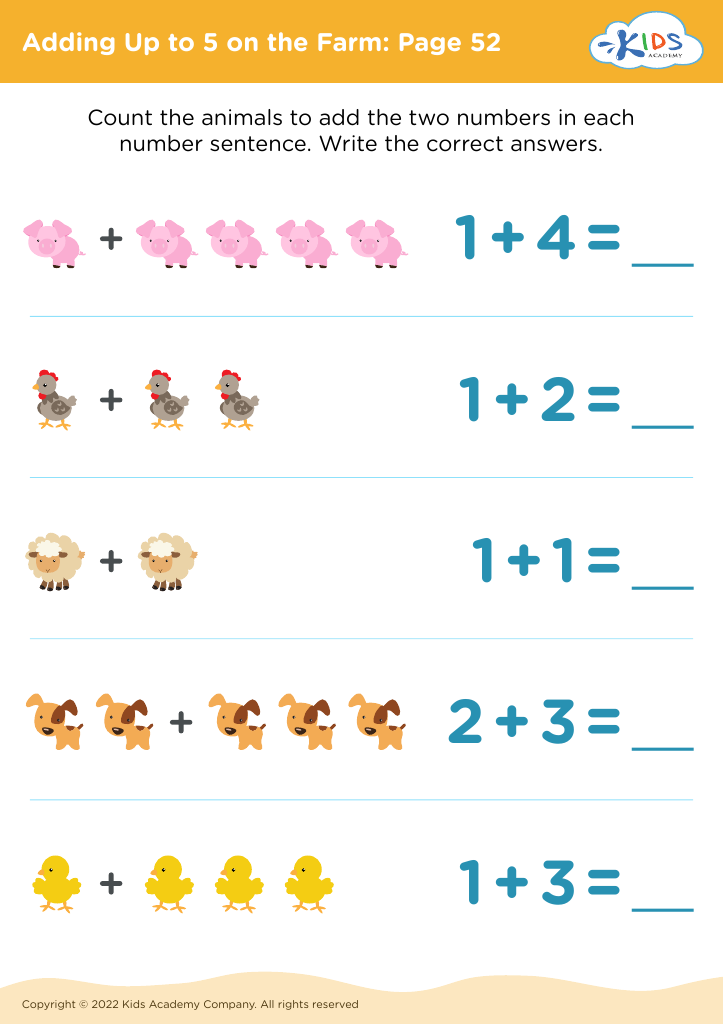
Adding Up to 5 on the Farm: Page 52
Worksheet
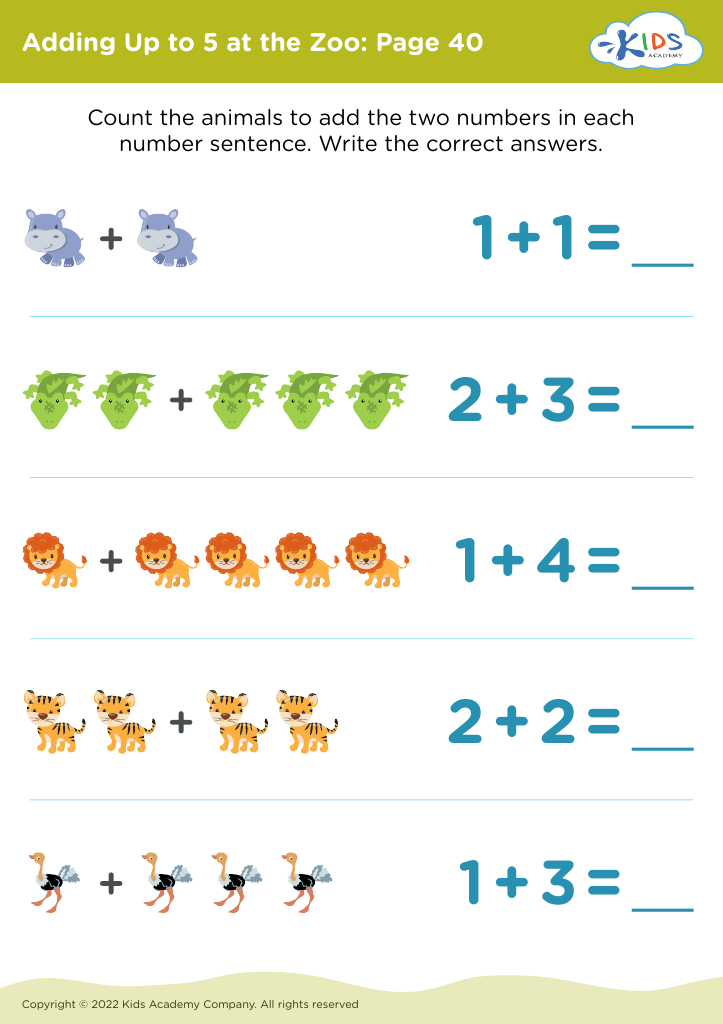
Adding Up to 5 at the Zoo: Page 40
Worksheet
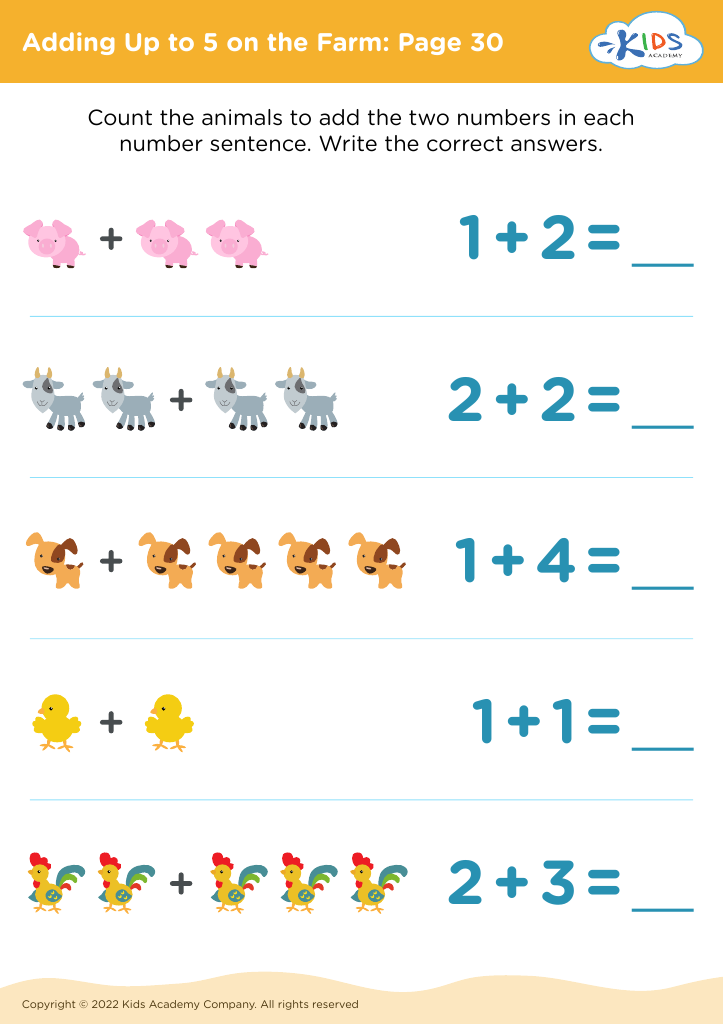
Adding Up to 5 on the Farm: Page 30
Worksheet


Parents and teachers play crucial roles in fostering early childhood development, and activities such as animal identification and simple addition up to five are instrumental. For 3-year-olds, identifying animals cultivates vital skills, including language development, cognitive growth, and an expanded awareness of the world. Learning to name and recognize various animals boosts vocabulary and fosters a connection to nature.

Incorporating addition up to five at this early stage lays the groundwork for more complex mathematical concepts. It promotes numerical literacy and understanding of basic arithmetic, skills that are essential for academic success. Engaging in these activities simultaneously supports both cognitive and motor skills, as children learn to count animals and match numbers, often using visual aids and hands-on materials like counters or animal figurines.

Furthermore, these exercises can enhance a child's problem-solving abilities and critical thinking. Parents and teachers can turn these learning moments into bonding opportunities, making education a collaborative and enjoyable experience. In a classroom setting, these activities encourage social interaction, as children work together and learn from each other.

Caring about these educational practices means valuing a holistic approach to early childhood development. It ensures children have a well-rounded foundation, preparing them for future academic challenges and fostering a love for learning.