Basic Arithmetic Adding Up to 5 Worksheets for 3-Year-Olds - Page 2
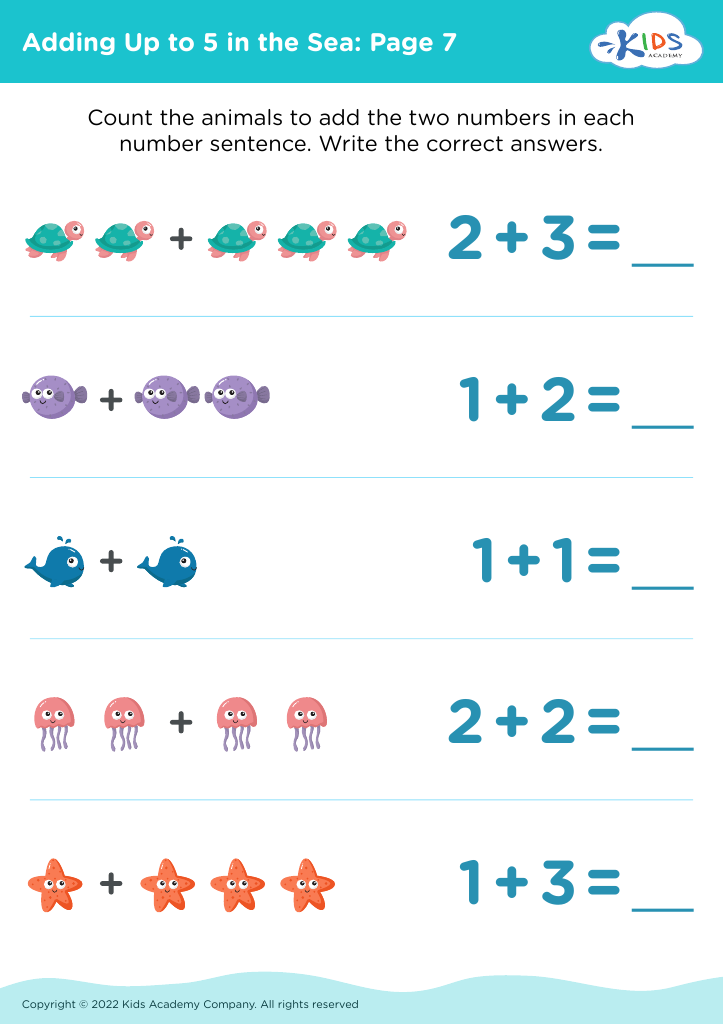
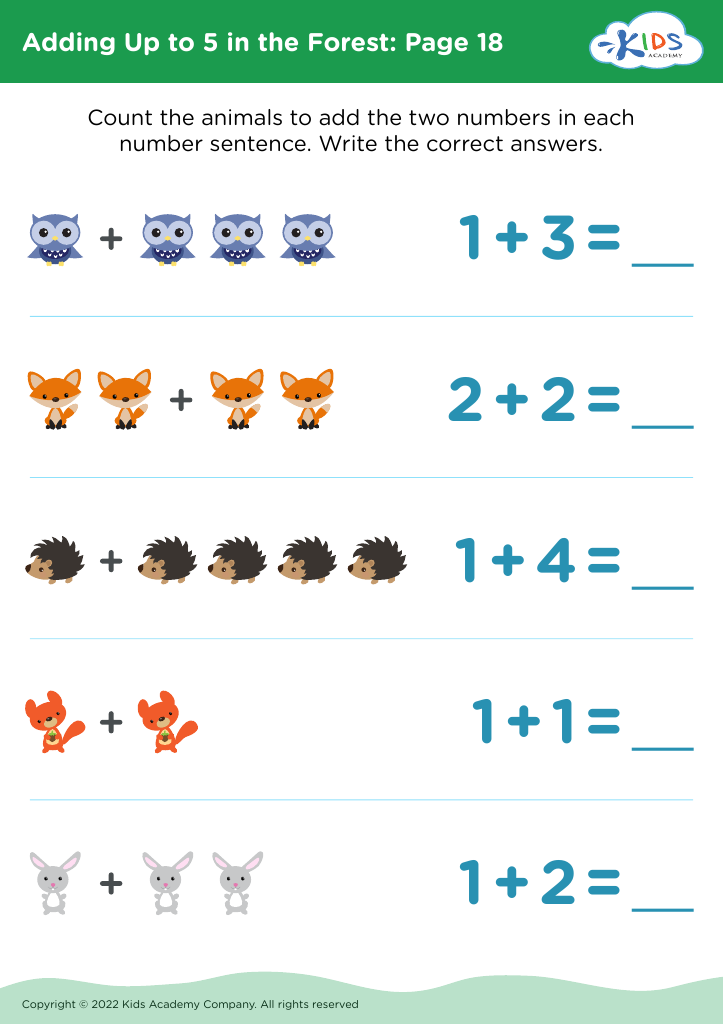
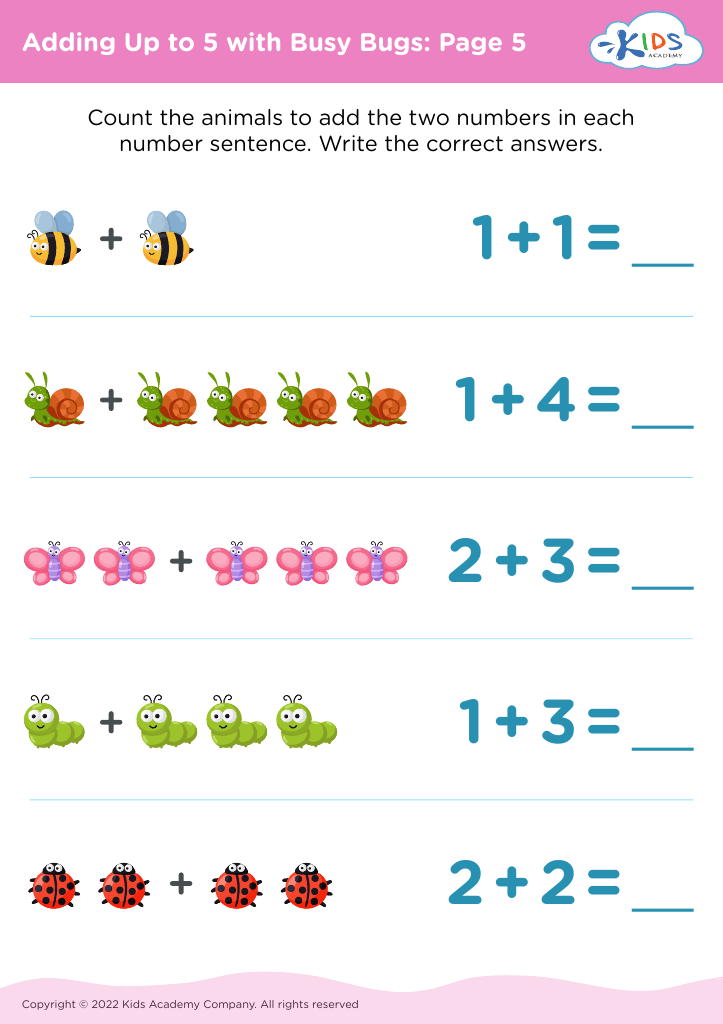
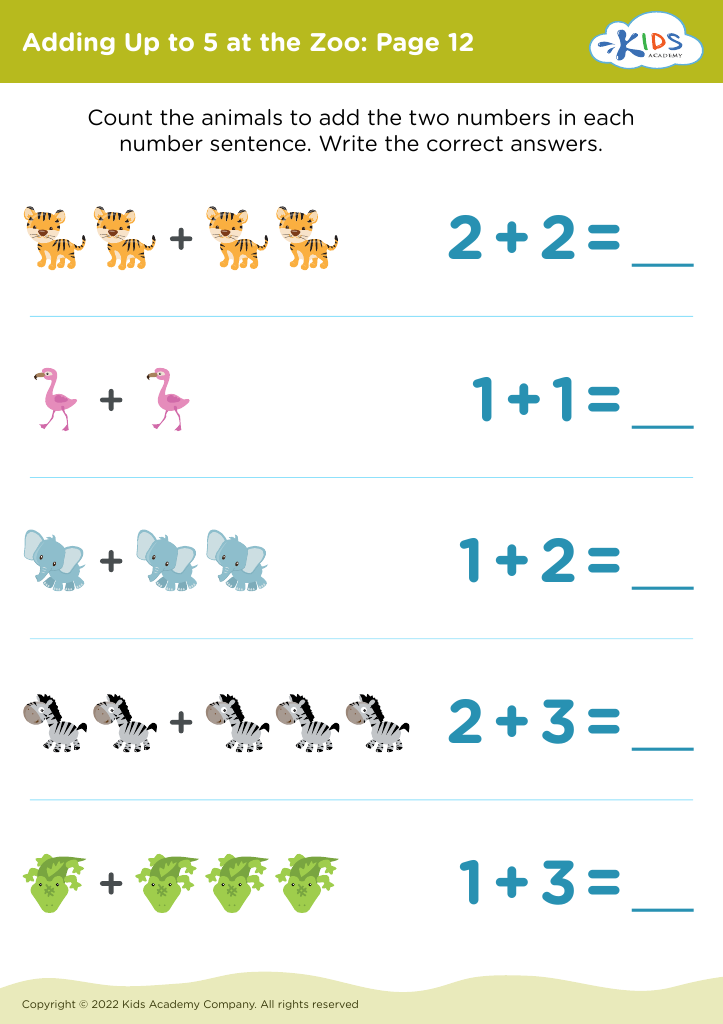
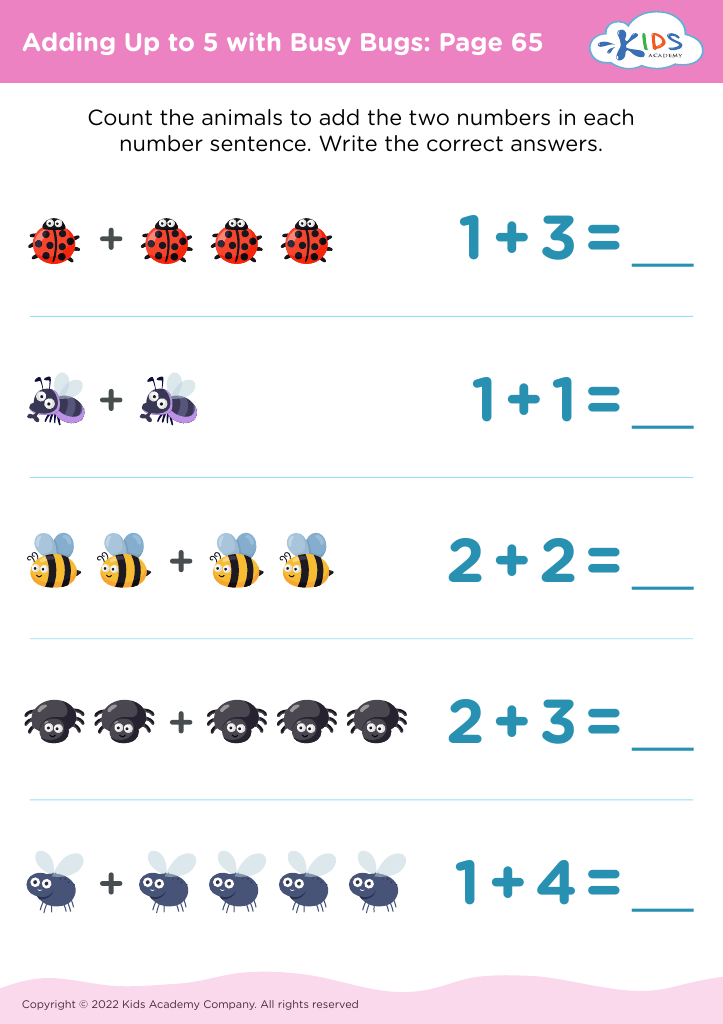
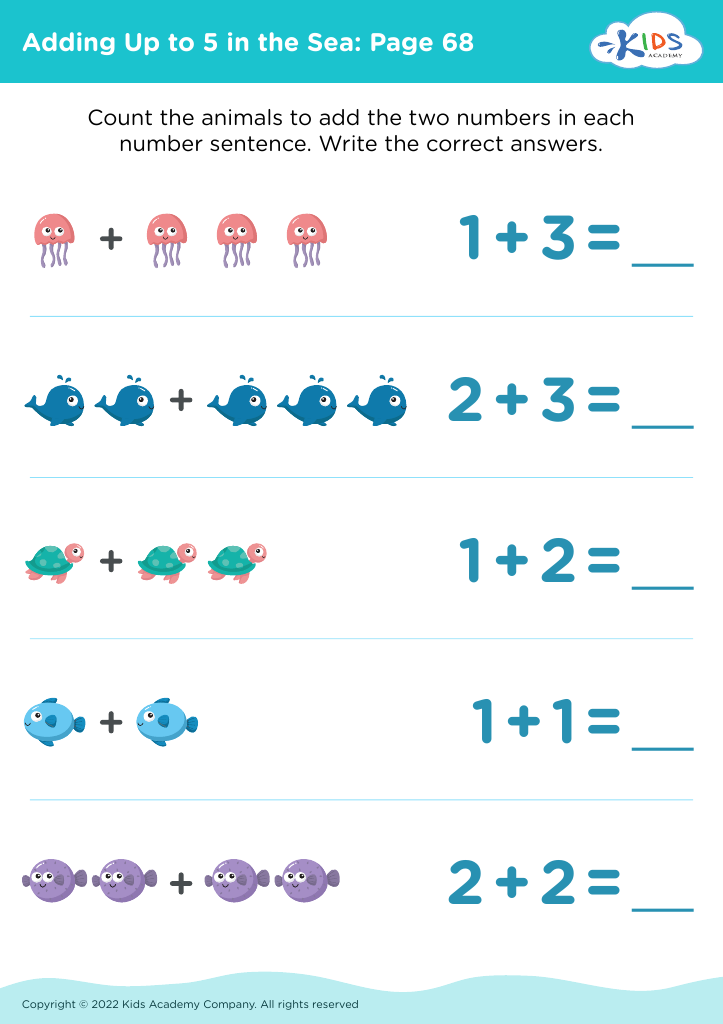
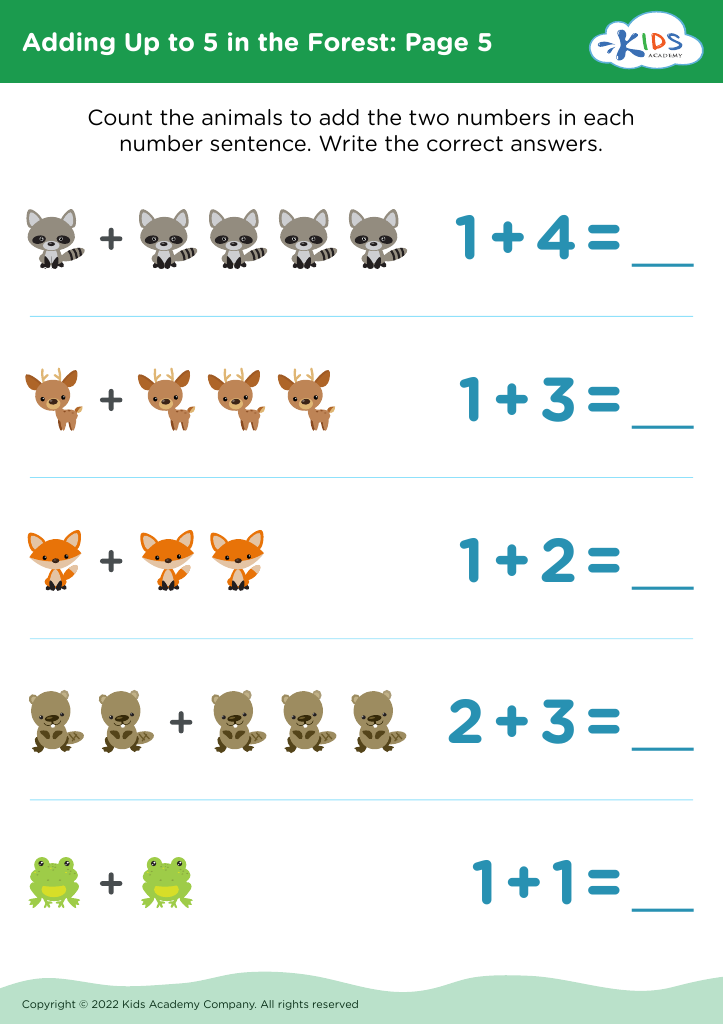
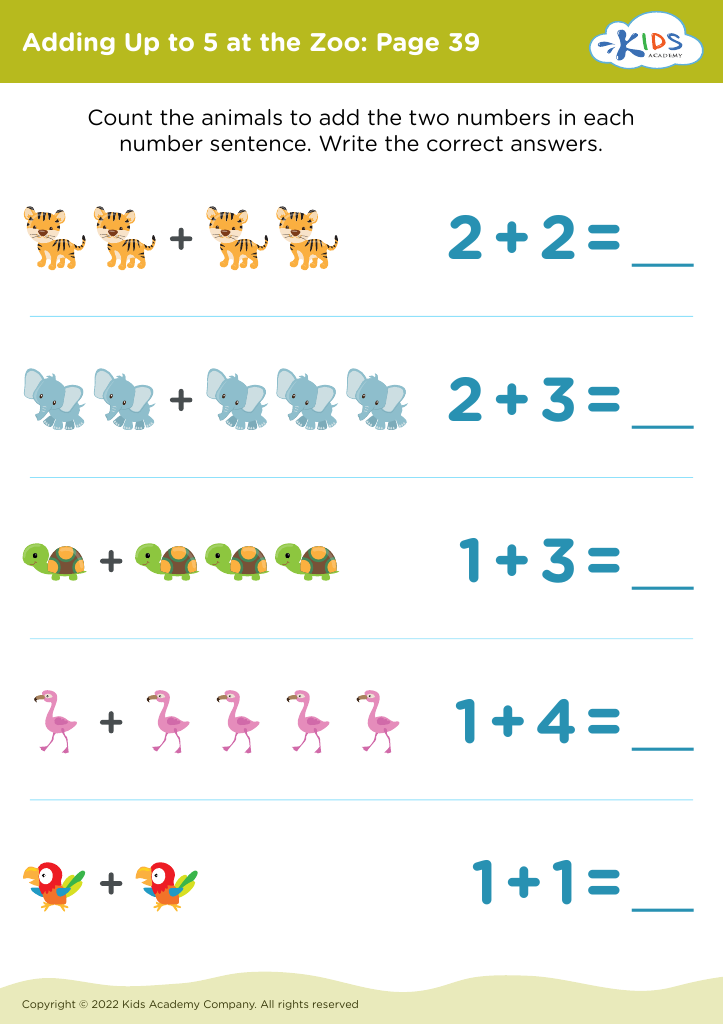






%20(1).jpg)
Parents and teachers should care about basic arithmetic adding up to 5 for 3-year-olds because early math skills lay a crucial foundation for future learning and cognitive development. At this age, children are in a critical period for brain development, and introducing simple arithmetic helps stimulate neural pathways crucial for problem-solving and logical thinking.
Basic arithmetic, such as adding up to 5, is not just about numbers; it's about understanding relationships, patterns, and sequences. It fosters an early sense of numerical competency that can boost a child’s confidence and love for learning. Engaging in arithmetic activities also enhances fine motor skills and hand-eye coordination when children use physical objects like blocks or counters to solve problems.
Furthermore, early arithmetic skills correlate with future academic success. Studies show that children who enter kindergarten with a strong grasp of basic math concepts perform better in school across various subjects. By introducing arithmetic to 3-year-olds, parents and teachers can cultivate an environment that encourages curiosity, critical thinking, and persistence, all of which are vital for long-term educational achievement.
In brief, paying attention to basic arithmetic for young children is not just about teaching numbers; it’s about equipping them with the skills and confidence needed to excel in all areas of life.








