Basic Math understanding Adding Up to 5 Worksheets for 3-Year-Olds
7 filtered results
-
From - To
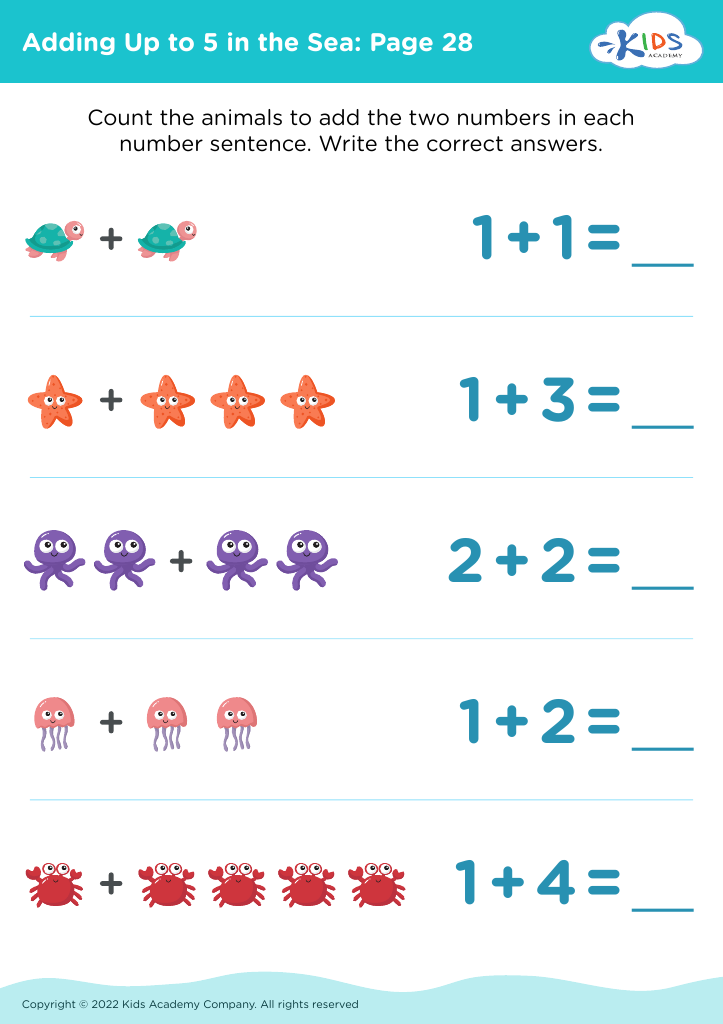
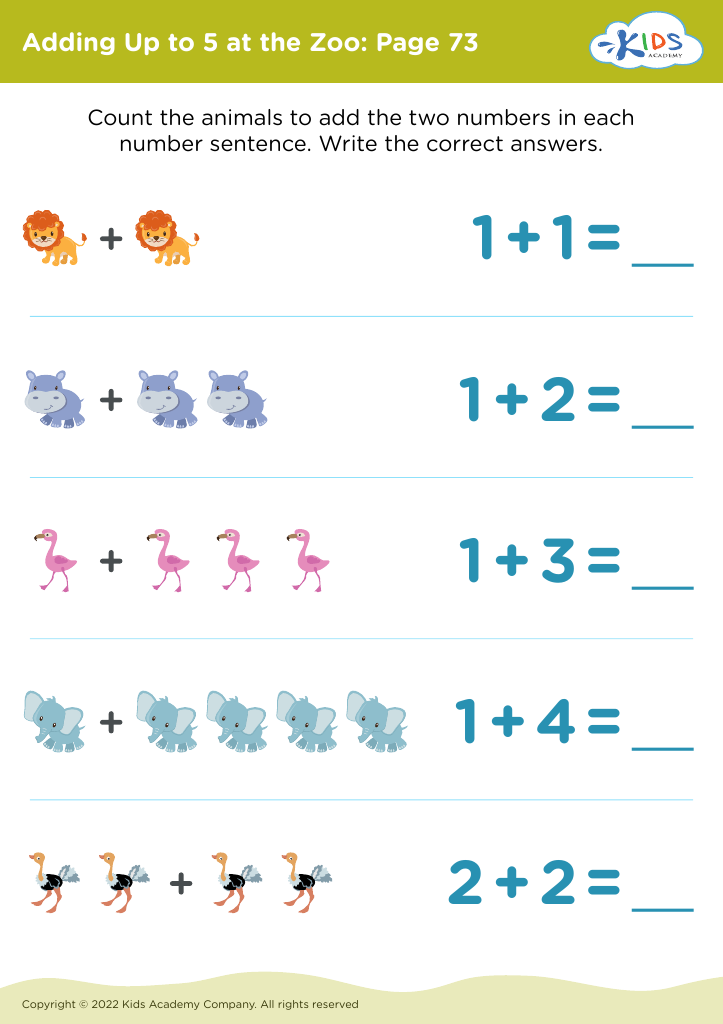
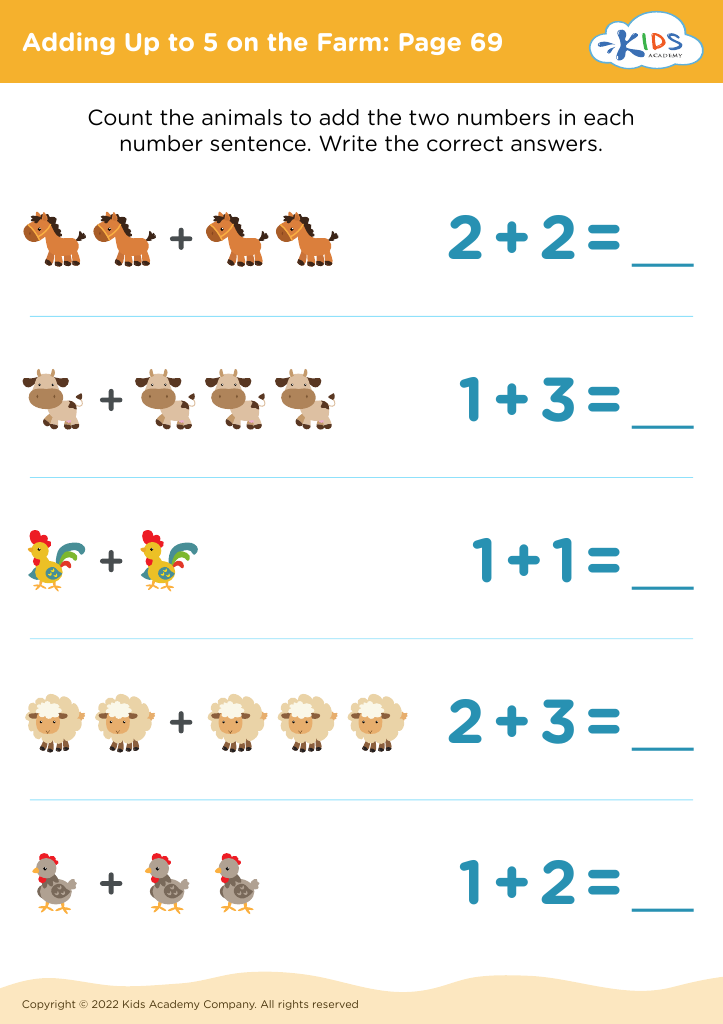
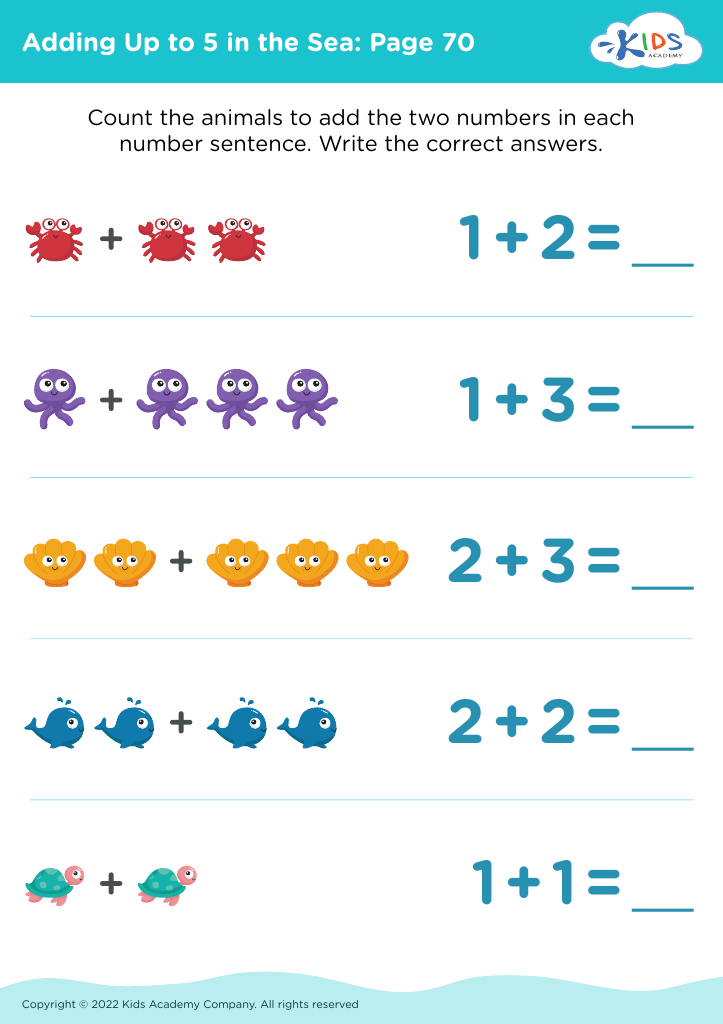
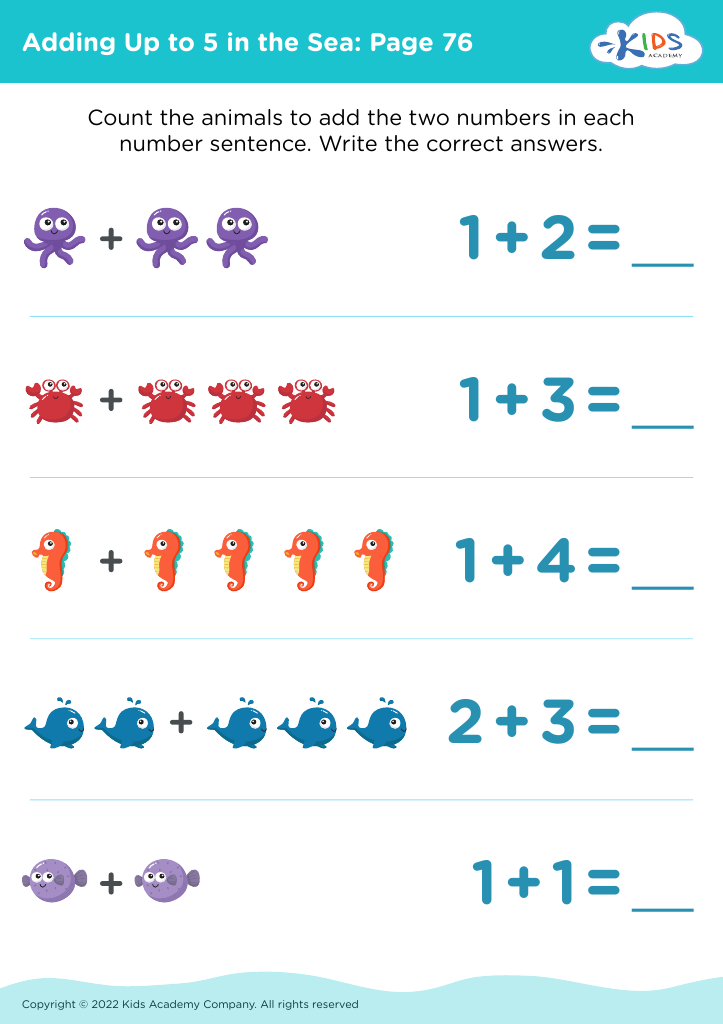
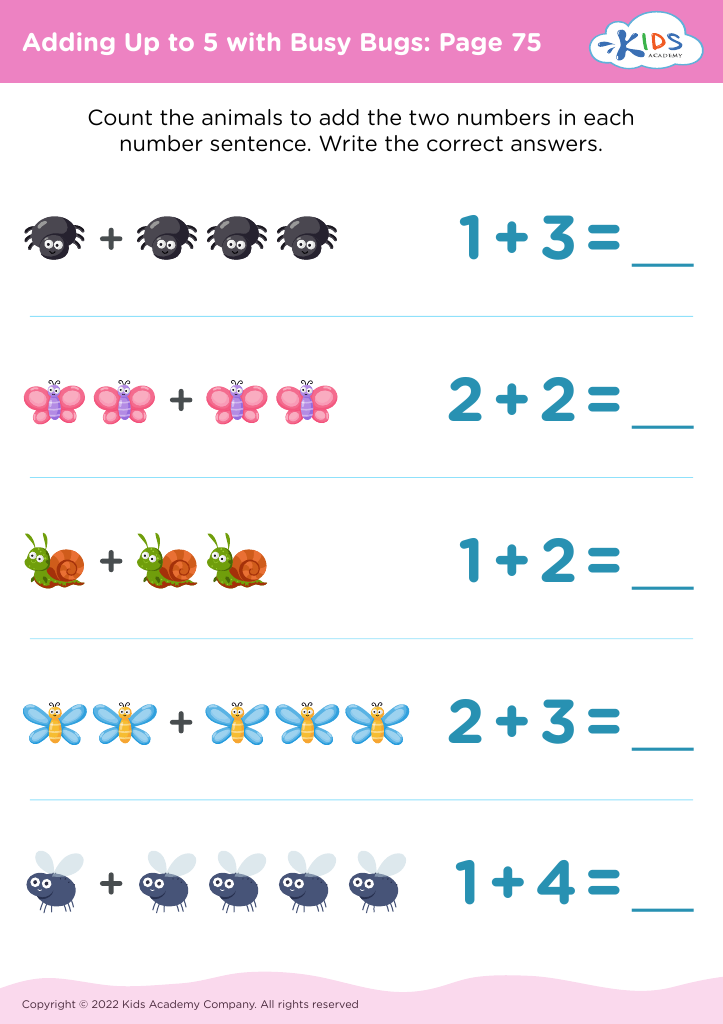
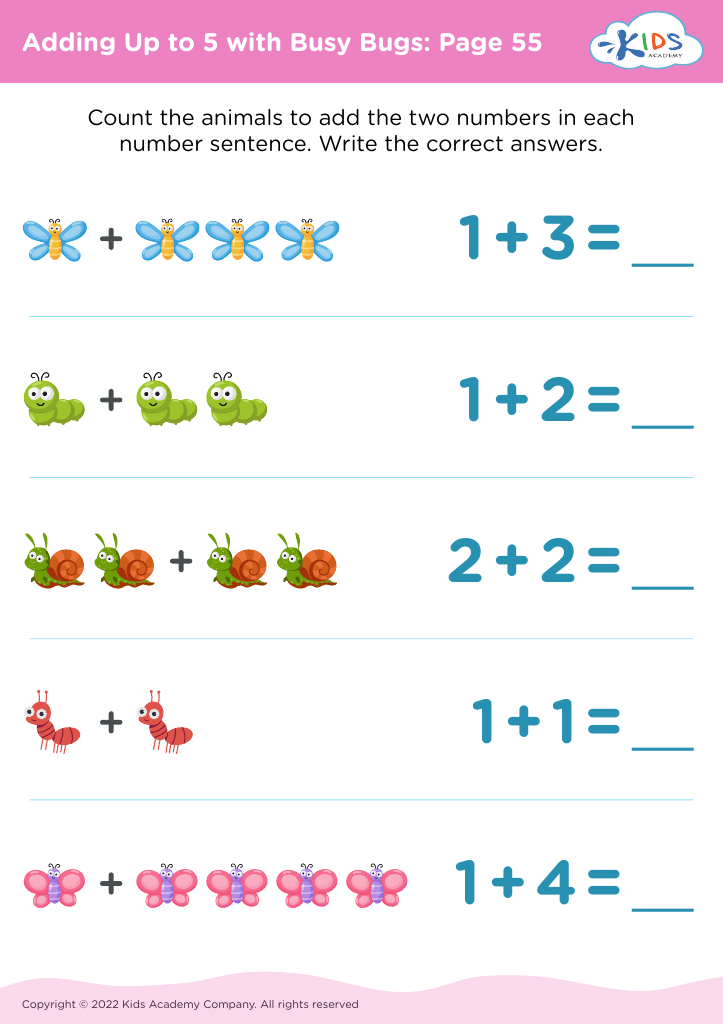
Foster early math skills with our "Adding Up to 5 Worksheets for 3-Year-Olds." Designed to introduce basic math concepts, these engaging and age-appropriate worksheets help young learners understand simple addition. Each activity is thoughtfully crafted to enhance counting, number recognition, and hand-eye coordination through playful exercises. Encourage your child's curiosity and confidence with fun visual aids and interactive problems that make learning seamless. Ideal for preschoolers, our worksheets align with early childhood education standards, ensuring a solid mathematical foundation that will benefit them in their ongoing educational journey. Ignite a love for math early on with our engaging resources.






.jpg)

Parents and teachers should place importance on basic math understanding, such as adding up to 5, for 3-year-olds because it lays a critical foundation for future learning and cognitive development. Early exposure to math concepts promotes number recognition, counting skills, and an understanding of quantities, which are essential for more complex math tasks later in life.
Introducing addition up to 5 engages children in problem-solving and logical thinking at an age where their brains are highly receptive to new information. It also fosters a sense of achievement and confidence as they grasp these fundamental concepts. Math activities at this age, like counting objects, using fingers, or playing simple number games, can be both educational and enjoyable, creating positive associations with learning.
Moreover, early math skills are predictive of later academic success not only in math but across other subjects, including reading. These activities sharpen focus, improve memory, and enhance attention spans. Supporting early math learning emphasizes that education is a priority and value in the child's life. By nurturing these skills early on, parents and teachers can instill a lifelong love for learning and critical thinking, setting young children on a path to academic and personal growth.








