Counting proficiency Adding Up to 5 Worksheets for 3-Year-Olds
9 filtered results
-
From - To
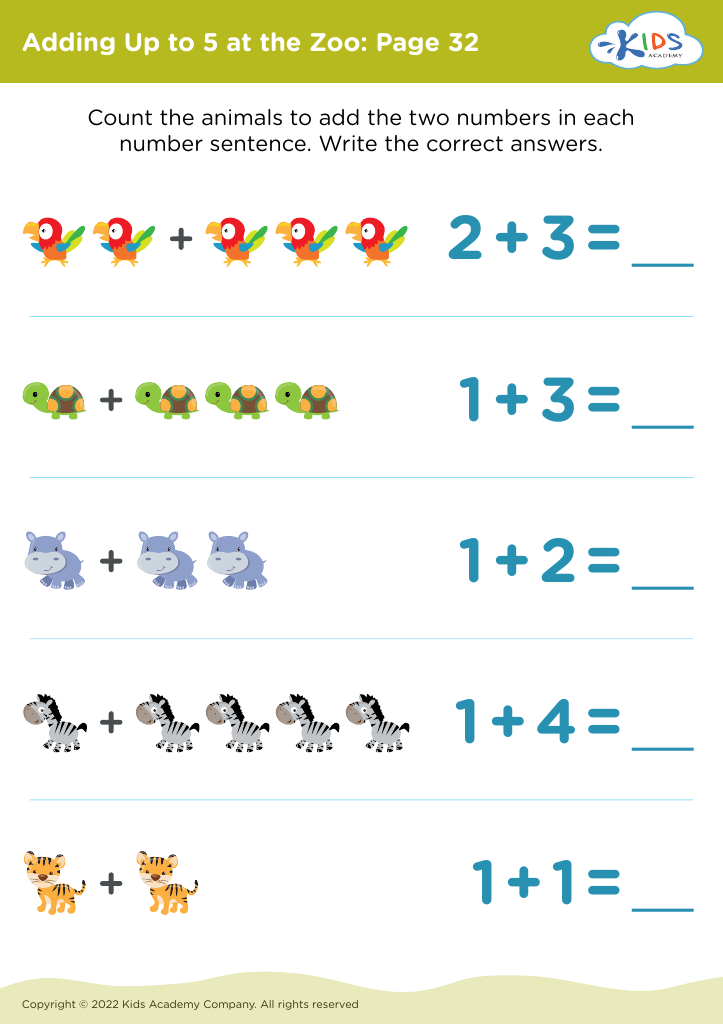
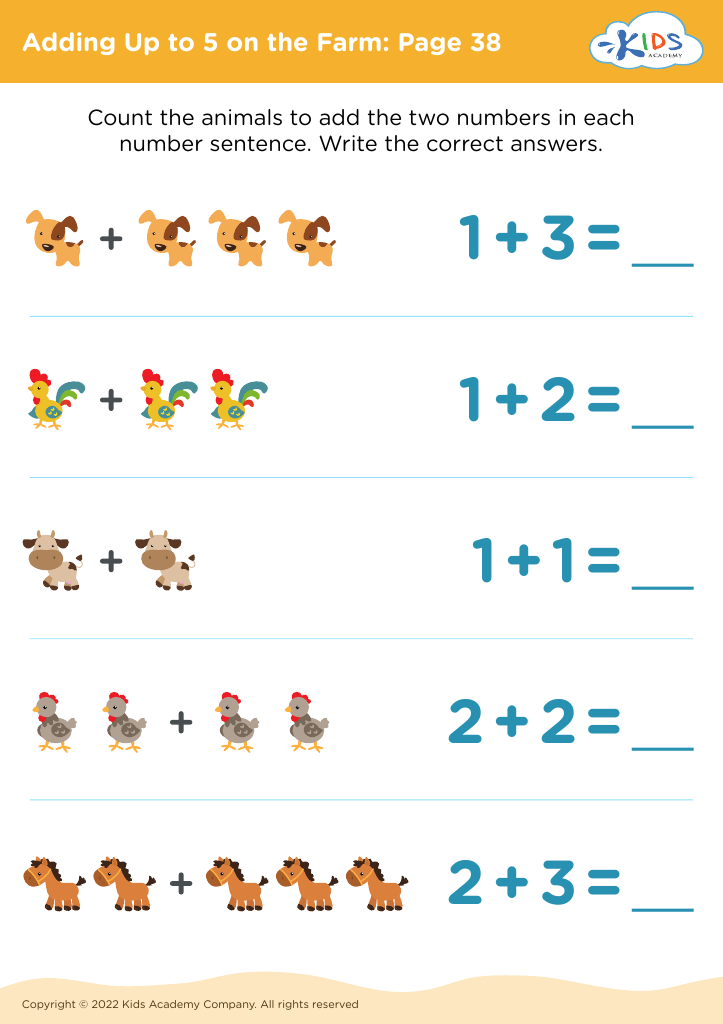
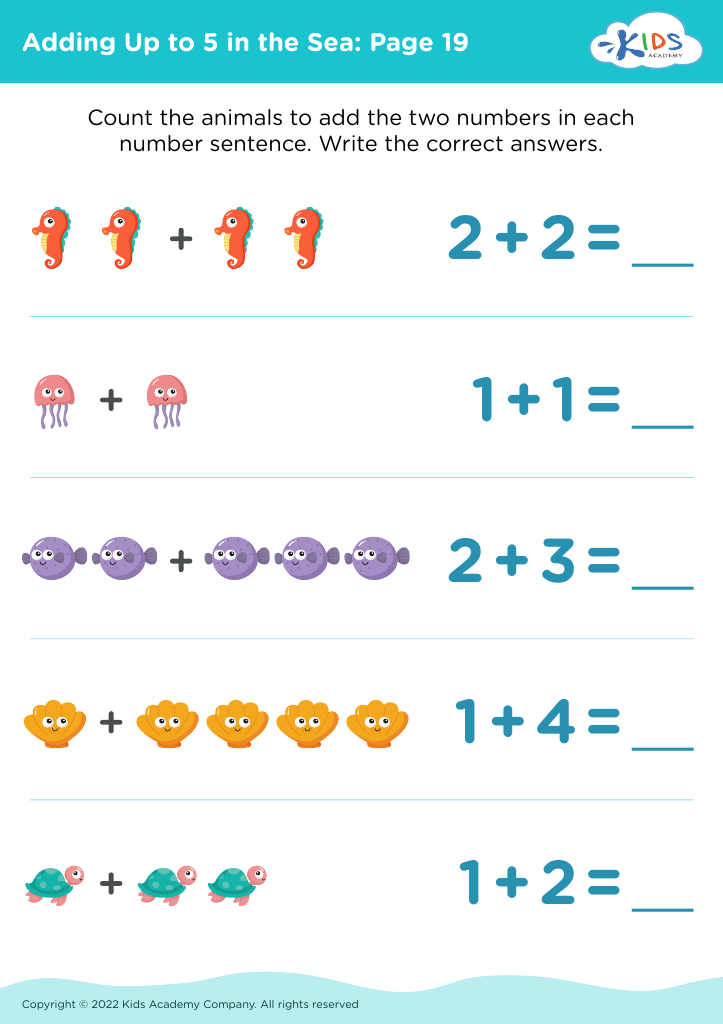
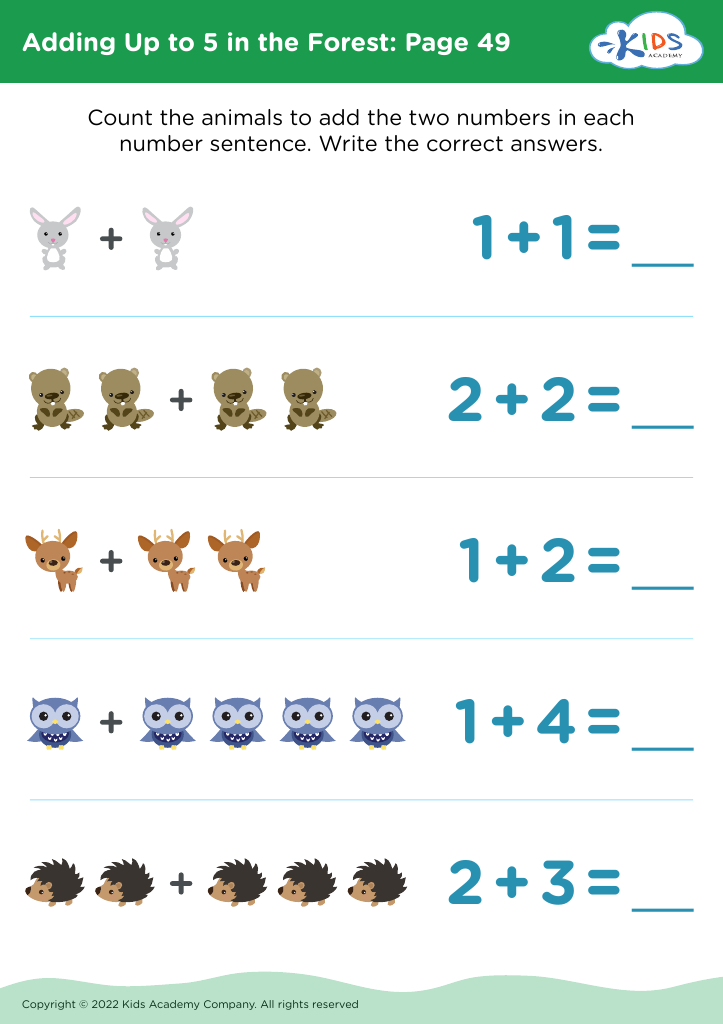
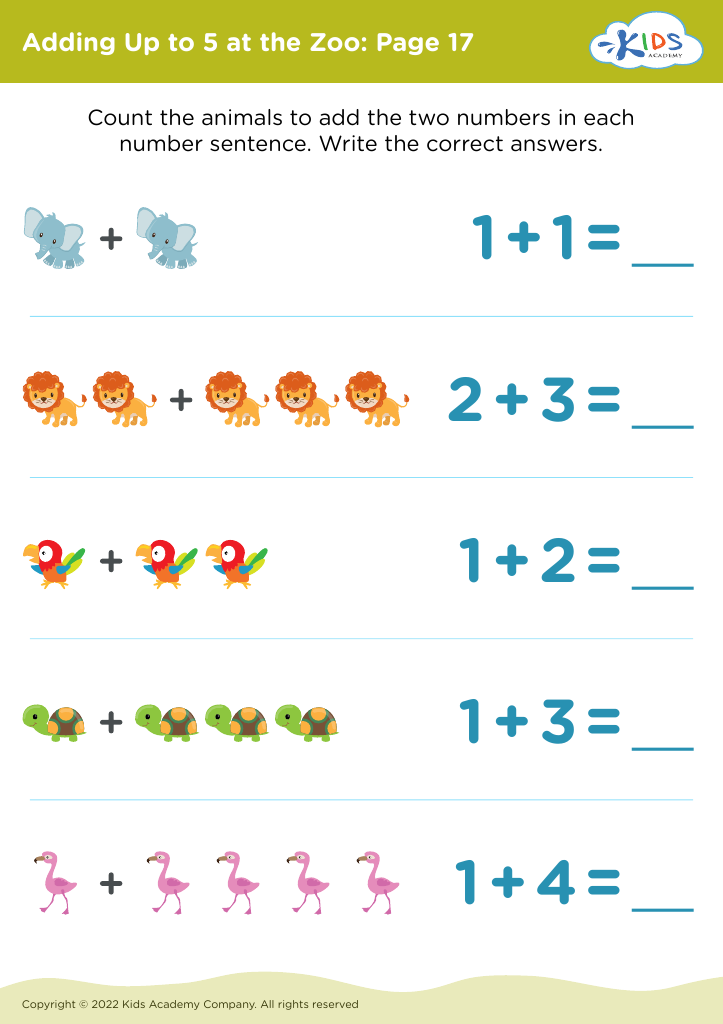
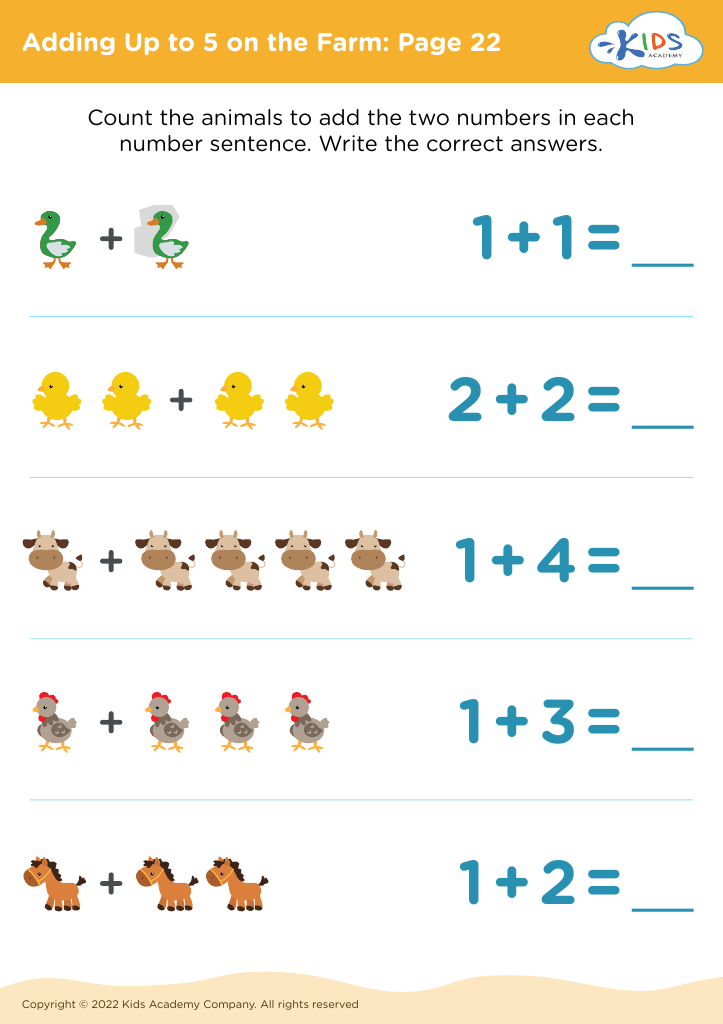
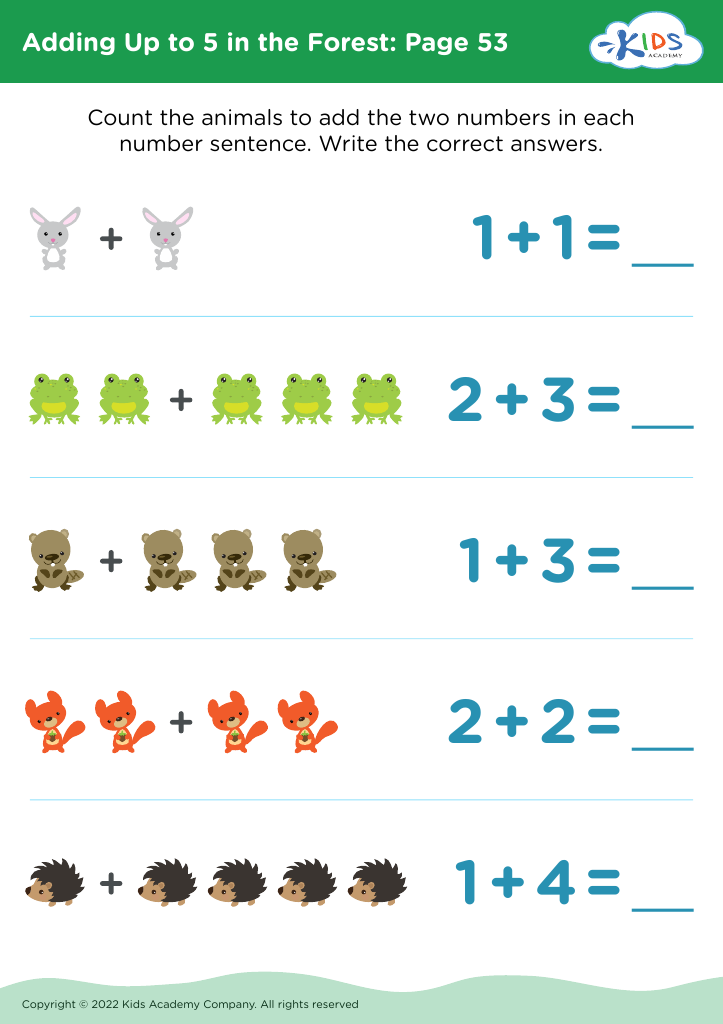
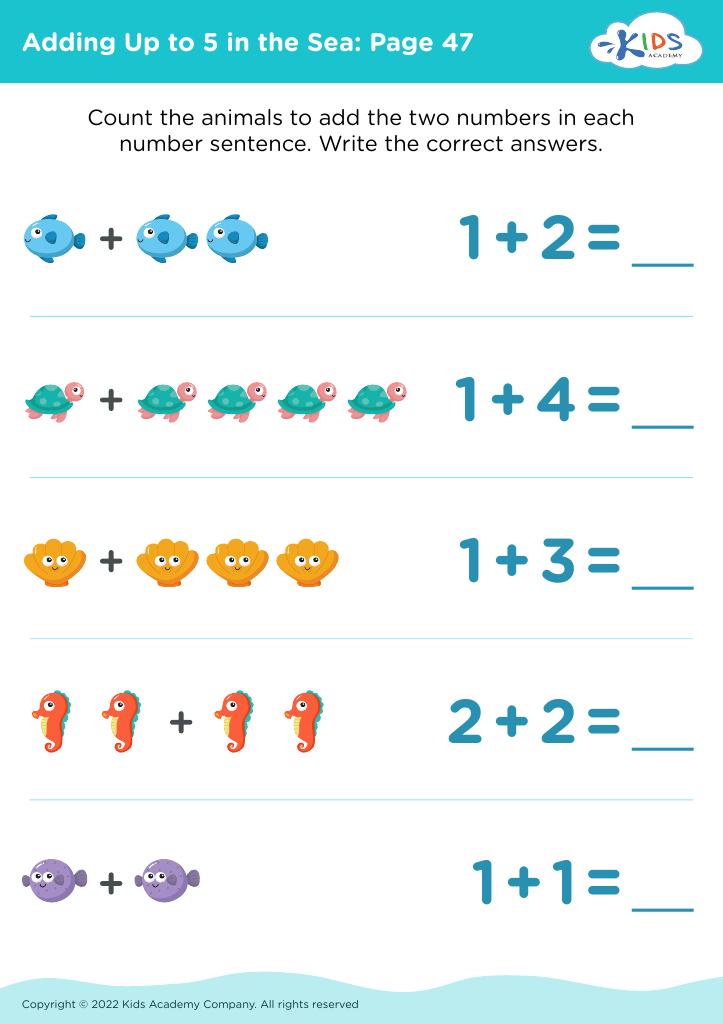
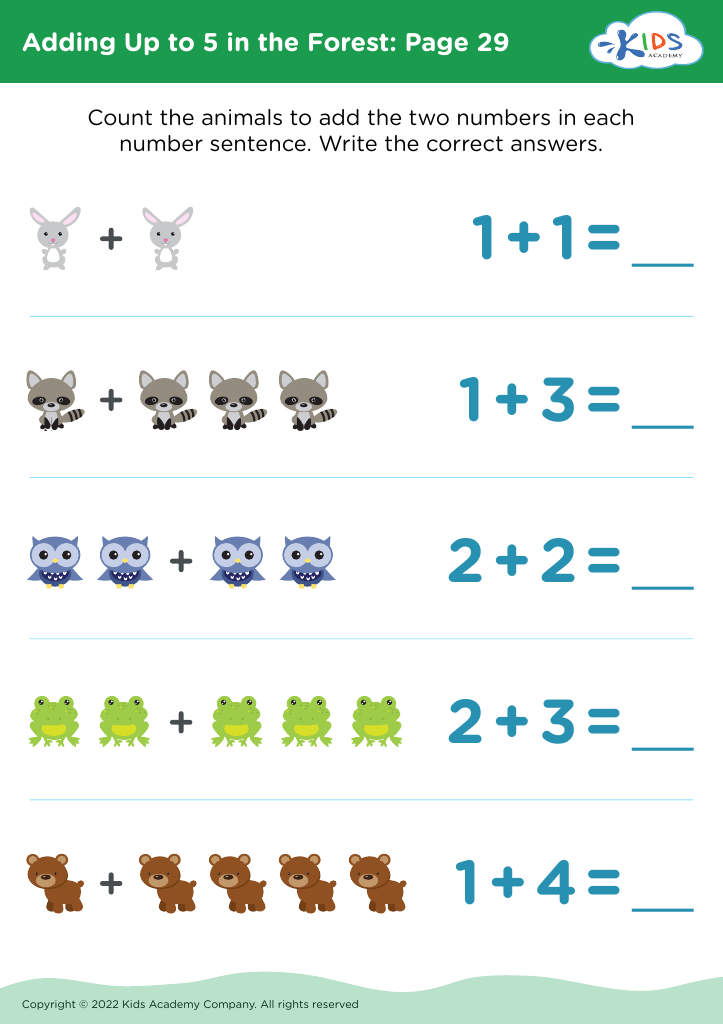
Welcome to our "Counting Proficiency: Adding Up to 5 Worksheets for 3-Year-Olds" page! Designed to lay a strong foundation in early numeracy, these engaging worksheets help young learners master the basics of addition with sums up to 5. With colorful illustrations and interactive exercises, children will develop essential counting skills while having fun! Each worksheet encourages visual learning and promotes number recognition, making it an excellent resource for parents and teachers alike. Join us in nurturing your child's mathematical abilities and confidence as they embark on their journey into the exciting world of numbers! Download free worksheets today and start counting!




%20(1).jpg)



Counting proficiency in early childhood, particularly adding up to 5, plays a crucial role in laying the foundation for mathematical understanding. For parents and teachers, fostering this skill in 3-year-olds is essential for several reasons.
Firstly, early counting skills enhance cognitive development. Children who can identify and manipulate numbers build problem-solving skills and logical thinking. These abilities are not limited to math; they also transfer to language development and general conceptual understanding.
Secondly, mastering counting adds to a child's confidence and engagement in learning. When young children successfully count, they gain a sense of accomplishment, which encourages them to participate more actively in classroom activities.
Additionally, counting teaches children foundational social skills. For instance, communal games and activities often involve sharing and taking turns, which can be initiated through counting. This naturally leads to lessons in cooperation, patience, and respect.
Lastly, monitoring counting proficiency empowers both parents and teachers to identify potential learning difficulties early. This allows for interventions or support as needed, ensuring that each child's unique learning trajectory is respected and nurtured.
Overall, helping 3-year-olds master counting up to 5 is pivotal in formulating a strong educational backbone that supports all aspects of a child's growth.








